Shaker Square
This opinion piece / analysis was republished with permission from the Real Deal Press. To learn more about what’s happening with Shaker Square, sign up for meeting notices from the Shaker Square Alliance. To learn more about writing for The Land, click here.
Part I
Towards the end of Cleveland City Council’s 2021 session, legislation was introduced to rescue Shaker Square from receivership to stanch its deterioration and create value to facilitate its future sale. At its essence, the ordinance authorizes the Director of Economic Development to enter into a loan agreement(s) with New Village Corporation, a subsidiary of the nonprofit Cleveland Neighborhood Progress, to partially finance the purchase of Shaker Square under the terms set forth in the Executive Summary to the Finance Committee.

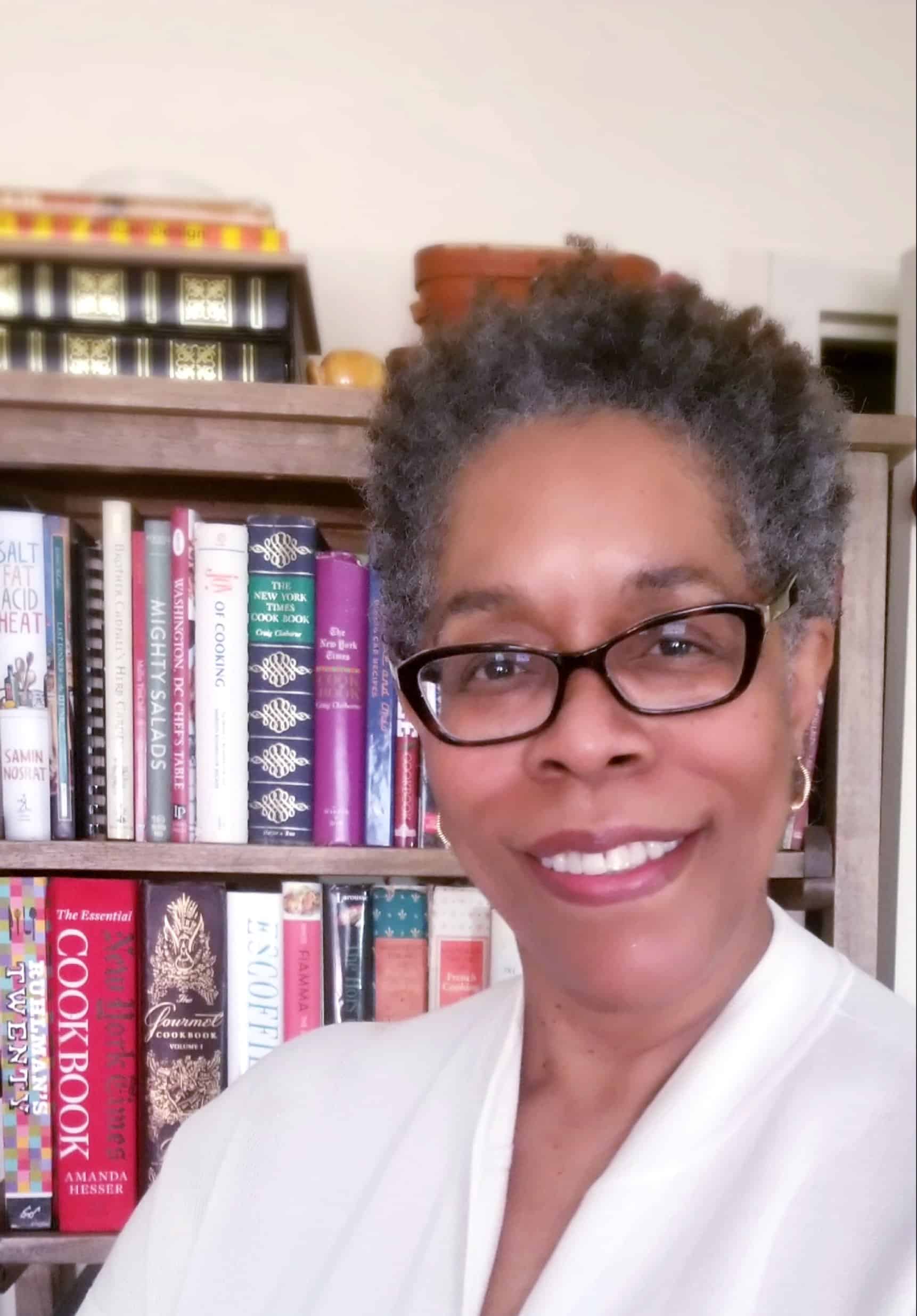
Michelle B. Jackson, this article’s writer.
Those terms provide for two low interest loans of $6 million each. The first loan has a 5-year term, interest only, renewable at the City’s option. The second, subordinate loan, has a 10-year term, is also renewable at the City’s option, and is forgivable at the City’s option upon fulfillment of specific criteria, the most important of which is the property’s sale to a City approved buyer. (Hold on to this detail because you will need it later in the story.)
The legislation had the support needed to pass under emergency ordinance pursuant to Council rules. Instead, it got stalled in committee where it resides to this day.
How did a solution that had the support of 16 of 17 council people at the time end up back to square one at the 11th hour?
The answer is rooted in both the founding of Shaker Square nearly 100 years ago and in the more modern-day politics of division.
On one side stand those who advance the zero-sum proposition that if Shaker Square is rescued with public money, then “needier” more “deserving” sections of Ward 4, will be deprived of resources. On the other are the nonprofit community development corporations and City of Cleveland entities charged with developing and stabilizing the Buckeye-Shaker-Larchmere neighborhoods.
If the real issue is the perennial one of the haves vs. the have nots as espoused by the faction opposed to the legislation, what about the equally persistent question of capitalism vs. the common good? And how does the culture of distraction and division in pursuit of personal advantage undergird the entire conversation?
Shaker Square was built as the gateway to Shaker Heights Village, an elite, suburban enclave developed by the Van Sweringen brothers. The property itself sits in Cleveland’s Ward 4 Buckeye-Shaker area and is adjacent to the Ward 6 Larchmere commercial district and the suburb of Shaker Heights.
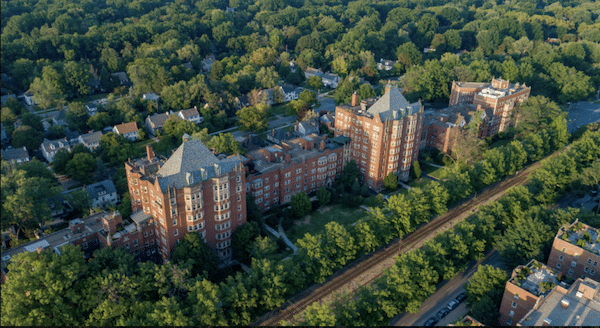
Moreland Courts
Shaker Heights was the brothers’ version of utopia. Exclusivity was maintained through strict zoning that at the time prohibited apartment buildings and commercial properties. As was also the norm then, discriminatory covenants were embedded in property deeds that placed restrictions on resale to keep out “undesirables”, not so veiled code for black people.
Almost a decade after incorporating Shaker Heights, the “Vans” began work on the Moreland Courts project, a luxury mixed use residential and commercial development in Cleveland just west of the Shaker Heights border on Shaker Blvd. That project included what we now know as Shaker Square. Moreland Courts remains a prestigious address in Ward 4 with an undeniable aura of wealth.
At its inception, Shaker Square was intended as the back yard of the Moreland Courts apartments and as the playground of the privileged white residents of Shaker Heights. Upscale retail stores, restaurants and services dominated the commercial space for decades, anchored by a movie theater. But today, nearly one hundred years since its 1929 opening, the Square’s character and commercial mix have changed markedly from its founders’ vision, in large measure as a by-product of the new demographics of its adjacent neighborhoods.
The legacy of Shaker Square as both connector and divider continues to this day, even as the city of Shaker became more racially diverse, and the nearby Cleveland Buckeye neighborhood far less so.
Former Ward 4 city council member Ken Johnson was adept at exploiting that contradiction. He maintained his near 40-year councilmanic tenure not by spreading the wealth, but by pitting the poorer, mostly black residents of greater Ward 4 against the wealthier, largely white residents of Moreland Courts. Johnson propagated the fiction that “they” are somehow responsible for the rest of Ward 4 not getting its fair share.
Eventually, if you’re told you’re a duck often enough, you start quacking.
Against this backdrop it was predictable, if not entirely inevitable, that the Johnson playbook of “them” vs. “us” would be trotted out in the 4th quarter of a new game.
Opponents of public funds to save Shaker Square from foreclosure assert the need to protect the interests of the have-nots from the public-money-grab by the haves of Moreland Courts. Their leader is Shaker Square resident and nonprofit CEO, Brandon Chrostowski, founder of EDWINS, a reentry program housed there and on nearby Buckeye at E 130th Street. Chrostowski’s nonprofit has revitalized that gateway to the Buckeye Road commercial district by methodically acquiring and rehabbing properties on both Buckeye and South Moreland roads.
The main assertions of this group are that by extending “$12 million in forgivable” loans to New Village Corporation to stabilize the position of Shaker Square as the anchor of the Southeast side, the city is paying double what the property is worth, thus depriving other parts of Ward 4 — Mt. Pleasant and Kinsman — funds needed for coats for kids, meals for kids, lead abatement et. al. (Readers will remember from earlier in this story that only the second subordinate loan of $6 million is forgivable. The first loan of $6 million, which is what the property is currently worth, must be paid back to the City in full.)
They also condemn the so-called rushed process of ushering the legislation through the committee process, accusing the other side of invoking the “boogie man is coming!” to create a nonexistent crisis.
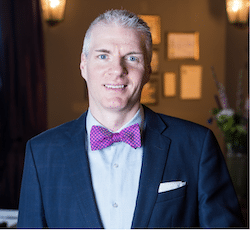
Brandon Chrostowski, Shaker Square resident and nonprofit CEO.
“‘We have to get this done now’,” is misleading, Chrostowski contends. “There is no rush.” Incongruously, the faction also supports allowing the property to go to foreclosure where free-market forces prevail but also has the potential to leave another scar on a district riddled with derelict properties.
To win support for his stance, Chrostowski penned the week before Christmas a passionate op-ed published in the Plain Dealer enumerating the above altruistic-based opposition to the proposed legislation. What was absent from the op-ed, however, was any reference to Chrostowski’s personal stake in defeating the proposed ordinance.
Basking in the glow of recent national exposure, Chrostowski wants to recreate the Square in the image of EDWINS by transforming it into the social enterprise capital of the nation. “Few places or spaces have what Shaker Square has,” he reasoned. “We built a national model with EDWINs that can set the example for the rest of the nation.”
The only obstacle keeping Shaker Square from fully realizing its potential, according to Chrostowski, is the right leadership. But his early bid to acquire the property out of receivership was rejected. If the Cleveland plan to use New Village Corporation to re-imagine and redevelop the Square is thwarted, Chrostowski might reemerge as the lenders’ best or only alternative to be made whole.
Whether the omission of Chrostowski’s personal agenda was intentional or an oversight, it nonetheless paints a more complex scenario that forces the question of motive: Does one man’s personal interest in buying Shaker Square to extend his brand nationally and his real estate holdings locally align with the message he has been promulgating to the most vulnerable residents of Ward 4? Or does it echo the Ken Johnson playbook of pitting neighborhood against neighborhood to distract from his personal agenda?
Incidentally, Johnson himself lived in the Shaker Square footprint up until he was incarcerated in 2021 for crimes linked to theft of federal dollars earmarked for the revitalization of the Buckeye and Kinsman neighborhoods.
Part II

Shaker Square
Cleveland City Council President Blaine Griffin, whose Ward 6 abuts Shaker Square, respects what Brandon Chrostowski has accomplished with his EDWINS enterprise, but does not want to engage the politics of division. He sees the proposition that it’s either coats for kids in Mt. Pleasant or a real estate development deal at Shaker Square as “a straw man argument” meant to undermine honest debate.
“You can’t negotiate neighborhood against neighborhood,” Griffin emphasized when interviewed for this article. “You can’t pit neighborhood against neighborhood. That is the epitome of parochialism. We won’t get anywhere as a city.”
Griffin pointed out that “coats for kids, meals for kids have nothing to do with real estate deals, economic development deals and trying to get return on investments,” which in the case of Buckeye-Shaker have already been substantial with more slated moving forward. “The County has sole responsibility for providing the social services safety net. The City’s job is to stabilize neighborhoods and provide better city services,” Griffin explains. “Ask why the County isn’t putting more money into social services.”
Griffin not only supports the legislation that centers community development agencies in charting the future of Shaker Square; he was the driving force in prioritizing the issue within Mayor Frank Jackson’s administration back in 2020. Contrary to Chrostowski’s characterization that this has been a rushed process, work on finding a solution to the Square’s challenges began nearly two years ago when it became known that the Coral Co., the Square’s owner, was in financial trouble and unable to secure refinancing in the midst of the pandemic.
At that time, Griffin began conversations with Shaker Square residents and the departments of economic and community development about how to best stabilize the property and make it attractive to a buyer. He also engaged nonprofit community development corporation Burton, Bell, Carr Development, Inc., (BBC), which a year or so before agreed to add the Buckeye-Shaker and Larchmere neighborhoods to its service area portfolio.
“This is what we do,” shared BBC Executive Director, Joy Johnson. “[Community development corporations] were created to support and revitalize real estate development in challenging neighborhoods. So, this is our mission. This is why we exist.”
With BBC partnering with New Village Corporation to help craft a solution, the missing link was bringing the mayor on board. Jackson was not an easy sell. Chuckled Griffin, “…it took me almost six months to convince the mayor!”
Mayor Jackson wanted three considerations met before he would ok Griffin’s plan:
1) The plan could not be a simple bailout of Coral Co. but had to anchor Shaker Square for a future sale.
2) The city would get its money back.
3) The city would continue to have a voice at the table throughout the entire process.

Blaine Griffin, the Cleveland City Council president who represents Ward 6.
Normally the council member in whose ward a property exists has a pronounced say in the public decision-making process. But Ward 4 councilman Ken Johnson was preoccupied with superseding troubles of his own, given his arrest in February 2021 on fifteen federal criminal charges. After Johnson was suspended from Council in April, the seat was vacant for another two months. Anita Gardner was appointed as the interim council member in June.
In late July, with a Ward 4 representative finally seated, Griffin began transitioning out of the process by facilitating a meeting at Moreland Courts to promote rapport among the key players. In addition to residents and Griffin, the meeting included interim council member Gardner, BBC’s Joy Johnson, Terri Hamilton Brown, a consultant with New Village Corporation, and Tania Menesse, CEO & President of Cleveland Neighborhood Progress. The language that eventually formed the basis of the proposed legislation had not been formulated as of the meeting date, but the conversation then helped to inform it.
Less than six months later, Gardner would assert that she was left in the dark in the rush to push through legislation to use public funds to rescue Shaker Square. She claimed not even to know about the legislation even though she signed on as a sponsor. Gardner further questioned the need to invest in Shaker Square when other parts of Ward 4 are more deserving of public funding.
If that last argument sounds familiar it’s because it reflects the talking points of EDWIN’s CEO, Brandon Chrostowski, who told me that he is on the phone with Gardner every day.
Perhaps that is why she did not have time to respond to my three requests for her side of the story. Had we spoken, I would have asked Gardner how she squared her yes vote a few weeks earlier to award $435 million in public funds to renovate a downtown ballpark, including its corporate offices, but went thumbs down on $6 million for her own turf. I would have asked her why the interests of a billionaire sports team owner superseded that of the coatless children of Ward 4 just a few weeks before she killed the Shaker Square legislation.
To Chrostowski’s concern about the all-too-real issue of food insecurity in Ward 4, I would have asked if Gardner is willing to risk losing Dave’s grocery store if the delayed capital improvements to its space are not completed sooner rather than later. (Part of the obligation of New Village Corporation under the legislation is to raise additional money to make the necessary capital improvements and repairs to the property.)
Finally, I would have asked Gardner what responsibility she had to educate herself on the issues discussed in that July private meeting at Moreland Courts. What obligation did she have to take the lead?
Editor’s Note: We reached out to Ward 4 Councilwoman Deborah Gray to get her position on the proposed legislation when she was still councilwoman-elect. She declined repeated requests for comment, saying that she was “studying” the issue and would get back to us when she had “something to say.”
What has made the proposed rescue especially daunting is that to date, Shaker Square’s mortgage holder says it will accept no less than the full $10.6 million owed, plus interest and fees. The bank apparently has no problem letting a significant piece of real estate languish until conditions improve. To paraphrase Jack Nicholson in the movie Chinatown, “It’s only Ward 4.”
Chrostowski’s early bid reportedly came in closer to the appraised value of the property. BBC and New Village twice enlisted straw buyers who each bid $9 million: one in July and the other in October. Both offers were rejected.
While a deal that was almost two years in the making can hardly be called rushed, time has now become critical: disrepair and the tab for fixing it are increasing while the property languishes in receivership. The proponents of the legislation want to stop the clock and the further deterioration of the property.
There is also serious concern among many residents of the Shaker Square area that, like numerous properties in Ward 4, this core community asset could end up with an absentee owner who has no stake in the upward mobility of Southeast Cleveland. Often it takes years to compel property maintenance compliance from out-of-town owners who have no connection to the community, let alone to Cleveland.
The nonprofit partnership sought out a local developer to take over ownership, to no avail. It was then that New Village Corporation and BBC concluded, “this is our job” and got to work devising a strategy.
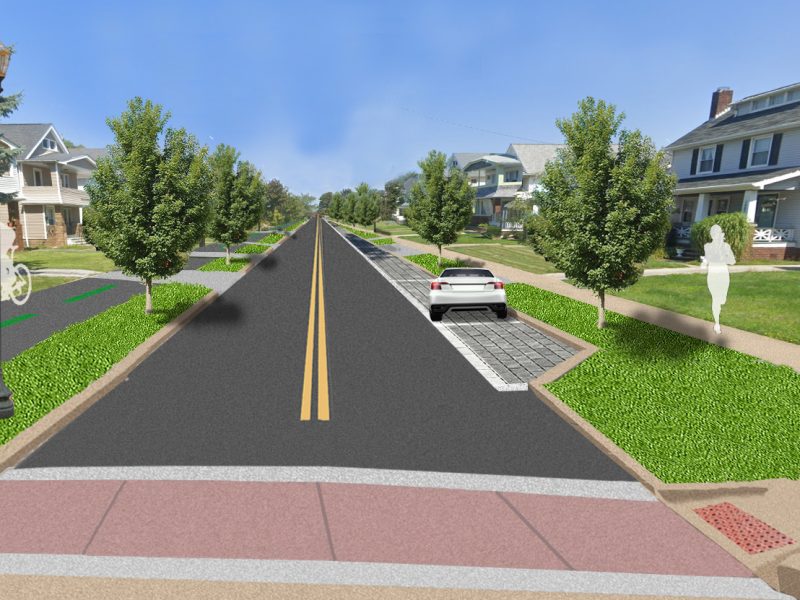
Admittedly, there are many people who are predisposed to see the legislation as a land grab by New Village Corporation and BBC. There is also the persistent belief that the Shaker Square proposal is a back door entry to subvert the will of the people by closing off Shaker Blvd as was proposed to much resistance in 2019.
Some community development corporations have failed to serve their constituents well and are deserving of suspicion. BBC is certainly not one of them, and not just because its charter specifies that 51% of its board of directors must be residents of its service area.
Notwithstanding a witches’ brew of suspicion, conspiracy theories and alternative facts, it seems clear that the community development corporations have no desire to hold Shaker Square any longer than necessary. New Village Corporation’s Hamilton Brown is adamant in her denial of both conceits. She unequivocally went on record with the assurance that should the legislation be adopted, the partners will not close off Shaker Blvd. As for the notion that New Village Corporation and/or BBC have designs on owning and operating a shopping center, that, too, defies reality. “We don’t have an appetite to own Shaker Square long term,” said Hamilton Brown. In fact, she says her board would not sign off on the project without presentation of an executable exit strategy.
Council President Blaine Griffin describes himself a big picture guy. While he has a deep understanding of Cleveland’s historically ward-centric model of governance, he also recognizes its limitations as the city navigates deeper into the 21st Century.
Terri Hamilton Brown of New Village Corporation also sees the limitations of territorial thinking. “Wards are abstract constructs based on political subdivisions based on population,” she says, “not how people come together.” Echoing Griffin, she finds the either/or deflection straw man tactic to be hackneyed. She points to other cities that manage to serve both commerce and the poor. Like Griffin she rejects that it has to be “this or that. The city is too big. We are capable of doing both. The city will remain only poor if all we have are poverty programs.”
Michelle B. Jackson is a community ACTivator and voting advocate who lives in Cleveland’s Buckeye-Shaker neighborhood. Reach her at reclaimward4@gmail.com.
We're celebrating four years of amplifying resident voices from Cleveland's neighborhoods. Will you make a donation to keep our local journalism going?