
Welcome to Cleveland: a new path for international entrepreneurs to build businesses here
The U.S. does not have a startup visa. But Global Cleveland is partnering with local universities to create a pathway for international entrepreneurs to start and grow businesses in Northeast Ohio.
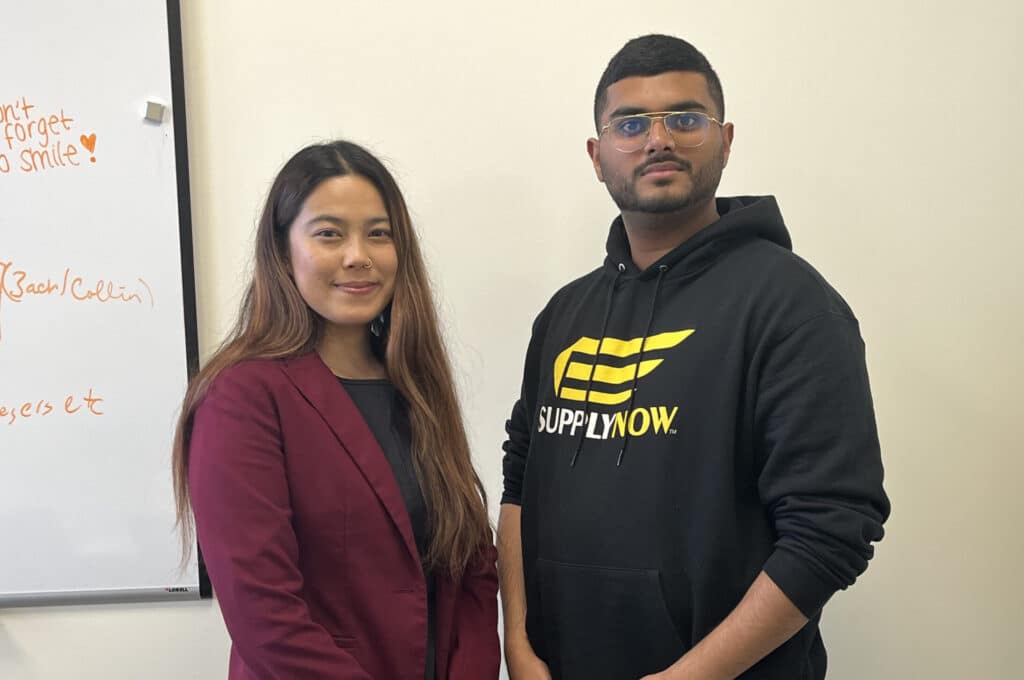
Aaron George, Global Cleveland’s first entrepreneur in residence, says he gets his passion for entrepreneurship from his mom.
“Seeing my mom build something from scratch – working as a manager of a beauty salon and then building out her own beauty salons – was fairly inspirational,” George said.
George, who came from Dubai to study at Case Western Reserve University, started his own business as an undergraduate student. His startup, PastryNow, allowed local bakers and home bakeries to sell surplus products to college students in the area. The business expanded from CWRU to Cleveland State University but abruptly lost its customer base when universities shut down due to the pandemic in March 2020.
Working with The Jolly Scholar brewery owner Matt Vann, George then started SupplyNow, a business that shops for and delivers food products to restaurants. The company is a delivery service like Uber Eats, Doordash, and InstaCart, but rather than delivering takeout meals or groceries directly to restaurant or store customers, it supplies restaurants with the ingredients they need to make their dishes.
But as George researched the immigration system when he was an undergraduate student, he came across barriers that could hinder him from pursuing entrepreneurship here. For entrepreneurs who are not U.S. citizens, there is not a simple path to obtaining a visa.
At least a dozen countries have startup visas for immigrant founders. The U.S. is not one of them. Congress has proposed legislation to create a startup visa multiple times starting in 2009, “The Startup Visa” author Tahmina Watson wrote in an article published in Forbes. Startup visa legislation passed both the Senate and the House of Representatives in 2022 but has since stalled out.
So international entrepreneurs have to bank on a random selection lottery system in hopes of getting a coveted H-1B visa, which allows employers to hire international workers with a bachelor’s degree or higher for highly skilled work. The U.S. has a cap of providing 65,000 H-1B visas per year, and the recipients are chosen through a random lottery. Some organizations, such as universities, are exempt from the H-1B cap, though.
That’s where Global Entrepreneur in Residence (GEIR) programs come in. The programs started in Massachusetts and have begun to appear in other places, including Detroit, St. Louis, and now, Cleveland. They partner with H-1B cap-exempt universities to create a workaround, providing international entrepreneurs with a pathway to starting and growing businesses in the U.S.
Through his research, George learned about GEIR programs and reached out to Craig Montuori, the co-founder and executive director of the Global EIR Coalition. He then found the new program at Global Cleveland, where he would become the first Global Entrepreneur in Residence.

How Global Cleveland’s GEIR program works
To make it possible for international student entrepreneurs to start and grow businesses here in Cleveland, the nonprofit Global Cleveland enters into affiliation agreements with area universities. The universities sponsor the entrepreneurs in residence, who in turn help other entrepreneurs start and grow businesses.
Cleveland State University was the partner university for George. Global Cleveland is working on signing on CWRU and is in conversation with the University of Akron, said Supriya Tamang, Global Cleveland’s program training and development manager. Universities benefit from partnering with Global Cleveland on the EIR program because they can use the program as a way to attract international students, Tamang said.
Tamang, who manages Global Cleveland’s GEIR program, has been reaching out to local universities to spread the word about the program. She’s also reaching out to organizations that provide business support and resources to entrepreneurs like JumpStart and MAGNET.
“I’m reaching out to the universities, asking to connect with international students there, how can we spread the information about this particular program to all the international students that are here in the region — to have them understand that there is an opportunity for any entrepreneurs that are willing to start a business here,” Tamang said.
Global Cleveland is providing the funding for the program. So far, it’s received funding from the Gund Foundation. It has also received funding specifically for supporting tech entrepreneurship from an Ohio Third Frontier program agreement with JumpStart.
George started as a Global EIR in October 2022, and his term ends in July 2023, but Global Cleveland hopes to eventually host multiple entrepreneurs in residence at the same time. Northeast Ohio has only retained about 5% of the international talent that comes here, Tamang said, so it’s crucial to create pathways that allow immigrant entrepreneurs to start businesses in the region. She thinks the region should be retaining at least 15-20% of its international talent. In many cases, international entrepreneurs and workers come to the Cleveland area for school but then move to other cities like San Francisco, Seattle, and Chicago, Tamang said.
As part of his EIR role, George spends eight to 10 hours connecting with and supporting other immigrant entrepreneurs. He’s working on building out a program called the “Food Industry Network,” which focuses on helping immigrant restaurant owners address purchasing logistics and workforce challenges.
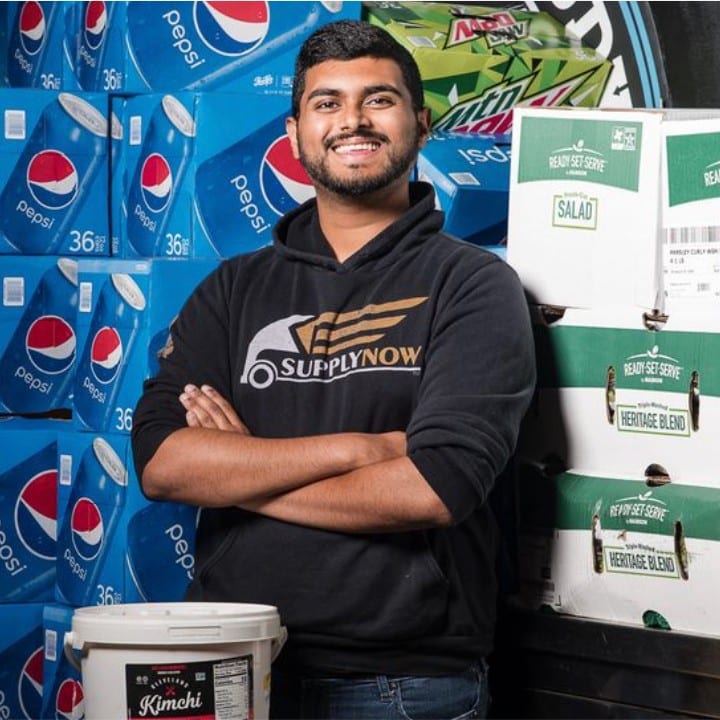
George’s entrepreneurship journey and navigating barriers
Through his food supply business, George helps restaurants run smoothly as they face supply chain issues. He has a passion for entrepreneurship and for the food service industry. “It’s a universal language that speaks to everyone,” George said of food, saying that this may be a reason that many immigrants have started food businesses.
“I think restaurants serve as the beating heart of cities. They represent the finest and the worst parts of us all,” George said. “They show that humanity, regardless of all our faults and discrepancies, we push forward.”
Even though he’s found a way to continue to grow SupplyNow through Global Cleveland’s GEIR program, he has faced other barriers outside of visa-related challenges. Securing funding is a major obstacle for many entrepreneurs, and specific barriers make it particularly difficult for immigrant entrepreneurs. For example, entrepreneurs who are not citizens have limited access to SBA (small business) loans and often have to rely on other funding sources.
At the same time, they face extra barriers when trying to build up credit due to lacking a U.S. credit history. They also may not have the same level of access to networks and connections as entrepreneurs who have lived in the U.S. their whole lives, George said.
He said that he was able to connect with some mentors who have provided him with entrepreneurship guidance, but he said he also faced some barriers, such as not having access to an SBA loan, that he had to navigate on his own. After going through a string of four rejections for funding, George secured venture capital in October 2021. SupplyNow was also recently accepted into a Chicago-based startup accelerator called Food Foundry for startups in the food service industry.
Global Cleveland’s Tamang said that international students and immigrants’ coming to another country is in itself an “entrepreneurial act.”
“They’re taking their chances; they’re taking a huge risk to come to a different country,” she said. “They’re trying to figure out their life in the new place and trying to figure out a new culture, new language, and even new challenges that they have based on laws or policies and everything.”
GEIR programs like Global Cleveland’s help make it possible for international students and newcomers to then start businesses in the U.S.
Learn more about Global Cleveland’s GEIR program and how to apply here.
Keep our local journalism accessible to all
Reader support is crucial as we continue to shed light on underreported neighborhoods in Cleveland. Will you become a monthly member to help us continue to produce news by, for, and with the community?
P.S. Did you like this story? Take our reader survey!
Author

Related Articles
Bringing the farm to the city: Farm Dog Fresh offers fresh, local produce on Cleveland’s West Side
One customer says: “For [Clevelanders], sometimes it’s hard to get fresh, local produce. We need to take advantage of these produce stands for the four or five months out of the year that they’re open.”

Keeping the light on at Can Do Neon
Preserving the art of neon sign making is Craig Alan Nichols’ mission, but he’s in search of a student and medical aid.
New children’s bookstore in Lakewood aims to inspire, delight kids, families
The Wandering Lantern aims to be a cozy, welcoming kid’s bookstore, with space for families to explore reading.


