The Point of Freedom (POF) office was bright and bustling on a gray Monday morning, when Najah Muhammad, assistant director and James Gantt, chief executive officer and cofounder of POF greeted me with smiles and coffee.
Point of Freedom was profoundly influenced by the founders, Gantt and his wife Aisha Muhammad, own experiences with addiction and recovery. Gantt shared that the need for other types of addiction support emerged from witnessing the struggles and eventual demise of his mother, who battled addiction with the limited options available in her time.
“Back in the day, the only solution was methadone,” he recalled, narrating the relentless cycle of relapse and methadone dependence his mother endured until her untimely death at 42. For Gantt, this personal tragedy underscored the urgent need for better recovery support systems. The founders embarked on a journey to sobriety, which profoundly changed their lives. This transformation fueled their determination to create a safe and supportive environment for others on similar paths. “We realized that addicts needed somewhere safe to recover,” he emphasized, pointing to the critical importance of a clean and secure environment in the recovery process.

The transition from concept to reality began with a serendipitous opportunity. Gantt, who had been working in construction for 7 years, was approached by a colleague who had acquired several properties from a hospital that was in the process of closing. Among these properties was a duplex that the colleague was unsure how to utilize. Gantt recalls that the house was nice but he also did not have immediate ideas for how to utilize it. His wife did.
After a moment of inspiration, Muhammad, co-founder of POF, turned it into a recovery home for women. “We know what to do with it,” she immediately suggested, envisioning a haven for women in recovery. In 1998, this vision materialized as they opened the doors of their first recovery house. Gantt beams with admiration at this memory of his wife’s vision.
The home, capable of accommodating 12 to 14 women, provided not just a place to stay but a structured environment essential for recovery. The founders leveraged their resources and skills, using their construction background to refurbish the house and equip it with necessary amenities.
Launching Point of Freedom was not without challenges. The founders faced significant financial hurdles, because they self-funded the project without loans. They meticulously refurbished the house, sourced second-hand appliances, and recruited family members to help prepare the home.
Najah recalls the family coming together and helping her sister, Aisha. “I was a teen but remember coming to help clean up and prepare the home for use, we had fun doing it. It’s amazing that all these years later that this is what we were building.”

Despite these obstacles, they were driven by a shared commitment to providing a sanctuary for recovery. “We kind of self-started,” Gantt explained, highlighting their dedication. Their approach involved stringent entry requirements for residents, ensuring they completed a treatment program and committed to attending regular AA/NA meetings. This structure laid the foundation for a disciplined and supportive recovery environment.
Residents are paired with an Ohio Certified peer recovery supporter who works with them on a Recovery Plan and personal goals; there is no set time limit on how long a woman can stay. A Peer Recovery Supporter is a person with lived experience who trains and certifies with the state to aid people who are impacted by mental illness or substance abuse disorder.
Point of Freedom faced financial constraints and the inevitable wear and tear of the facility. Gantt recalled that he thought they may have to temporarily close Point of Freedom but his wife’s unwavering dedication to keep the home operational kept the doors open. Grants and community support began to play a crucial role in sustaining their mission, though financial strain was a constant challenge.
Najah Muhammad, MPA, who had experience as a grant writer, saw an opportunity to expand POF and its services. In 2020, she thought they should take a leap and apply for a research project that included innovative techniques for recovery.
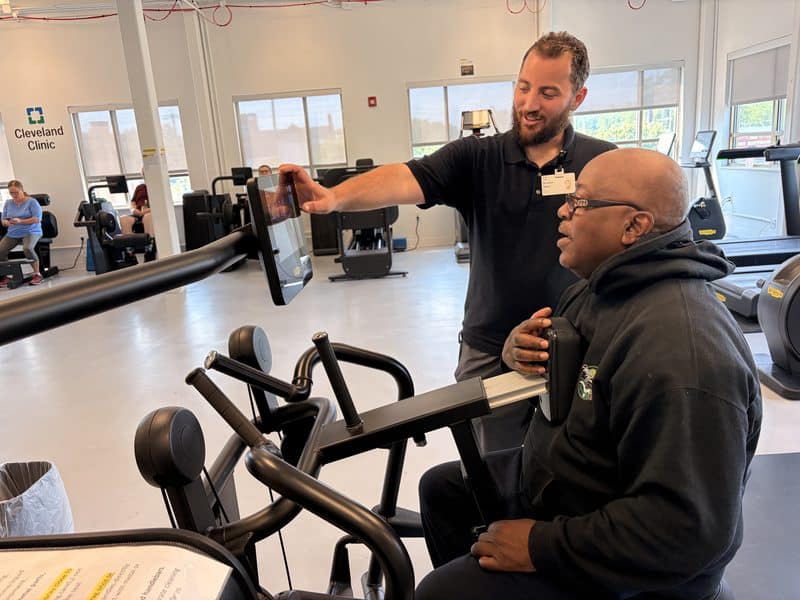
“The word innovative was interesting to my ears,” she said. She’d recently finished training as a yoga instructor, and thought that mindfulness and wellness could be a pivotal next step in clients’ successful recovery outcomes. POF secured that grant, and they were able to rent their first office and expand programming to include yoga, meditation and art therapy.
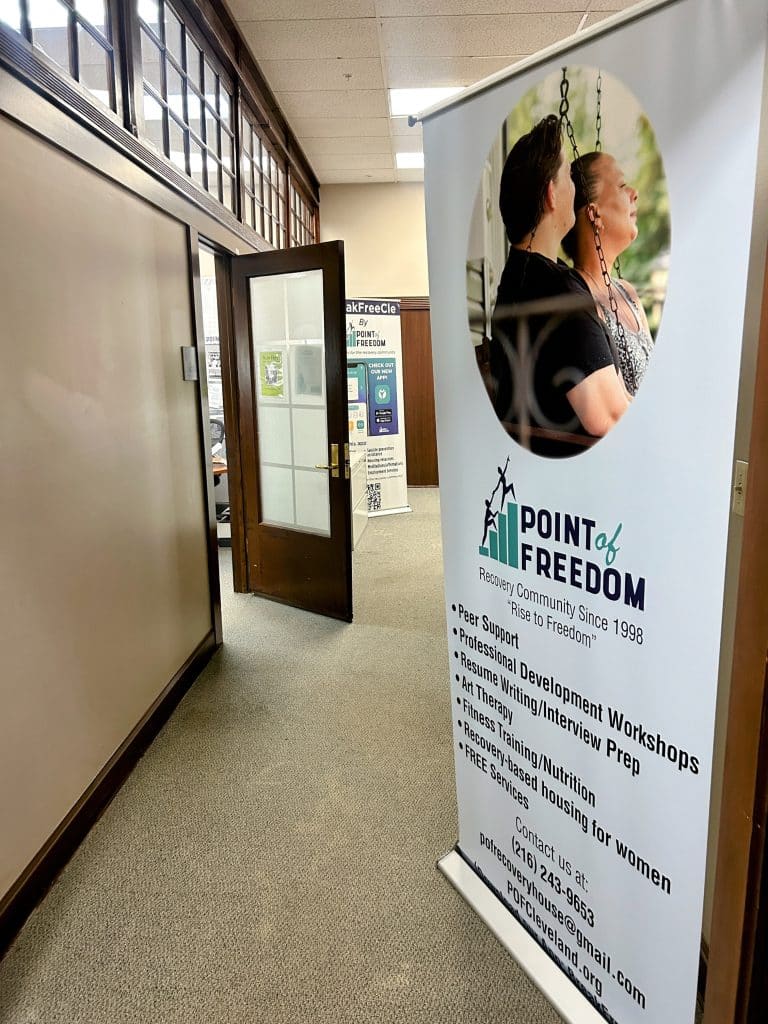
POF’s current classes include: physical fitness, spiritual principles, recovery solutions, GED test prep, job readiness, and more. The expanded offerings have made Point of Freedom a recovery resource for the community as well. All of the classes are open to the public.
The founders expressed immense pride in the successes of Point of Freedom. Watching residents transform their lives, overcome addiction, and reintegrate into the community has been their greatest reward, they said. They beamed while discussing how one of their first clients became a house manager and is now a peer supporter with the organization.
“The biggest joy has been seeing ladies recover and go on to lead productive lives,” Gantt shared.
“POF has allowed me to stay connected to the community. When I was a client, Point of Freedom helped me to address a lot of my personal issues and allowed me to overcome my shortcomings and be a role model to others. I’m now paying forward what was freely given to me from Point of Freedom. POF has also given me an employment opportunity which allows me to be a part of the solution to the problem in our community. Today, I am able to share my experience, strength, and hope about recovery to other’s and support them through their recovery journey as well. One day at a time!” said Rondye Brown, a former client at POF.
Looking ahead, the POF family wants to increase capacity, both in terms of physical space and the number of residents they can support. This expansion would allow the organization to help more women in need and provide a broader range of services. The recovery home currently houses only women but they want to find another location to create a home for men. Ensuring long-term financial sustainability through consistent grant funding, donations, and community support remains a priority. The leadership aims to create a stable financial foundation that will secure the future of the recovery home.
The goal is for Point of Freedom to be a beacon of hope, illuminating the path to sobriety for many people and being an example of a supportive community, the founders said.
The journey of Point of Freedom from a personal vision to a thriving recovery home underscores the importance of safe spaces, structured support, and community involvement in overcoming addiction. Muhammad said the mantra, “The wider the base, the higher the point of freedom,” has become a personal inspiration.
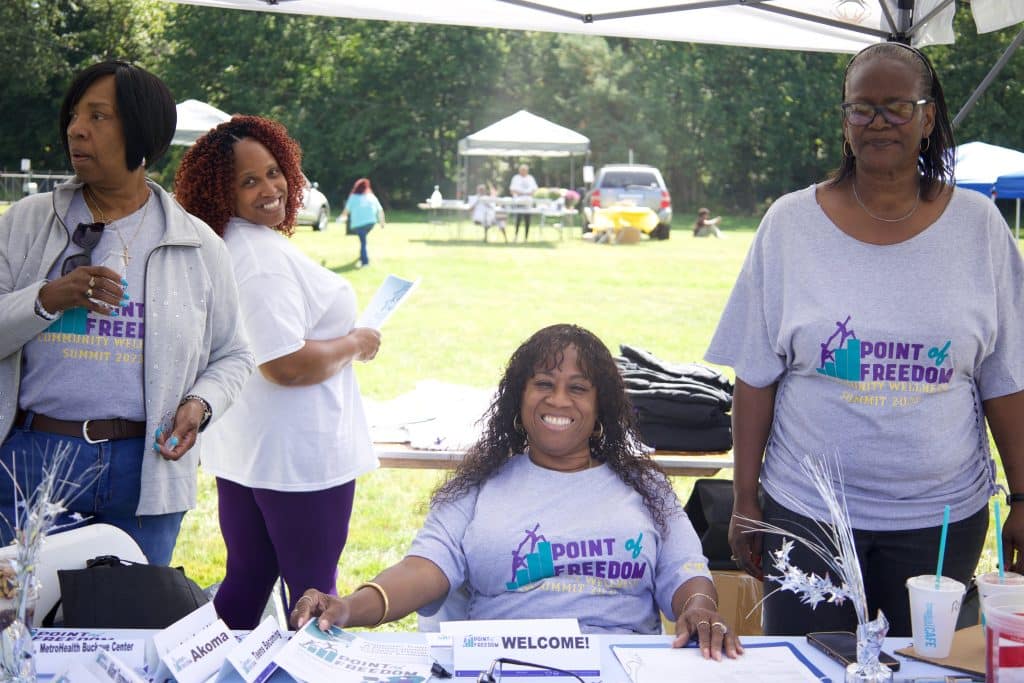
For more information check out the POF website. Register for their upcoming 3rd Annual Wellness Summit here: https://bit.ly/POFSummit. To donate: https://bit.ly/POFgiving
We're celebrating four years of amplifying resident voices from Cleveland's neighborhoods. Will you make a donation to keep our local journalism going?