
Editor’s note: Asylum seekers working with AMIS were advised not to speak to The Land because it is too risky to their asylum cases.
Since 2019, Americans Making Immigrants Safe (AMIS) has been helping asylum seekers who arrive in Cleveland after journeys from their home countries that are often long, difficult, and frightening. The process asylum seekers face in the United States to obtain work permits and legal status is arduous and can take years. That’s where the all-volunteer, nonprofit AMIS comes in. They “help people make the transition from dependency to self-sufficiency,” said Anne Hill, interim president of AMIS. “We want to pay for necessities and help them become self-sufficient. But it can take months or even years.”
AMIS began with a group of neighbors and friends in Cleveland Heights who “felt compelled to get involved with new immigrants, because the rhetoric was so ugly and harsh,” explained Hill. They formed Northeast Ohio Friends of Immigrants, a group that mostly focuses on advocacy, education, and support work. At around the same time they also did a fundraiser for Ansly Damus, a Haitian immigrant asking for asylum and facing very expensive, long-term legal fees. The group raised more than $11,000 for Ansly’s legal work.

“It was kind of like a light bulb went off,” Hill remembered. “We realized that there was support in the community for immigrants.”
Tapping into that support and the group’s desire to address a real need in the community, they created AMIS to raise funds and disperse them to individuals and families who need help for a variety of reasons, including with food, transportation, and rental housing. Their budget in 2023 was $95,000, and they continue to grow each year. Since they cut the first check in August of 2019, they have helped more than 100 individuals and families from 27 countries.

Focusing on asylum seekers
What distinguishes asylum seekers from other migrants is that they apply for asylum only after they arrive in their destination country. To be granted asylum status, they must prove a fear of persecution due to their religion, nationality, political opinions, or membership in a particular social class, which can include sexuality.
In contrast, refugees, who are also fleeing their home country for fear of persecution, apply for refugee status before crossing the border into the United States by registering with the UN Refugee Agency.
From a practical standpoint, the difference between refugees and asylum seekers is the official help they receive. Refugees, once they have gone through waiting, interviews, screenings, and paperwork that can take years, receive government resettlement assistance and work permits, whereas asylum seekers do not. In addition, locally, there are several refugee resettlement agencies who support refugees as they create a new life in Cleveland. Examples include Re:Source Cleveland (formerly Refugee Response), Catholic Charities, and U.S. Committee for Refugees and Immigrants. AMIS decided to focus on working with asylum seekers after noticing the gap in support for asylum seekers compared to refugees.
Challenges of seeking asylum
For everyone coming to the United States, the process is difficult. This is primarily because the system is overburdened, and lawyers and judges are overburdened, but it’s also because rules change with presidential administration changes. For asylum seekers, the application process without an attorney can be impossibly hard. It’s hard even with one.
“Part of the big problem we have is that the immigration system and the bureaucracy that handles it is overwhelmed,” said Hill. “There’s just so many people coming across the border, the staffing levels are not high enough.” While asylum seekers wait and manage the legal process of getting asylum, which can take years and years, they still need to live somewhere, eat, and secure a source of income. Getting work is a particularly perplexing component of settling in a new country. The government “might want to give out more work permits,” said Hill, “but they can’t get it done because everything’s a process.”
For AMIS, finding housing for those they are helping is their primary concern. “Half or more of our budget goes to housing, rental, or paying utilities, moving people, that kind of thing. So housing, trying to get them into some stable housing is a really big goal,” said Hill.
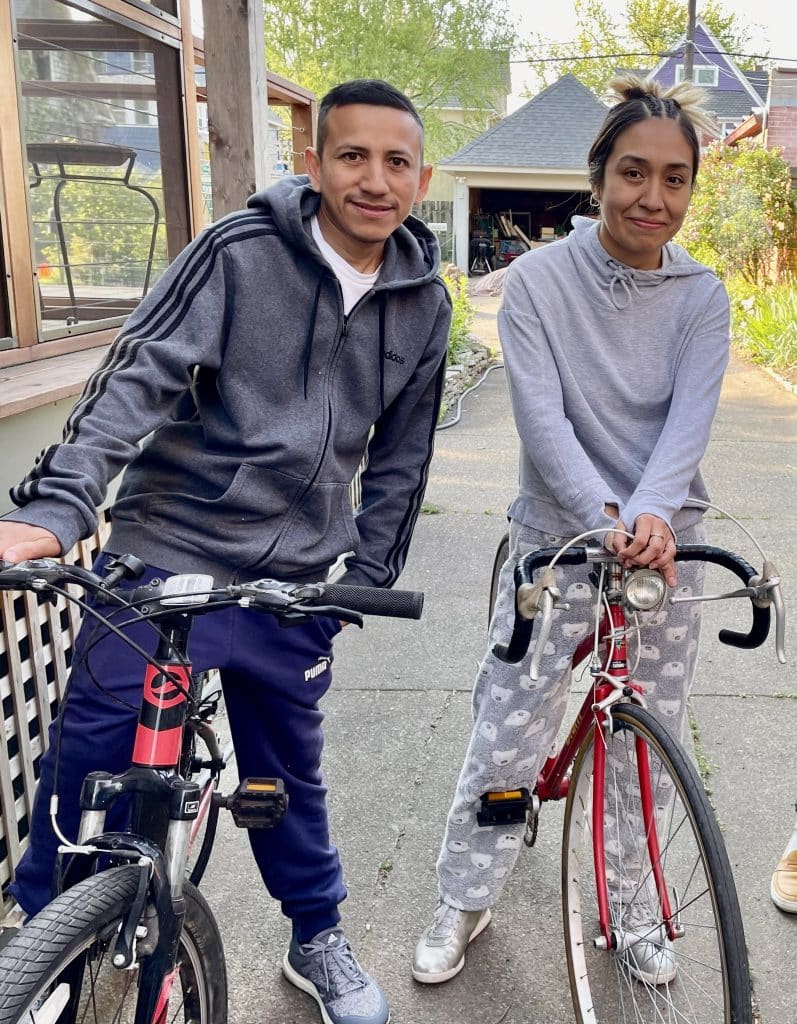
But each circumstance is different. AMIS also delivers meals, provides bus passes and bicycles for transportation, coordinates English lessons, and links newcomers to the large immigrant community already in Cleveland. And for families with children, “we try to get them registered and into school ASAP because that’s really important for them,” said Hill.
Vice President of AMIS Bobbi Reichtell told The Land about a group of five women who support a young woman from Guatemala. She got a full scholarship to Beaumont High School but lives where there’s no city bus and no school bus for her. “So, five women take turns, like, one day a week, taking her to school, picking her up from school. All school year,” she said. “It’s amazing what people do.”
As both Hill and Reichtell emphasized, the work is long-term and often what is needed is unexpected. One couple had been together for five years but hadn’t gotten married, and they have a daughter. “And so, in order to have their two cases consolidated and have them not get split up, the recommendation was that they should be married,” said Reichtell. “A friend of ours who was the former dean of Trinity Cathedral married them. And we had a little party.” What AMIS does is as varied as organizing a wedding to mundane tasks like getting donations of furniture.
Once housing is taken care of, next is finding work. Securing work permits, like the rest of the resettlement process, takes a long time. It can take months and often years to get a work permit. Until then, asylum seekers often find underground work such as landscaping, painting, and restaurant work. “Most people are working,” said Reichtell. “It’s just in the underground economy, and in jobs and at low wages that people who legally can work don’t want to take.”
But that system is open for abuse. One of the people Reichtell has assisted was offered a job at $7 an hour working in a little grocery store, she said. That’s below the state minimum wage of $10.45 per hour. “Who gets paid $7 an hour anymore? That’s crazy,” she said. And another man she works with took a job cleaning offices. “It was a whole group of refugees. Undocumented, and they worked for two weeks and never got paid. And they had no recourse, of course.”
What’s next for AMIS and asylum seekers
As of July 2023, when an official tally was taken of everyone AMIS has helped since the beginning, it was 88 individuals or families. “But it’s clearly well over 100 now, and probably 120,” said Hill at the end of 2023. “This year has been very, very busy.”
With that growth comes the need for more volunteers. In 2024, AMIS will explore hiring a staff person familiar with the immigrant community to manage volunteers and the wide range of work that they do each week.
Without AMIS, Cleveland’s asylum seekers could end up in shelters, living in their vehicle, or on the streets. Living with family and friends is not always a stable or long-term option. Hill offered one example. “We have a family, an Afghan family of eight, and we’re paying their rent and their gas bill,” she said. “And frankly, I don’t know what they would be doing [without AMIS].” There are other organizations and churches that may be able to help, but what makes AMIS unique is their tightly focused mission of providing the resources needed for asylum seekers to make a new, self-sufficient life in Cleveland.
The work AMIS does resonates with Reichtell, an active volunteer with several other local organizations, because her grandparents on both sides came to the United States as immigrants and had very hard lives. She lamented that “our country is kind of okay with immigrants who came 50, 60, 80 years ago, but not people who are coming now.”
During her time with AMIS, she has been struck by “how long trauma stays with a person and how it affects their whole life.” She says the people she works with just want to live without fear of persecution or death, and that many are “heroic” in the face of their adversity. “It’s just very hard to start to have a normal life when you’ve experienced the worst possible things, and then you’re expected to fit in and do everything that the government wants you to do,” she said. “So that’s been kind of a sad awakening.”
Hill echoed Reichtell’s statement about trauma and the arduous journeys. “I would like readers to know that new immigrants really enhance the richness of our community,” she said. “New immigrants really want to work and be a part of the community, they really want to learn English. And they really want their children to have a good education.”
To find out more about AMIS Ohio, volunteering or donating, visit the AMIS Ohio website.
We're celebrating four years of amplifying resident voices from Cleveland's neighborhoods. Will you make a donation to keep our local journalism going?