In September 1964, The Beatles made their way to Cleveland’s Public Auditorium, a performance that caused uproar, injuries, and a ban for the band in the birthplace of rock n’ roll. The hysteria of Beatlemania washed over the Public Auditorium, and established the site as a historical landmark in the Cleveland music scene.
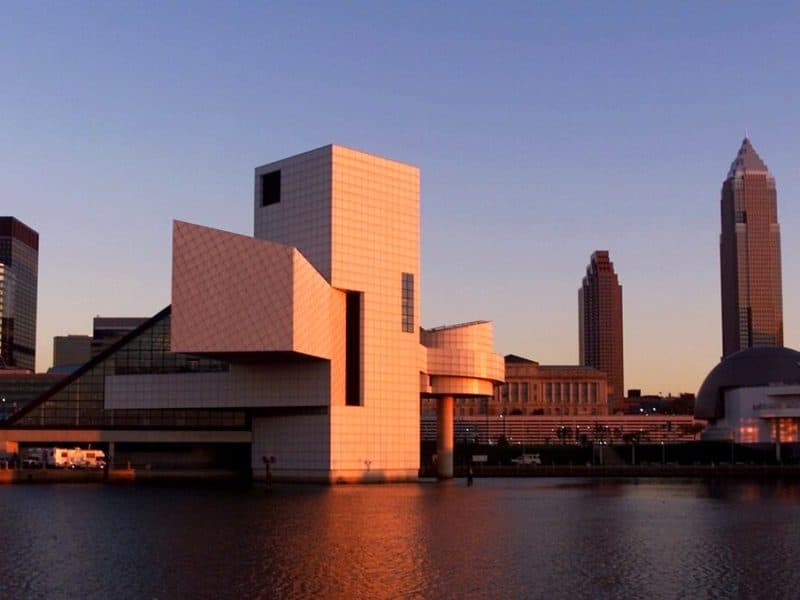
The auditorium was opened in 1922 and was the largest concert venue in Cleveland at that point. The auditorium was among seven other buildings constructed during the “City Beautiful” movement in Cleveland and reflected the desired Roman architecture of the time.
When construction was completed, the Public Auditorium was made up of a 21,780-square-foot lobby, 10,000 seat auditorium and a 3,000 seat music hall – where many notable performances would later take place.

One of those many performances, and one of the most notable, was The Beatles first appearance in Cleveland. On Sept. 15, 1964, The Beatles took over the Public Auditorium to perform a 30-minute set to a crowd of thousands of young fans. This was in the midst of the early days of Beatlesmania.
Janice Mitchell was one of many fans in the crowd that night, but her experience is unlike any other. At just 16-years-old, Mitchell managed to secure front-row tickets to the upcoming Beatles performance.
“I couldn’t get any closer to The Beatles themselves,” Mitchell, now 76, said. “Just seeing them was bigger than life.”
Mitchell, who grew up in Cleveland Heights, recounted her love for The Beatles, which all started in Dec. 1963, when she heard “I Want To Hold Your Hand” for the first time over the radio. From that moment on Mitchell was hooked on The Beatles, she was a true fan and couldn’t get enough.
“It was just transformative from the very first few chords,” she said. “It was just so beautiful and wonderful and I became a true fan from that moment on. It grabbed me, it just happened and I couldn’t get enough. It was exactly the thing I needed in my life, as it was for so many people.”
For Mitchell, life after that moment would be dedicated to everything Beatles. Every day was spent listening to more songs, making up stories about the members, and most importantly, searching for Beatles merchandise.
It was an “era of excitement” in Mitchell’s life, and in every other young girl’s life who was starstruck by The Beatles. This excitement would lead to the overwhelming experiences of the 1964 Beatles concert, and the consequences that followed.
According to Mitchell, within minutes of the performance starting, the screams of the crowd overtook the sound of The Beatles.
By the third song, girls began leaving their seats and rushing to the front of the stage, leaving Mitchell angry.
“It was my first concert ever,” Mitchell said. “I was angry, I had never seen anything like it.”
The police stopped the concert for 10 minutes due to this behavior, making it the first Beatles show to be shut down by the police. However, a compromise was made and the concert resumed – the set lasted a total of 40 minutes.
However, Mitchell’s story wouldn’t end there. Following the show she and a friend would set off for England in hopes of meeting The Beatles.
“[It] was one of the best things I did in my life,” Mitchell said. “I was creative [with] the way I lived my life”
Using money saved from babysitting, the pair took a flight out of the Cleveland Hopkins International Airport and made their way to England. The girls stayed in an apartment in London for two weeks before being caught by a police officer.
The officer recognized Mitchell as one of the runaway American girls from the “Missing” fliers that were posted throughout the city.
Unknown to them at the time, Mitchell and her friend were the faces of international buzz and had made headlines across the world. After being caught, the girls were interviewed by the paparazzi and took a limousine back to the airport.
“I had no idea they were looking for me,” Mitchell said.
Twenty-three days after their adventure began, Mitchell was escorted back to the United States to face the consequences of her actions. On Nov. 2, 1964, Mitchell attended her juvenile court date for accusations of “wayward and truancy.”
Cleveland’s mayor at the time, Ralph S. Locher, used this as an opportunity to “teach a lesson” about the effects of rock and roll on teenagers. Following the Beatles incidents, and a similarly raucous concert by the Rolling Stones, the morning after Mitchell’s court appearance, Locher banned all public rock performances in the city of Cleveland.
“The Cleveland Heights police department, the juvenile court system, the church, the school and the community were overwhelmingly shocked beyond belief,” Mitchell said. “The ramifications were so massive, I could not believe it.”
The ban on rock and roll only lasted two years, according to Jason Hanley, vice president of education and visitor engagement at the Rock and Roll Hall of Fame. In a podcast with Destination Cleveland, Hanley explained how passionate the residents of Cleveland were for putting an end to the ban.
“A number of people here in Cleveland really lobbied the mayor’s office,” Hanley said. “[They] said ‘Look, we can’t keep missing out on all this great stuff. It’s good for the city. People want to hear rock ‘n’roll.’”
Due to the lobbying and The Beatles’ highly anticipated return, the ban was lifted in 1966 and Cleveland welcomed not just The Beatles, but all rock artists back to the city of rock and roll.
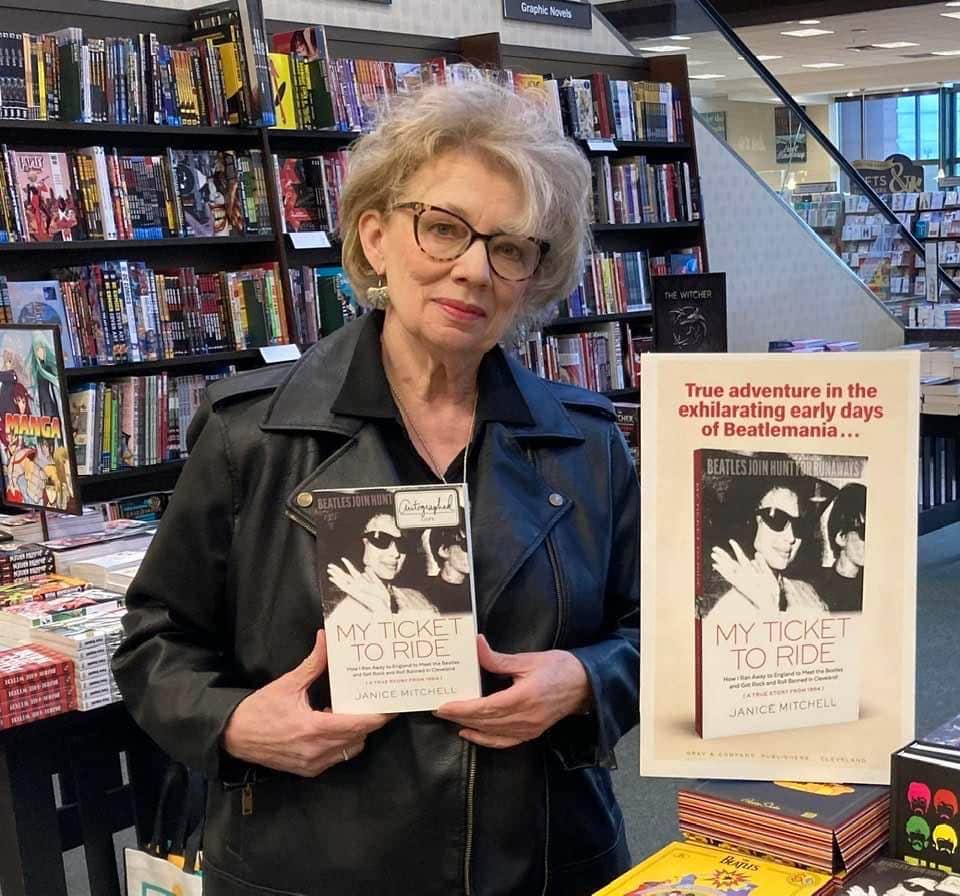
As for Mitchell, she was once silenced for her actions by her community, but has now recently told her story in her book “My Ticket to Ride” and shared her true love for The Beatles.
“It was an age of freedom,” Mitchell said. “I am so happy to know I lived my life during that time.”
Keep our local journalism accessible to all
Reader support is crucial as we continue to shed light on underreported neighborhoods in Cleveland. Will you become a monthly member to help us continue to produce news by, for, and with the community?
P.S. Did you like this story? Take our reader survey!