The Japanese Garden at the Cleveland Botanical Garden is turning 50 and celebrations have begun. The opening weekend of the “Between Water and Stone” exhibition was a success, despite the weather, organizers say.
“Despite a cold and wet Memorial Day weekend, over 2,000 people visited Cleveland Botanical Garden for the opening of “Between Water and Stone,” says Jessica Schneider, director of marketing for Holden Forests and Gardens.
History of the Cleveland Botanical Garden
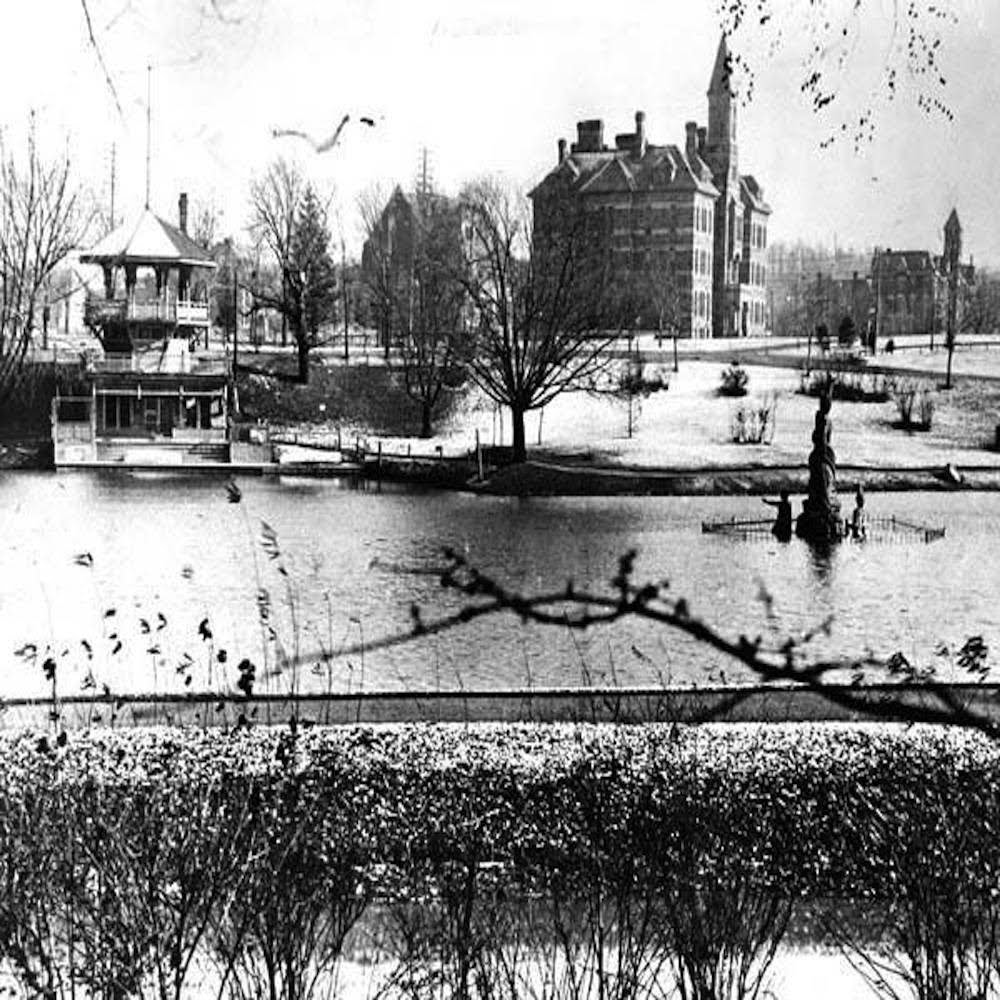
The Cleveland Botanical Garden has a long history, dating back over 100 years. Celebrated as the first civic garden center in the country, it was founded in 1916 through Eleanor Squire’s donation of 250 horticultural books to the Garden Club of Cleveland, according to Cleveland Historical. Members of the club approached Frederick Allen Whiting, at that time the director of the Cleveland Art Museum, about leasing the boathouse along Wade Lagoon. They held a French Street Fair from June 12 to 14, 1930 to fundraise for the new garden center. Even though this was during the Great Depression, the club was able to raise more than $17,000. The book collection was moved into the boathouse, and on December 4 of that year, the Garden Center of Greater Cleveland opened. The center’s first director was Margaret Osborn, a graduate of the Lowthorpe School of Landscape Architecture. Its mission was to “promote such knowledge and love of gardening as will result in a more beautiful community.”

Many organizational changes took place throughout the years, including the center’s incorporation as a nonprofit in 1937 and a significant renovation and expansion in 1939. During World War II, the Garden Center of Greater Cleveland delivered flowers to those injured in battle at local hospitals, provided funds for mobile canteens, and maintained Victory Gardens.
A flood in 1959 devastated the original boathouse, and after multiple repairs and additional flooding, it was eventually demolished. The current site was opened in 1966 just a quarter mile from the old boat house on a site that previously housed Cleveland’s original zoo, the Wade Park Zoo. The grading of the old bear pit can still be seen in the sunken garden, and some of the stones that make up the dry landscaping feature of the Japanese garden lined steps that used to lead up to East Boulevard.
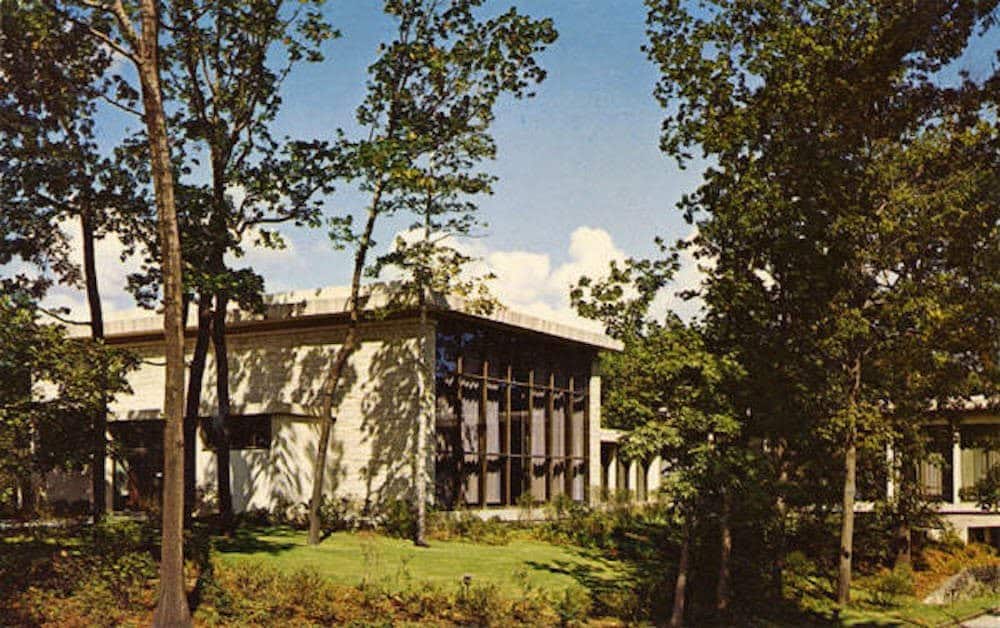
In 1994, the garden center became the Cleveland Botanical Garden, and renovations were made in 2003 that expanded the outdoor gardens, provided additional amenities, and built the Eleanor Armstrong Smith Glasshouse, and 18,000-square-foot conservatory that houses two domes, each with specimens from fragile ecosystems: the spiny desert of Madagascar and the cloud forest of Costa Rica. Amenities added also included a café, education wing, teacher resource center, expanded and climate-controlled library and gift shop, and a 200-space underground parking garage. Thirteen years later, in fall 2016 the Cleveland Botanical Garden completed its merger with the Holden Arboretum, and the combined organization is now known as Holden Forests and Gardens.
Today, the Cleveland Botanical Garden offers 12 unique gardens in addition to the Japanese Garden and welcomes over 150,000 visitors each year including members, nonmembers, and school and program participants, according to the Holden Forests and Gardens.
History of the Cleveland Chapter Twenty of Ikebana International and the Japanese Garden
In 1959 the Cleveland Chapter Twenty of Ikebana International was established by a 15-person group led by Lucille Wunderly to “stimulate, cultivate and to strengthen relationships among teachers and students of ikebana,” the Japanese art of flower arrangement. By the time of the Cleveland Botanical Garden’s planned move to its current location, the club had grown and were hosting local programs and exhibitions on Ikebana. The club’s Japanese Garden committee had begun to search for a location for a garden site, and in 1965, the under-construction Cleveland Botanical Garden was chosen as an ideal location due to its topography and need for partnership and renewal. Ten years later, the Japanese Gardens opened, on May 20, 1975.
Trained and mentored by Japanese garden master Professor Kinsaku Nakane, designer David A. Slawson blended two styles into the Japanese Gardens design: the “karensansui” or dry landscape and the tea garden.

Signage at the garden reads, “In the 1970s, a young Clevelander’s appreciation for nature and unique design perspective brought him home to create a Japanese garden. David Slawson was just 34 years old and fresh from an apprenticeship in Kyoto when he was selected to design a Japanese garden for the Garden Center of Greater Cleveland. Now in its 50th year, the garden he named Gan Ryuu Tei has grown into its features, evoking the timeless, weathered beauty of famous landscapes in Japan while staying true to its Cleveland roots.”
Caroline Watson, horticulturist at the Cleveland Botanical Garden, shares more about the Japanese garden design.
“The garden is so contained that you are transported out of University Circle,” she says.
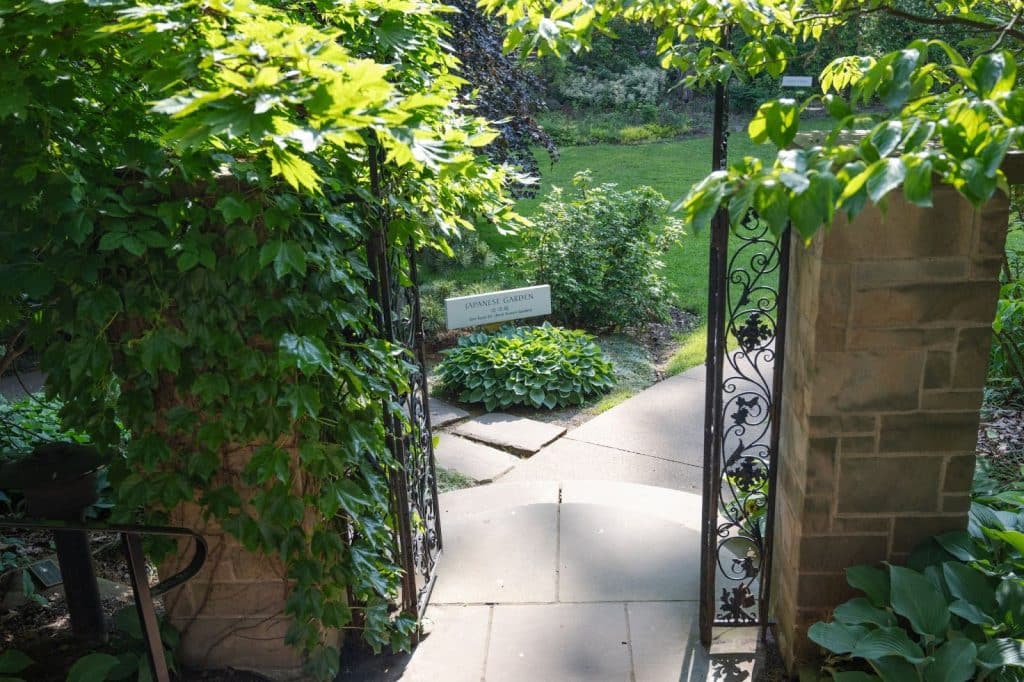
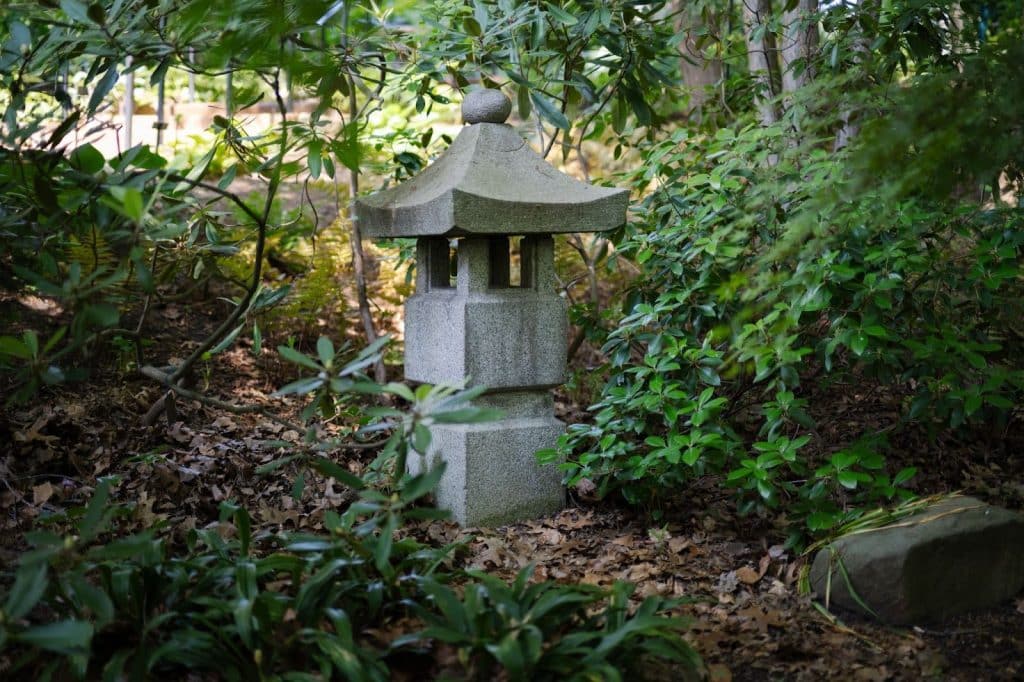
The name given to the garden by Slawson, “Gan Ryuu Tei” or “Rock Stream Garden” aptly reflects its character. Visitors enter through a gate, wander through meandering shaded paths on stone steps and over a bridge, feeling the humidity and listening to the sounds of the trickling water under the bridge. A water basin is presented for washing hands and face before evening tea ceremonies. Stone lanterns dot the path to light the way.
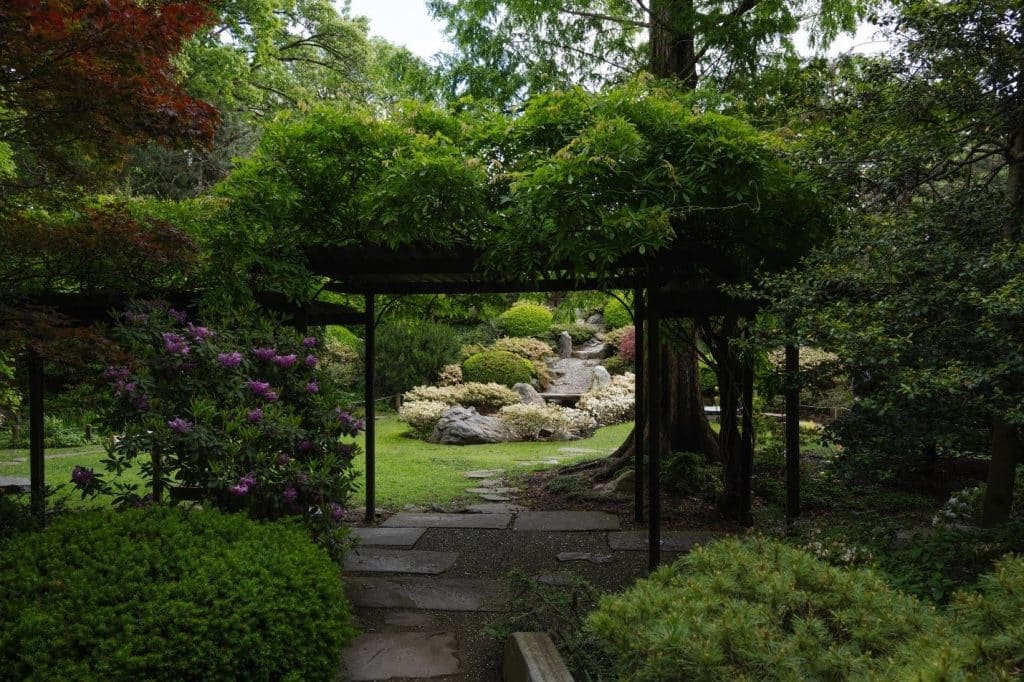
Through the frame of a pagoda, the focal point of the garden is revealed. Watson explains how the small stones of the dry landscape garden symbolize the running water of a stream coming off a mountain, how the bigger rocks symbolize the earth, with water flowing beneath. Benches and a stone path are provided for viewing these static garden designs, and the style is popular with Buddhist Monks for meditation.
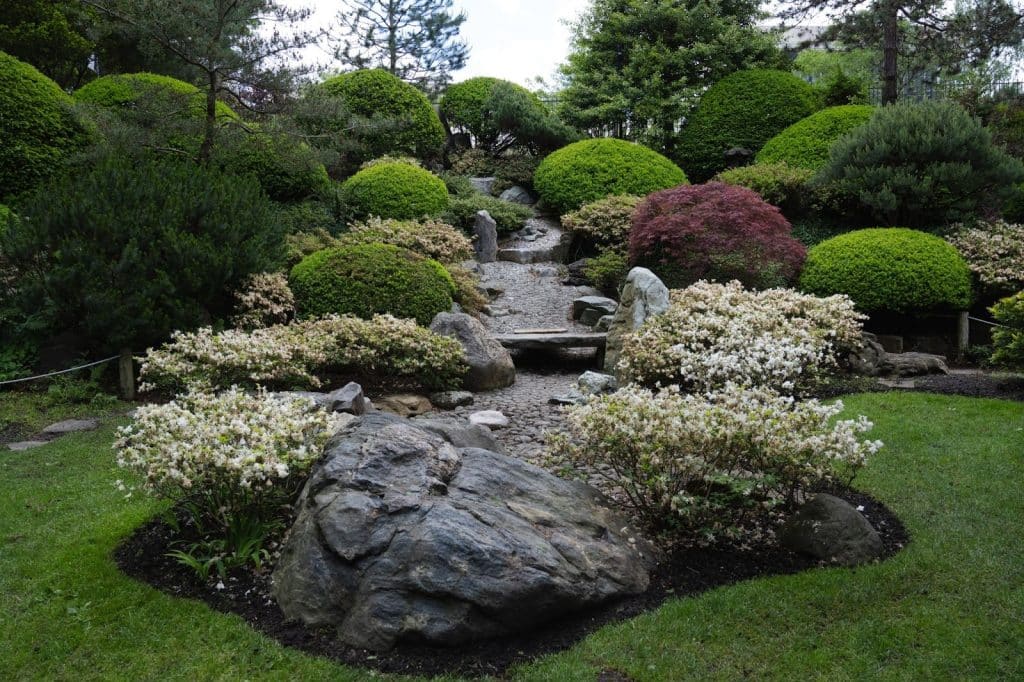
This garden feature is so popular that many weddings are hosted here, especially in spring when the azaleas are in full bloom. The Cleveland Botanical Garden hosts between 50 and 75 weddings per year, and more than half of couples choose to get married in the Japanese garden. A bridge is placed for couples to say their vows with up to 125 guests seated in the garden.
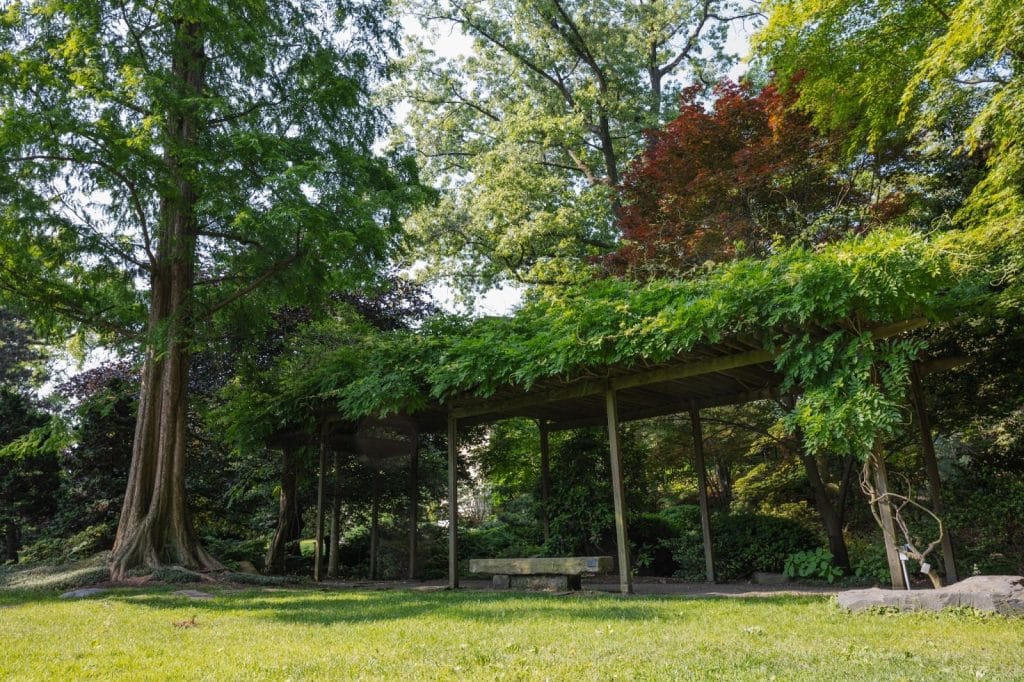
Japanese garden dawn redwood and pagoda, Photo Credit: Sharyn Arai
Also popular with visitors is the garden’s impressive dawn redwood tree. This ancient tree species was thought to be extinct until it was rediscovered in China in the 1940s. As it was planted before the site was chosen as the Cleveland Botanical Garden, the Japanese garden was designed around the dawn redwood. At over 65 years old, the tree reaches into the sky high over the garden.
50th Anniversary Celebration for the Cleveland Botanical Garden’s Japanese Garden
This year the Cleveland Botanical Garden opens for the season with new exhibits, classes, and events, in celebration of the 50th anniversary of the Japanese Garden. “Between Water and Stone: Celebrating 50 Years of Our Japanese Garden” runs from May 24th through September 1st.
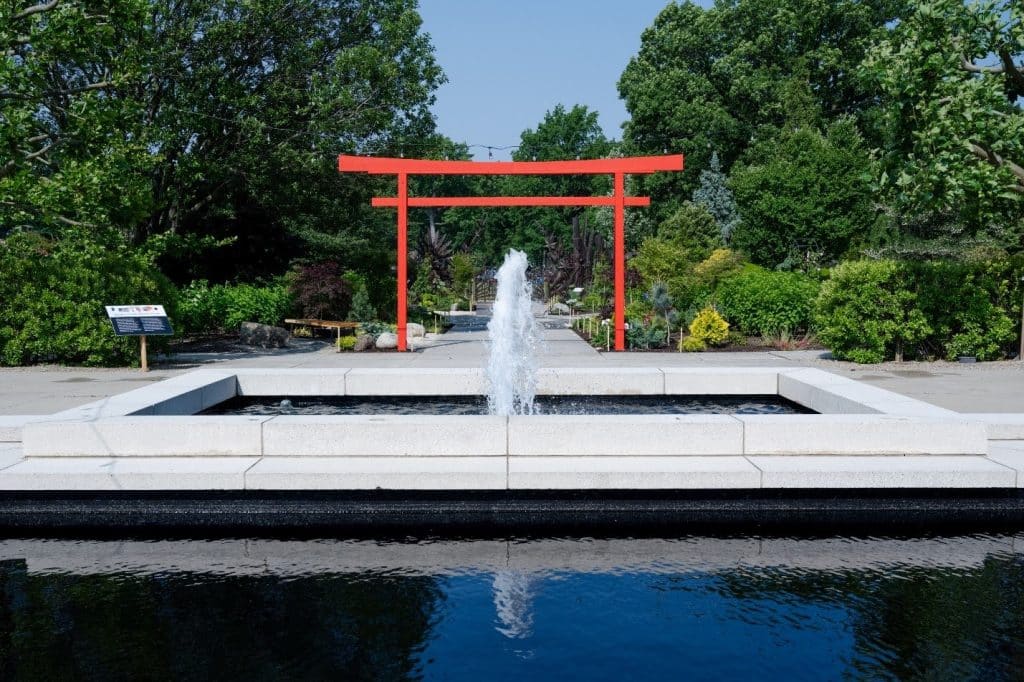
A new red torii gate marks the entrance to the show, and the Geis Terrace has taken on a Japanese theme. There are over 70 azaleas and rhododendrons on loan from the Leach Research Station where they are bred for increased blooms and disease resistance. Over 60 dwarf conifers have been installed on loan from the Holden Arboretum’s nursery, and the garden’s staff has created dry landscaping sand beds with raked designs to symbolize water.
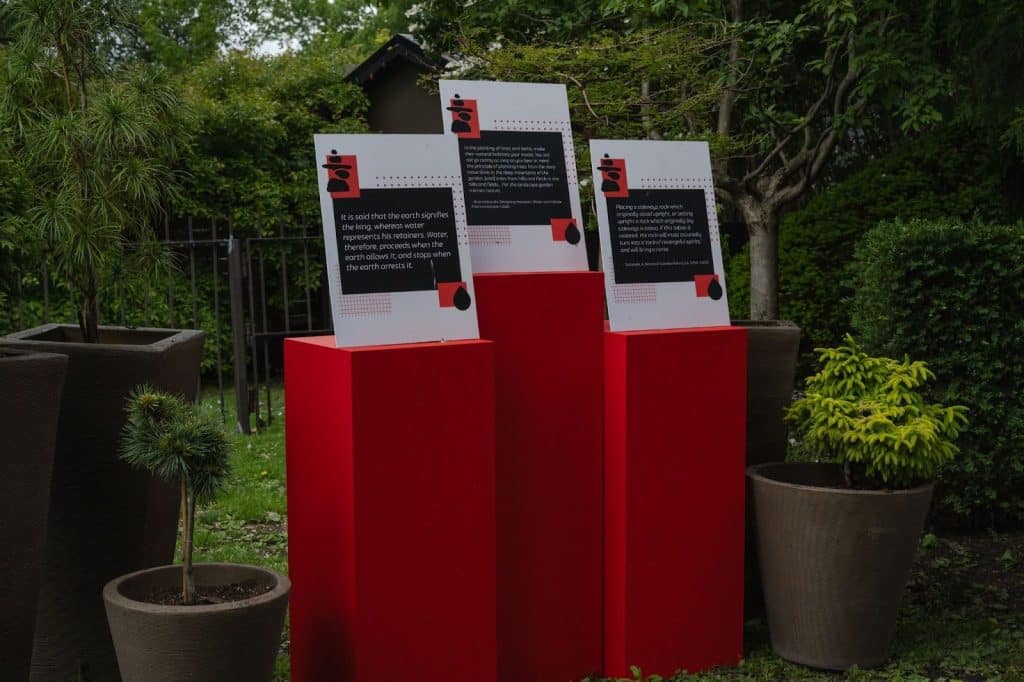
In partnership with the Holden Arboretum, an interpretive trail has been installed with signs that teach visitors more about the philosophy of Japanese gardening.
“It is said that the earth signifies the king, whereas water represents his retainers. Water, therefore, proceeds when the earth allows it, and stops when the earth arrests it,” one sign reads.
The Restorative Garden is now home to bonsai from MaryAnn and John Thesing’s personal collection. The Thesings have turned their Euclid home into a lush retreat with over 60 Japanese maples, dwarf conifers and perennials, and 42 bonsai, 12 of which are on loan at the Cleveland Botanical Garden. Their suburban garden has been featured on the City of Euclid Pond and Garden tour, and MaryAnn Thesing is happy to share her love of Japanese gardening.
It is widely recognized that spending time in nature reduces stress and enhances mood, but Thesing says Japanese gardens lower anxiety more than any other style of garden. Japanese gardens are designed to be calm, meditative spaces.
“Most people want to see bright, pretty flowers,” says Thesing. “But Japanese gardens are meant to be a muted, peaceful experience.”
“Bonsai” literally translates from Japanese to “planted in a container.” The bonsai on loan from the Thesings includes a collection of potted miniaturized trees, including several Chamaecyparis obtusa varieties.
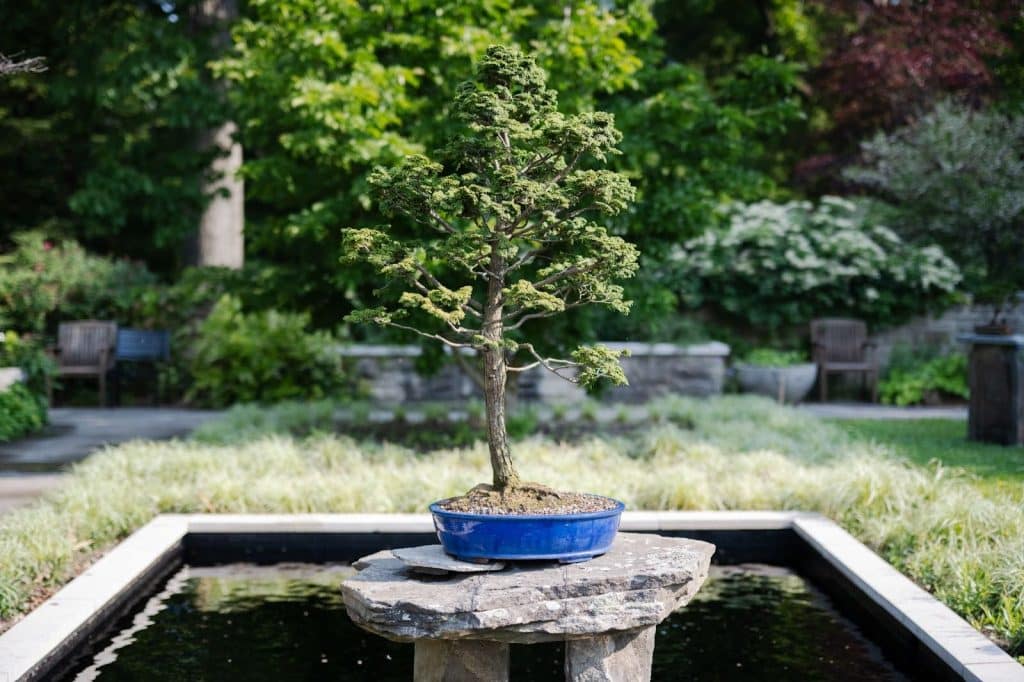
“Don’t be afraid to try,” Thesing says of bonsai. She says many gardeners are too intimidated to try bonsai, and that she hopes this exhibit will encourage others to try the style.
She and her husband started growing bonsai in 2011 after John was disabled and could no longer garden. Bonsai was good for his healing, Thesing explains. She is excited for this summer’s “Between Water and Stone” exhibit and wants everyone to know that “it’s definitely worth seeing. […] It will be engaging for all, and very peaceful.”
The bonsai from the Thesings’ personal collection is on display throughout the Restorative Garden, the largest of which is 35 to 40 years old and sits on a stone pedestal over the reflecting pool.
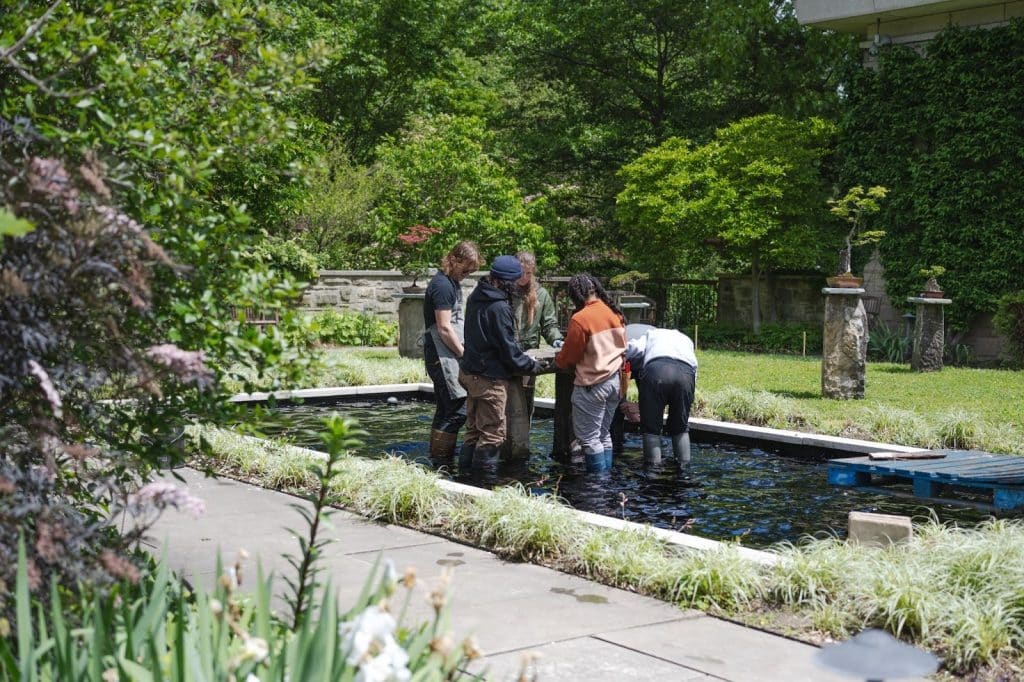
Throughout the summer, the Ikebana International Cleveland Chapter 20 will be hosting rotating exhibits each weekend. Carefully crafted flower arrangements fill the Ellipse each weekend from Friday through Sunday, spilling into the main entrance and halls.
Emily Viland “grew up sitting down with a bunch of flowers and arranging them.” Her father was a gardener, and her mother used to plant annuals in their home garden so they would have flowers on the table for dinner time.
“That wasn’t common in the 50s and 60s,” Viland says. Everywhere she has lived she has created a garden in her home, seeking out new hybrid flower varieties and filling her yard with color. After retiring from nursing, Viland attended the Ohara School of Ikebana and joined the Ikebana International Cleveland Chapter 20 in 2000 or 2001.
At the time Viland joined, the chapter was down to around twenty members, but today the club boasts a membership of 34 and growing.
“We’ve added 7 new members in 2025,” Viland shares, the most new members in about 15 years.
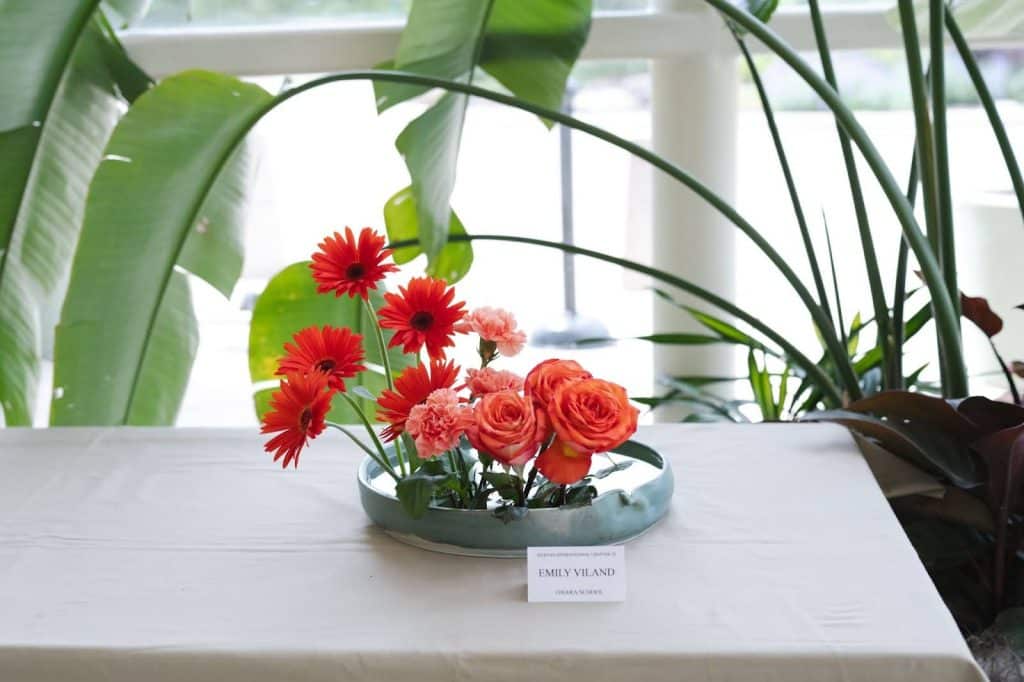
“It initially starts with loving gardening and loving flowers,” she says of her interest in Ikebana. In her 25 years in the club, Viland has held roles such as Treasurer and President. At the age of 87, she is still an active volunteer and is excited to be participating in the celebration this summer at the Cleveland Botanical Gardens. She taught the June 17 Ikenobo Ikebana class and is participating in the celebration in August.
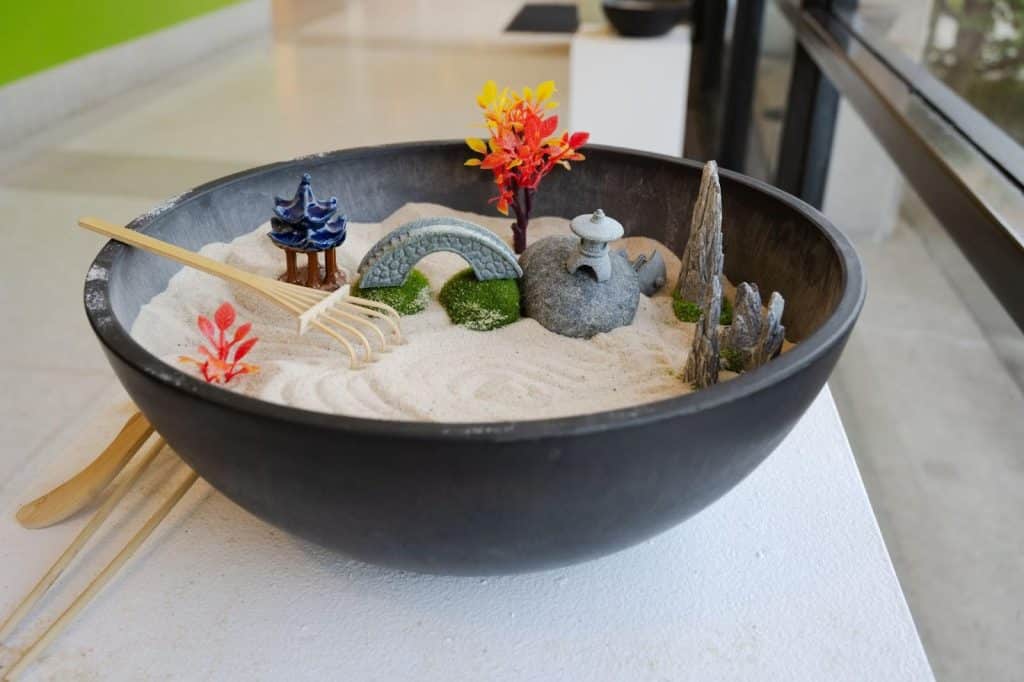
“Try your hand at creating an entire environment on a tabletop!” New indoor exhibits at the Cleveland Botanical Garden also include Mini Meditations, tabletop environments where guests can participate by creating a karesansui, or dry rock garden. Signage at the exhibit discusses the benefits of creating on a small scale, providing a “sense of focus and enrich(ing) the spirit.”
The Cleveland Botanical Garden is hosting various classes and events in celebration of “Between Water and Stone,” starting with two Ikebana classes; a children’s class that was hosted on Saturday, June 7th and an adult Make and Take: Ikenobo Ikebana class that was held on June 17th. A photography class that emphasizes Japanese gardens as a timeless art form is offered on June 22nd, and the Columbus Koto Ensemble is performing with Shojoji Japanese dancers on June 28th.
The summer culminates with the “Between Water and Stone Celebration” on Thursday, August 21st where visitors will learn origami, traditional Japanese dance and meet the horticulturists who work in the Japanese garden. This event is included with admission.
Volunteer with Holden Forests and Gardens
Volunteers are always welcome at Holden Forests and Gardens and the Cleveland Botanical Garden. Chris Lakus has been volunteering with the organization since 2012. She lost her husband in 2016 and found volunteering to be a “lifeline” for her.
“I always get back more than I ever give [when volunteering],” says Lakus. “It’s a great opportunity to engage with people and to learn a whole lot.” She mentions friendships she has made while volunteering and says if she doesn’t leave laughing she always leaves smiling after a volunteer opportunity. According to their website, Holden Forests and Gardens have over 100 volunteer opportunities available in their Volunteer Position Directory. Guests can volunteer on a one-time, weekly, or seasonal basis, and positions such as Garden Ambassador are available to adults aged 18 or older.

Admission to the Japanese gardens is included in the cost of entry at the Cleveland Botanical Garden. Daily tickets range from $14 for kids ages 3 to 12; to $20 for those 13 and older. Children 2 and under receive free entry and discounted tickets are available for veterans and active-duty military, Museums for All participants, and also on Tuesdays for seniors ages 60 and older.
Holden Forests and Gardens members receive free admission to the Cleveland Botanical Garden as well as the Holden Arboretum. They also receive member perks like discounted parking at the Cleveland Botanical Garden and members-only access and rates for events, classes, select exhibits, and other programs. Membership starts at $65 per year for individuals. More information can be found on the Holden Forests and Gardens website.
We're celebrating four years of amplifying resident voices from Cleveland's neighborhoods. Will you make a donation to keep our local journalism going?