Despite Bike Cleveland’s ongoing advocacy efforts to improve road safety across the 6,000-plus streets comprising the city’s grid, Cleveland has already experienced an uptick in traffic-related deaths with 12 cyclists and pedestrians killed in vehicular accidents, an increase over the nine who died in 2023. That puts tough questions and discussions before the nonprofit as members gather data to help local leaders craft the municipality’s first mobility plan since 2007.
Volunteers and paid advocates at Bike Cleveland (BC) are finding themselves with full hands. The organization secured some of its yearly $500,000 operating budget from its annual Fundo event on Aug. 24. Now, organization members are busy inputting data into an interactive traffic safety map to help the city launch a 5-year public development planning proposal. Simultaneously, BC members have assumed investigative roles, tracking down information to draft a letter of condolence for the family of the most recent cyclist to die in a traffic accident.
Bike Cleveland Advocacy and Policy Manager Jenna Thomas said her organization steps out of the policy realm and into the social wellbeing world when reaching out to family members in instances of injury or death. Making that difficult in this case, she said, is a lack of reported facts on the person killed. That presents a wrinkle when compared to BC’s current efforts — with the organization working to amass and upload information to help build Cleveland Moves, an impending citywide mobility plan for which Bike Cleveland can claim at least partial credit.

Making Moves
Multimodal and shared transportation devices will be some of the more visible first-time considerations for a Cleveland-run transportation survey. The last time anyone laid out a comprehensive, citywide plan involving bikes was when NOACA updated its Regional Bicycle Plan in 2013. That was four years before Bird Scooters hatched a concept that has since taken flight throughout the United States.
“We’ve been pushing for an updated plan for a long time,” Thomas explained. “Mostly through conversations with city administration. Up until this year, there was only one staff member who was focused on bike infrastructure and that was the bicycle and pedestrian coordinator.”
Thomas cites the recent additions of City Hall staff for helping launch Cleveland Moves, including Senior Active Transportation Manager Sarah Davis, who will be leading the project for the city, and Major Transportation Projects Coordinator Dave Bass, plus Complete and Green Streets Program Manager Phil Kidd. While the project will continue collecting data before finalizing recommendations in 2025, the plan promises a “3-year rapid implementation” process that will tie into the ongoing Cleveland Midway protected bikeway project.
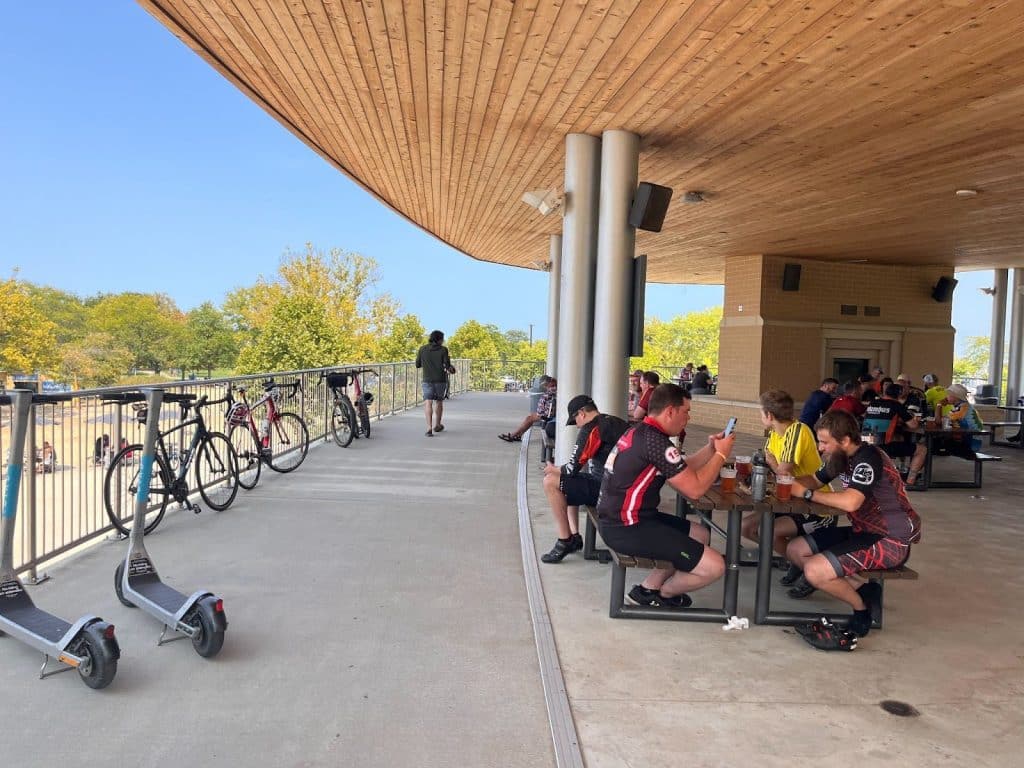
“I think, for this plan, one of the things we’re excited about is it’s really looking forward in terms of how we can build and implement networks for people of all stages and abilities,” Bike Cleveland Executive Director Jacob VanSickle noted. “Back (when the last plan came out), things like protected bike lanes in North America were a relatively unknown thing.”
Cleveland city government has not completed its own mobility survey since 2007. Since then, the city has gotten a new central corridor along its East Side, branded and rezoned itself as a 15-minute city; and overhauled Public Square. The Greater Cleveland Regional Transit Authority (GCRTA) has completed and launched new strategic planning initiatives and Cleveland Metroparks wrapped its work on the Red Line Greenway alongside the RTA’s West Side rapid train service area.
With the next decade likely to bring further transformative infrastructure proposals, biking advocates want to make sure safety is emphasized at those completed projects because, as the 2024 pedestrian and biker death toll indicates, unsafe pockets persist throughout the city.
A total of 12 people have died on foot or bicycle since the year began, a 25% increase over 2023’s yearlong traffic fatality total of nine people killed by vehicles. Cleveland caught up to last year’s death figure in June, around the time BC initiated its Memorial Street Sign Program, though Thomas said staff have recently uncovered data that suggests more people died last year, along with the 550 people who were injured as identified in the group’s 2023 crash report.
Even with heaps of usable traffic and transportation safety information on their hands, local organizational planners like Thomas are left scratching their heads when trying to rationalize the vehicular violence.
“I think people have noticed that, ever since folks have been coming back from the pandemic, driving has been a lot more erratic and dangerous,” Thomas explained. “It’s also hard to say because I feel like there are a lot of near misses that could have been fatal if someone was in a different place seconds earlier. A lot of people (survived) out of pure luck.”
In having a modernized plan ready to help streamline planning decisions, Thomas and others hope that city leadership will continue committing resources to remove as many barriers to bike safety infrastructure as possible.
“Major changes are just going to take time,” she concluded. “I think that our allies at City Hall are definitely listening to us and working their butts off to meet our requests. People are working in biking infrastructure and transportation, but we’re still feeling some budgetary issues (in departments). I think Cleveland is still behind other cities in terms of traffic. Other cities have people working around the clock.”
Last-minute legislative decisions often give developers go-ahead to close funding gaps or initiate projects at a moment’s notice. That’s a big deal because, as Thomas notes, shaping hundreds of pounds of asphalt or adding signage can’t always happen overnight, especially given the fact that Cleveland only has two engineers involved in traffic operations planning.
For Thomas and others with Bike Cleveland, “resources” aren’t just road-embedded safety features like traffic circles, bike lane delineators and speed tables. They also include funding for new, sorely-needed positions at City Hall. That staffing need at least partially explains Cleveland Moves’s open-ended approach to data collection, which can be traced to its interactive map tool.
The quest for a better map
Bike Cleveland outlines brief user instructions on how to use the Cleveland Moves interactive map on its website, under a header that tellingly reads, “Your Voice Matters. This is not an ordinary feedback request.”
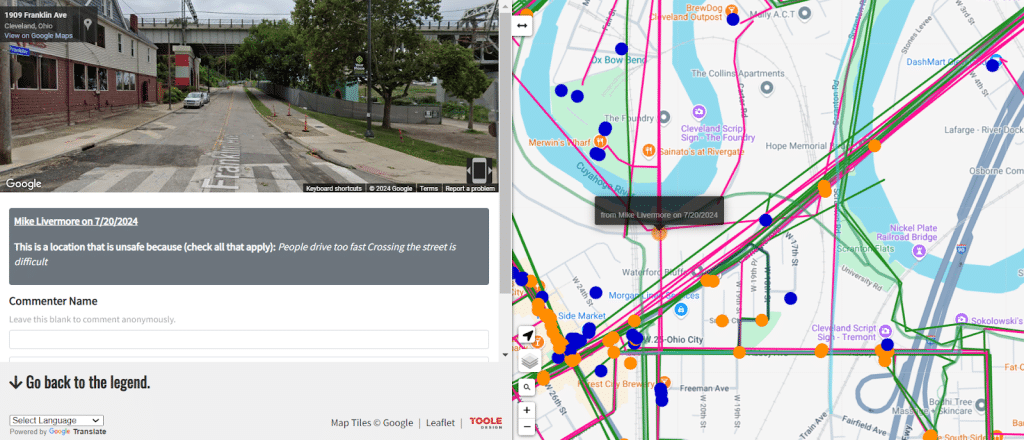
Currently, the map operates much like a permanent Waze overlay. The tool first requests users submit short surveys with responses ranging from “Very Safe” to “Very Unsafe.” Questions include: How do respondents feel walking, riding bicycles or scooters, taking public transit and using personal vehicles or mobility devices? Volunteers that work with and around Bike Cleveland champion the tool’s ease of access and the user friendliness of the map’s display, both of which Toole Design Group built into the map.
“The most important piece for people is adding places [to the map] that they have complaints about,” said Julia Mettler-Grove, a planning and development associate with Ohio City, Inc.
Mettler-Grove gathered with Thomas, Tremont West Development Corporation (TWDC) Engagement Specialist Martin Brass and two other Bike Cleveland volunteers around a large meeting table in the TWDC offices to fill out analog versions of the Moves map. The advocates had come together for the fourth meeting of Bike Cleveland’s Ohio City & Tremont Better Streets Committee, where they color-coded physical maps with unsafe zones for Mettler-Grove to then upload to the online tool.

The Ohio City and Tremont committee formed in May, one of seven such committees that serve as the data-collecting arms of Bike Cleveland, allowing them to propose policy changes like the overarching mobility plan. Readers can find the nearest better street committee’s next meeting times via the organization’s calendar.
Previous meetings have seen the Tremont and Ohio City advocates gather at TWDC’s Professor Avenue headquarters before engaging in a group ride and an ADA walk to determine which areas are most in need of city maintenance for bikers and individuals with disabilities. The mid-August meeting served as a culmination of those events along with the typical commuting that Brass, Mettler-Grove, Thomas and the others practice outside of cars in their daily travels.
Fundo numero 10
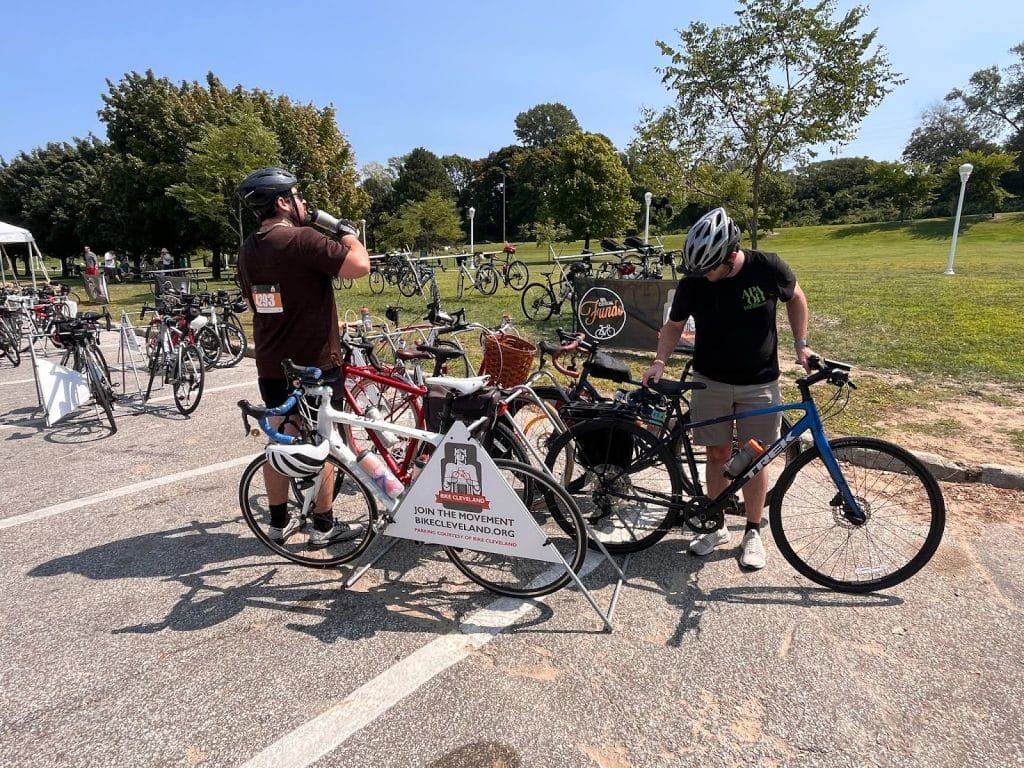
On a cloudless Saturday in the middle of August, a pair of neon-shirted cyclists dismounted their bikes and trollied them to vehicles parked near a temporary finish line BC workers had constructed in the parking lot nearest the Edgewater Beach House. “I think we saw just about all of it, David, didn’t we?” one of the local cyclists, Joel, asked his companion while using his right forehand to squeegee sweat from his forehead.
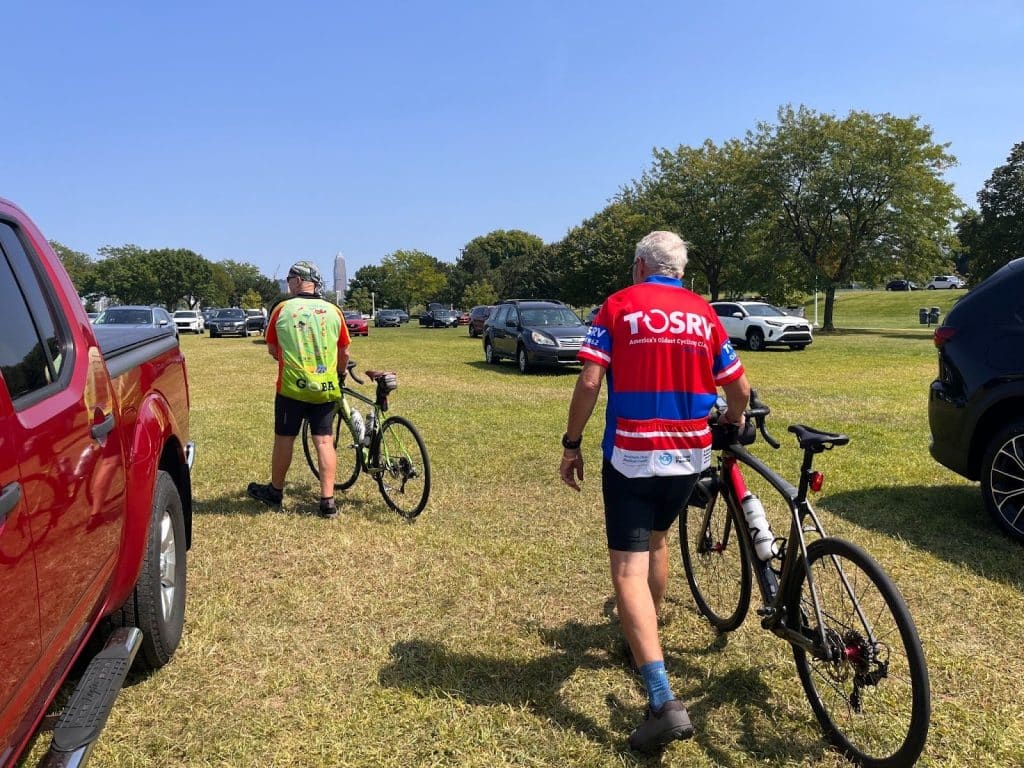
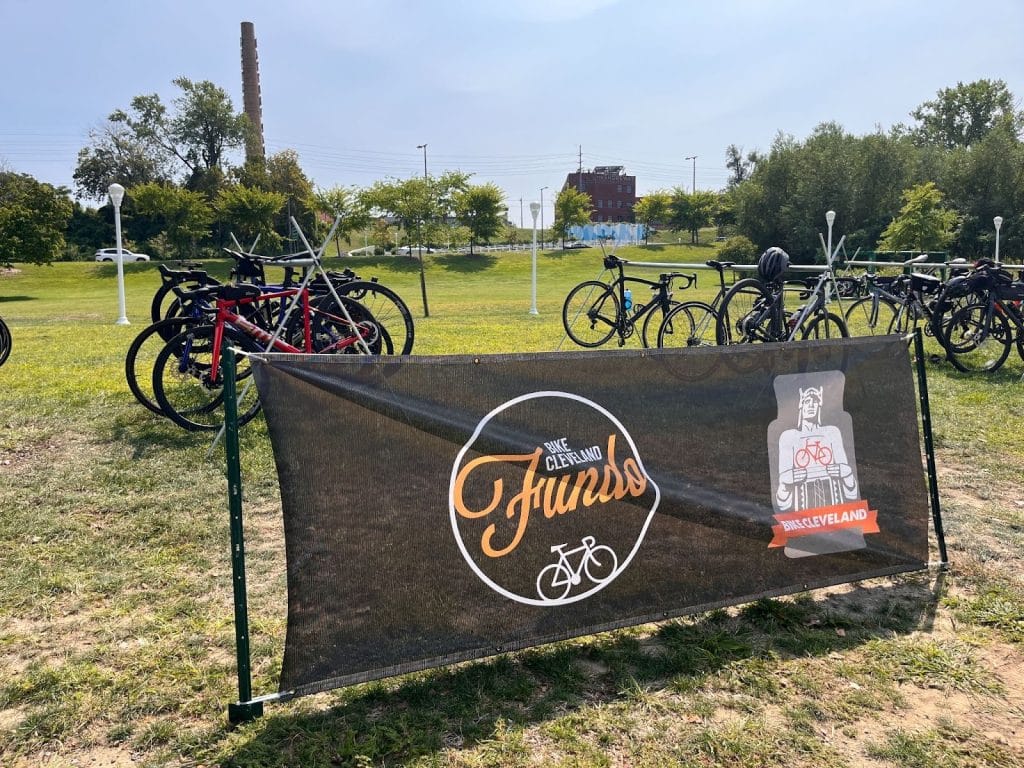
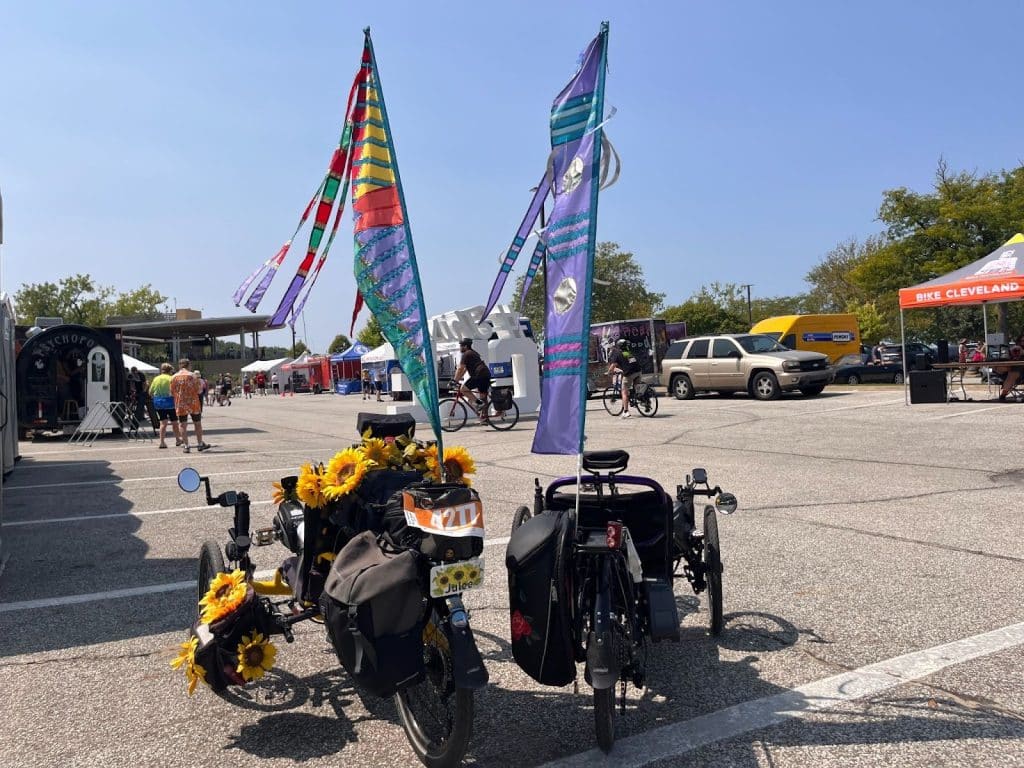
The two said they had just canvassed a decent portion of the city along a 60-mile course routed and staffed by Bike Cleveland personnel during the organization’s tenth annual Fundo event at Edgewater Park on Aug. 24. Starting from the park, the Fundo’s home since its 2014 launch, the two had started by pedaling the Towpath Trail east before heading south to Brooklyn and Brook Park before looping north via Lakewood.
An interactive fundraiser that BC’s Jacob VanSickle said accounts for roughly 10% of the organization’s annual budget, the Fundo provided an opportunity for Joel, David and over 1,300 bikers, from 19 states, to tour the city on two wheels.
“We’ve found a good rhythm; we do a pretty similar route each year depending on construction,” Thomas said. “Frankly, there are only so many relatively comfortable streets in Cleveland for folks to ride on.”
Elsewhere in the parking area, cyclist Terry Thompson prepared to trade her 60-mile bike ride for a 134-mile car trip back to Senecaville in Southeast Ohio, nearly equidistant to the drive many of her fellow Fundo participants made on the return home to Pittsburgh.
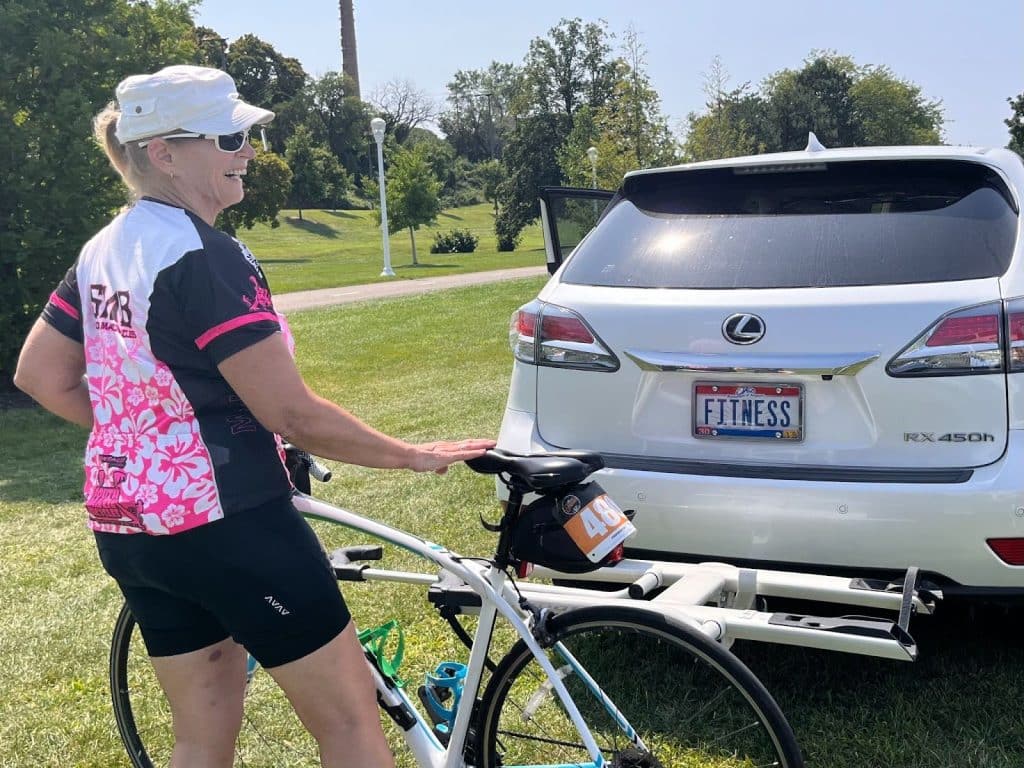
In addition to serving as a fun way to keep an organization spinning, Thomas said each Fundo is a platform for highlighting Cleveland’s bike infrastructure and improvements while also testing for wear on city roads. For many of the riders, the trek serves as an unofficial gauge of Cleveland commuters’ attitudes toward bikers; plenty of converastions could be heard either praising or admonishing drivers based on various interactiouns throughout the route.
Many of the out-of-town Fundo participants, who don’t typically ride Cleveland’s streets on bikes, had kind words to describe the city’s existing infrastructure. “I didn’t find cars to be an obstacle because I think Cleveland has done a really nice job of bike lanes and bike trails and all those things, so you feel pretty daggone safe,” said Lonny Caudill, who joined his wife, Paula, and Thompson for the longer ride.
A rider named Jonathan wrapped his third ride thinking about how bike-based organizations in other cities could take a page from Bike Cleveland’s book. “They’ve got a good thing down,” he explained, adding, “Bike Cleveland is a good organization … They did a how to build a campaign workshop about bike infrastructure and safe street campaigns.”
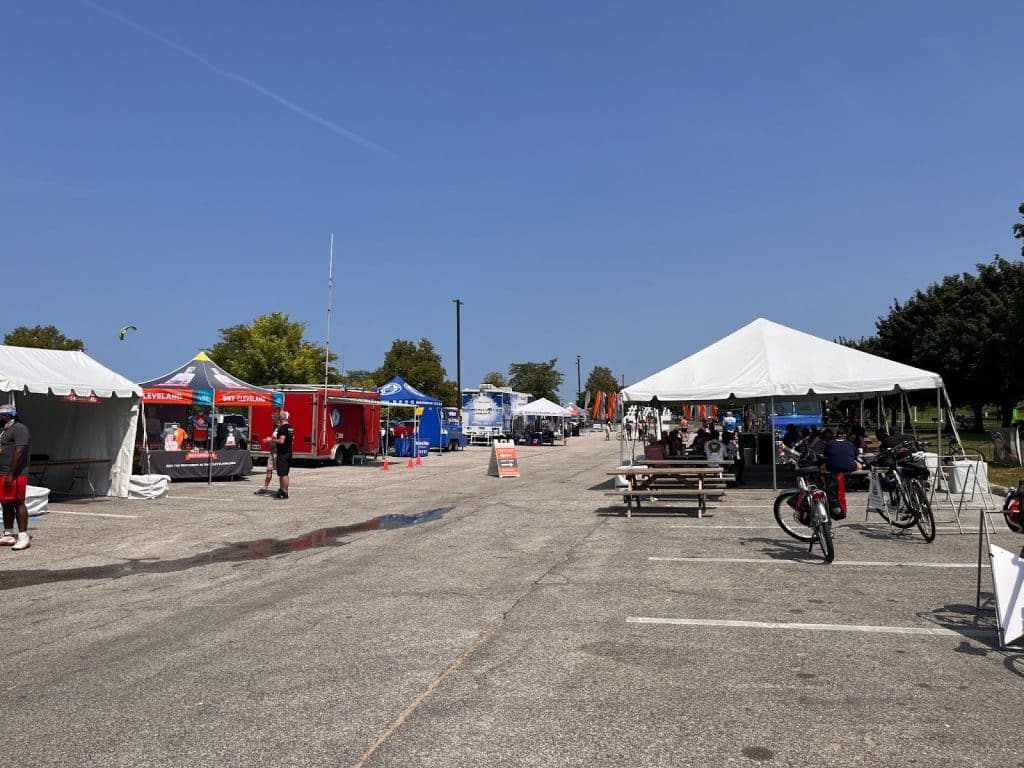
While many of the Bike Cleveland advocates who planned and hosted the event had to remain at the start/finish line to encourage leaving cyclists and greet returning riders, VanSickle said volunteers would like to eventually generate greater excitement and scale. He pointed to BC’s previous partnerships with the Greater Cleveland Sports Commission, Cleveland Metroparks and other local entities for the weekend-long NEOCycle summit in 2014.
Better Streets and bollards
In order to prevent burnout among the small cadre of staff members working on transportation projects within City Hall, Bike Cleveland’s Thomas said it’s also important for cycling advocates to deliver pats on the back whenever positive improvements are made. To that end, BC hosted a positive “call to action” event to highlight a series of newly installed plastic bollards separating the bike lane along Detroit Road from the main roadway on Aug. 14.
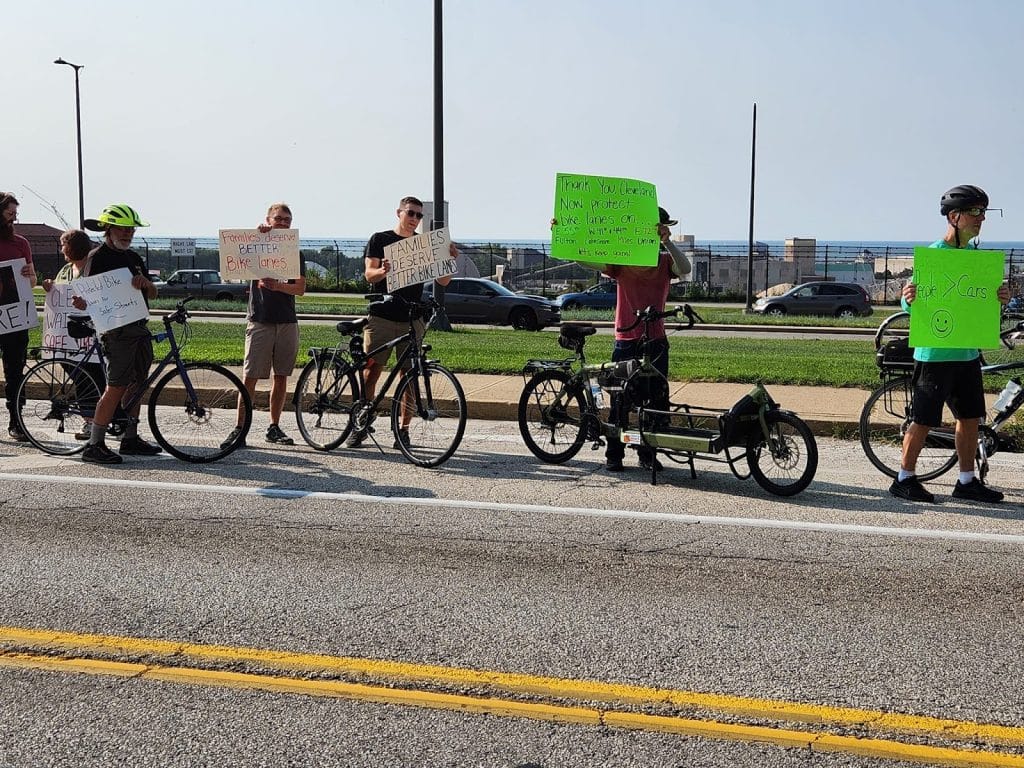
Lining a paint-demarcated section of roadway outside the Music Settlement’s Bop Stop venue between West 29th Street and West 32nd Street, the lane delineators are one of the most-touted safety implements in Bike Cleveland’s toolbox for improving bike lane visibility
“They also help the road feel narrower,” Mettler-Grove explained. “You have to have physical structures to make the road feel narrower so people slow down.”
Mettler-Grove said speed tables (raised asphalt beds with 10 mph speed limits, serving to calm traffic northbound along West 85th Street upon exiting I-90 West at the Lorain Road exit) serve the same purpose: they encourage motorists to lay off the gas to avoid damaging their vehicles.

Earlier this year, Cleveland road crews started the process of adding 100 new speed tables by the end of 2024 but, according to Mettler-Grove, the additions still pale in comparison to Detroit’s stock of 10,000 tables. For Mettler-Grove, however, that’s all the more reason to be excited about Cleveland Moves and the feedback she is working to enter via Ohio City, Inc.
“(Cleveland) can compare what other cities are doing,” she stated. “(Cleveland has) a small transit and mobility-oriented staff so they don’t really have the staff to be proactive. So Bike Cleveland can kind of add more ideas and focus on pressure points that need attention. I hope the Cleveland mobility plan makes not only infrastructure improvements but also policy changes.”
Readers interested in working with and supporting Bike Cleveland can attend a memorial ride for Clevelander Sylvia Bingham, who died in a traffic incident in 2009, starting at at 9 a.m. on Sept. 15 in the Tremont neighborhood. Bike Cleveland lists free upcoming bike repair sessions and other bike-related happenings via its calendar and events page and also accepts donations for its public policy work.
Those interested in the mechanics of cycling can consult the Ohio City Bicycle Co-Op to learn bike repair and earn credits towards acquiring their own machine. Link-Up Bike Ministry also fixes and donates bicycles at no cost.
Keep our local journalism accessible to all
Reader support is crucial as we continue to shed light on underreported neighborhoods in Cleveland. Will you become a monthly member to help us continue to produce news by, for, and with the community?
P.S. Did you like this story? Take our reader survey!