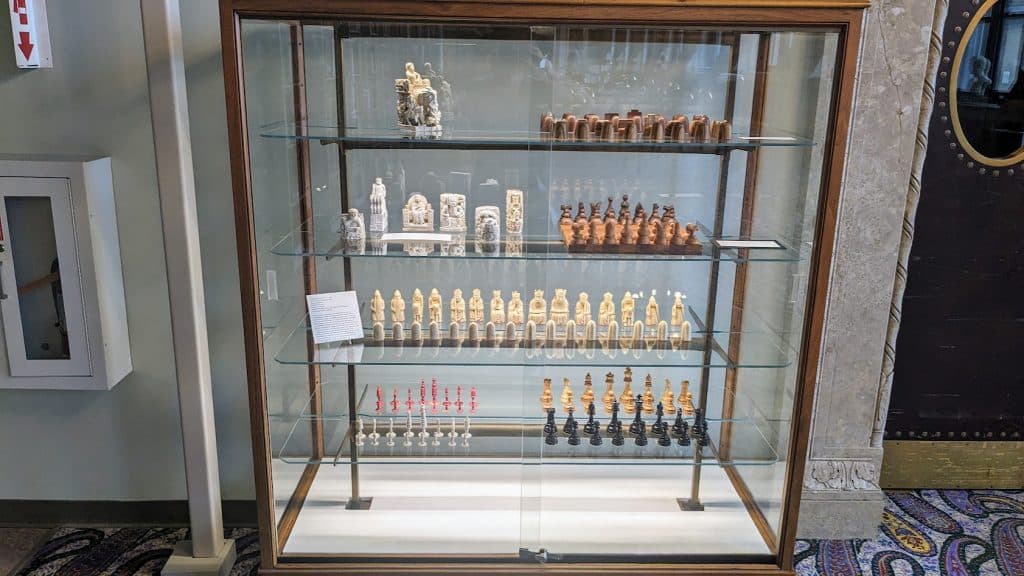
Cleveland Public Library’s world-leading chess collection has become even bigger and better.
At a centennial celebration for Cleveland Main Library on May 10, officials announced several major gifts, including the bulk of what New in Chess magazine once called “the finest collection in the world.” They also announced a $3 million gift from the Jack, Joseph and Morton Mandel Foundation to help remake the Fleet Branch, a $1 million challenge grant from Mandel toward the library’s $25 million campaign to preserve and digitize the Northeast Ohio Broadcast Archives, and $100,000 from Parker Hannifin Corp. that will help the library’s Cleveland Reads program.
Winning games and collectibles
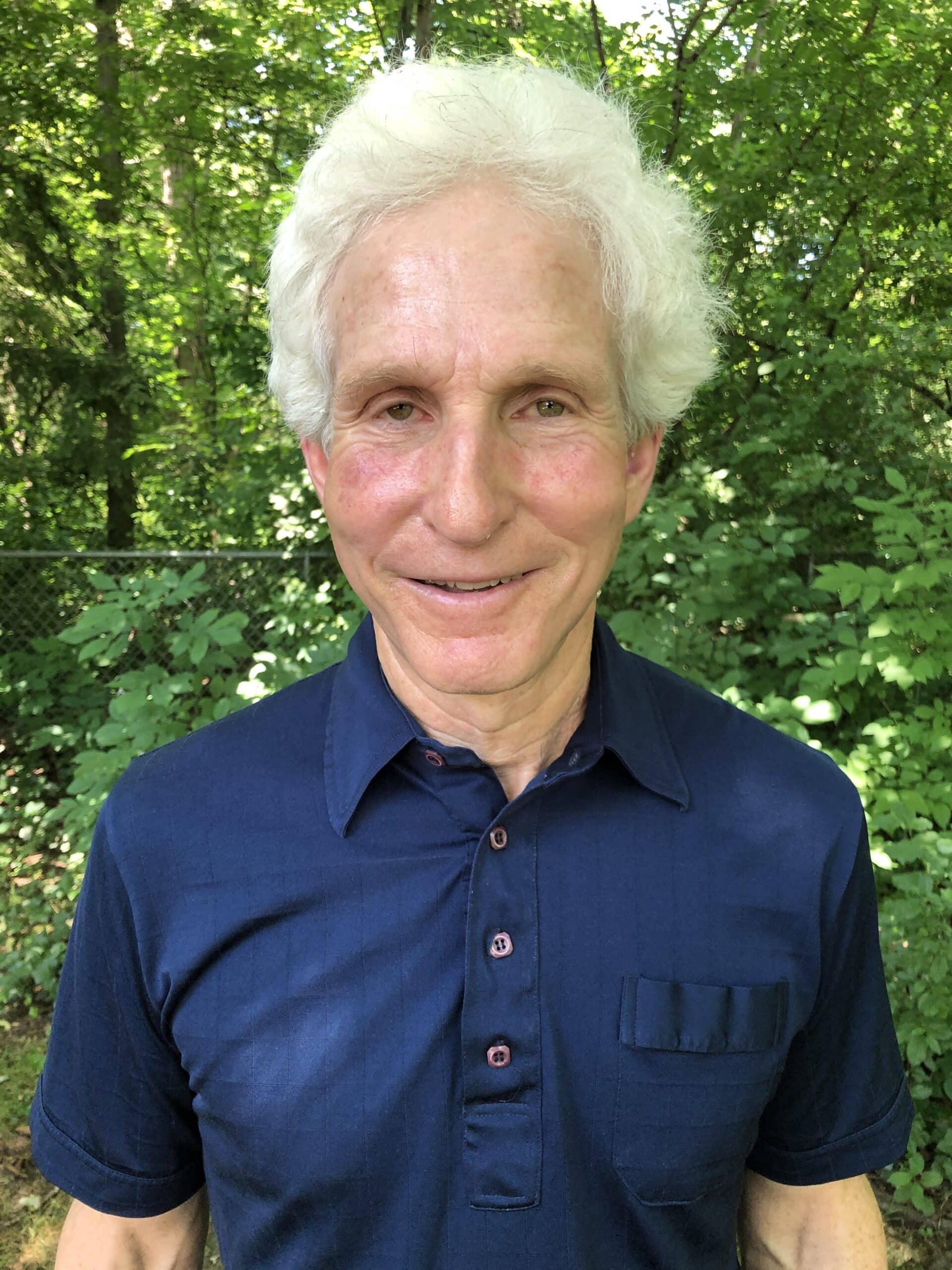
David DeLucia, a retired securities trader in Florida, has given the library the bulk of what New in Chess magazine once called “the finest collection in the world.” The library already had what was considered the world’s biggest chess collection, public or private.

DeLucia gave Cleveland about 6,200 papers, manuscripts, books, letters, score sheets, photographs, portraits and other materials from top figures in the game, including four world champions. His collection has been valued for the Internal Revenue Service at $5.1 million.
DeLucia says he enriched Cleveland’s chess collection because “It’s a great, great archive, by far the best in the world.”
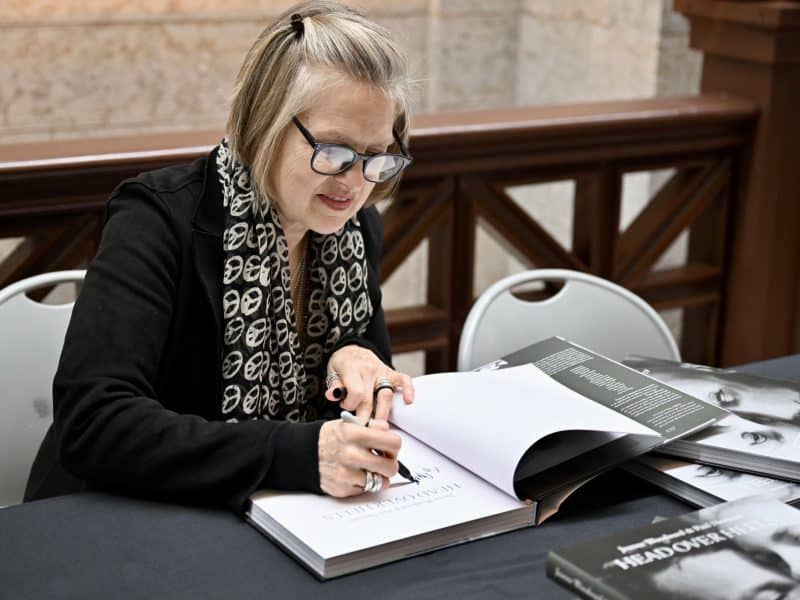
Michael Ruffing, CPL’s director of special projects, says, “Cleveland Public Library’s world-renowned chess collection has been transformed with businessman David DeLucia’s extraordinary gift.”
DeLucia, age 72, used to play in chess tournaments and won an expert rating. He also befriended players, collectors and dealers. He gathered enough items to fill a 2,200-square-foot library in his Connecticut home.
Then he moved to a condo in West Palm Beach barely bigger than that library. He took along a few favorite items, gave a few to his son, and sent the rest to Cleveland.
DeLucia says he gave Cleveland the world’s biggest trove of materials from Emanuel Lasker, the longest lasting champion, who reigned from 1894 to 1921, and from Bobby Fischer, who won the title in 1972 and refused official conditions to defend it. The collector also gave Cleveland materials from Jose Capablanca, world champion from 1921 to 1927, and Alexander Alekhine, champion from 1927 to 1935 and again from 1937 until his death in 1946.
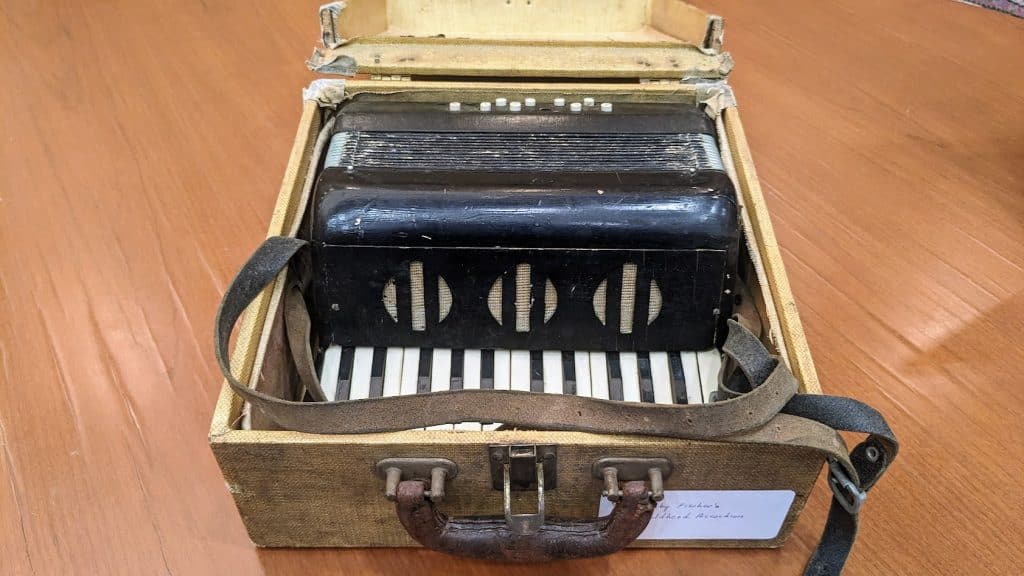
The Fischer items range from the champion’s accordion to several heavily crossed-out drafts of his letter to Serbian President Slobodan Milosevic claiming money, score sheets and chess clocks from that country.
Library leaders plan to inventory, repackage and digitize the chess items and start in two to three years to make them available to patrons in person and online. They’ll be part of the library’s John G. White Chess and Checkers Collection, whose namesake was the library’s long-time president.
According to Chess Life and Chess News magazines. Cleveland already had the world’s biggest chess collection. It holds more than 35,000 materials going back to the 12th century. They include manuscripts, journals, chess sets, columns, problems, pictures, the world’s most comprehensive tournament records, Fischer score sheets, Lasker medals, and two death masks of Gisela Kahn Gresser, winner of nine U.S. women’s championships in the mid-20th century.
Cleveland’s chess cache is one of the library’s several special collections, including miniature books, folklore, Asian materials, and works about tobacco, architecture and baseball. These collections are stored on the third floor of Cleveland Main Library, 325 Superior Ave. A visitor with identification such as a driver’s license can see one item at a time.
Cleveland heard and seen
The broadcast archives contain about 6,000 hours of local black and white, color, and audio recordings from the 1950s through the 1980s. They were made by WEWS-TV, WKYC-TV and WGAR-FM on 16-millimeter film, magnetic tape video, reel-to-reel audio, and glass phonodiscs.
They show world figures like Rev. Martin Luther King Jr., Muhammed Ali, the Beatles and Bruce Springsteen appearing in Cleveland. They show Carl Stokes taking the oath of office as the first Black mayor of a major U.S. city. They show students fleeing National Guard gunfire at Kent State University. They show local talents like Bob Hope, Mike Douglas, Al Roker, Fred Griffith, Wilma Smith and Mr. Jingeling entertaining the town.
They include most surviving recordings of WEWS’s Dorothy Fuldheim, the nation’s first woman news anchor. They show activist Jerry Rubin telling her, “We’ve got to eliminate all the pigs,” and her ordering him off the set.
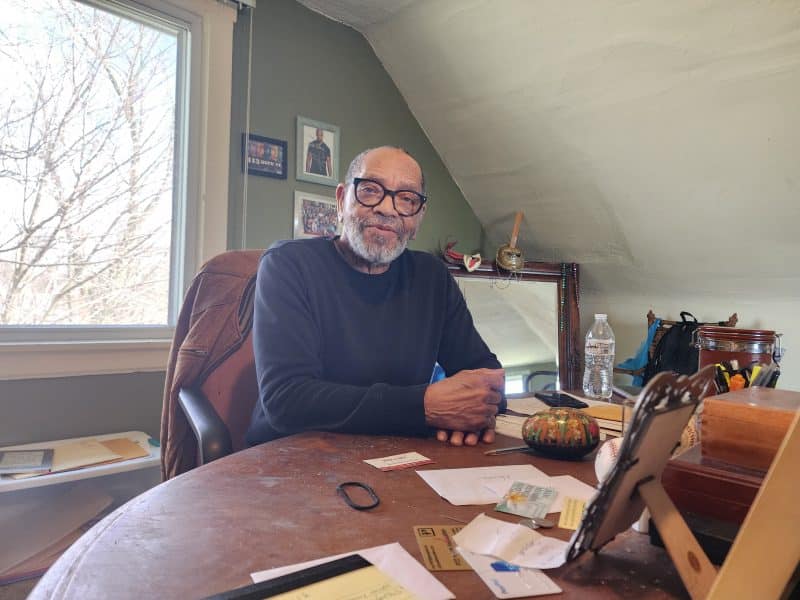
In 1987, the stations gave the footage to John Carroll University, which kept them until 2023. Local historian James Robenalt, who prompted their move to the library, “This is an unbelievable collection: civil rights, sports, all sorts of stuff.”
The library plans to preserve the recordings, digitize them, and start putting some online in two to three years.
Branches and services
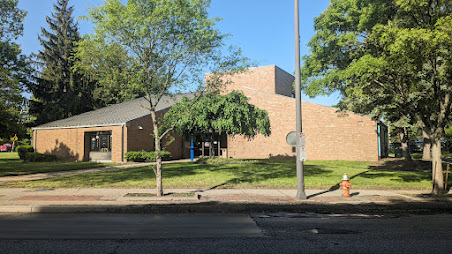
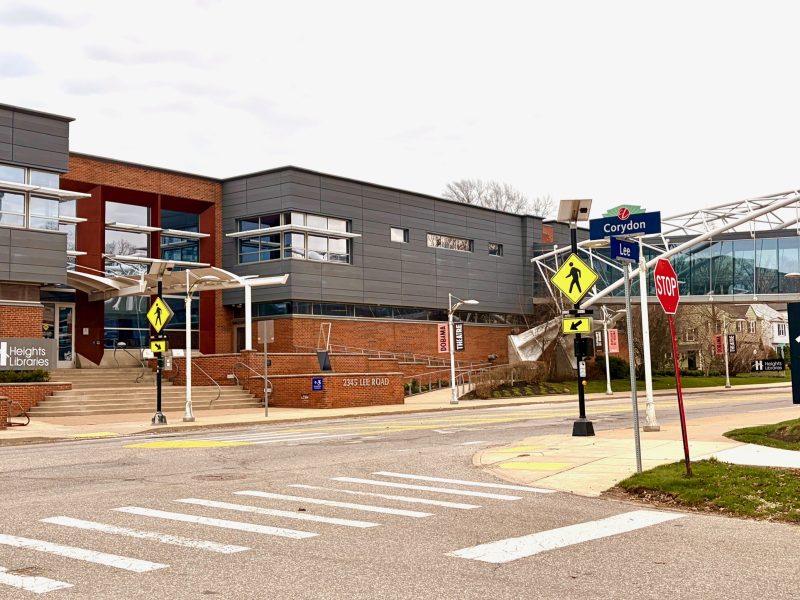
Thanks to the Mandel Foundation, the Fleet Branch’s 1981 building will get an up-to-date computer lab, an interactive children’s area, and more space for meetings. Renovations should start in 2026 and finish in 2027.
Meanwhile, the library has nearly finished transforming its 1978-designed Glenville Branch, with help from a $3.25 million gift from Mandel, whose namesakes grew up in that neighborhood. The 11980 St. Clair Ave. building will feature a Mandel Workforce and Senior Digital Innovation Lab. It will reopen with a celebration from noon to 3 p.m. on June 13.
Jehuda Reinharz, Mandel Foundation president, says, “It is our hope that these revitalized spaces and the archival project will serve as bridges connecting the city’s past to its future, preserving community stories that might otherwise be lost while reinforcing our commitment to invest in Cleveland’s neighborhoods for generations to come.”
The Glenville and Fleet renovations are part of Cleveland Public’s decade-long drive to renovate or replace all 27 branches. From 10 a.m. to 11 a.m. Friday, officials will break ground for the Walz Library-Karam Senior Living building at 7910 Detroit Ave.
The library will apply Parker Hannifin’s unrestricted grant to Cleveland READS, a program in its third year that encourages youths to read during the summer. The grant will support verbal and digital literacy and related professional development. As part of Main’s centennial, Cleveland Reads’ theme this year is “100% Curious: Question, Explore, Discover.”
Cleveland Public has long been considered one of the nation’s leading libraries. It gets a top rating every year from the American Library Association. It has 6.5 million physical or virtual items. Per year, it makes about 6.3 million loans of materials, gets about 1.5 million visits, and has a budget of about $66 million. Since 1890, earlier than any other major metropolitan library, it has set materials on open shelves for patrons to browse and discover for themselves.
Felton Thomas, Jr., executive director and CEO of Cleveland Public Library, said in a press release about the recent gifts, “As we celebrate 100 years of our Main Library, these contributions strengthen our ability to preserve history, foster lifelong learning, and empower future generations.”
To support the broadcast project or other efforts at the Cleveland Public Library, contact Shenise Johnson-Thomas@cpl.org.
Keep our local journalism accessible to all
Reader support is crucial as we continue to shed light on underreported neighborhoods in Cleveland. Will you become a monthly member to help us continue to produce news by, for, and with the community?
P.S. Did you like this story? Take our reader survey!