Cleveland City Council has approved a $1 million grant of federal revenue recovery funds to the United Way of Greater Cleveland (UWGC) to support tenant resources and outreach programs to increase housing stability.
The funding will enable UWGC to establish the Tenants’ Rights Program, connecting residents with emergency housing assistance, tenant education, training on organizing, and legal and mediation services.
New Tenants’ Rights Program to Support Renters
Councilman Kris Harsh, who represents Ward 13, sponsored the legislation alongside Council President Blaine Griffin. Originally introduced in November 2024, Council meeting highlights note the legislation would reestablish a tenant rights organization similar to the Cleveland Tenants Organization, which previously provided advocacy and education for renters before closing in 2018.

“One thing we realized is that we can’t really prop up a whole new organization, but we also recognize that we needed more voices in the field in Cleveland,” said Harsh. “So we want to try to figure out how do we work with trusted, reliable networks that we know weather the winds of time, but also maybe bring in new voices.”
The legislation allows the city to enter a grant agreement with UWGC, which will serve as the fiscal agent overseeing the distribution of the grant and contracting with organizations to connect residents to resources.
“One of the big focus areas that we realize is missing is something that really helps educate tenants and landlords, quite honestly, about their rights,” said Ken Surratt, chief development and investment officer at UWGC. “So the Councilman [Harsh] asked us to think about how we will design this and so we said, there’s plenty of partners in the community, folks on housing are doing great work, and maybe just with a little bit of added capacity in a couple of different places, we can actually fill in those gaps.”
How the Organizations Behind the Tenants’ Rights Program Will Help Renters
The Tenants’ Rights Program consists of four main pillars, including tenant intake, tenant education, advocacy and organizing, emergency housing assistance, and legal and mediation assistance. The intake portion of the program will be performed by UWGC’s 211 helpline, connecting residents with trained staff who will refer them to the appropriate resources.
“We knew 211 would be the central intake, that was a key component that people thought was helpful, having that one place to call to help direct people to the right resources,” said Surratt. “The other pieces that we wanted to make sure we had were tenant education, but also organizing mobility, emergency housing assistance, and legal mediation assistance. We knew that those were key ingredients to getting to good outcomes for our residents.”
To identify the organizations that will provide the services and resources in the remaining three pillars UWGC issued a request for proposals (RFP). “We vetted the partners we will be responsible for helping provide the support,” said Surratt. “The groups we selected all applied to be part of it. We made sure that they had the capacity, the experience in order to fulfill each part of it,” said Surratt
The funding will expand programs at five key partner organizations to implement the remaining three pillars: the Legal Aid Society of Greater Cleveland, the Cleveland Mediation Center, Smart Development, Fifth Christian Church, and Morelands Group.
Fifth Christian Church will lead training sessions to help tenants understand their rights and organize to take collective action when addressing landlord-tenant issues. Alongside Fifth Christian Church, Morelands Group, a community-driven advocacy organization and key advocate for tenants’ rights, particularly in the Shaker Square area, will provide workshops on housing rights and the formation of tenant associations.
“It could be 20, 30, or even 50 apartments, with renters all dealing with the same issue. Well, not every single one of these groups is going to go out and do things on their own, they may not have the resources,” Surratt said. “Now we have a group of people who can come in and say, ‘Hey, you know what? I’m going to help you and all your neighbors address this issue because we’re going to have more strength in numbers,’ and that will likely lead to more success in dealing with this landlord.”
Tenant organizing and education can serve as key strategies for addressing neglectful landlords and improving housing stability. “Imagine if there was a tenants’ organization already on the ground holding that landlord accountable,” Harsh said. “Clean, safe housing… is not up for debate, and we have to hold them to those standards as a society as part of our responsibility. And I hope that this money can be used in ways that help some tenants do that on their own.”
Smart Development, a nonprofit serving Northeast Ohio’s refugee, immigrant, and ethnic-minority communities, will offer navigation support, rental assistance, and housing counseling for tenants and landlords, for refugees, immigrants, and at-need individuals and families according to UWGC’s presentation on the proposal.
The proposal also outlines that the Cleveland Mediation Center, a nonprofit that mediates disputes and provides conflict resolution training, will offer emergency housing assistance and legal mediation services.
“We just shared our report to the City Council on the Right to Counsel work, and one of the things we learned from that work is the importance of rental assistance and actually getting to a true resolution,” said Surratt. “Just that little bit of money to pay that back rent or to help pay some other costs it really helps the landlords and tenants negotiate and get to a resolution, which keeps people housed.”
The Legal Aid Society of Greater Cleveland will expand tenant education and access to legal services by increasing outreach through the Tenant Information Line, a resource originally staffed by the Cleveland Tenants Organization and now managed by Legal Aid. Additionally Legal Aid will host community presentations informing tenants about their rights
Legal Aid will also connect eligible residents to Right to Counsel, an already established partnership between UWGC and Legal Aid, which provides free legal assistance to Cleveland tenants facing eviction who have at least one child and live at or below the federal poverty line. The legislation creating the Right to Counsel made Cleveland the first Midwestern city, and only the fourth in the country, to establish such a right.
With funding set to be distributed over three years, Cleveland State University’s Center for Economic Development will evaluate the program by identifying challenges, measuring its financial impact, and assessing how it helps tenants. Evaluation of the program also aims to highlight opportunities to improve services and determine the program’s overall effectiveness in increasing housing stability.
What Comes Next
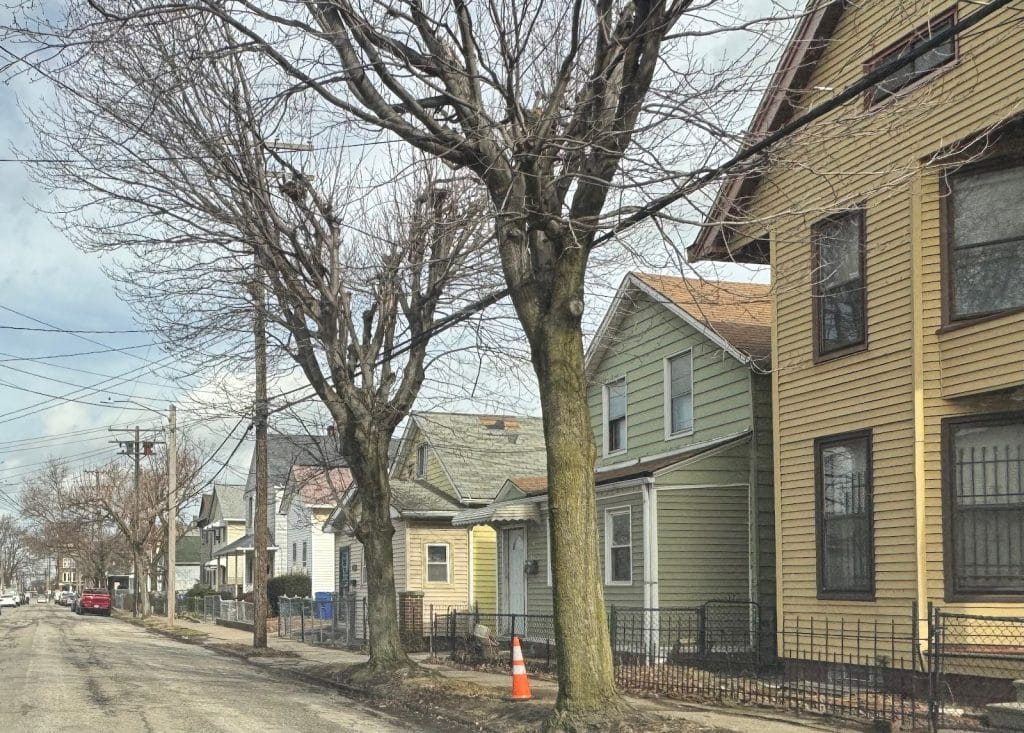
After the legislation was approved in late January, UWGC is now working on contracting and agreements with partner organizations. In the meantime, certain resources that will also be featured in the program are already available to tenants, like UWGC’s 211 and Right to Counsel.
“What I want everyone to know is that if you don’t know what to do, you don’t know where to go, how to start something, you can always call 211,” Surratt said. “211 can be your first point of entry into our social safety net for pretty much anything.”
For Surratt, success will be measured by the number of tenants educated on their rights, increased use of escrow accounts in housing court, and a decline in evictions, with a goal of creating lasting stability for both tenants and landlords.
“What city council is going to look to us for right is, what’s the impact,” said Surratt. “What we hope happens is because of this intervention, or this group of interventions, people are able to stay housed, landlords are happy they’ve invested in their properties, see less nuisance properties… then ideally, we’re having less evictions as well. All that’s good for the community, all of that’s good for families, again, not just tenants, landlords, city, everyone benefits when we have people housed stably.”
We're celebrating four years of amplifying resident voices from Cleveland's neighborhoods. Will you make a donation to keep our local journalism going?