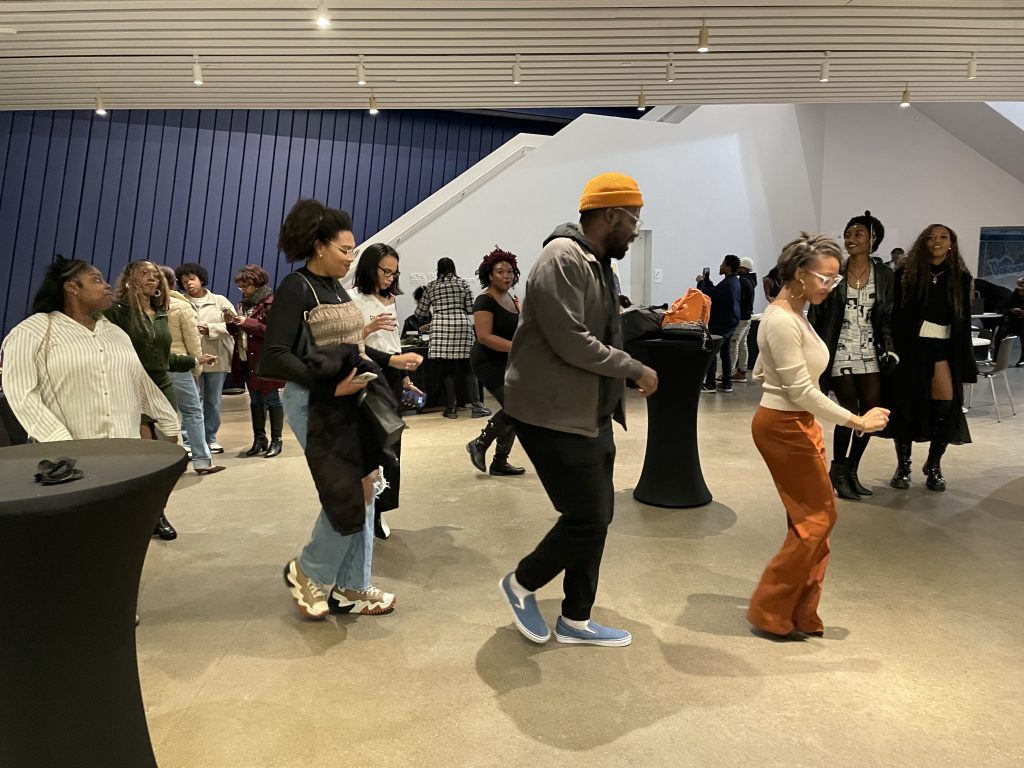
Crossing the street to get to the Museum of Contemporary Art (MOCA), I saw a sea of Afros in every color and texture, large Bantu knots with carefully parted sections, blonde rope twists as long as Rapunzel’s and braids galore.
I knew I was in the right place, headed to the 2nd Annual Cleveland CROWN Convention, hosted by MOCA, a celebration honoring the natural hair experience.
“MOCA has always provided safe spaces for art, self-expression and community,” said board member and owner of Coko’s Crown Dayja Smith, via messenger. “The Cleveland CROWN Convention is just an expansion of that.”

The convention took place on November 8th, 2025, filling the art space with music, dancing, hair styling demos, vendors, interactive art, advocacy, and deep-rooted discussions on hair discrimination and community.
“It feels good to be welcomed into a place where my hair is celebrated, complimented, and I can show off my creativity,” said attendee Tyler Jones.
The event was the perfect backdrop to bring together the community and champion the passing of the CROWN Act, an anti-discriminatory law that prohibits landlords, businesses, and schools from discriminating based on hair texture and protective styles such as braids, locs and Afros.
The CROWN Act
Cuyahoga County is the first county in Ohio to adopt this legislation.
The name CROWN is an acronym, “Create A Respectful and Open World for Natural Hair” and was created in 2019 by Dove and the CROWN Coalition in partnership with California State Senator Holly J. Mitchell to ensure protection against discrimination on race-based hairstyles by extending statutory protection to hair and protective styles such as Afros, braids, locs, twists and knots in public spaces, the workplace and public schools.
There are currently 28 states that have passed the CROWN Act. Though Ohio is not one of them, Cuyahoga County recently passed the law on October 14, 2025, going into effect on November 13, 2025.
“Pay attention to what the schools are doing to our children,” said veteran and mental health advocate Natasha Lovelace. She stressed the importance of speaking to younger kids about hair discrimination because, according to the website thecrownact.com, hair discrimination starts as early as childhood and continues into adulthood for Black girls and women.
“This is a serious issue we’ve heard from Black women,” panelist and researcher Chinenye Nkemere said. “It’s very powerful that out of all 88 counties, we are the first (to pass this law).”
Discrimination based on hair is illegal and is a civil rights violation because of the CROWN Act.
“It’s costing money to discriminate. Black women don’t want to work at these companies, and they (businesses) are going to get sued,” said Nkemere, co-founder of Enlightened Solutions, a racial and gender justice think tank that published ‘Project Noir 2024’ – researching the lived experience of Black women living in Northeast Ohio.
This report was published four years after a national livability index ranked Northeast Ohio as the “worst place for Black women to live,” citing discrimination in healthcare, education, and the workplace as reasons why.
Project Noir results show that 68 percent of surveyed women received negative and inappropriate comments about their hair and appearance while at work.
Cuyahoga County Becomes First Ohio County to Pass CROWN Act
Working with State Rep. Juanita Brent, Cuyahoga County District 10 Councilman Michael Houser brought the CROWN Act forward locally. Co-sponsors, Councilwomen Meredith Turner and Yvonne Conwell, and the County Law Department worked tirelessly to craft the legislation and were key advocates for its passage, working alongside community partners and other council members to see it through.
In passing this ordinance, Cuyahoga County became the first county in Ohio to support this growing movement. It expands the county’s civil rights protections to clarify that discrimination based on hair is a form of racial discrimination. The county’s employee handbook was also updated to include hair among protected traits, to ensure that county workers are covered.
“It did not pass unanimously, “ Houser said, explaining that it took two or three months to get the language correct in the handbook and that he was very intentional about the language to include specific hairstyles.
The language describing Black hair and styles delighted panelist Lovelace, who made the choice that day to dress as a civilian, rather than in military garb, in order to look good and show off her natural locs.
Real Stories of Hair Discrimination
When Lovelace joined the military at age 19, she found out how hard Black women struggled when it came to hair – some opting to cut their hair off and avoiding natural styles to keep within regulations. Buns in particular had to be 3.5 inches from the scalp, which is difficult when your hair is long and thick. The experience was personal to her.
“I think about how our hair grows…Afros are looked at as eccentric,” she said.
Military regulations were updated in 2017 to allow women to wear dreadlocks in uniform. Lovelace shared how she kept tools like brushes, combs, gel and hairbows to support other women coming in.
She also let the crowd know that Black women weren’t the only ones dealing with hair issues in the military. Men have to be clean-shaven, and Black men have to take special precautions not to break out when they shave. These pitfalls are unique to African American hair and the way that it grows.
Discrimination based on hair is nothing new to Black people – Black women especially, but men are not left out of the conversation when it comes to hair bias.
“I have been discriminated against in interviews and at jobs,” claimed one male guest who asked to remain anonymous. “It’s corny, and now that the CROWN Act has passed, hopefully these people will stop.”
A Convention to Honor Natural Hair
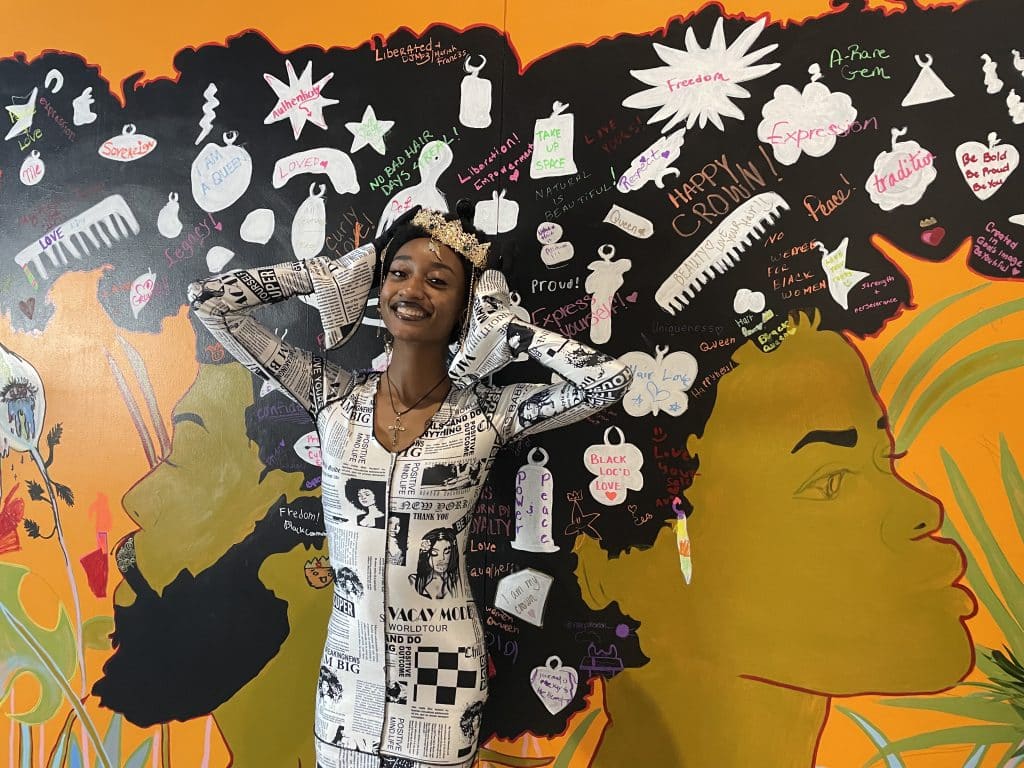
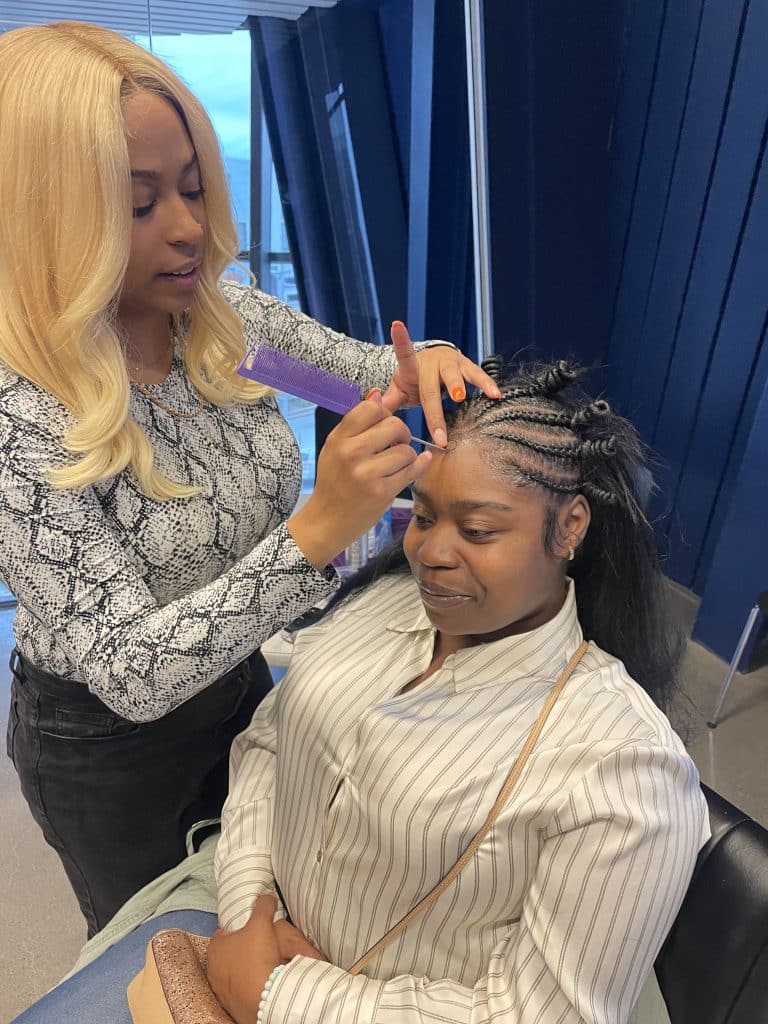
Guests gathered to watch stylists from Excused by Zah and Glo Locs perform live hair activations on one floor and on another floor, painter Aaron “Aawful Aaron” Williams showcased ‘Nature’s Salon’ an immersive art piece where participants were encouraged to collaborate and paint on his mural using prompts about what natural hair means to them.
“Usually in spaces like these, you aren’t allowed to interact with the art. I wanted to break those norms by doing something different,” explained Williams.
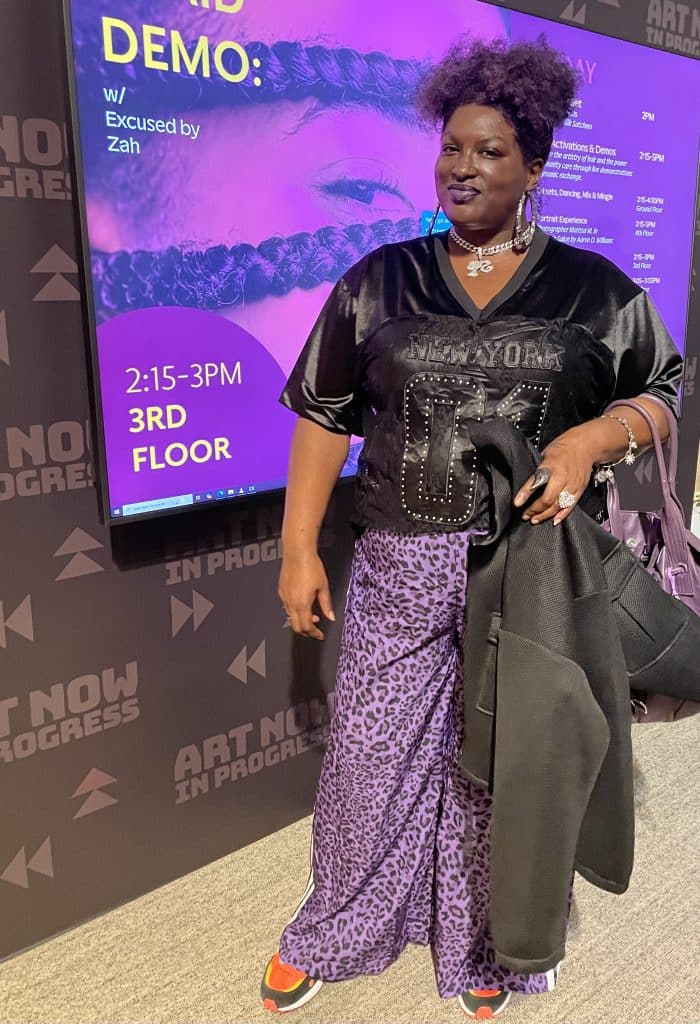
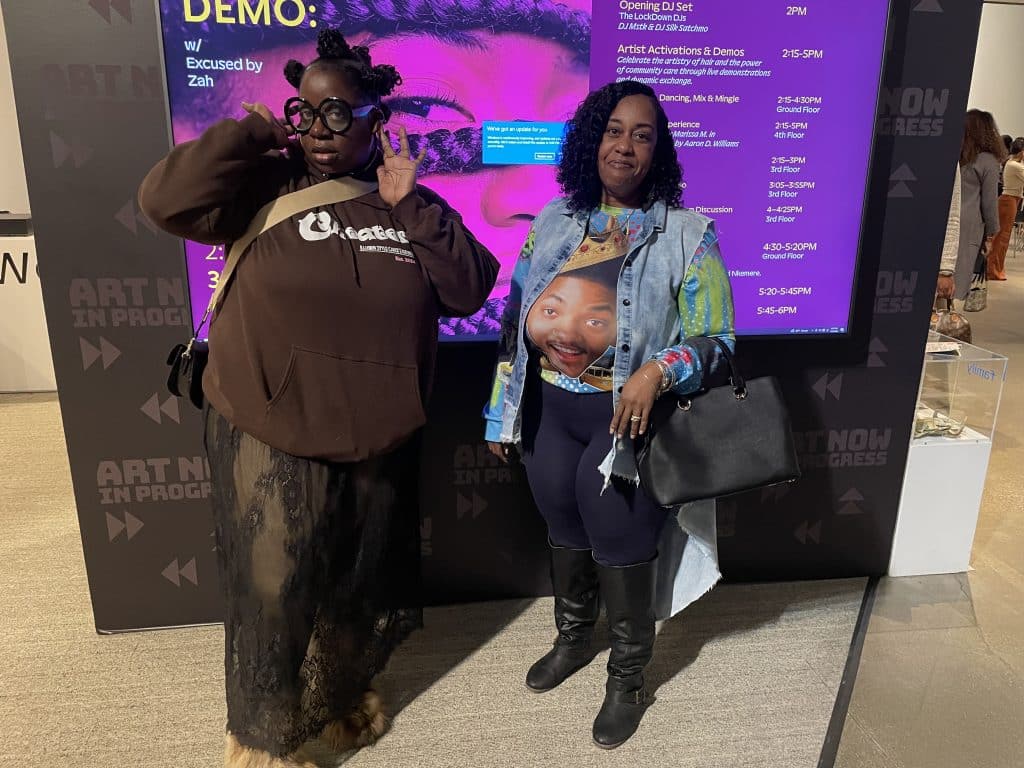
Photographer Marissa McDowell was on hand to take a portrait of guests in front of the painting, adding another immersive layer to the exhibit.
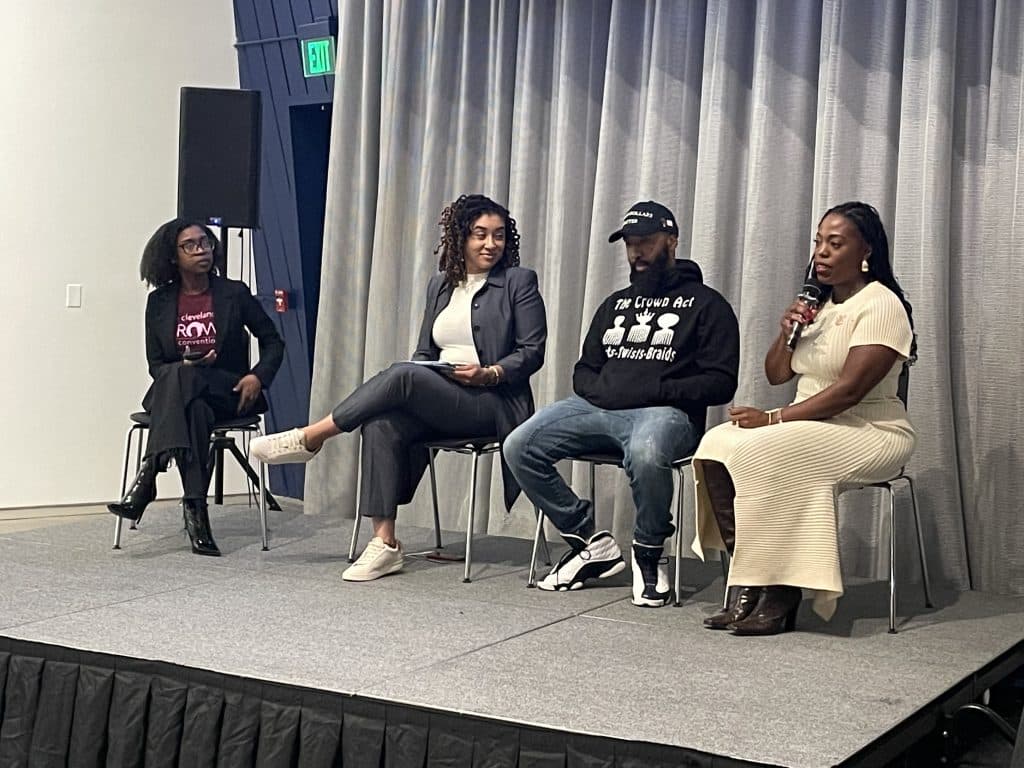
The music kept the vibe going with DJ MSTK and DJ Silk spinning for the crowd and workshops were followed by a panel discussion moderated by Smith. Smith spoke with Houser, Lovelace and Nkemere on the passing of the CROWN Act and listened in as they shared personal hair stories, woes and triumphs.
When asked why events like this matter, Houser said, “It takes a lot to show up in public spaces as yourself. I’m really big on intentional storytelling events that help change culture. People can show up as their authentic self and that is very important.”
Guest Kenszy Charles agreed. “It’s been beautiful being here with people who love expressing themselves through hair!”
When asked what brought guest Dajia Black to the event, she said, “The Crown! The concept around our hair, the beautification, the communit,y and my friend Aaron’s exhibit.”
Tandra Lockhart enjoyed the event, “The networking, the loc demo was my favorite from start to finish and it’s nice to have somewhere to display our talents.”
Smith stresses the importance of attendees reinforcing community values even after the event. “Get involved by supporting the businesses or artists that you met at the convention. The point is to create spaces and advocacy beyond the walls of MOCA.”
Stay updated on the 3rd Annual Cleveland CROWN Convention by following @clecrownconvention on Instagram.
If you think you have been discriminated against due to your hair, you can file a complaint at the Cuyahoga County Department of Law. Call 216.698.8422 or email humanrightscommission@cuyahogacounty.gov if you have any questions.
We're celebrating four years of amplifying resident voices from Cleveland's neighborhoods. Will you make a donation to keep our local journalism going?