A study led by Case Western Reserve University (CWRU) shows new potential for treating multiple sclerosis (MS) and other diseases while boosting Cleveland’s economy. That is, if America keeps investing in science.
The study, posted Aug. 25 on the website of the scholarly journal Cell, describes a new treatment helping mice restore myelin, a material insulating nerve cells in the brain and elsewhere. MS and related diseases destroy myelin, interfering with nerve signals.
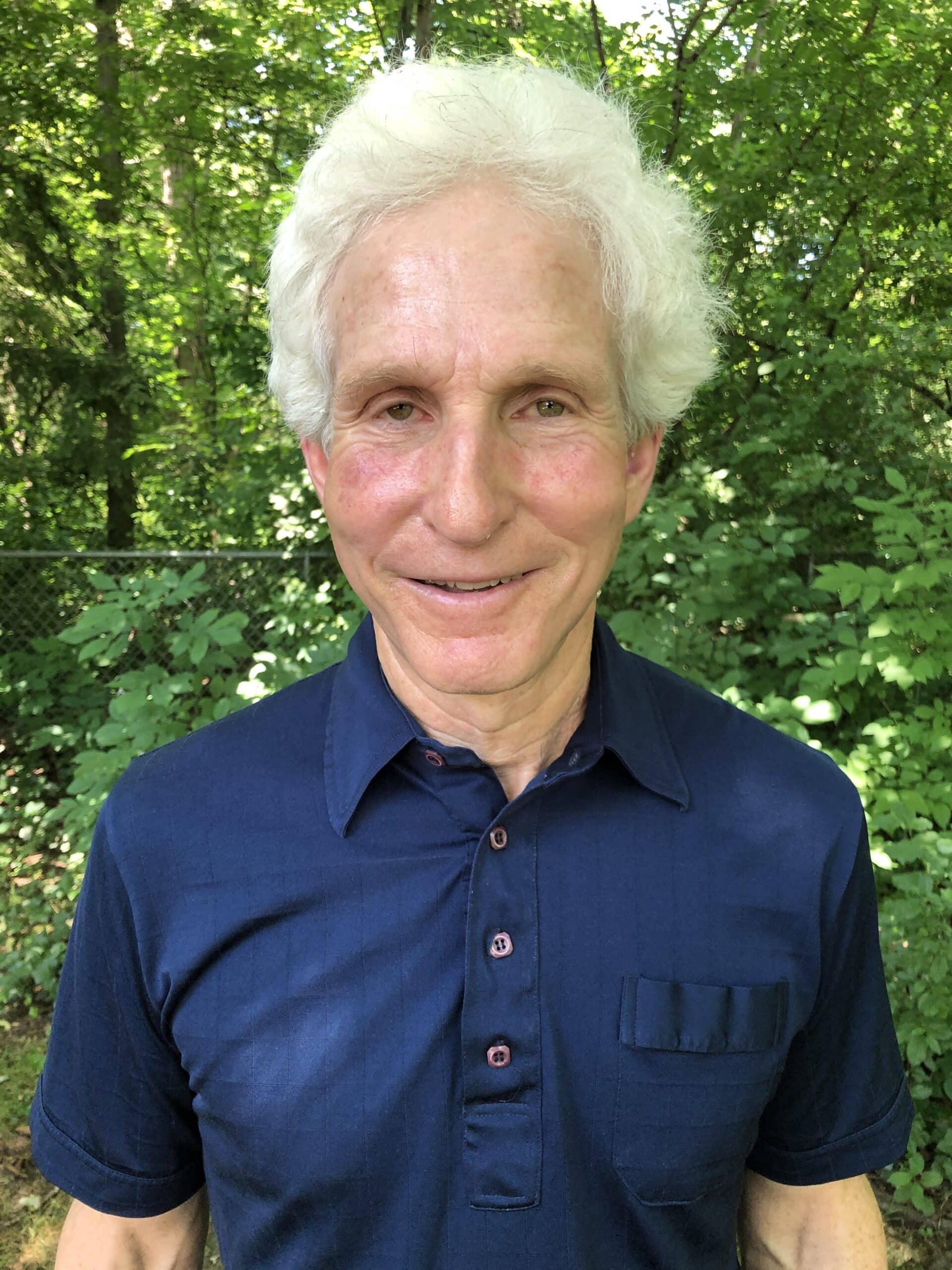
The study’s leader, Professor Paul J. Tesar, has co-founded a Cleveland company, Convelo, that is developing a drug treating MS based on previous research of his. He hopes that Convelo or a different company might develop another drug from his latest findings.

MS is a chronic, progressive, incurable, autoimmune disease attacking oligodendrocytes, cells that make myelin, in an estimated 3 million people. Usually appearing in young adulthood, the disease gradually but often severely limits mobility, vision, cognition and other functions. It’s more common in cool climates like Cleveland’s, perhaps because of residents’ low levels of Vitamin D.
Current treatments slow MS’s progress or ease its symptoms, but none help restore the oligodendrocytes.
“Our approach has real potential to stimulate remyelination and restore function,” says Tesar. “We hope we can push these innovations forward here and advance the Cleveland economy.”
He also thinks that some other autoimmune diseases, such as diabetes type 1, might be treated by helping cells regenerate.
Dollars for discoveries
Tesar was born in Cleveland and joined CWRU 15 years ago. He has helped to write more than 60 papers and to earn about two dozen U.S. or foreign patents, with 50 to 60 more pending. He has won grants of about $25 million in roughly equal shares from foundations, individual donors and the National Institutes of Health (NIH). Convelo has raised another $100 million from investors and the drugmaker Genentech.
At CWRU last year, Tesar launched an Institute for Glial Sciences, glias being oligodendrocytes or related cells. It now has about 50 scientists and yearly grants of about $2 million to $3 million. He hopes to double both figures over the next few years.
He means for the institute to fill a gap between academia’s focus on general science and industry’s focus on specific drugs. “We want to be the premier center for translating academic discoveries into glial medicine.”
But he faces a White House rejecting much mainstream science. Federal agencies have dismissed some of its proponents, and President Trump has made demands of universities seeking research funds, including a ban on diversity programs. CWRU has responded by removing websites for some minority scholarships and replacing its Office of Diversity, Equity and Inclusion with an Office of Campus Enrichment and Engagement. A CWRU spokesman declined to say whether the school had ended the scholarships or whether the new office was substantially different from the old.
Some of the administration’s efforts elsewhere have failed. After a lawsuit by scientists, it agreed to restore much health data it had removed from public websites.
And Congress seems to be rejecting Trump’s call to slash about 40 percent from the next budget of NIH. The two chambers are proposing instead to roughly duplicate the agency’s current budget of nearly $48 billion. Still, the administration has blocked expenditures and revoked grants authorized by Congress in science and other fields, resulting in several lawsuits.
Tesar says his field has not undergone cuts so far but will likely do so over time. Meanwhile, “the biggest challenge is the uncertainty,” which makes it harder to plan projects and raise capital. “We’ll have to adapt.”
Immature cells
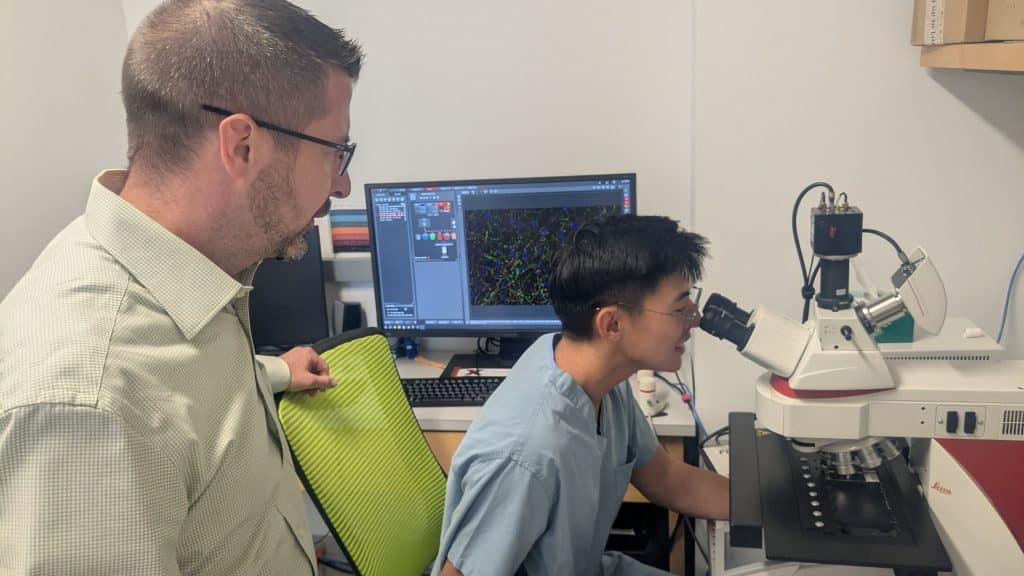
His latest study reports that excess levels of a protein-coding gene called SOX6 keeps oligodendrocytes from maturing and producing myelin. His team spurred them by injecting synthetic DNA into mice brains.
Tesar hopes over the next couple of years to study the long-term benefits and possible harm to the mice. If all goes well, he says, a resulting oral drug might hit the market in 10 to 12 years.
He has also helped Convelo develop an oral drug to reduce harmful excesses of a protein in MS patients. Human trials are expected next year. And such trials are already underway for another oral drug, based on his work and developed by California’s Ionis Pharmaceuticals, for patients with Pelizaeus-Merzbacher Disease. That disease is related to MS and is typically fatal in childhood.
Tesar’s latest study has 21 authors, 14 of them from CWRU and six from institutions in other states. It will be included on Oct. 30 in the next print issue of Cell, whose articles are reviewed and approved by other scientists.
The National MS Society has helped fund Tesar’s work. Bruce Bebo, the society’s executive vice president of research, says of Tesar’s latest study, “Identifying key molecular targets involved in myelin production and repair, such as SOX6, is an important step toward developing treatments that could restore nerve function and potentially slow, or even reverse, disability in MS.”
That finding could also enrich Cleveland, already strong in health care and health technology. As Convelo’s website says, “Our vision transcends medicine. We’re deeply invested in Cleveland’s future, cultivating talent from its academic and healthcare landscapes.”
Keep our local journalism accessible to all
Reader support is crucial as we continue to shed light on underreported neighborhoods in Cleveland. Will you become a monthly member to help us continue to produce news by, for, and with the community?
P.S. Did you like this story? Take our reader survey!