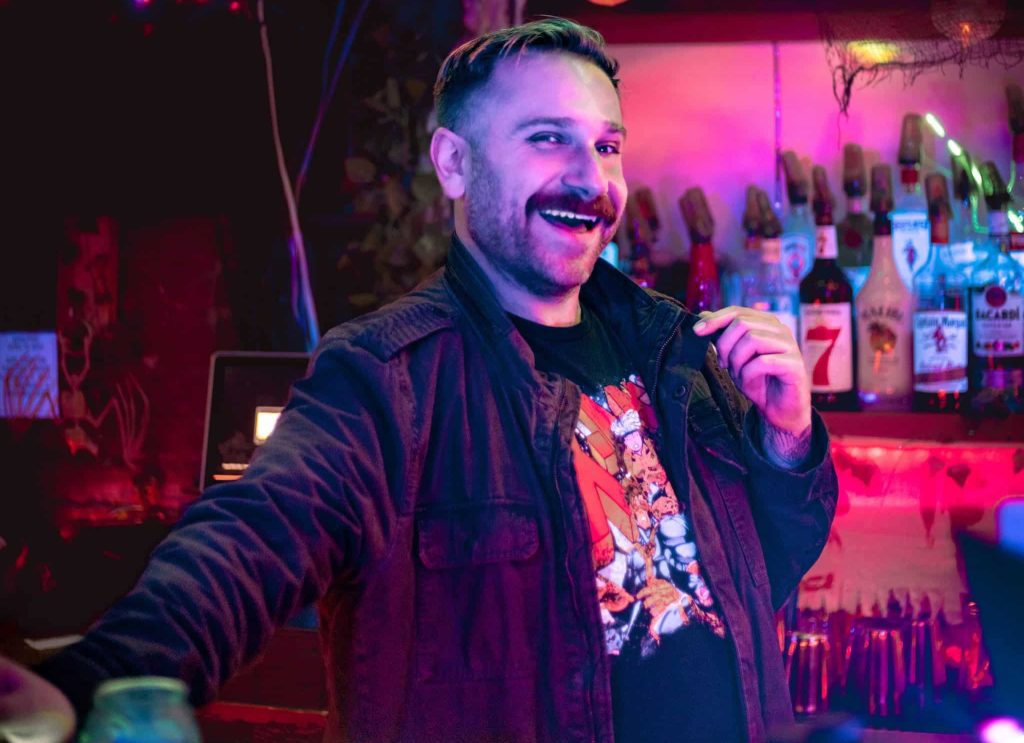
Roger Conners is a lifelong horror-head who traces his fandom to the ‘90s. A self-proclaimed “delicate child,” Conners found scary cinema empowering, insofar as it helped him develop a thicker skin, he says.
Yet, Conners also observed how poorly older horror films depicted the queer community he belonged to. Most gay, lesbian or gender-fluid characters were either comedic caricatures or shunted to the background.
Slasher films were particularly egregious, even if the horror subgenre relied on broad characterizations (like the jock or promiscuous girl) to provide victims for the psychopathic murderer. While the landscape for LGBTQ+ horror cinema has evolved, Conners is raising the bloody stakes with his new feature, “Meat.”

Featuring a diverse cast of queer-identifying individuals, the Cleveland-set slasher centers on a masked killer who targets those responsible for a young gay man’s death. Although billed as a traditional “revenge slasher,” “Meat” separates itself as an unblinking portrayal of queer culture, says the writer and director.
“I gave myself freedom to write an unabashedly queer script rooted in my favorite genre,” says Conners, a Westlake native. “The goal was to take a queer slant to the classic slasher formula, but without any stereotypes. That’s what “Meat” is. It came so naturally, because it’s based on folks I knew in Cleveland.”
Filming took place around Conners’ current home of Gordon Square, as well as Ohio City, Lakewood and Hocking Hills.
While “Meat’s”two-hour run-time is somewhat unusual for the genre, it afforded Conners the space to develop his characters’ nuances. Slasher films have always attracted a queer fanbase, particularly those who identify with the Final Girl. A common slasher trope, the Final Girl is sole survivor of a killer’s murder spree, and typically a female-identifying character.
“Gays gravitate toward the Final Girl, because she’s this unsuspecting female protagonist you don’t expect to rise up in the face of evil,” says Conners, who also has a role in “Meat.” “They represent a beacon of strength for people. Final Girls were the people I turned to.”
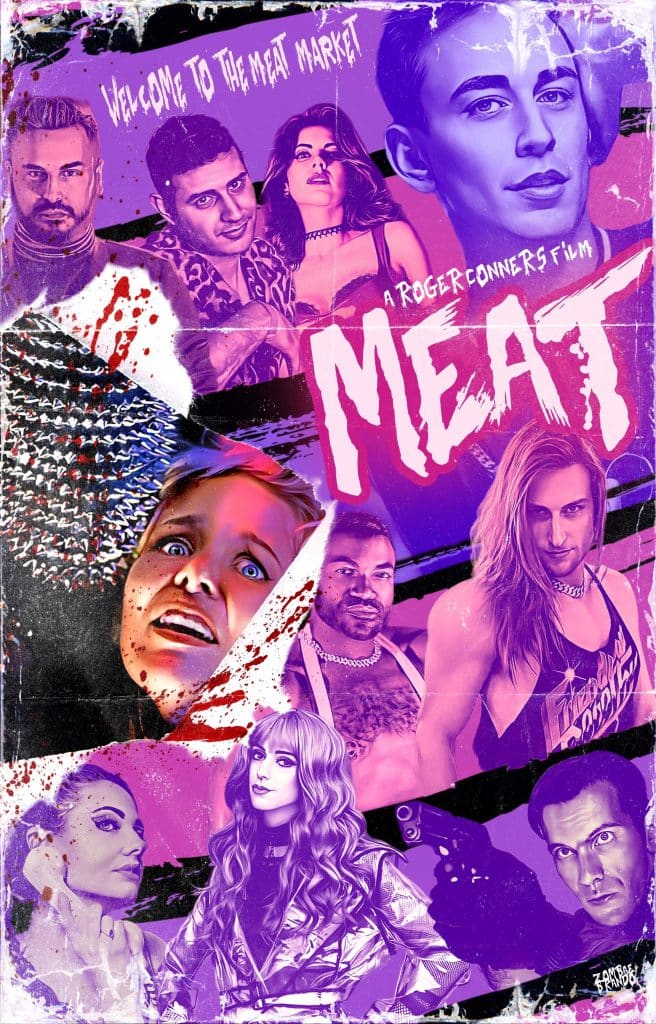
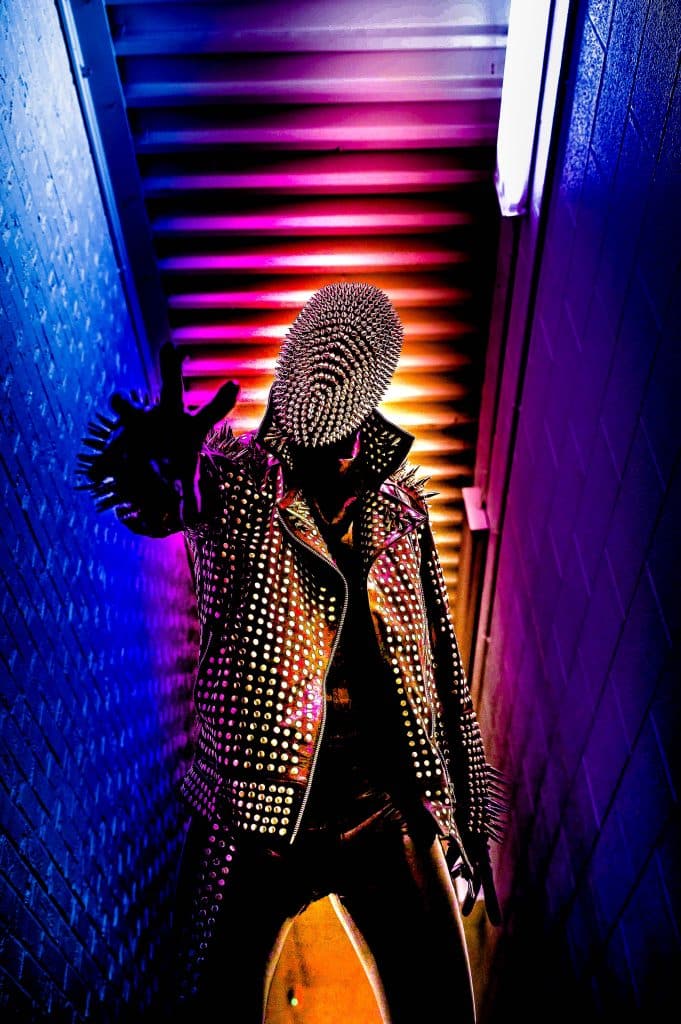
Caption: Meat is an “unabashedly” queer slasher about a masked killer who targets those responsible for a young gay man’s death. [Photos from Roger Conners]
Supported and seen
Conners was exposed to horror at age 7 through a viewing of the George Romero zombie classic, “Night of the Living Dead.” An admittedly harrowing affair that nonetheless transitioned into a cinematic “obsession,” he says.
Though the gory content held appeal, Conners was equally fascinated by the filmmaking ingenuity that brought Romero’s vision to shambling life. Conners’ later years found him on the set of indie projects, including the 2009 slasher “Hellementary: An Education in Death.”
“That was my first exposure to working behind the scenes, and seeing creative types execute great special effects with no money or supplies,” says Conners. “It was a fantastic learning experience, teaching me how to capture high-quality visuals on an indie budget.”
Conners began writing the script for Meat in 2016, counting on one hand the other titles that had attempted something similar. Among them was “The Gay Bed and Breakfast of Terror,” a horror-comedy released in 2007.
“Meat” is inspired by the gritty ‘80s sleaze-fest “The Prowler,” as well as “Scream” and “Urban Legend.” It took four years to raise the necessary production funds, with Conners and his team ultimately crowdsourcing over $30,000. The movie is now in its festival run as the director aimes for wider distribution in mid-2026. “Meat” is also scheduled for a virtual screening in early December as part of the New York City Horror Film Festival.
Response has been positive, despite a smattering of queerphobic comments on Conners’ Instagram page. Conners aims not only to provide queer fear fans with a bloody good time, but also to let them know they are supported and seen, he says.
“It’s extremely clear that the fan base for queer horror not only exists, but they are extremely passionate and devoted to the genre,” Conners says. “At a time when our nation feels truly divided and oftentimes hostile toward our community, this sort of in-your-face queer representation isn’t only requested, it’s necessary.”
Keep our local journalism accessible to all
Reader support is crucial as we continue to shed light on underreported neighborhoods in Cleveland. Will you become a monthly member to help us continue to produce news by, for, and with the community?
P.S. Did you like this story? Take our reader survey!