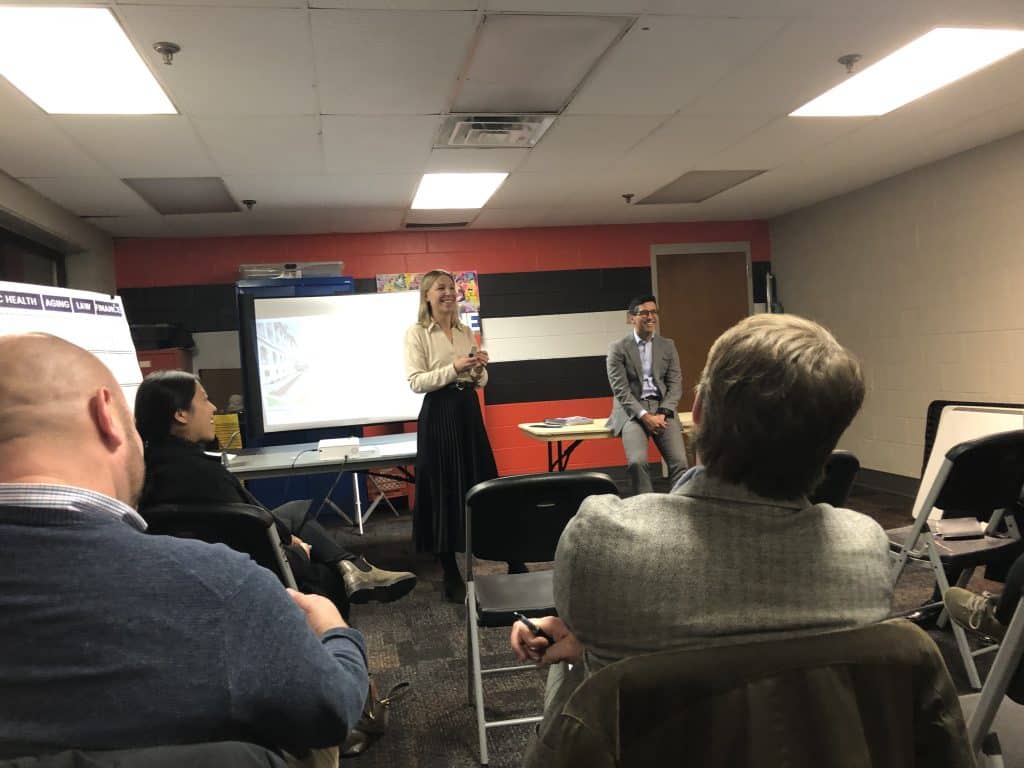
On a snowy Wednesday night, a small group of 15 residents gathered to talk about the city of Cleveland’s budget in a meeting room tucked in the back of Zone Recreation Center at W. 65th St. and Lorain Ave. in the Detroit Shoreway neighborhood. The meeting, which was the fourth and final in the city’s most recent series of Budget Community Meetings, was a platform for the Bibb administration’s Chief Finance Officer, Ahmed Abonamah, to break down the city’s budget and budgeting process, and answer questions from everyday residents.
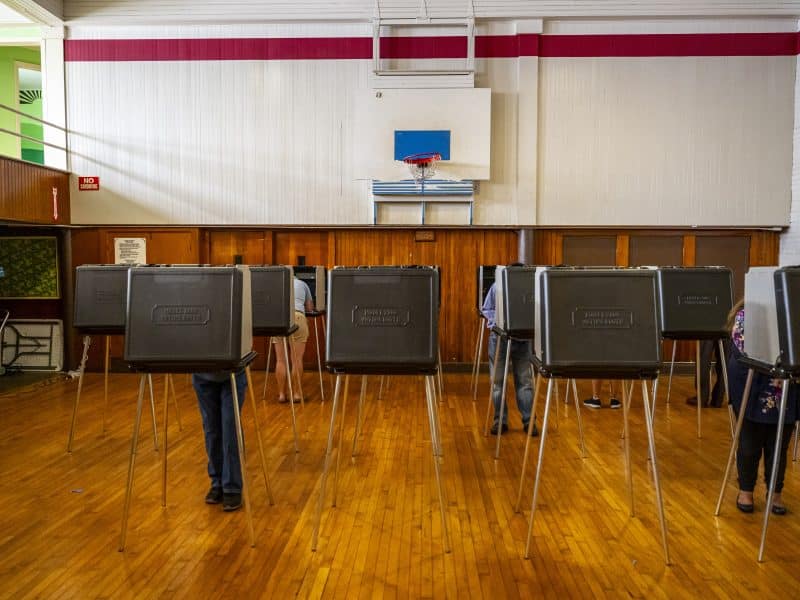
Although this is not the administration’s first series of meetings about the budget this year (several were held at the top of the year), the timing is notable given the fact that Issue 38, or the People’s Budget, was defeated by 1,201 votes, or just under 2%, in the November 7 election. It was outspent by around two to one by Cleveland City Council’s Political Action Committee or PAC, which received support from the billionaire owners of the Browns and Cavaliers. I was involved in PB CLE as a member of the Steering Committee, volunteering with the campaign over the past six months to help its passage. I was excited to learn what the administration would share about the budget.
Attendees of the event told me that they learned a lot from the presentation and would like the city to build this kind of transparent process into how they engage with residents moving forward. “If the city gives folks the opportunity to share their opinions, we need to take advantage of it!” Michele Sommerfelt of the Edgewater neighborhood said. She acknowledged that those with economic constraints likely were not in attendance, but shared hope for more meetings like it. “This is a first step that needs to become the standard for how our city engages residents,” she said.

An update on the city budget
The event opened with a powerpoint presentation by Abonamah that explained key facts about the city’s $1.9 billion budget.
He noted that the city narrowly balanced its budget for the first time in decades in 2023: They were able to cover all city costs without dipping into reserves to pay for staff and services. This is despite factors like rising costs for services (such as healthcare for employees) and the city’s declining population. Cleveland spends 74% of the budget on paying employees. The remainder is spent on basically everything else that the city does, from repairing roads to park upkeep to highlighting the city’s culture with events like the Forbes 30 Under 30 Summit which took place in October and the Women’s Final Four, which is scheduled to take place next year.
Among other topics, the CFO discussed the city’s $512 million American Rescue Plan Act (ARPA) allocation, the eighth largest in the nation. The site readiness fund, an over $50 million investment in remediating a thousand acres of vacant sites for development, was highlighted. It was not clear if there would be a chance for residents to weigh in on how the remaining ARPA dollars will be spent.
Issue 38, the narrowly defeated People’s Budget, also came up during the conversation. In Ward 15, where this meeting was held, Issue 38 was popular, winning 56% of the vote, and the PB won in nine of 17 Cleveland wards. “If the People’s Budget passed, we would’ve had to move 2% from somewhere,” said Abonamah, who lobbied against the measure before the election. “The permanence of a charter amendment for something we didn’t have experience with was a concern for me.”
Questions, answers, and an activity
A question and answer session at the end of the CFO’s presentation gave attendees a chance to clarify the material in the presentation and ask any other questions they had.
Residents inquired about a wide range of budget items, including transportation, investment on the city’s east side, housing development, and Cleveland Public Power. Some questions received direct answers, such as what happens with revenue from parking tickets (it goes into the general fund). Others, like a question about the bureaucracy involved in funding nonprofit community development corporations from the federally allocated Community Development Block Grant (CDBG) program, received a less direct answer. “We understand the federal compliance obligations are tough,” said Abonamah. “We are willing to explore other options.”
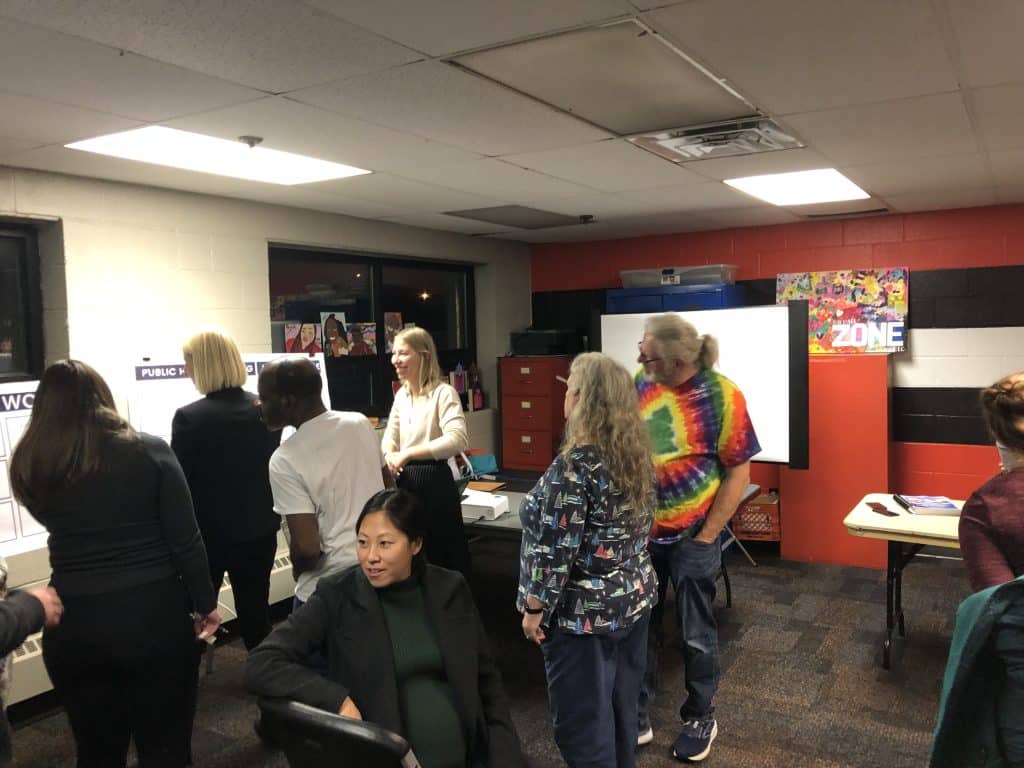
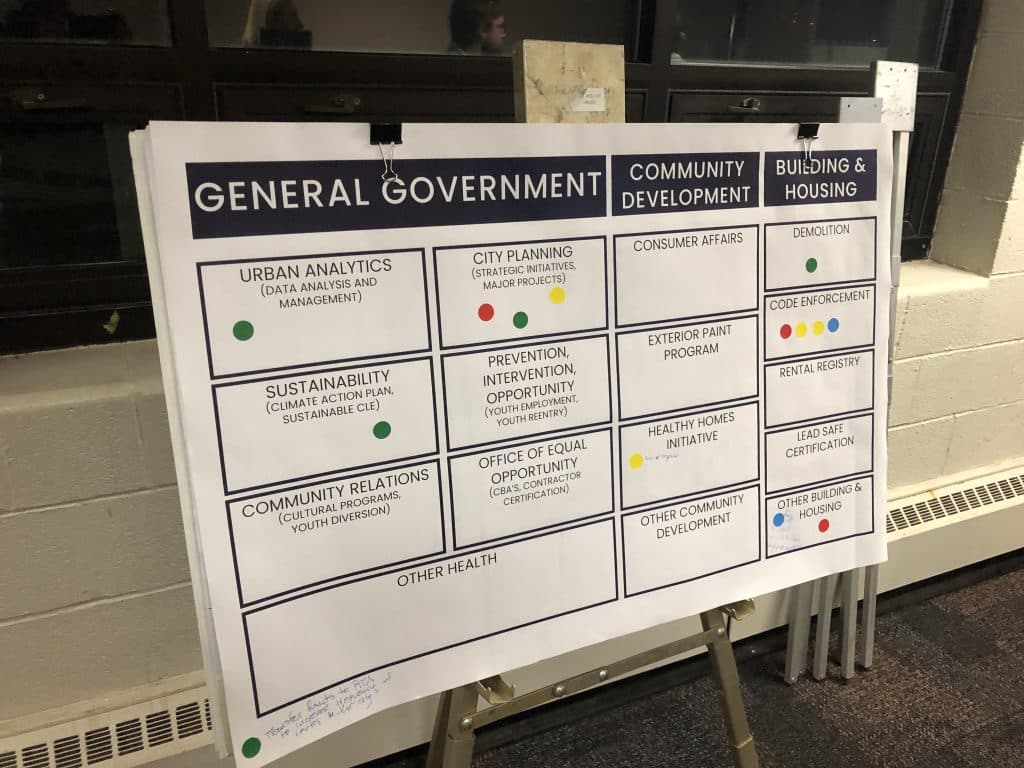
The meeting closed with Abonamah inviting attendees to choose which parts of the city budget they would prioritize by putting stickers on boards with different city departments like public safety, and public health. Stickers were limited, so residents had to make tough decisions about which departments to prioritize. The two most popular departments were “code enforcement” under building and housing and “city planning (strategic initiatives and major projects).”
Those in attendance said they were grateful for the opportunity to speak directly with the mayor’s administration and for the closing activity. Chris Martin, an Ohio City resident, said it was his first opportunity to get to ask direct questions of a Bibb administration official. “I haven’t had the chance to talk with [Abonamah] and this was the closest I could get… I enjoyed hearing about the perspective of the Chief Financial Officer of the City of Cleveland,” he said.
A new precedent for budget engagement
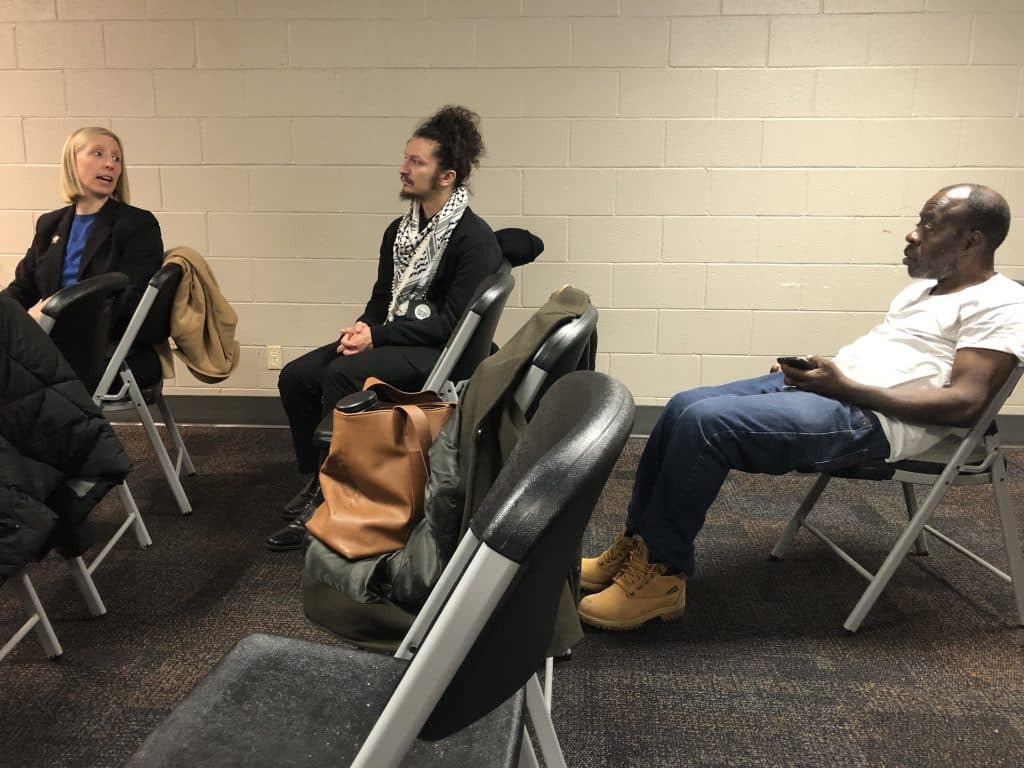
Ward 15 Councilwoman Jenny Spencer, who was in attendance, said she hoped the meetings would continue and expand to engage more people, perhaps by offering food and a chance to build community with others. “I want the mayoral team to come back and do it again, the [interactive sticker exercise] was impactful, people got to brainstorm and share their ideas,” she said. Meetings like this are a good opportunity for the council and the mayor’s administration to work together, she added. “This could be a collaboration between the mayor’s administration and council, it’s a great opportunity to promote transparency with city decisions and the budget specifically.”
November’s Budget Community Meetings will not be Clevelanders’ last opportunity to engage with the Bibb administration on the budget. During the event, officials expressed interest in hosting more conversations to help residents understand the complex, important issue. Additionally, next Wednesday, December 6th, Abonamah and Councilman Charlie Slife will meet with the public at The Budget is Not Boring, We Swear!, a free event at The Happy Dog.
To learn more about the city’s budget meetings, reach out to Anne Tillie at atillie@clevelandohio.gov or call 216-664-2391. You can also follow the city of Cleveland on their website at clevelandohio.gov, on Facebook or @CityofCleveland) on X (twitter.com).
We're celebrating four years of amplifying resident voices from Cleveland's neighborhoods. Will you make a donation to keep our local journalism going?