When Patrick Antenucci first began experiencing a dull, tiresome flow of pain that radiated along his joints, he hoped it would simply disappear. But it didn’t and, slowly, it spread into a vast network of hurt. At the age of 30, the Warren, Ohio native had just returned from a run, and his knees were aching while his mind was wracked with confusion and concern for his future.
In the midst of 2021, when the pain started, Antenucci then found his ailments compounded while stacking row upon row of new releases at a popular bookstore in Pittsburgh. Fatigue found his limbs more easily as he transferred hundreds of copies of new print editions from untrucked boxes to shelves to storage again.
“I had a lot of pain in my knees,” he explained. “My family has a history of joint problems and I played a lot of soccer. But then it spread into my heels, my hands, my elbows, my wrists, shoulders, everywhere.”

The aches, which would come and go seemingly at random, forced Antenucci to leave his job and return to his hometown along the Mahoning River, where he waited, learned and adapted to his body’s new needs during a brief hiatus from working. Those needs, he found, changed by the hour. Sometimes the pain’s presence was all-encompassing and forced him to lie down. Other times, it just forced him to pause activities altogether.
“I couldn’t really chew,” he added. “Like, the repetitive motion made my jaw hurt.”
The now 34-year-old Antenucci is no longer confused. He received a fibromyalgia diagnosis in 2021. He now takes more breaks, finds ways to keep his body and mind comfortable, and is generally tuned into his changing needs. The process kicked off a journey of self-discovery and adaptation.
Antenucci reentered the bookselling game, this time in Northeast Ohio as Nightlight Books. Nightlight operates as the sole bookseller in the United States to focus on authors and subjects related to disabilities. Now residing in Cleveland Heights, after moving from Warren in 2021, Antenucci has sold hundreds of books spanning subjects from physical disabilities, like his own, to less-visible forms of neurodivergence. His store’s slogan? “A bookstore for every body.”
“A bookstore for every body”
Antenucci began using the Nightlight branding on online platforms in 2022 as he amassed stockpiles of used books and, increasingly, cultivated relationships with publishing houses to order the hundreds of new titles in Nightlight’s inventory. He hopes that catalog expands into the thousands.
First, he’ll need to achieve his greatest goal for Nightlight: a physical space. One that Antenucci describes as a welcoming storefront and a discussion-friendly zone for those who identify as having dissabilities, a space to congregate and discuss their lives and barriers.
In the meantime, Nightlight’s backstock of books lies in storage wherever makes sense or is available to the store’s three owners. Some are boxed in various rooms of Antenucci’s apartment. His mother is holding boxes in her garage as they await online sale or a place in an upcoming pop-up rotation.
More recently, the success of Antenucci’s pop-up efforts and digital storefronts influenced his decision to transition to a co-op structure after he started discussing the prospect with co-owners Allie Mackerty and Ellen Euclide, who he met while running pop-up tables in 2024. The three are currently enrolled in a 14-week training program with Cleveland Owns for co-op startups to figure out Nightlight’s shifting logistics.
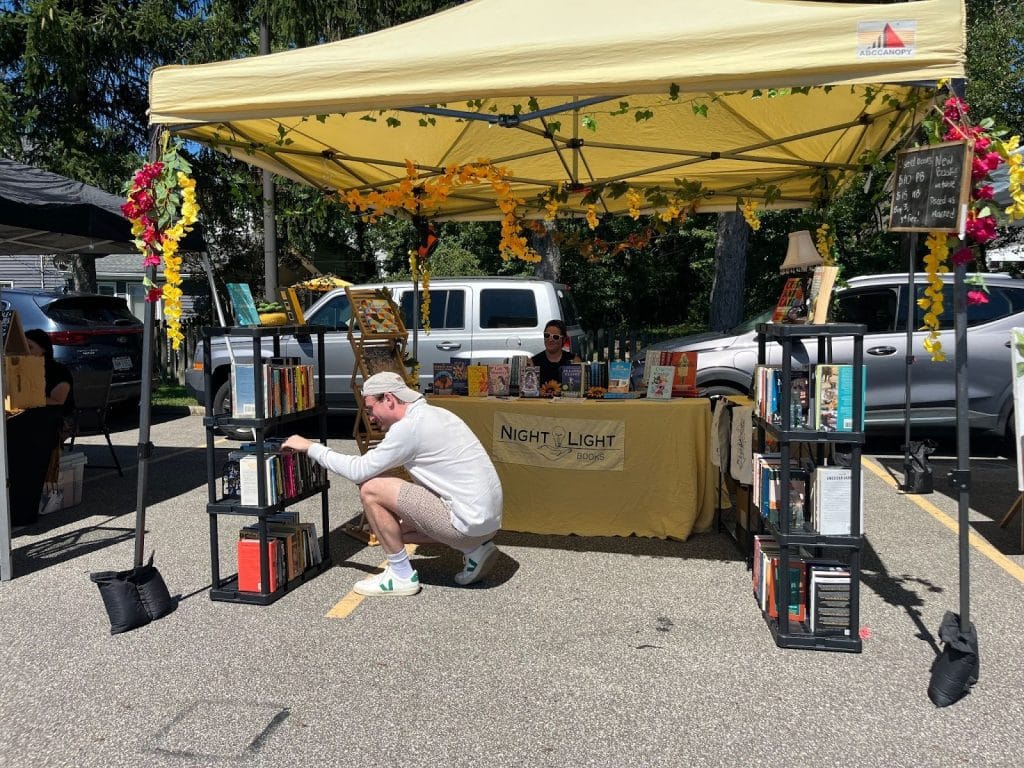
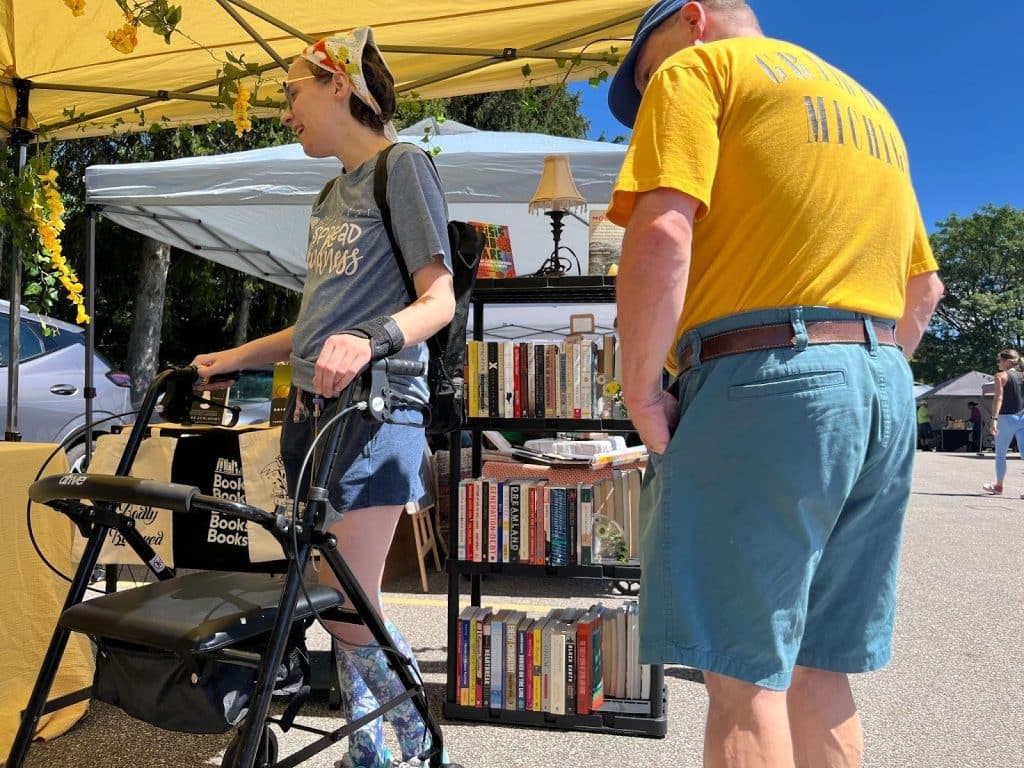
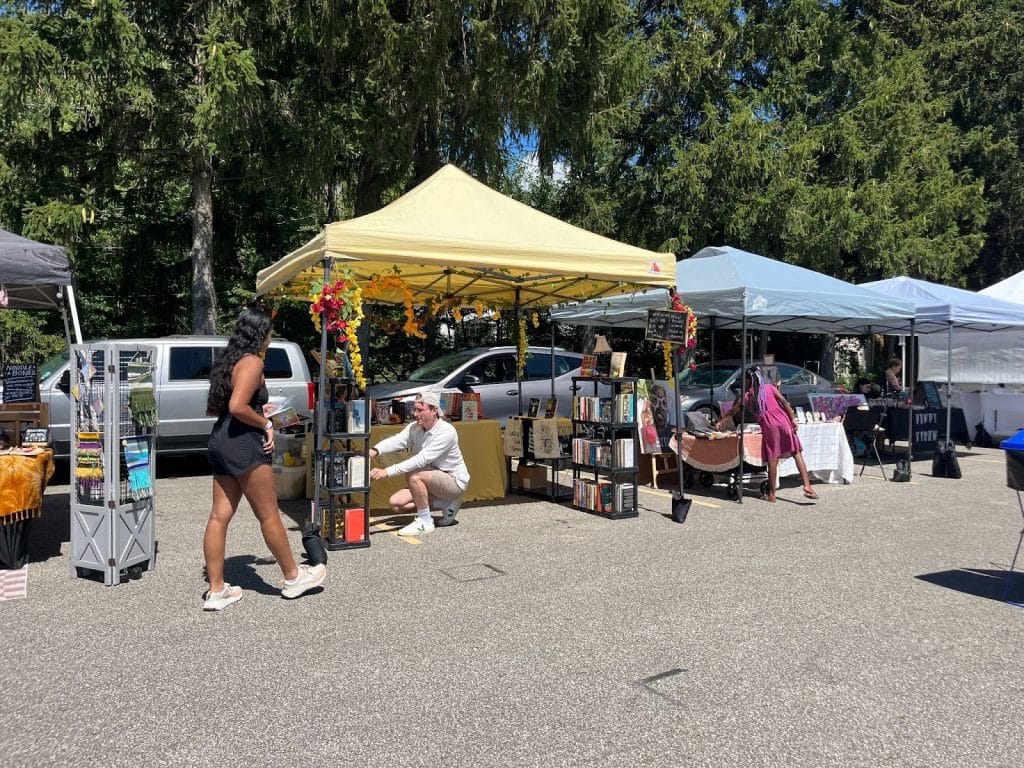
Since the summer of 2023, Nightlight has sought to further its reach by setting up vendor tables at a handful of monthly pop up events, starting with the Beachland Ballroom & Tavern’s summer flea market that year. Nightlight’s weekly events schedules, as shared on the store’s Instagram, typically see Antenucci, Mackerty, or Euclide set up tables at between four and eight events during each month of the pop-up season, spanning May to September.
Pop-ups have also shaped the nature of the business as it has changed from idea to concept. Antenucci first encountered Mackerty under her Burning River Roller Derby moniker of “Chewrockya” while tabling an event at the Cleveland Heights Community Center in 2024. Euclide joined the team after she met Antenucci at a subsequent Beachland Flea Market.
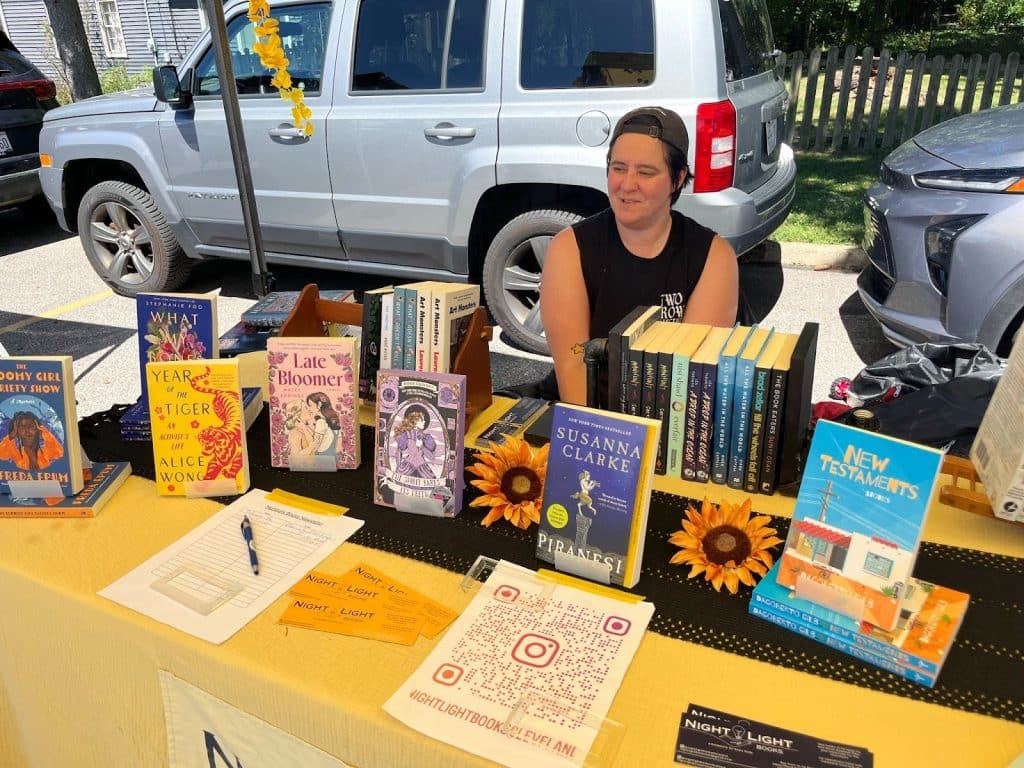
“We have a lot of people who come up, and once we mention the goal or focus of the store, either they disclose (their disability) or they mention they have someone in their life that is [lives with a disability],” Mackerty explained. “It’s an identity that affects a lot of people. Being able to have a store like this kind of brings people together; the community aspect has been a big focus, I think, for us.”
The online and cooperative efforts, Antenucci hopes, will eventually culminate in opening a physical retail location designed to give Northeast Ohioans with disabilities a comfortable place to browse, discuss and learn without barriers. According to Antenucci, much of the store’s character is centered around books that he and the other co-owners cherish, such as Marta Russell’s “Capitalism and Disability” and Leah Lakshmi Pipzna-Samarasinha’s “Care Work: Dreaming Disability Justice.”
“There’s a lot of tropes, really ugly tropes about disability in a lot of fiction. Nonfiction, too,” Antenucci said. “But I think, really, what I noticed when I first began to look around for books, and I wasn’t even looking for fibromyalgia-specific. . .more about the ramifications of this new identity I was embracing. . . I really kept running into the same five titles that were listed.”
Nightlight’s reach has expanded with the addition of Antenucci’s co-owners, each of whom has also contributed hours of research and years of reading. Like Antenucci, they hold one-third ownership of Nightlight and have learned to live with disabilities in their daily lives.
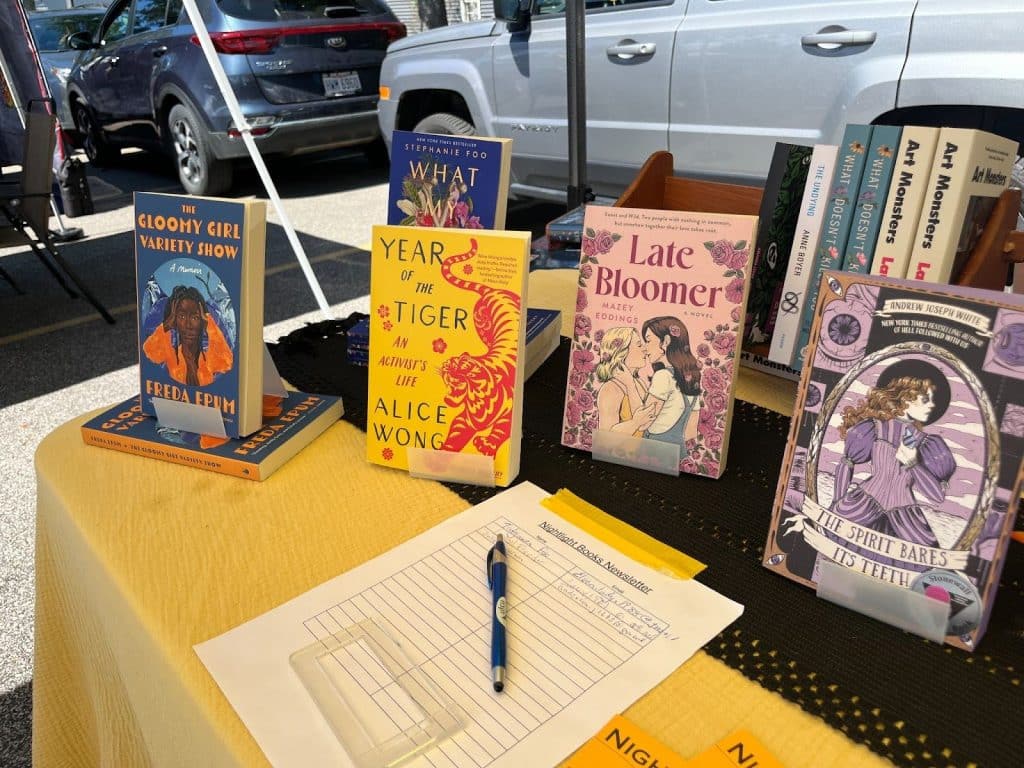
The Nightlight founder currently stocks over 500 different authors in the online catalog. After finding a retail space, securing funding, and renovating the store, Antenucci anticipates adding a few hundred additional writers. These writers, who the co-owners have already identified, meet the store’s criteria of carrying authors who have “made a point to claim that (disability) identity.”
Antenucci also envisions a couple thousand square feet for Nightlight Books’s physical location, including ramps, accommodating staff members, and stock placed at eye level. The space will host book clubs structured around disabilities and other community-oriented events.
“An extra layer for us is that, as a disability-focused store, we’re really looking to build into the space to make it accessible in many ways,” Antenucci explained. “Cleveland being a relatively older city. . . there’s not a ton of new buildings, and those new buildings are more expensive. Because of that, a lot of older buildings were sort of grandfathered in with the ADA (Americans with Disabilities Act), so they didn’t have to adapt them.”
As a ballpark estimate, Antenucci said Nightlight Books sold about 600 individual titles in 2024. That is, roughly, an even split between new and used books that Antenucci hopes evinces an appetite for both. He said he proudly views the sales numbers as a stepping stone along the logistically difficult path of selling new books outside of the Amazon ecosystem.
Co-opting an identity
That’s where the new choice of structure comes into play. Antenucci said the margins he sees on used books far exceed the profits from batch ordering and selling new books at competitive rates, an issue that’s become more prevalent with the consolidation of online booksellers into larger networks.
Cleveland is by no means bereft of bookstores, but Antenucci sees the yearslong process of opening the shop as worthwhile due to the strong intersection between disability identity and written communication, as well as a dearth of businesses that serve people with disabilities in general.
“As far as I know. . . we’re the only ones in the U.S.,” the store founder said. “I know of disabled booksellers, I know disabled writers and publishers, but not bookstores where that’s the specific focus. There’s a disability collective in Los Angeles that does a book club. They’re called the LA Spoonie Collective, and we sometimes fill in their book club order. So, I figure, if a collective out in LA is reaching out to a bookseller out in Cleveland, there probably isn’t anyone else.”
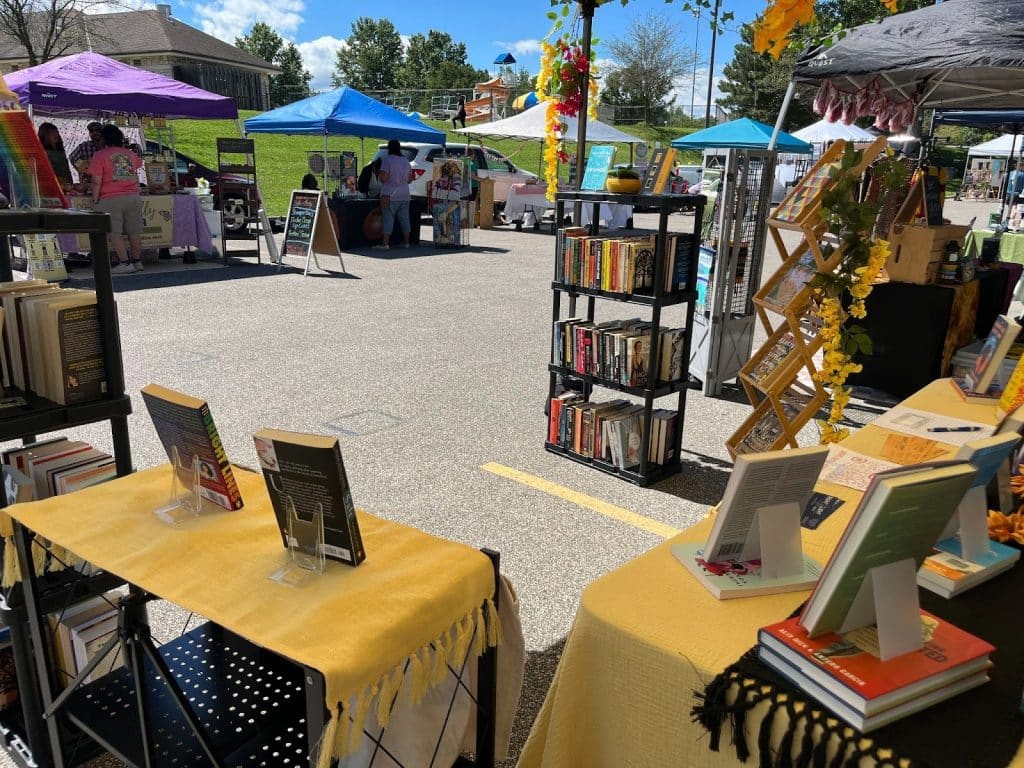
“People in the wild who are facing a chronic disability, when they see our booth (at events), it’s almost like they emotionally or mentally sit down for a moment,” Antenucci said. “I’ve had hourlong conversations with people who have hung out with me at the booth, basically.”
The identity of disability
The three co-owners enjoy discussing the wide-ranging influence of books and media that expanded their understanding of “disability identity.” It’s a concept interwoven with the notion of “disability justice,” which promotes a culture and society in which adjustments are made based on an individual’s idiosyncrasies in the hopes that everyone can live equitably.
“So there’s a big. . . national disability culture and community and I think just reading the books (disability advocates) have written to share their own lived experiences, that’s how I have learned,” explained Stefanie Galbreath, a community development specialist with the Cuyahoga County Board of Developmental Disabilities. “I’ve also learned about the Americans with Disabilities Act.”
As an outreach specialist with Cuyahgoa DD who does not identify as having a disability, Galbreath acts as a liaison between the area government and local businesses or institutions that wish to uphold the ADA and be inclusive to people with disabilities. She said that promoting an understanding of disability laws that require and enable disability inclusion comprises half the process to achieving disability justice.
“We provide funding to help develop programming or to expand programming or to include people with developmental disabilities,” Galbreath continued. “We also have funding to modify spaces so (they’re) more welcoming, accessible and inclusive.”
Organizations seeking funding participate in the Board’s ALL means ALL initiative, which presents a six-step process and training to help make businesses and spaces more accessible for a variety of disabilities.
The remaining part of the advocacy-justice divide is bridged by an ongoing process of hearing, discussing and comprehending the personal experiences of those with disabilities. Galbreath has learned in her own work that this understanding can be achieved in part via reading.
Mackerty, for example, said they appreciated disability representation in media and pop culture that has helped them to understand themselves and the trials they’ve faced. They listed several examples of books that have aided them after they were diagnosed with ADHD in their 30s.
“I’m reading a book right now called ‘All’s Well’ by Mona Awad, and there’s a part where (the author) is talking to a doctor about her pain and maybe they’re not taking it seriously,” Mackerty said. “‘Maybe you’re thinking about it too much. Maybe, if you did XYZ, it would feel better.’ And that hit real hard, because I think a lot of the times I’ve gotten checked out, it’s been like, ‘Oh, it’s in your head.'”
In the Board’s work to bring understanding of disabilities to a broader audience, Galbreath said the organization has worked with seven of nine library systems and municipal branches in Cuyahoga County to boost each location’s stock of books by authors with disabilities. The libraries have also hosted reading sessions in which adults with disabilities read stories to audiences of children and adults. The goal, Galbreath stated, is to “showcase the talents of people with disabilities (and) show. . . people as role models.”
“There is a story to be told here”
That level of representation is significant to the Board, where the mission is to help people with disabilities “to live, learn, work and play in the community,” Galbreath said.
She continued, “…if the spaces aren’t welcoming and accessible to people with disabilities, we can’t achieve our vision. So (we achieve that) by working with places to make sure their space and amenities are accessible, working with staff to understand the importance of the laws that support them.”
“I think that a lot of people with disabilities that I’ve talked to feel excluded or isolated,” Galbreath continued. “People with disabilities have to adapt to all kinds of different barriers on a daily basis. So, by having these conversations and reading and talking to people with disabilities, you have more compassion and you understand.”
For Mackerty’s part, their recent onboarding into Nightlight’s co-op structure has kept them immersed in the conversation while they work their way through their reading list, now bolstered by dozens of new titles in Antenucci’s existing inventory.
“When you go to a store, there isn’t really a disability section,” Mackerty said. “So being able to point people in the right direction is great. I’m very happy to be part of this and I think it’s helped me recontextualize my own disabilities. Like, I’m not the only one dealing with this. There is a story to be told here and I think it’s important that we tell it.”
The Cuyahoga County Board of Developmental Disabilities hosts several directories on its website for individuals who live with disabilities and are seeking opportunities to find housing, use or learn about assistive technology, or attend inclusive events. Care or service providers, advocates, and community members can also find free informative resources ranging from guides and more specific directories to grant options on the Board’s website.
Nightlight Books currently vends online via the Biblio and Bookshop.org platforms and the seller shares pop-up schedules and store updates via its Instagram page and a newsletter that Mackerty writes. While the pop-up season is coming to a close after September, Nightlight will be present at the Neurodiverse Culture Festival in Chagrin Falls on October 18.
Keep our local journalism accessible to all
Reader support is crucial as we continue to shed light on underreported neighborhoods in Cleveland. Will you become a monthly member to help us continue to produce news by, for, and with the community?
P.S. Did you like this story? Take our reader survey!