
How can public funds help artists in our community, especially in the wake of the Covid-19 pandemic when many artists are struggling to make a living? How can these funds be distributed in an equitable way so they benefit artists of color and other marginalized groups? These are some of the questions the nonprofit Assembly for the Arts set out to answer this fall with its Support for Artists Listening Campaign.
The listening campaign was organized by Cuyahoga Arts and Culture, the regional organization that distributes funds for arts organizations and artists from the Cuyahoga County cigarette tax that has been in place since 2007. The effort comes at a timely moment when public support for individual artists through CAC has been a source of frustration for arts advocates.
Currently, a very small portion (less than 3%) of the money raised by the cigarette tax goes to individual artists via organizations that regrant the money to them — a topic that was heavily addressed at a recent listening session held at Kaiser Gallery in Tremont. The rest of the tax money banked by CAC is split between the various nonprofit organizations that apply for a general operating support grant, a project support grant, or a cultural heritage grant.

This is a decline from when CAC first launched and a greater share of the money went to individual artists. It’s stirred up some controversy in the community as individual artists wonder why more money isn’t going to them. At the same time, CAC’s funding has already greatly declined over the years, by a total of nearly 50% due to fewer people smoking cigarettes.
The debates around funding for individual artists are increasingly amplified as CAC starts to stare down a vital tax levy — one that may be on the ballot as soon as November 2024. To pass a ballot issue, CAC will need support from those in the local artist communities who helped them to pass it the first time, and right now those relationships are marred by distrust and finger-pointing.
In a guest column for cleveland.com, Fred Bidwell said he feels that Greater Cleveland’s art community is at a crossroads. Though he acknowledged the steep loss of revenue brought in by the cigarette tax, he argued that the loss wouldn’t be felt as severely if CAC had stuck to their original mission of providing as much support as possible to the artist community, rather than taking on “activities that are more typical of a charitable foundation” including subjectively evaluating and choosing projects, marketing CAC, and developing their own programs. Bidwell noted that CAC’s administrative budget remains unchanged, even as many of their grantees are receiving notification that their support will see a drop in the coming two-year cycle. Some of the grantees receiving those notifications will face declines of up to 20%, he said.
CAC did not respond to requests from The Land to share a copy of the Support for Artists Listening Campaign report prior to its December 13 board meeting, but Cleveland.com recently wrote that the report calls for major changes. “The report called for ‘restorative action’ by CAC that could include a public apology ‘for the strained relationship between CAC and local artists,” reporter Steven Litt wrote.
Black artists have felt excluded from funds
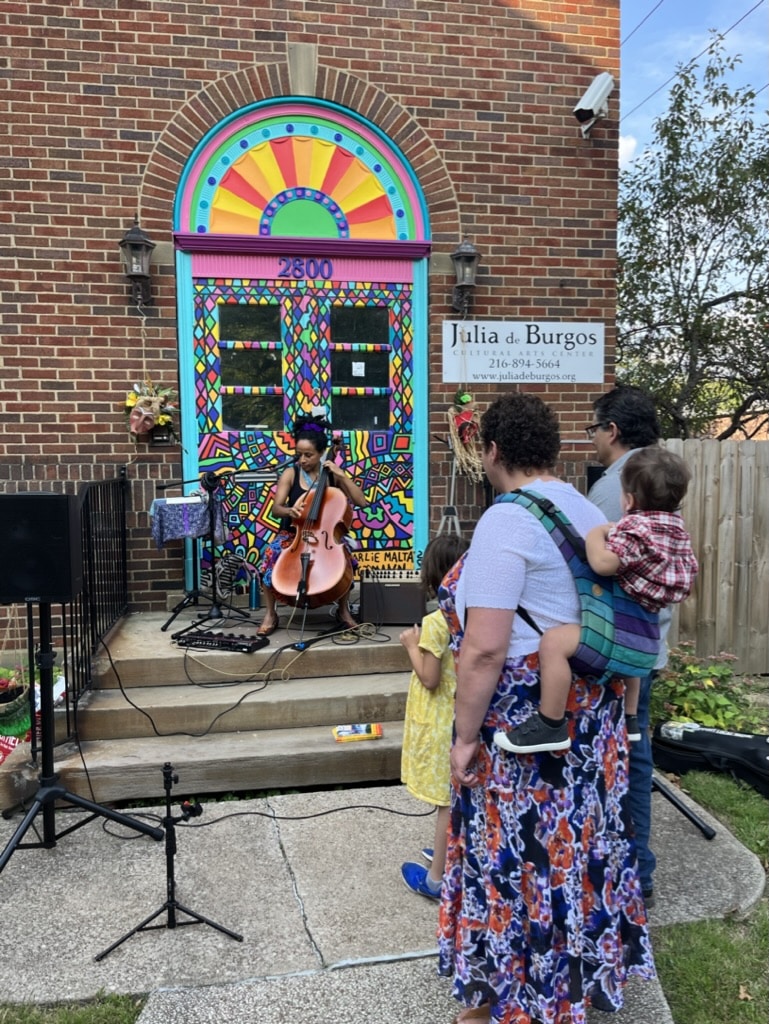
Since 2019, the funds that once took the form of $20,000 grants have been split into smaller amounts distributed by several community partners. Change began in 2017 when CAC stated that only 16 (of the 161 total) artists who received now-discontinued Creative Workforce Fellowships were identified as African American or Black. At that time, the artists on the planning team began grappling with an alarming lack of equity. Sixteen out of 161 is about 9.3% — a far cry from the 30% of Cuyahoga County citizens identifying as African American or Black.
Today, CAC boasts that those statistics have turned around — at least 80% of the 58 artists who benefited from various Support for Artist grants of $4,000, $5,000, or $6,250 throughout the 2023 calendar year are “Black, Indigenous, or People of Color (BIPOC).”
CAC says that recommendations from the Support for Artists Planning Team directly influenced the smaller grants being distributed by different community partners. Yet Donald Black Jr., a photographer who was on the Support for Artists Planning Team, told The Land he doesn’t think that the new granting structure makes up for the steep inequities of the recent past: “An artist right now can get one of these $5,000 grants and they can get three of them. Even if they get three of them, they’re still not getting what was being given out. Sixty-one white people got $20,000. Some of them more than once. Give 61 Black artists $20,000.”
“Equity is catching people up. What are you gonna do to catch up the community at large to the fact that you gave those fellowships out to all white people? Until that happens nothing will be fixed or repaired,” he said.
Another critique of the Support for Artist grants is that each of the community organizations uses a different application system to select individual artists. Those systems evaluate artists based on whether their work immediately engages their community in dialogue about pressing issues. But just what does that mean?
The Urgent Art Fund awarded 12 grants of $4,000 in 2023. According to the website for the nonprofit arts organization SPACES: “This support may go toward production expenses and artist commissions for the creation of ‘urgent art’ that is socially, politically, or culturally responsive. We are designating funds specifically for such projects taking place in the public realm, helping artists immediately engage their community in dialogue about the most pressing issues.”
The more narrow eligibility guidelines governing the Support for Artist Grants also faced harsh criticism at CAC’s November 15, 2023 board meeting.
“Yes, more artists are getting money, but we had artists getting tens of thousands,” said painter Gwen Garth. “The money that the Black artists can get now, we gotta jump through hoops for.”
“I see Black artists, artists of color being asked to support your development, your projects. And then when you give us money, there’s these conditions that yet again we’re supposed to use our art practice to help you feel connected to the community. We are the community.”
CAC could give more money to individual artists
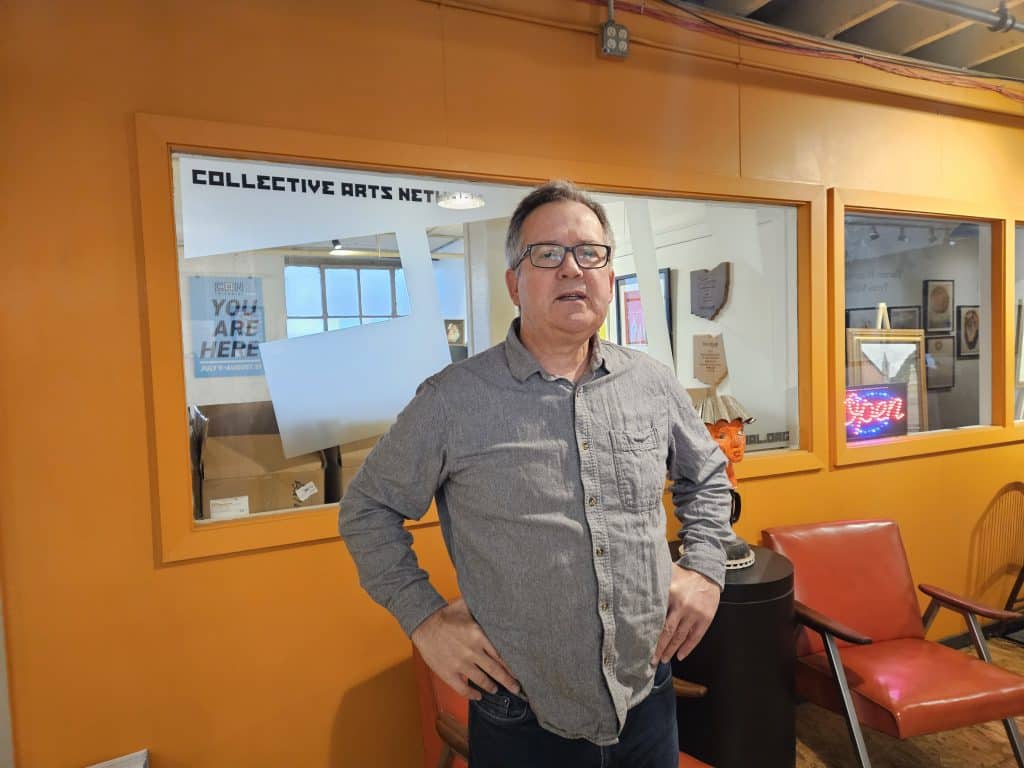
Some feel that the easiest way to expand the pie would be to add to the funds available for individual artists. Michael Gill, a visual artist who’s the editor of CAN Journal, a publication covering Cleveland visual arts news, said the budget set aside for individual artist support is dwarfed by the amounts typically given to powerhouse nonprofits like The Cleveland Orchestra or the Cleveland Museum of Art.
“They could double the amount of money they award to individual artists without having much impact on the organizations that they support,” he said. “The hundred-some organizations that they give general operating support to would hardly notice the missing $400,000 because it’d be divided between the organizations — some of them have budgets in the millions.”
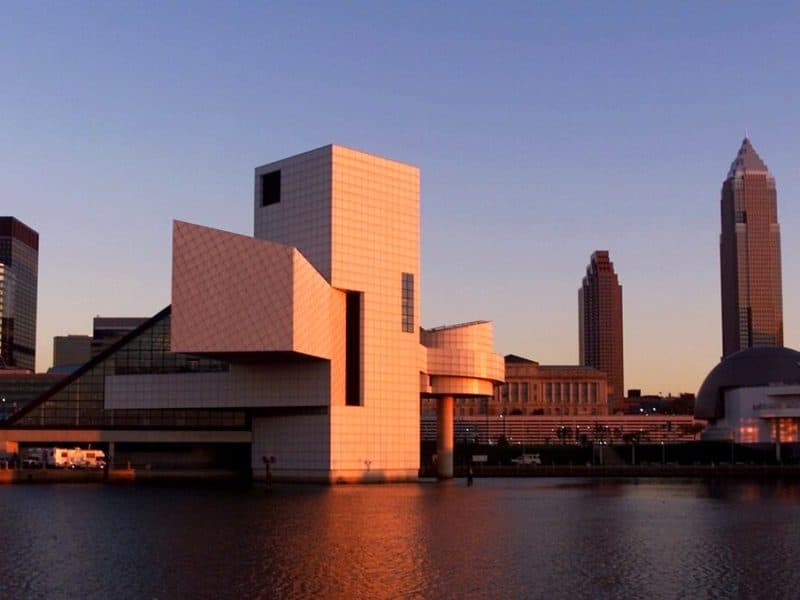
Liz Maugans — a practicing artist, co-founder of Zygote Press, a non-profit printmaking studio, and member of the Support for Artists Planning Team — shared similar sentiments in a recent op-ed published by Crain’s Cleveland Business: “Individual artists are fighting for pennies on the dollar when it comes to funding compared to the major institutions like the Cleveland Museum of Art, Cleveland Orchestra, Playhouse Square and the Rock & Roll Hall of Fame. With a combined net worth well into the billions of dollars, the nonprofits mentioned here receive the overwhelming majority of total funding.”
Despite rising criticisms, the board of Cuyahoga Arts and Culture voted to approve nearly all of their 2024 grants (excepting the individual artist grant amounts) during the November 15 board meeting. If you look at the full list of approved grant amounts, you’ll see that three organizations — the Cleveland Museum of Art, Playhouse Square, and the Cleveland Orchestra — were each granted amounts over $850,000 for the purpose of general operating support.
Jake Sinatra, Director of grantmaking strategy and communications for CAC, said this is because funds are distributed according to the size of the organization. “CAC uses a mathematical formula to determine its General Operating Support grant amounts, to ensure a fair and impartial distribution of funding,” he told The Land via email. “The formula uses a 3-year average of each organization’s unrestricted operating revenue. By using a formula, all 73 grant recipients can get meaningful grants relative to their budget size.”
On the topic of funding for individual artists, Sinatra said that CAC understands there’s work to be done: “We are grateful for the feedback from artists who participated in the listening process hosted by our grantee partner, Assembly for the Arts. We know this work will require accountability, space for healing the harms of the past, and true partnership with Assembly to ‘expand the pie’ of resources available to artists over time.”
It’s clear that CAC’s stated intent to regain the support of Greater Cleveland’s artist community was inspired by the findings of the Support for Artists Listening Campaign. In the article referencing the Assembly for the Arts report, Cleveland.com gave a brief preview of its contents. “Artists surveyed by Assembly for the Arts ‘expressed a range of emotions including anger, exhaustion, frustration, hopelessness, and sadness related to the deep perception of disrespect shown to them by CAC,’” Cleveland.com’s Steven Litt quoted the report as saying. “The report also stated that ‘deep distrust overrides interpretations of CAC programmatic and funding choices.’”
How can CAC make up the budget shortfall and regain trust?
CAC says they’re currently working with only 50% of the revenue they had in 2007, when the organization was first created. Unfortunately, CAC only has the ability to tax two things: property and cigarettes. Voters rejected a property tax levy in 2004.
One way to make up for some of the declining revenue, and potentially increase the amount awarded to individual artists, could be to raise the amount of the cigarette tax, which has stayed at 30 cents per pack since 2007. However, Assembly for Action (a sister organization of Assembly for the Arts) has decided to place a hold on their levy-dedicated fundraising campaign.
At this time, Fred Bidwell (Assembly for Action’s board chair) doesn’t believe that it’s possible to collect the $1.5 million that would be needed to ensure the levy passes. His recent guest column for cleveland.com explains that Cuyahoga Arts and Culture has lost the confidence and trust of the sector they’re meant to serve.
“The racial reckoning of the past several years has underlined the need to help individual artists and creative professionals build sustainable careers to create a new pipeline of leadership. But CAC’s response to this need has been clumsy and ineffective,” he said.
Speaking on behalf of his organization, Jeremy Johnson (President and CEO of Assembly for the Arts) tried to get the attention of Cuyahoga Arts & Culture when it was his turn to give remarks during the November 15 board meeting.
“We just completed a whole series of in-person interviews with artists. The results we’ll share in December, so I won’t jump ahead. But I’ll tell you they’re very sobering.”
“Assembly for the Arts and Assembly for Action already paid for public opinion research. It shows that the public — as we all know — they love and adore the arts in our community. So it really is the arts community that we’re relying on to have a unified front.”
“I know we’re not going to come to a resolution today but we need to come to a resolution soon. Individual artists play a big role.”
Cuyahoga Arts and Culture will have their next board meeting on Wednesday, December 13. For those unable to attend the 3:30 p.m. meeting, at Cleveland Public Library, it will be streamed on YouTube.
We're celebrating four years of amplifying resident voices from Cleveland's neighborhoods. Will you make a donation to keep our local journalism going?