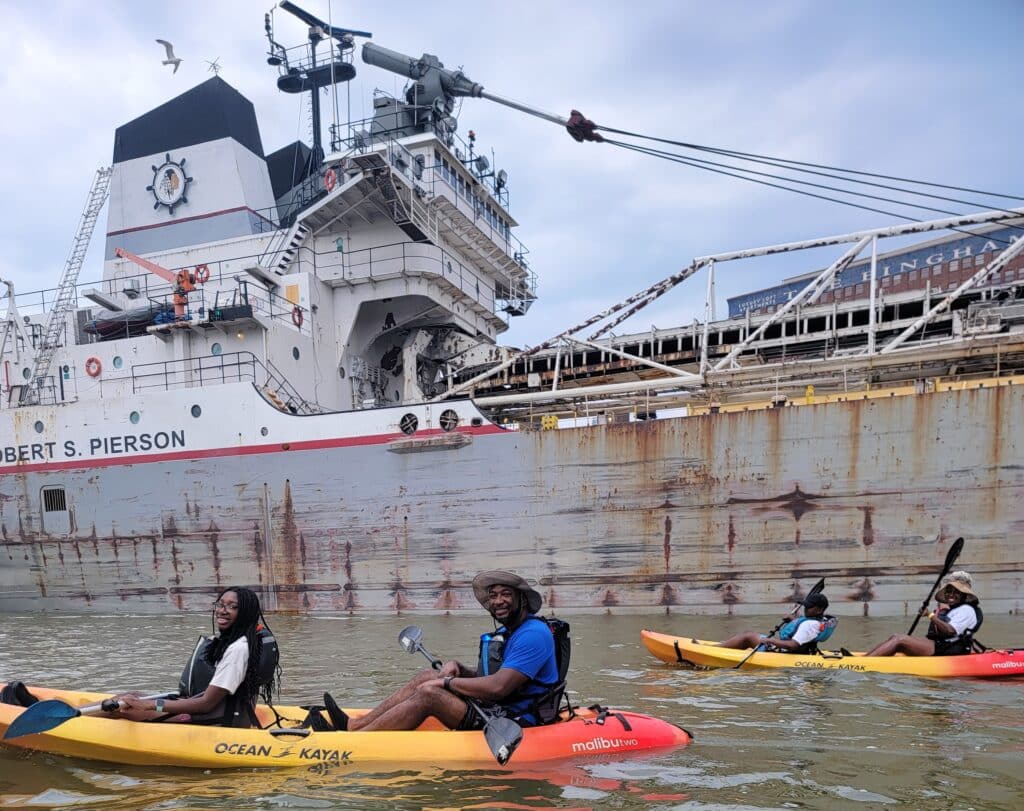
Cleveland has long been an industrial city, and the Cuyahoga has long been an industrial river. A working river. Roughly 13 million tons of cargo still pass through Cleveland Harbor each year. At the same time, stand up paddleboards, competitive rowers, and other recreational boats are now just as common a sight on the river as massive freighters.
The river is changing: it’s getting cleaner and more focused on fun and nature, and yet it continues to be a major commercial route. Today, government officials and area interest groups are working to balance these interests and are optimistic that they’ll reach a point where tension between commerce and recreation is a thing of the past.
Entities like the Cuyahoga River Area of Concern Advisory Committee are busy working to clear long-standing barriers to water quality, public health, and wildlife habitat preservation. Though huge freighters continue to ply the waterway, long gone are the days when the river was utilized as a literal dumping ground for any number of industries.

Yet, progress remains slow on the clean-up and protection of these waters, even as federal, state, and local organizations have opened their coffers to fund various improvement projects. Not only must river supporters navigate layers of governmental oversight, but also the natural systems themselves can take years to show signs of recovery even with the steady work taking place, notes Jennifer Grieser, chair of the Cuyahoga River AOC committee, who remains optimistic.
“We can have a giant ship as long as the Terminal Tower is tall beside a five-foot-long recreational boat,” says Grieser. “It’s imperative to let people know that we can have a thriving economy alongside recreational improvements. We have to come to a compromise and respect each other’s place in the world.”
A clean river is the goal – and it’s legally required
The fact that there’s interest in recreation on a river that infamously caught fire is a sign of how far the Cuyahoga has come in the last 50 years. TIME Magazine brought national attention to the polluted state of the river in 1969, and the publicity and public response are credited with leading to the passage of the 1972 Clean Water Act.
Efforts to clean area waterways continued with the Great Lakes Water Quality Agreement (GLWQA) signed by Canada and the U.S., which aims to reduce the amount of 29 toxic chemicals in the Great Lakes basin. Under the GLWQA, the Cuyahoga is one of the Great Lakes Areas of Concern (AOC), defined as U.S. and Canadian waters experiencing environmental degradation that impairs aquatic life or beneficial uses.
The lower 46.5 miles of the Cuyahoga – as well as the adjacent Lake Erie shoreline and its direct tributaries – make up the Cuyahoga River AOC. The area begins at the head of the Gorge Dam pool in Akron and Cuyahoga Falls, encompassing the shoreline from the western Cleveland border to Euclid Creek to the east.
The GLWQA requires identification and removal of Beneficial Use Impairments, or BUIs, from these affected areas. The Cuyahoga AOC has six remaining impairments, including sediment contamination as well as dams and additional barriers to fish passage. Simply accommodating freighters on the watercourse necessitates sediment dredging activities harmful to fish and macroinvertebrate populations. Removing sediment through dredging can physically degrade fish habitats or even release pollutants such as hydrocarbons and heavy metals into the water. (The EPA lists sediment as the most common pollutant in streams and rivers.)
However, some BUIs such as harmful algae blooms have been successfully removed from the Cuyahoga AOC – that happened in 2021 – thanks to years of regulations and reduction of surface runoff into storm sewers, leading to healthier ecosystems and improved accessibility to water-based recreation.
How the work is getting done
The Cuyahoga was determined an area of concern under the GLWQA in 1987, with the local AOC’s boundaries established the following year. Over time, the river has been degraded due to numerous factors, ranging from natural and human-caused sediment and streambank erosion to leftover contamination from urban industrial sources.
Delisting the Cuyahoga as an AOC is the ultimate goal, one that can only be accomplished by meeting all BUI targets throughout the watershed. Enter the local AOC advisory committee, a task force representing businesses, community groups, government agencies, and other organizations working for clean water and river restoration.
The Cuyahoga Soil & Water Conservation District serves as the facilitating organization for the AOC advisory group by way of a two-year, $105,000 contract from the Ohio Lake Erie Commission. The funding is used to pay staff and support projects like the Gorge Dam removal, even as implementation of total BUI actions has a price tag of well over $150 million, says Grieser. Dollars for these projects come largely from funds under the Great Lakes Legacy Act and the EPA-funded Great Lakes Restoration Initiative – a multi-agency organization that provides funding for the biggest threats facing the lake ecosystem.
“We must remember that these are not one-and-done projects, but need ongoing support,” says AOC Committee chair Grieser, who is also director of natural resources at the Cleveland Metroparks. “It’s about championing positive ecological stewardship alongside development on the river.”

How commerce cooperates with environmental and recreational efforts
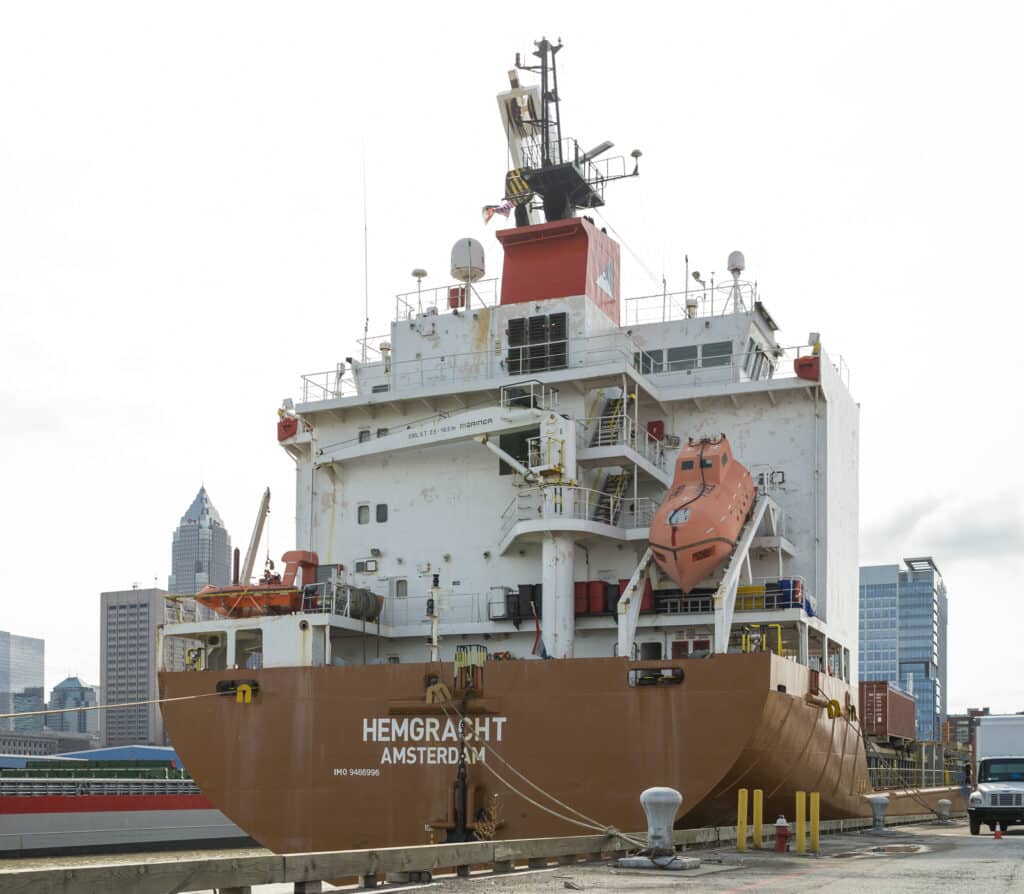
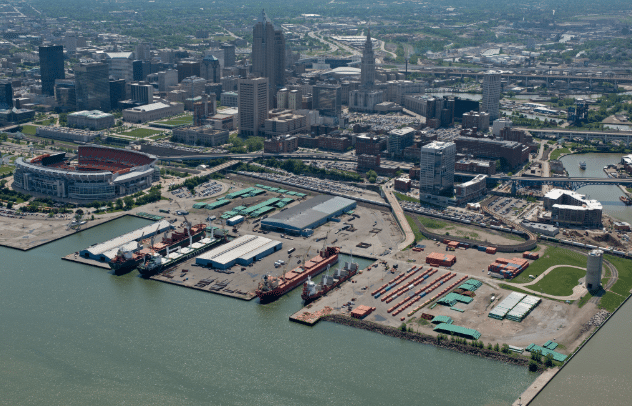
Pollution control activities under the GLWQA continue even as the Cuyahoga remains a critical watercourse for commerce. The Cleveland-Cuyahoga County Port Authority, which is an AOC Committee member, oversees the roughly 13 million tons of cargo that move through Cleveland Harbor each year. Despite the historic tension between industry and a clean river, the Port is positioning itself as an advocate for the Cuyahoga.
Delisting the Cuyahoga as an AOC is a vital facet of the port’s strategic plan, says Jade Davis, the port’s vice president of external affairs. Davis points to port-centric proposals for river renewal, including a sustainable dredge management program along the 5.9-mile river shipping channel. According to a strategic plan published by the port in 2016, environmental best practices are a key element of port infrastructure projects. The plan lists recycling, LED lighting, and greenspace wildflower cultivation as part of a larger organizational mission that encompasses advocacy around a cleaned-up river. Since 2012, the Port has deployed its tandem Flotsam and Jetsam vessels, which were built for the sole purpose of removing commercial-based plastic and organic debris from the river.
The port also backs initiatives like the Irishtown Bend project, set to transform 17 acres along the Cuyahoga into a new park while ensuring ships can travel safely down the river. (As of this time, the project remains stuck in a legal dispute.)
Davis is already seeing the fruits of the advisory group’s labors in the form of new waterway activities on the cleaner Cuyahoga, such as the nonprofit Argonaut’s support of a maritime-themed curriculum that gets local high school students on the water. “The river literally runs through urban areas and a national park – it is a true treasure,” says Davis. “Our crooked river is the genesis of the metro region, and it’s the future as well. It’s what makes Cleveland, Cleveland.”
Supporting a large-scale effort
The work of delisting the Cuyahoga AOC needs continuing assistance not only from industry leaders, but government officials who understand the resource’s significance, says Drink Local Drink Tap founder Erin Huber Rosen, whose nonprofit is dedicated to improving water equity through education and creation of clean water sources.
Huber Rosen is heartened by the Bibb administration’s early work around environmental issues, including naming Sarah O’Keeffe as Cleveland’s director of sustainability and climate justice. Among Mayor Justin Bibb’s other environmental goals is transitioning the city’s energy supply to 100% renewable sources by 2030. Additionally, the city planning commission is spearheading its Vision for the Valley plan to guide development along a Cuyahoga that is still friendly to commerce and recreation.
“We need leadership from city hall to say we value our rivers and lakes – Lake Erie is part of a system that provides 20% of the world’s fresh surface water,” Huber Rosen told The Land. “And if residents have development projects in their area, they should find out how those projects will affect the river and other natural spaces. Bring your voice to the table, because at a certain point, you can’t do what’s been undone.”
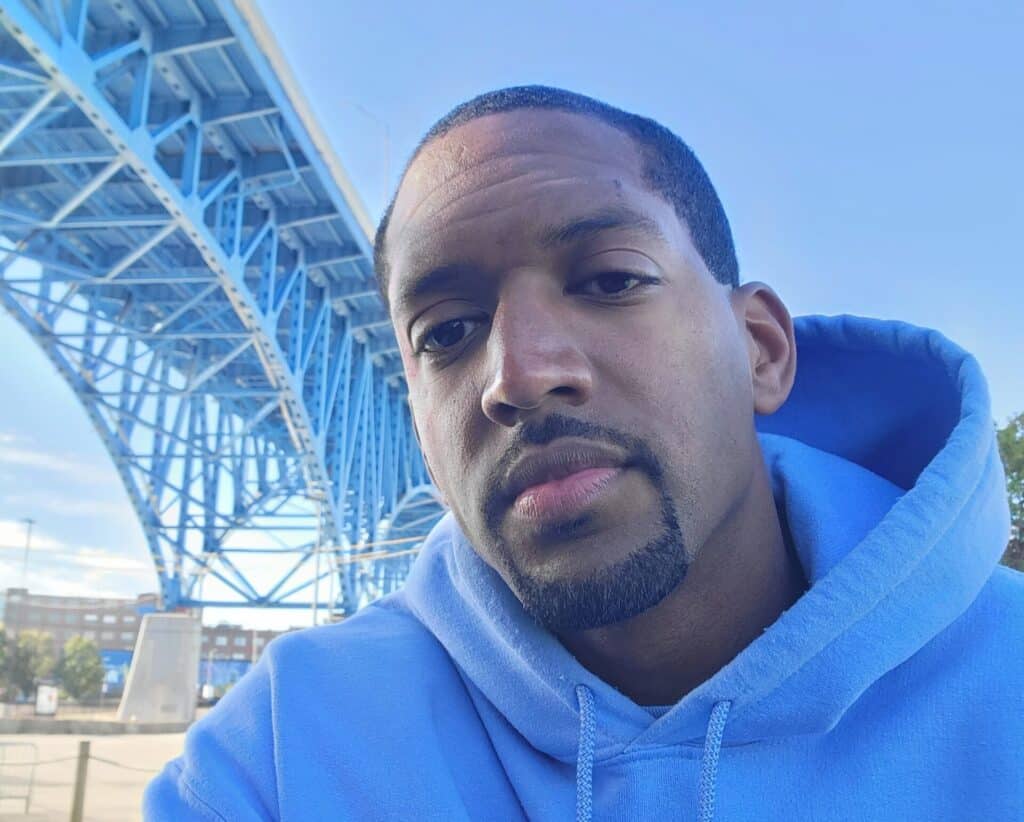
Joshua Allen, owner of Great Lakes Watersports, is vocal about how a healthy Cuyahoga can bring new customers to his watercraft rental business – a different kind of commerce that the river now supports. The company has grown 35% year over year since 2020 – and a clean waterway will only continue that trend for Allen’s business and the riverfront economy at large.
“The river allows for community freighters to carry raw materials to factories, which is a huge economic driver,” says Allen, acknowledging the dual uses of the river. “The Cuyahoga is an amazing resource that we need to appreciate and take care of.”
Underwriting support for this article was provided by the Northeast Ohio Regional Sewer District.
Keep our local journalism accessible to all
Reader support is crucial as we continue to shed light on underreported neighborhoods in Cleveland. Will you become a monthly member to help us continue to produce news by, for, and with the community?
P.S. Did you like this story? Take our reader survey!