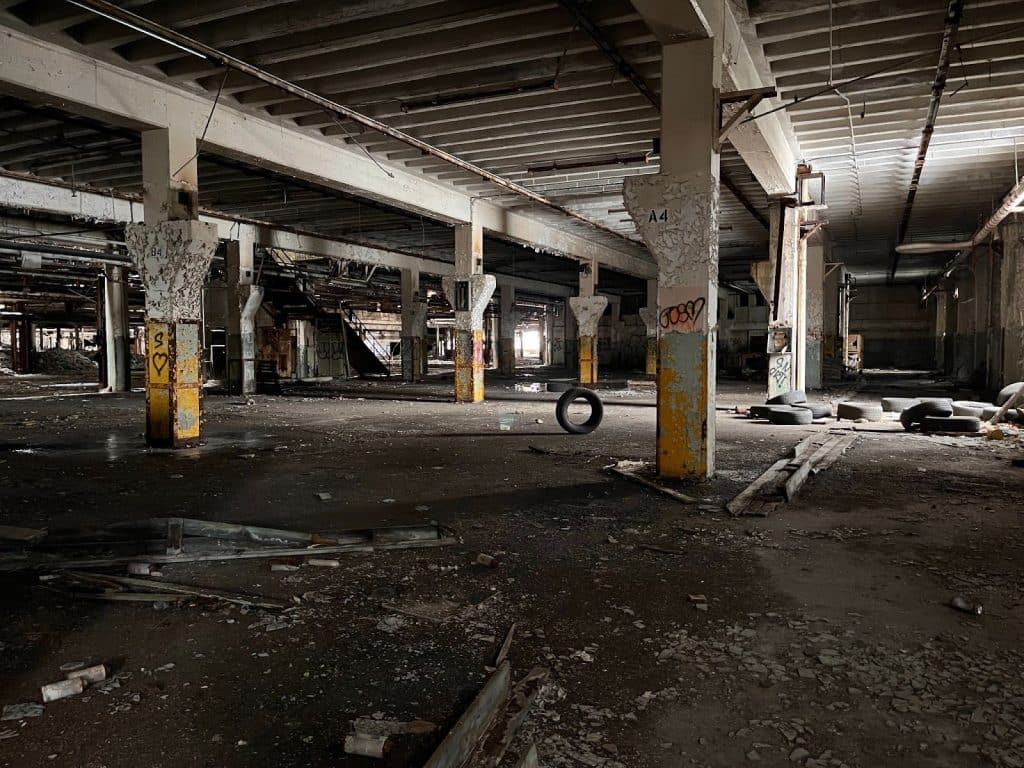
A quarter-mile southeast of the Greater Cleveland Food Bank’s East Side distribution center formerly sat a small stand of trees, their roots entwined among bags of household garbage in a wide concrete expanse. The trees occupied their wide, abandoned lot alongside the disheveled concrete-and-rebar body of the National Acme tooling plant. But the trees have since been removed, a fate the remaining structure will come to share over the next year due to a push from local politicians.
The factory, cradled in the A-frame-shaped intersection formed by the crook of Coit Road, Kirby Avenue, and East 131st Street, once employed upwards of 6,000 Northeast Ohioans at its peak in the early 1980s. However, as of early 2025 — with the Cuyahoga Land Bank (CLB) working on behalf of the city as the parcel’s landholding entity to secure a labor contract to clean and demolish builds on the 15-acre landmass — that structure is now a skeleton.
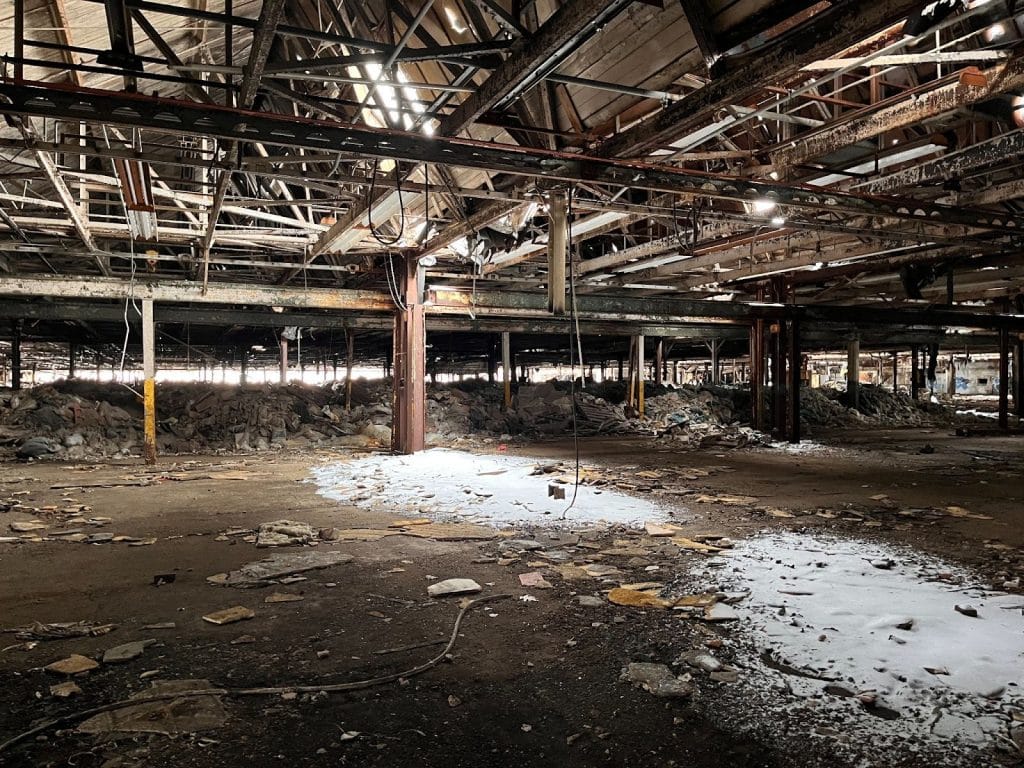
According to Cleveland City Councilman Mike Polensek, whose Ward 8 encapsulates dozens of former large industrial employers including National Acme, the remaining patchwork factory is now home to thousands of tons of waste. Roughly two-thirds of the original building remains after a former owner attempted to illegally dismantle it, and what remains of the roof is falling as a result, coating the bagged and loose trash with toxic powder .

“The history after Acme left is wild,” explained Adam Stalder, director of community stabilization for the CLB. “What’s unique about this project (is) there was so much dumping, and one part of the structure was demolished illegally.”

The degrading roof compounds the problem as it crumbles in patches revealing piles of trash that exceed 25 feet in height in some corners. Despite multiple factors complicating the site’s demolition, Polensek has had eyes to redevelop the site since 2014 due to its potential for industrial capability amid the surrounding community’s historical need for additional jobs.
If the councilman considers the Jergens, Inc. machining factory on its redeveloped tract of land at the former Collinwood Yards rail depot to be the 13-acre poster child for responsible brownstown redevelopment in Cleveland, then the National Acme factory will be his proof of concept. If it works out, new-build developers and site-cleaning contractors are more likely to target longstanding sites ranging from the closed Dave’s Market in North Collinwood to any of Cleveland’s unoccupied housing.
“We all know there is potential (in this part of the city) because we have rail, and there are manufacturers that still need rail,” Polensek explained. “The majority of these (abandoned industrial) sites in this city have potential, but nobody’s going to touch them in their present condition. And you can’t blame anyone; who would want to be caught in a chain of titles with underground tanks or dumping?”
Polensek’s perspective on the National Acme plant stems from personal experience and professional obligation — he grew up in Glenville and graduated from Collinwood High School, less than two miles from the former factory that once employed one of his uncles. Having primarily overseen portions of Cleveland’s Northeast side since taking office in the city in 1978, Polensek’s voice wavers between contempt for the site’s past and hope for its future.
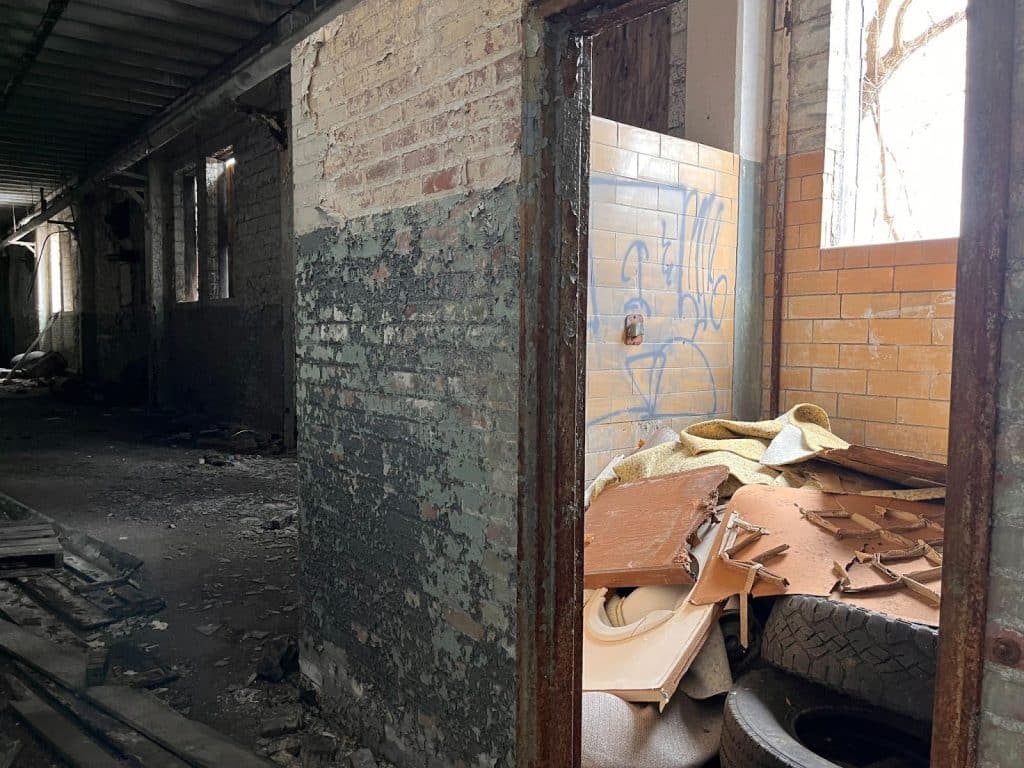
While the miniature garbage forest has since been removed, crews will have to take greater care in donning personal protective equipment and engaging in mindful work practices when it comes to removing the indoor garbage and the roofing material now covering it. As a result, Stalder said roughly $8 million of the project’s anticipated $11 million price tag will be used on asbestos remediation and abatement before the building comes down.
“The demolition [costs]about $2 million,” Stalder said. Looking at everything, a typical remediation of (a site) this size will be less than a million bucks.”
Industrial devolution
Two of the most common hidden pollutants at industrial sites like the National Acme factory are underground pollutants or subterranean tankers installed on site. Stalder is fairly certain that all the pollution at the National Acme plot is visible aboveground. Waste will be trotted off to various landfills. The structure’s frame, if deemed intact enough to be used again, will be dismantled and sent to construction yards in stacks of sheared steel or piles of gravel ground from concrete.
“The roof, which has asbestos in it, has been sprinkling down on top of the municipal solid waste, meaning that all of the waste has now been contaminated with asbestos and has to be hauled off and treated as though it contains asbestos. . . It has to go to a special landfill. It has to be still as it’s being handled.
Rust and dust
Regionally incorporated as the Acme-Cleveland Corp., the factory’s presence in Northeast Ohio began shortly after 1916 as the result of multiple mergers involving the National Acme Company out of Hartford, Connecticut, and eventually the Cleveland Twist Drill Co.
East 131st and Coit, the intersection Polensek most commonly references when discussing the site, cradled the company’s first Cleveland location through 1999, when a series of corporate divestments and sales placed the space in the hands of a real estate holding company.
The shuttered factory sat dormant and trash-free for the next decade-plus until Michigander Christopher Gattarello detected opportunity and leased it with the intent of using the former Acme plant as a recycling center to process cardboard and paper waste products for his two garbage hauling operations.
Not long after, however, Polensek said Gattarello apparently gave hauling crews the go-ahead to begin carting trash from local fast food restaurants and other vendors who had chartered his services to the shuttered factory.
The now-60-year-old was charged in 2017 with violating the federal Clean Air Act, indicted alongside fellow Michigander Robert Shaw and Clevelander William Jackson, who operated a demolition company. Shaw’s attempts to remove portions of the structure’s roof and body without properly reporting asbestos content contributed to the site’s need for abatement.
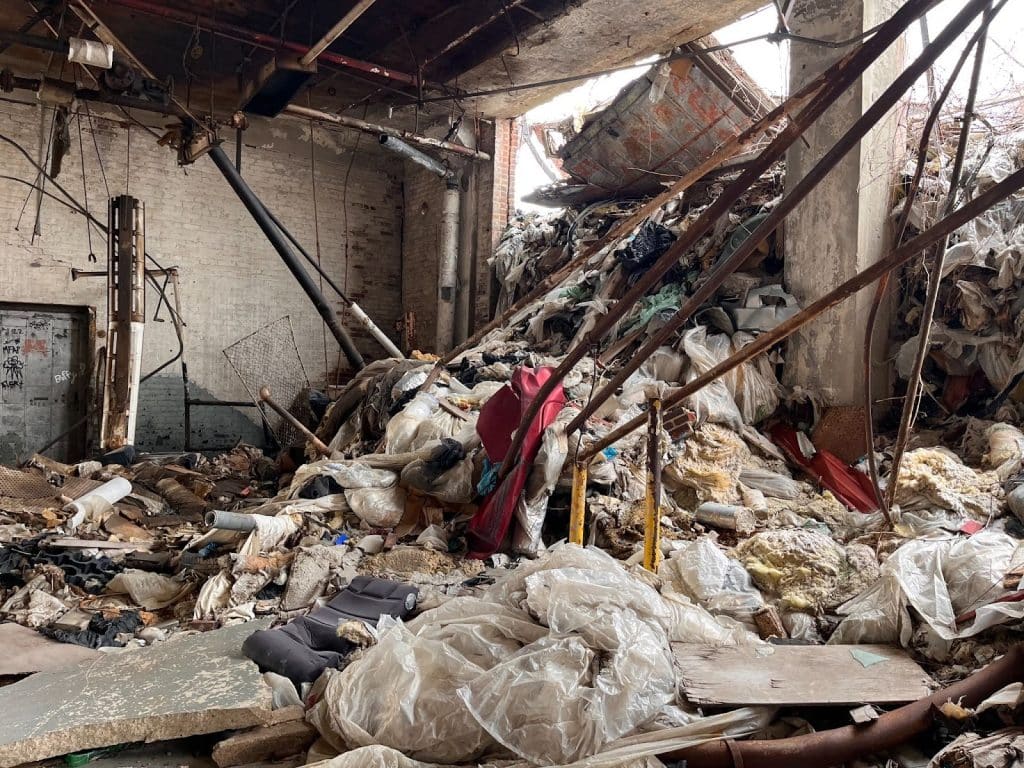
Polensek complained publicly of “possum-sized” rats living in the trash heaps at the site over a decade ago. In the years since, he has spoken about the illegal dumping measures taken at the site in the press, at rallies and in federal court, where the Councilman testified against Gattarello and his associates in 2017. Gattarello saw five years in prison and a $7.8 million fine as a result, unofficially positioning Polensek in charge of cleanup duty.
For Polensek, reviving the site would have personal and historical significance for himself and other descendants of longtime workers who once populated the factories spanning the area between the Collinwood and Glenville neighborhoods and Downtown Cleveland.
“Unless there is a concerted effort to rid our neighborhoods, and not just Collinwood and Glenville, of these abandoned (structures) that remind us every day of disinvestment or fleeing out of this country. . . you’re never going to see change,” Polensek explained.
The East Side’s former major manufacturer-employers included the Hupp Motor Car Company; Reliance Electric Company; Parker Hannifan Corporation; TRW, Inc. and White Motor company, all of which owned, operated, shuttered and then abandoned large-scale manufacturing facilities in hopes they would find future use. Polensek worked for several years at the former White Motor factory on St. Clair Avenue, where he also organized union activities as a member of United Autoworkers Union Local 32, before the company ceased to exist in the ’80s.
“I’ve worked a long time on this,” he continued. “I made a determination that I was going to do everything I could to address that site because I remember what it once was, and how it’s become abandoned, and how it’s become a reminder every day when I drive past it of disinvestment.”

Post-plant potential
Stalder, meanwhile, shares Polensek’s sentiments about the site’s potential, but said he is excited to clear it from his slate after the city transferred it to the CLB in early 2025 via a sheriff’s deed. Stalder said the CLB is better positioned to apply for and appropriate outside funding than the city is due to its status as a non-governmental entity. By adding the National Acme plant to its stock of other local brownfield landmasses in need of significant de-pollution measures, his team is able to take more liberty in bidding contracts to demolition and abatement consultants.
Taxpayers throughout Ohio will ultimately bankroll the bulk of the work performed by the contractor selected; $7.6 million of the project’s proposed $11 million bill comes from a site-specific grant via the Site Readiness for Good Jobs Fund. The Cleveland-based fund, whose nine-member board comprises city politicians like Councilman Anthony Hairston, as well as local investors like Shelley Roth, helped to secure $45 million in state funding for the Cuyahoga Land Bank to use in revitalizing the plant and six other brownfields in August of 2024.
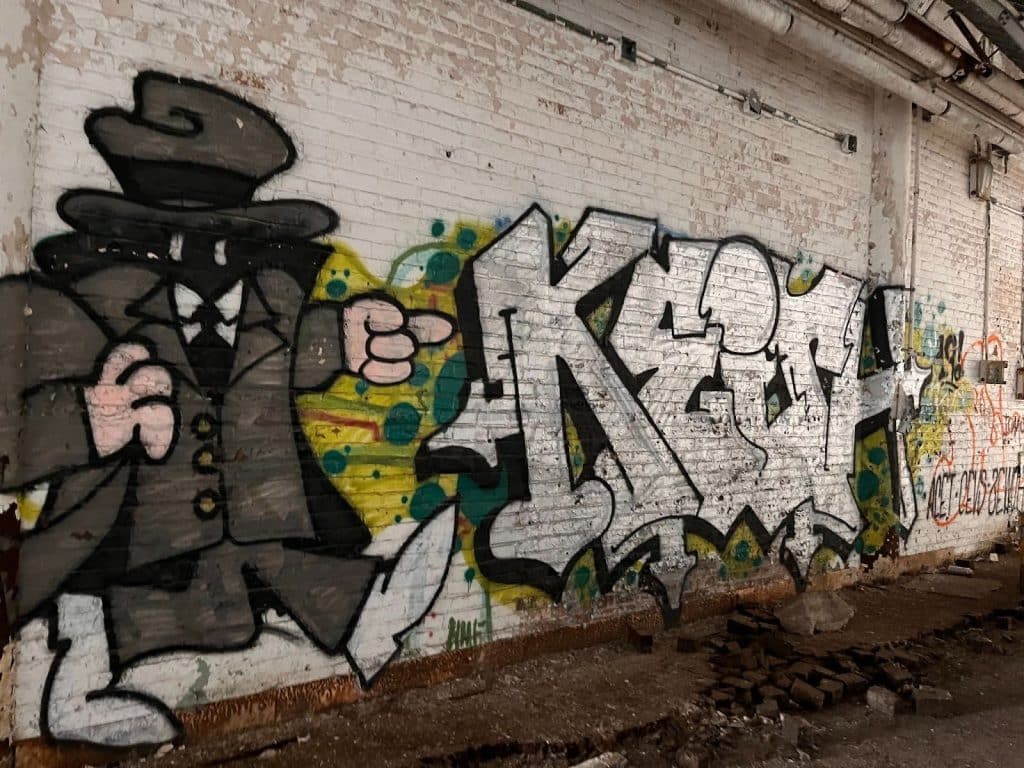
Cleveland City Council stated in late 2024 that the municipality will take point on marketing the 582,000-square-foot property to developers, with a focus on large-scale manufacturers in the vein of National Acme. The city will also kick in just over $2.5 million to supplement the state money in what the December press release called “the largest single demolition the Cuyahoga Land Bank has ever tackled.”
All of this occurs on a site whose net worth sank from a recorded 1996 high of $1.5 million to just over $235,000 in tax year 2024. That period has seen the land’s taxation value be halved by the East Side’s aforementioned industrial divestment while the worth of the building, intact and asbestos-free in the mid-90s, has fallen from $964,000 to $1,000 along the same timeline.
“It’s a great site,” Stalder explained. “It’s big, it is close to rail and the highway, close to the lake for multimodal access. It’s not too close to residential districts so a typical industrial use could fit right in there. It’s also scalable. There’s more land on all sides of the building to scale up.”
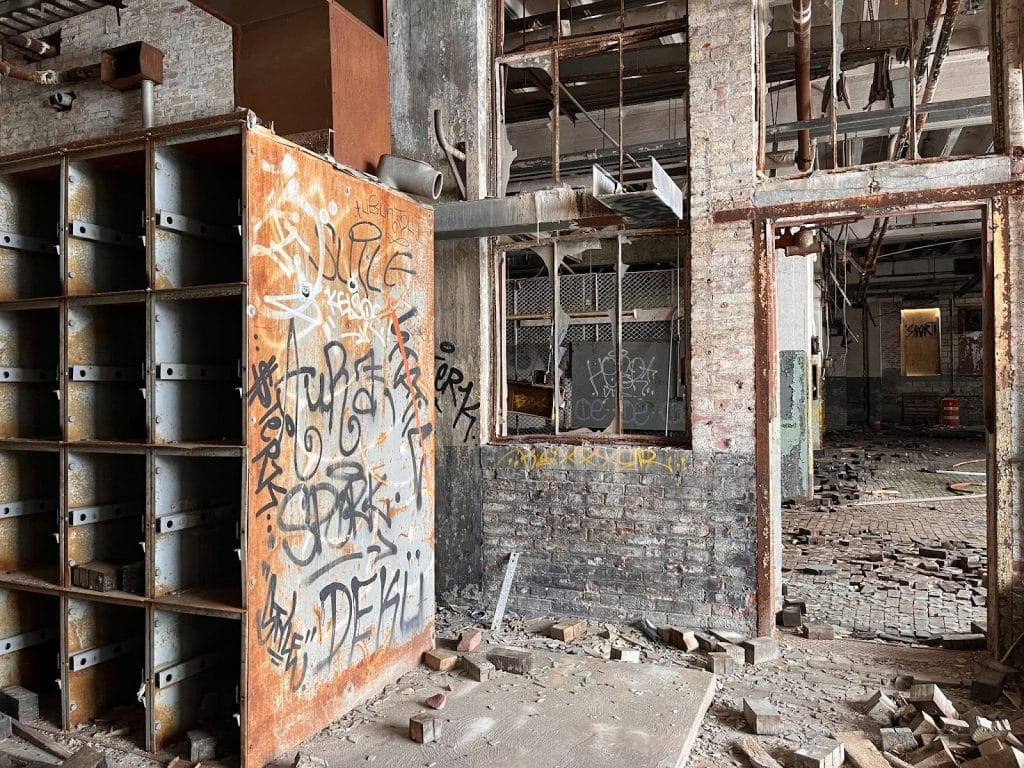
Such brownfield sites — including the former Sears store in Middleburg Heights that is primed to see $5.6 million in state money and the former juvenile justice center on East 22nd Street set to see $6.8 million through the land bank — often result from a combination of physical, chemical and financial factors.
The unique history of each site compounds the hopes and woes of local developers and the agencies funding them; the Juvenile Justice Center’s highway proximity, the Memphis Road and Pearl Avenue intersection’s storied legacy and the old Sears building’s commercial potential made each site attractive to private-sector developers at some point in the past, and will possibly do so again in the future, but only if the way to redevelopment is clear.
Developers, Polensek said, are more than likely to pass up a piece of land if they have to dismantle an old structure before beginning a new build.
Ultimately, former tenants’ practices and the passage of time are the factors most likely to render brownfields either too polluted or too large to welcome residential or commercial development without scaring off potential developers and investors.
While the Ohio Department of Development’s $150 million Building Demolition and Site Revitalization Program is designed to aid in building and property rehab “on sites that are not Brownfields,” the program still ended up granting roughly a third of its operating budget to the local land bank for the aforementioned seven properties. Polensek said this practice is proof that entities involved in state, local and private redevelopment all need to reconsider their strategies when it comes to repurposing abandoned lots.
“There’s got to be a concerted effort, especially at the state level, to acquire and demolish these abandoned sites,” he continued. “If you let them sit there, they’ll sit around until the Second Coming. It’s never going to happen. The city and the older, inner-ring suburbs, we do not have the financial ability or wherewithal to tear this stuff down.”
Capital expenditures
Some view Cleveland’s large number of brownfields as detractors for development, causing large-scale, out-of-state employers like Google, who would be most interested in reusing the sites as new facilities, to instead shift their gazes south to cities like Columbus and Cincinnati.
Polensek and Stalder have previously exemplified the issue by citing Intel’s planned multibillion-dollar campus of two microchip factories and the jobs they will spawn in Licking County, northeast of Columbus, by 2030.
Meanwhile Pickaway County, just south of Ohio’s capital, is set to see the construction of California-based automated weapons manufacturer Anduril Industries’ 500-acre production facility that is set to create 4,000 jobs between now and 2035.
In a mid-January press release, JobsOhio heralded the Arsenal-1 project, as “the largest single job creation and new payroll project in Ohio’s history,” promising the company would invest $900 million in the surrounding region northeast of Hocking Hills State Park.
“We need real help from the state with additional brownfield abatement and demolition funds,” Polensek said in a follow-up email in January. “I personally believe (the state’s) focus is on Franklin County and the immediate surrounding communities/counties.”
In addition to being counterproductive to job creation, Polensek said the state’s regional redevelopment strategy weakens the economies of older urban focal points like Cleveland while encouraging development on farmland and previously undeveloped “greenfield” land that would otherwise be used for residential or agricultural purposes.
“We need to protect our agricultural farms and lands,” Polensek said in response to the recent news of Anduril’s tenancy. “I am greatly concerned that family farms are disappearing in Ohio due to urban flight and industrial expansion. This is not good for us as a society.”
As organizations like the CLB communicate with state and regional funding entities and politicians to work through their current slate of brownfield redevelopment projects while identifying future sites needing work, Polensek said he would like to see state lawmakers assist in the process by revising Ohio’s current strategy for holding landholding entities accountable.
“You don’t see this in other states,” Polensek added. “In Ohio, if I’m the bank and I foreclose on your business or your home, I don’t have to put the property in my name as the bank, mortgage company or lender… (so) there it sits in limbo. You’re not operating your business, you’re not living there, you might have been out (of the building) for years, but you’re in a chain of title, and the lender or mortgage company takes no responsibility for the property. That is insane.”
Aside from the aforementioned seven land bank properties, the City of Cleveland also has its eye on developing land surrounding the Opportunity Corridor. The Abandoned blog, which was instrumental in writing the portions of this story dealing with National Acme’s local history, may offer some insights into sites in Ohio and other regions that could be considered for future state-funded facelifts.
Readers interested in learning more about Ohio’s approach to brownfield remediation can research Ohio’s Targeted Brownfield Assessment Program and a slew of 61 properties set to receive over $55 million from the Ohio Brownfield Remediation Program. Applications for these funding streams are not open at the time of publishing, but more opportunities will likely be announced at the 2025 Ohio Brownfields Conference on May 8 in Westerville, just north of Columbus.
Keep our local journalism accessible to all
Reader support is crucial as we continue to shed light on underreported neighborhoods in Cleveland. Will you become a monthly member to help us continue to produce news by, for, and with the community?
P.S. Did you like this story? Take our reader survey!