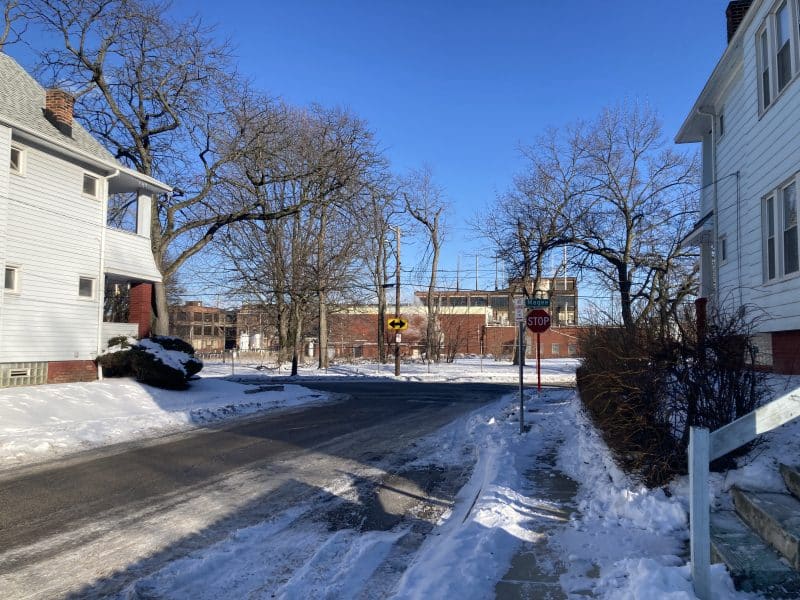
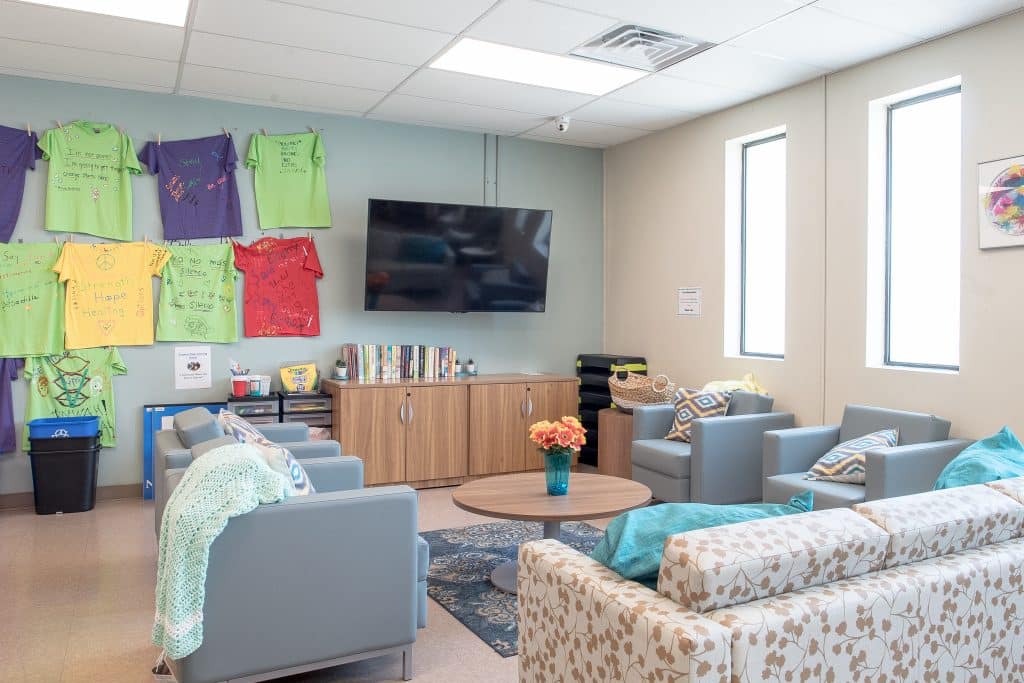
Since it opened in April 2021, the Human Trafficking Drop-in Center (DIC) in Glenville has been a safe space for women survivors. It is the first facility of its kind in Northeast Ohio. Last year, the DIC had more than 200 women visit or use its services.
Now, the Cleveland Rape Crisis Center (CRCC), which operates the DIC, continues to expand and enhance the services available to the women guests who are survivors of human trafficking.
Survivors can come in and receive emergency services if they are in crisis, or they can enroll in a variety of specialized services such as counseling, advocacy, legal or medical assistance. But they can also just come in and grab a cup of coffee and a snack, enjoy a conversation, play cards, take a shower, pick up personal hygiene products, do laundry or just relax and watch TV.

Computer terminals are available if they want to search for a job or a place to live. The center offers a full range of programming that includes parenting classes, empowerment workshops, job readiness and financial classes, and support groups.
They can also take home a couple bags of food from the pantry provided through a partnership with the Cleveland Food Bank. Individuals can also obtain food stamps or benefits assistance at the DIC. If the person has a child, the DIC features a comfortable family play area with toys, books and games.
“We found that basic need support, housing support and basic emergency relocation services were the number one requests,” said Jessica Martin, chief program officer, CRCC. “In the first year, the DIC provided 201 services, which isn’t bad for a first year, but a lot of people didn’t yet know we existed or what we did.”
In 2023, when the center added housing support services, they went from furnishing 433 special services to 1,215 in one year. Last year, the DIC provided 1,432 services to help survivors, and this year by the end of July they had provided 755 services to help survivors.
In the first year, the center served 26 individuals. The number continued to increase, and in 2024, they served 101. This year, they served 92 individuals who were not previously enrolled in services, and 233 who were, by the end of July.
“The CRCC Drop-In Center plays a vital role in Cuyahoga County’s coordinated response to human trafficking, because survivors rarely self-identify, and when they are ready to seek help, they need a place that is safe, welcoming, and very low barrier,” said Kirsti Mouncey, president & CEO, The Collaborative to End Human Trafficking. “The Drop-In Center fills that critical gap, offering immediate support when it’s needed most.”
According to Martin, the goal is to provide as many essential services as possible at the DIC as a one-stop location for survivors. While some people come and go, roughly 50% of regular guests eventually enroll in special services offered.
“There’s a reason that people aren’t traveling out into the community, it’s because they can’t,” Martin explained. “The community can be a desert to a lot of services the women need – medical, grocery, banks – so we’re trying to see how we can bring a lot of that on-site in a modest way, of course, since [the former bank branch] is not a huge building.”
CRCC adding new services to the DIC
This year, the DIC added Thrive Peer Recovery Services onsite to enhance their efforts to address harm reduction. Thrive’s support staff have lived experience that they can draw on as they assist people suffering from mental health or substance use disorders.
Rather than try to reinvent the wheel, Martin said, they wanted to offer the expertise of the proven organization to supplement the work of the dually licensed trauma therapist and substance abuse counselor on staff.
“They have a peer support program for folks that are both survivors of trafficking and have experienced substance use,” she explained. “It’s a very unique mixture, and they’re onsite providing those resources 40 hours a week.”
This fall, the DIC will add remote banking services provided by PNC Bank through a mobile banking office that will drive on-site several times each month. The bank will offer only basic banking services and will not use it as a sales branch so that the women are not pressured into signing up for credit cards, loans or other services they may not be able to afford.
The mobile PNC office will provide guidance with financial literacy and establishing banking or checking accounts and will only assist with setting up and using a credit card if it’s appropriate for the individual.
“We’ve been doing a trial run this summer, and we will continue to monitor it to ensure that it’s working well and being well received by survivors and the community because it’s not just for survivors,” Martin said. “But we will have protected access for survivors at specific times.”
Construction will soon begin on a gate and fence that will surround the parking lot to improve security at the DIC, which also employs a security guard. The fence will enable the center to confirm guests driving in at the gate and allow the center to have a safe outdoor picnic and seating area for guests.
New medical suite a 2025 highlight
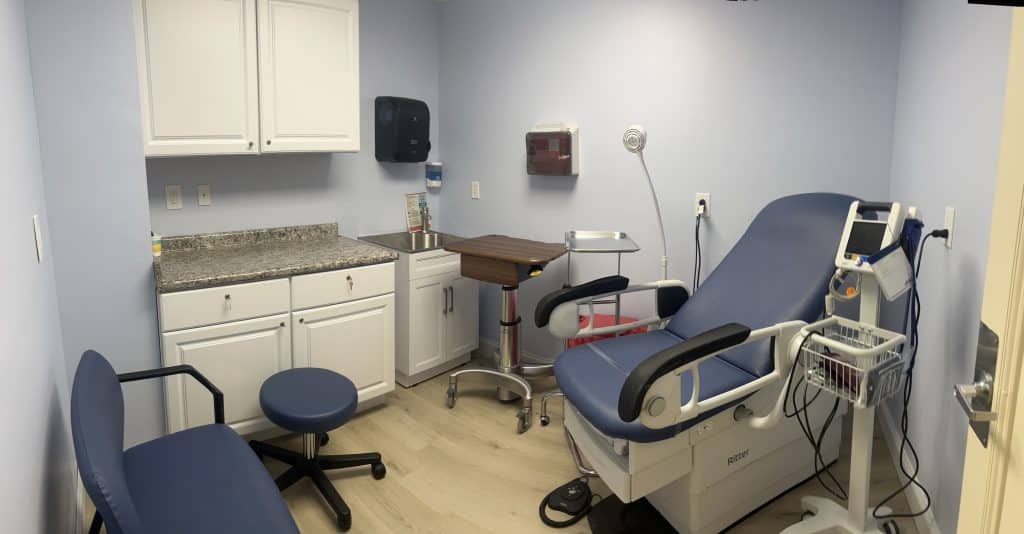
At the beginning of this year, the DIC debuted its medical suite, a one room examination facility where individuals can receive basic primary care, including treating coughs and colds, blood pressure screenings, wound care and STI testing and treatment.
CRCC obtained a federal appropriation of $120,000 for equipment, services and supplies necessary for the conversion of a restroom into the medical suite and for the first year of services. They contract The Centers for Families and Children each year to provide the onsite nursing and medical services, and CRCC purchases the medical supplies and equipment needed to continue expanding the offerings. Each year, they will have to secure funding for the following year for services to continue, according to Martin.
“Because of ongoing federal budget uncertainty, several of the grants that help sustain our medical suite are at risk,” Martin said. “Some are set to expire this month without confirmed replacements, though CRCC remains committed to maintaining uninterrupted care for survivors while we pursue bridge and replacement funding.”
For services they can’t provide in the suite, such as dentistry or psychiatric care, Takiyah Smith, DNP, RN, integrated health nurse at The Centers, said she will refer individuals to The Centers medical facility nearby at the former Free Clinic building. It is not free, but they accept all insurances. Smith works at the DIC every Thursday from 10 a.m. to 4 p.m.
“Because they don’t usually know anyone in medicine, but they know me as a familiar face from the DIC, I can book them an appointment at The Centers with me and a nurse practitioner or a doctor on a different day,” she said. “Then they will be more likely to keep the appointment. We do reminder calls the day before and can schedule Uber rides to and from the appointment.”
Smith, who started at the DIC in February, said she spends a lot of her time building trust with the women so that she can help them, especially if they are dealing with difficult health situations. She’s encountered a few women in crisis, such as a young woman who tested positive for an STI and was afraid she would be thrown out of the house she was living in by her trafficker. Smith and other DIC staff were able to calm her down and make sure she was treated.
More often, Smith said her primary objective is to get the women to begin thinking about their long-term health care and not just short-term therapy at the DIC. She can help them get signed up for a primary care provider appointment to get them started. For survivors, that’s one of the benefits of having the medical suite in the DIC.
“It’s hard when you’re thinking about how am I going to survive this day or this week?” Smith said. “So when they see a person in scrubs doing a blood pressure check, they start to think, ‘Maybe I should care about my blood pressure,’ or ‘Maybe I should sign up for a primary care provider,’ so I help them think more about long-term health goals.”
Human Trafficking Task Force supports the DIC but from a distance
For Larry Henderhan, chief detective, Northeast Ohio Human Trafficking Task Force, the DIC is a safe place where police or HTTF officers may take a victim for care and to obtain resources they need. However, to maintain anonymity, confidentiality and a relaxed setting for survivors, the Task Force does not embed anyone there.
“They are a victim service provider and must remain separate from law enforcement,” he said. “There’s no pressure on the survivors, and the staff is not there to feed law enforcement information about what the victims disclosed to them, unless someone wants to talk to law enforcement.”
Henderhan knows survivors often don’t want to disclose that they have been trafficked out of feeling embarrassed or fear of potential retaliation by their trafficker. He and his officers also know they may not always be able to make a criminal case against a trafficker.
“As law enforcement, we always want to go after the bad people doing this, but sometimes that doesn’t happen,” he said. “We still look at it as a success, if the victim can get out of that situation, be safe and get the help they need.”
CRCC serves as a community education resource
The topics of human trafficking and sexual violence are complex and have numerous layers, so CRCC serves as a community resource available to individuals who have experienced either. However, they also serve as an educational resource for nurses, physicians, teachers, therapists, counselors and others who aren’t familiar with what the organization provides for the community.
“Education about all of our services is most important, and we can connect people to a variety of training opportunities,” Martin said. “Our Hotline is not just for survivors but for professionals, too, so if you’re not sure just call us for a consultation.”
As Mouncey emphasized, no single organization can meet the complex needs of trafficking survivors alone.
“We are grateful CRCC leads this piece of the work, ensuring that accessible, survivor-centered, trauma-informed support is available in our community,” she said. “The Drop-In Center is not only a lifeline for survivors, it strengthens the entire coordinated response system across Cuyahoga County.”
Women interested in connecting with the DIC can stop by or call CRCC’s 24/7 hotline: 855-431-7827. They can also call, text, or chat via the Crisis and Support Hotline (216-619-6192 or 440-423-2020) to make an appointment or learn more.
Keep our local journalism accessible to all
Reader support is crucial as we continue to shed light on underreported neighborhoods in Cleveland. Will you become a monthly member to help us continue to produce news by, for, and with the community?
P.S. Did you like this story? Take our reader survey!