You normally don’t expect to find a farm across the street from a nightclub. But just a short stroll south from Detroit Shoreway over the train tracks on 85th, if you mosey west on Madison past a charter school, two bars, and several apartment buildings, you’ll suddenly find yourself in an improbable oasis of greenery.
Just before you get to the intriguing new woman-owned record store Shepard Records and the Imprint Arts Collective and across from Belinda’s bright-orange nightclub, you’ll find Good Earth Farm.
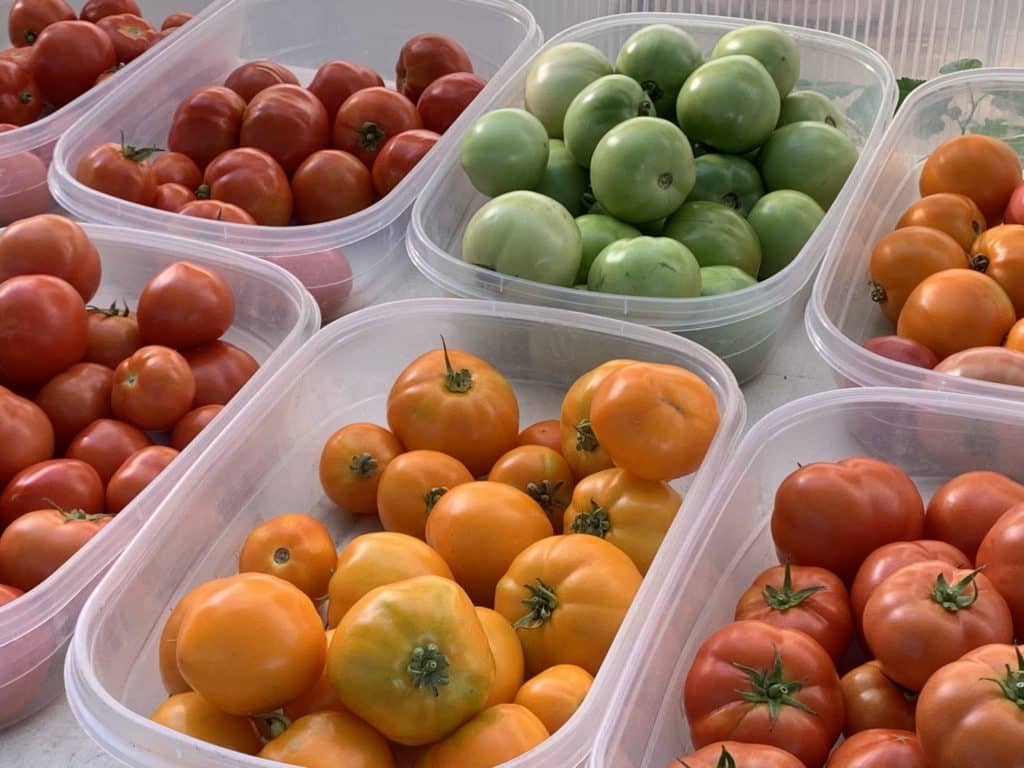
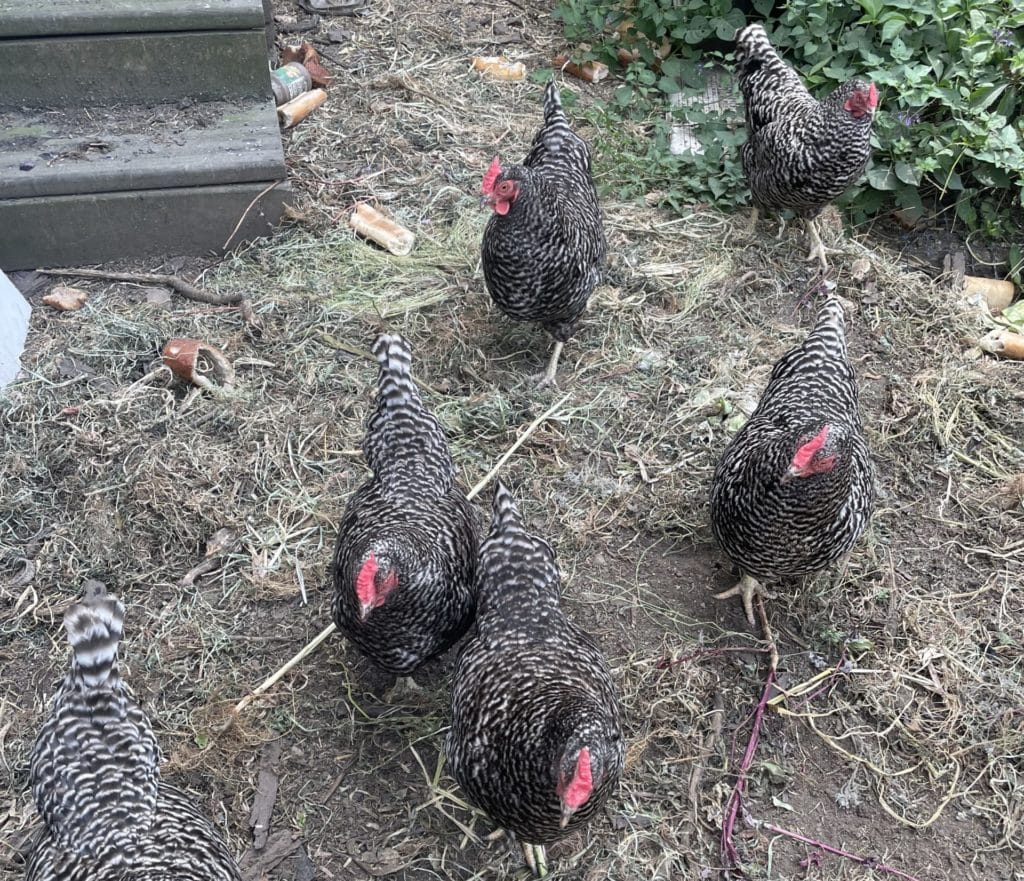
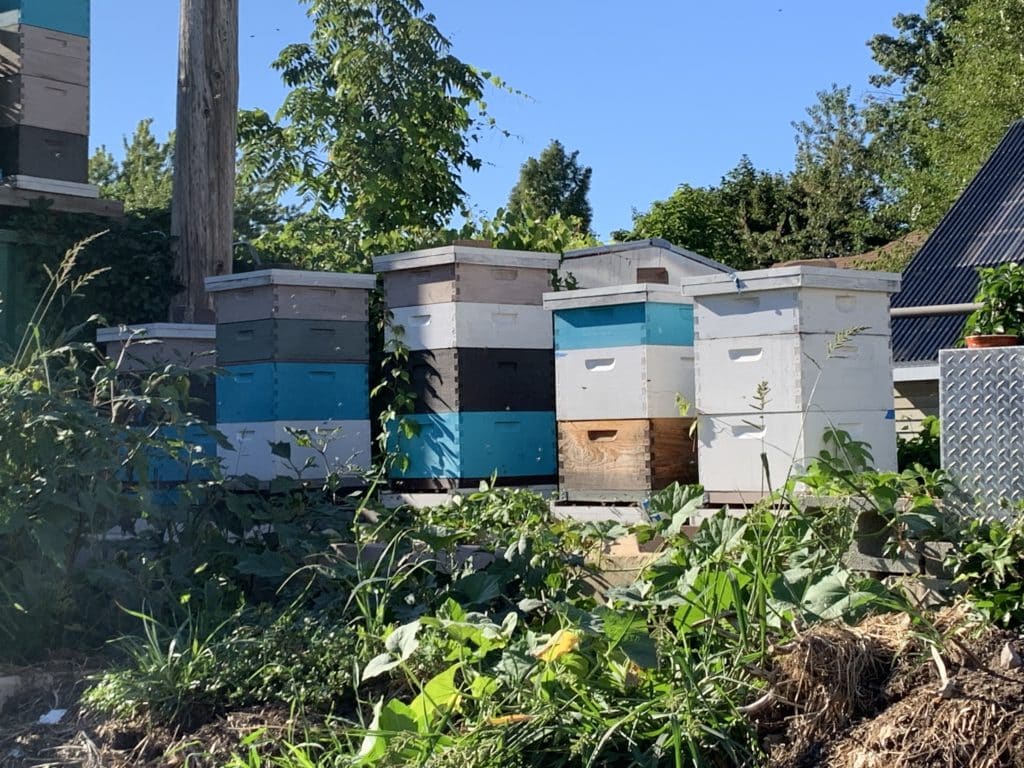
On this half-acre property, following in the footsteps of a previous community garden, a local couple has expanded the space to include buzzing bees, strutting chickens, and hyper-local produce that gives back to the neighborhood and also beautifies this unexpected corner of the Cudell neighborhood of Cleveland.

Neighbor to neighbor
I had heard of Good Earth several months back from my activist buddy who stops by the farm on occasion to buy their local honey and also eggs when they are available. The two small bottles on her counter were completely different shades of amber and, when I inquired, she explained to me that one was a winter honey, and one was a spring one.
“Apparently it has something to do with the differing plants that the bees pollinate at different times of year. I got them down the street at Good Earth. Have you been there?”
This got me curious about the local vegetation that could support bees in such an urban enclave. I remembered the little place with the colorful sign and greenhouses, but I was surprised to hear it was an actual farm with bees and chickens.
My friend explained to me that they had started out as a community garden with many refugee families that had been working one patch for years. There was a fire next door, she recalled, and then one day she drove by and saw the greenhouses going up. She told me that the same couple who runs it also own several houses on that block that they are slowly renovating.
As someone into sensitive urban renewal, I was intrigued when she mentioned how the owners had not only created a viable farmstand where their Cudell neighbors could buy fresh and affordable local produce, but also how they were gradually improving the block in so many ways. A visit was in order.
Exploring Good Earth
And thus, this is how I found myself on a broiling summer Saturday trudging around the corner to scope out this property that was sprouting green in every corner.
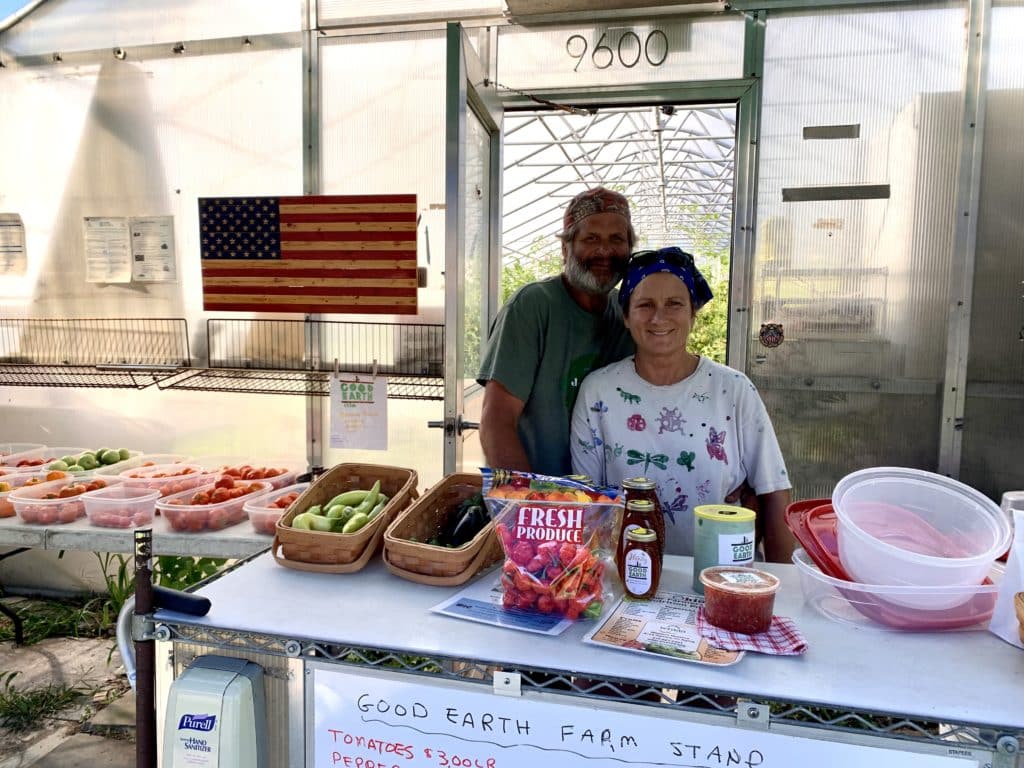
At the folding table in front of the right greenhouse – there are two, with a third one coming soon – was a woman with a large, reusable grocery bag carefully packaging several bunches of carrots and fragrant bags of basil. The woman and man at the table discussed the weather, what to do with garlic scapes, and growing seasons of Northeast Ohio as they carefully processed her EBT card. Later I found out that these two people who were helping were Norm and Jeanette Toms, the owners, who have been working in the community for over 15 years. It is important to them to provide for all, they say.
A resource for all
Good Earth wants to make sure that they cater to every customer, and they participate in the farmers market “Produce Perks” match up of up to $25 dollars a day for those who use food assistance programs SNAP or EBT. Good Earth, unlike many other farmstands, is open year-round, and SNAP/EBT recipients and other shoppers looking for an off-season option can access the location by RTA if they don’t have a car.
As Norm and Jeanette said a warm goodbye to their customer, it was clear that it was the kind of place where you could feel comfortable chatting. Shifting the bicycle messenger bag on my shoulder that I brought to buy whatever might look good, and feeling a little awkward, I interrupted the relaxed banter they were having with another local.
I explained that I’d just recently moved here and I was hoping to find out a bit more about what they do. They couldn’t have been friendlier, and they stopped what they were doing to tell me a little bit about the farm. Jeanette explained that it had been around for nine years and, like my friend had said, it was a community garden before that. Jeanette and Norm, along with neighbors, had created the garden on a double lot owned by the Cleveland Land Bank. Norm and Jeanette quickly became attached to the community garden.
“We always had a sense of community. It felt like…not like a library, but on a small scale, a place to connect…,” Jeanette remembered. She squinted in the sunlight, and her voice got softer and more nostalgic as she spoke about the many families that had worked the garden.
“I was surprised at how diverse it was. We ended up with about 20 families and 26 raised beds. People from Nepal, the Dominican Republic, Burundi and some other B country … Burma!”
Norm, an imposing man with hands that you can tell have held many tools, added to her recollections, with Jeanette occasionally interrupting him excitedly.
“Wasn’t it amazing, Norm, how none of us spoke the same language, but you give someone a hammer and nails and we built those beds together!”
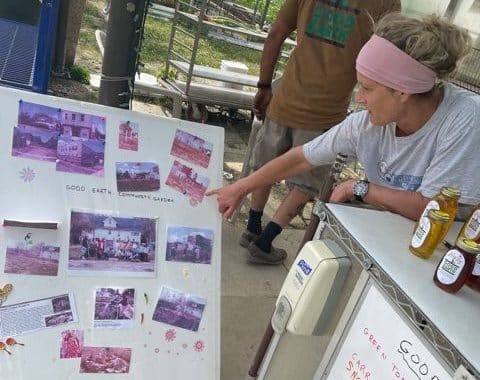
Their pride and a sense of love for their community that they have created in this soil, planting it alongside tomatoes, root vegetables, and herbs, were evident. I wandered about taking pictures, and then Jeanette was kind enough to ask her husband to search for an old wooden plaque where they had preserved photos of the different families that had worked the community garden.
She pointed to the worn snapshots and recalled the names and backgrounds of the neighbors in the photos. She was especially excited to tell me the story of one couple who ended up both finding jobs due to their farming experience on the property – the wife with the local Ohio City Farm Refugee Response organization and the husband with another local landowner.
“I couldn’t believe how quickly they got adjusted. Norm, wasn’t it amazing? One minute they were just learning English and then next he was getting his driver’s license. And I couldn’t believe all they had been through!”
Jeanette also shared how the community garden was a means for these neighbors, new to the United States, to grow their own food and also reconnect with their garden or farm tasks they may have done in their old homes. It centered them, allowed them to exercise their skills, gave them neighbors, and created a safe place to grow both literally and culturally.
Getting to know the farm
Now, Jeanette turned to help another customer, and Norm took me on a tour of the farm. I discovered that, in addition to creating community, Good Earth also tries to reuse and recycle. The potatoes are growing in sawed off remainders of large plastic pipes, and other homemade solutions by the handy couple abound.
Norm explained how the blaze next door to the old community garden destroyed several buildings, after which Jeanette and Tom purchased those lots. Then, as new owners of the lot adjacent to the community garden property, they were eligible to purchase that garden property from the Cleveland Land Bank through its side yard program. Now, Norm and Jeannette owned nearly half an acre, and they were poised to make this a food source for all.
We enter the bees’ enclave, and I try not to get nervous as Norm tells me that he was raised with beekeeping and explains how the different bees’ diets create the seasonal options – clover honey in spring and goldenrod honey later in the year. He also shows me some well-fed chickens that poke curiously at my feet.
After a small tour of the rest of the farm where I learn about different native plants and fruit, it is time to stop taking up their time and buy some of this amazing produce. I get garlic scapes, carrots, and basil – later, I google a recipe for roasted carrots with a scape and carrot top pesto that I would have never tried without this shopping trip. They fold the purchases in my bag and add a few other items without charging me because it is the end of the day, and they want me to try them. As I wander back home, sweaty, bag full, heart full, I have a goofy grin on my face. It is places like this that make Cleveland so special.
Good Earth Urban Farm Stand is located at 9600 Madison Avenue, Cleveland, Ohio, 44102. 216-288-0170. Summer hours: Monday 3-7, Thursday 3-7, and Saturday 12-4; winter hours Thursday 3-5. EBT and SNAP accepted. All major credit/debit cards accepted as well as cash.
We're celebrating four years of amplifying resident voices from Cleveland's neighborhoods. Will you make a donation to keep our local journalism going?