The Buckeye -Woodhill area is one of several Cleveland neighborhoods with a long list of needs. Houses have deteriorated and some homes have been torn down, leaving empty lots.
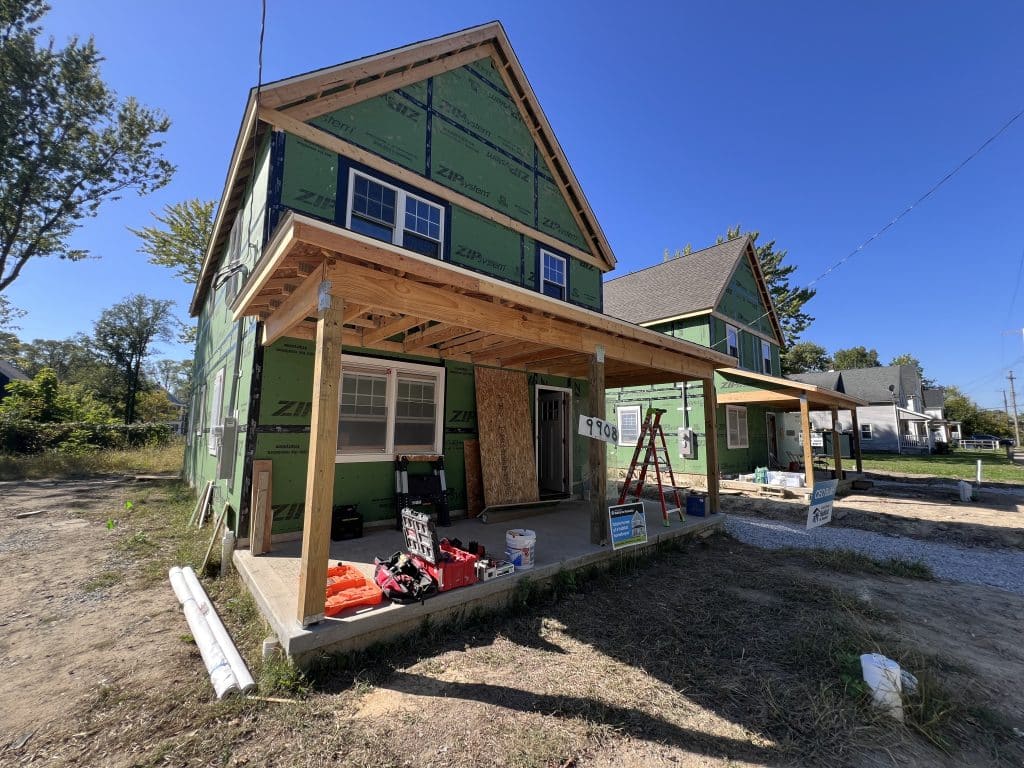
That’s why Greater Cleveland Habitat for Humanity has focused on Buckeye-Woodhill over the last 10 years or so, rehabbing homes and cleaning up properties. Now, Habitat is building 15 homes on Elwell Avenue, a short street south of Buckeye and just east of the Buckeye-Woodhill intersection.
The $4.3 million development is called Pope Leo Village, envisioned and made possible in part by an anonymous donor. That same donor is helping to fund other Pope Leo Village projects in up to 18 other cities, including Chicago and Cincinnati.
The donor was inspired by the appointment of Pope Leo XIV as the first American pope earlier this year.
“He’s just a gentleman who approximately every seven years comes up with a big project that he’d like to execute to help others,” said Kim Pride, director of development with Greater Cleveland Habitat for Humanity. “He and his family are just people with big hearts.”
The city of Cleveland has contributed $1.35 million in federal American Rescue Plan Act (ARPA) money toward the construction of Pope Leo Village. Habitat is raising additional money from local businesses and foundations.
Many of the 15 sublots once contained dilapidated homes that were torn down years ago by Cuyahoga Land Bank or the city of Cleveland. The city sold the lots to Habitat for $200 each.
“These are the first new buildings on Elwell,” said John Litten, president and CEO of Greater Cleveland Habitat for Humanity. “We have done four rehabs and major repairs on this street, and we did a spruce-up day over a year ago, a general cleanup with painting and landscaping.
“Nearly every house on this street and the whole neighborhood will benefit from Pope Leo Village,” Litten said.
Litten said Habitat chooses areas like Buckeye-Woodhill to build homes based on several factors, including proximity to bus routes and rapid-transit lines for residents without cars.
Habitat also likes to work in neighborhoods where other nonprofits are doing projects. In the case of Buckeye-Woodhill, for example, Cleveland Metropolitan Housing Authority recently built Woodhill Station West, a mixed-income apartment building, on Buckeye near Elwell.
“CHN Housing Partners (an affordable housing developer) has also done work in the Buckeye-Woodhill neighborhood,” Litten said. “Western Reserve Land Conservancy plants a tree everywhere we build a house and helps put pocket parks in the neighborhood. The Cuyahoga Land Bank has been a partner in acquiring land here, and Cuyahoga Land Bank Charities is a generous funder of ours.”
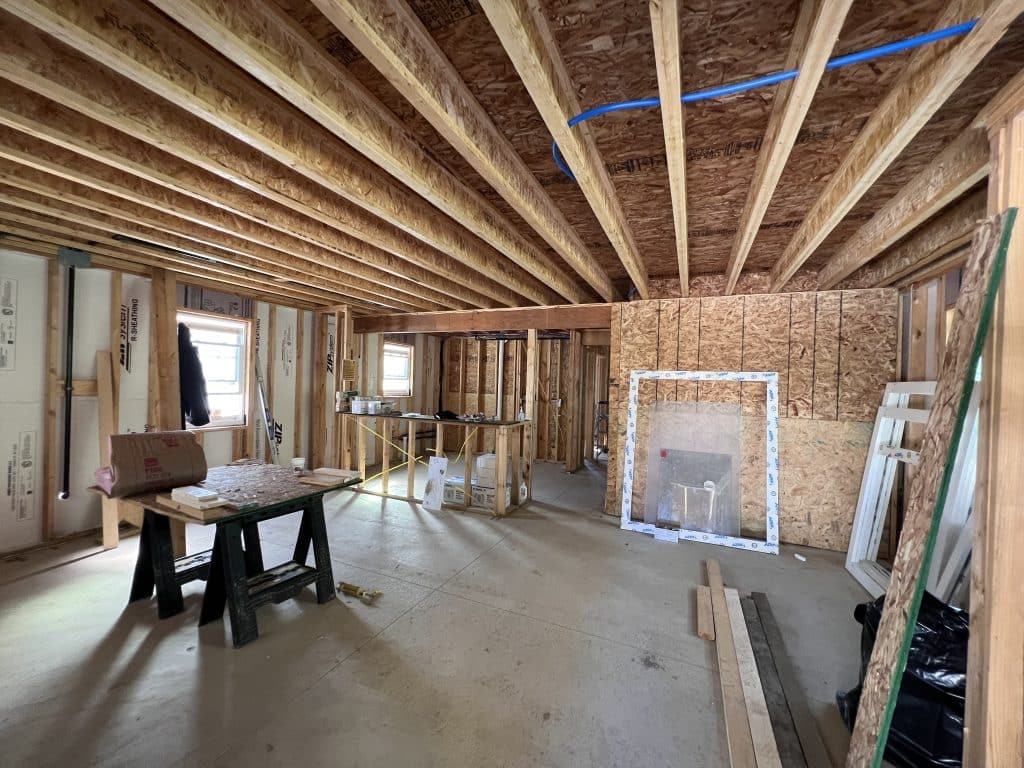
Construction of Pope Leo Village began in the spring. Habitat expects that 11 homes will be finished by the end of this year and the remaining homes are scheduled for completion in 2027.
Sticks & panels
Homes in Pope Leo Village for the most part will measure about 1,600 square feet and contain four bedrooms and two bathrooms. Each home will come with a detached garage.
Habitat is using three construction methods to build the houses. These include the traditional “stick-built” method where the home is constructed entirely onsite, using standard lumber and frames, from the foundation upward.
Habitat will also build modular homes. Sections of the homes are built offsite and shipped to the sublots for assembly. Finally, the panelized method involves offsite manufacturing of steel walls and roof sheathing embedded with foam insulation. The panels are installed and the home interior is finished onsite.
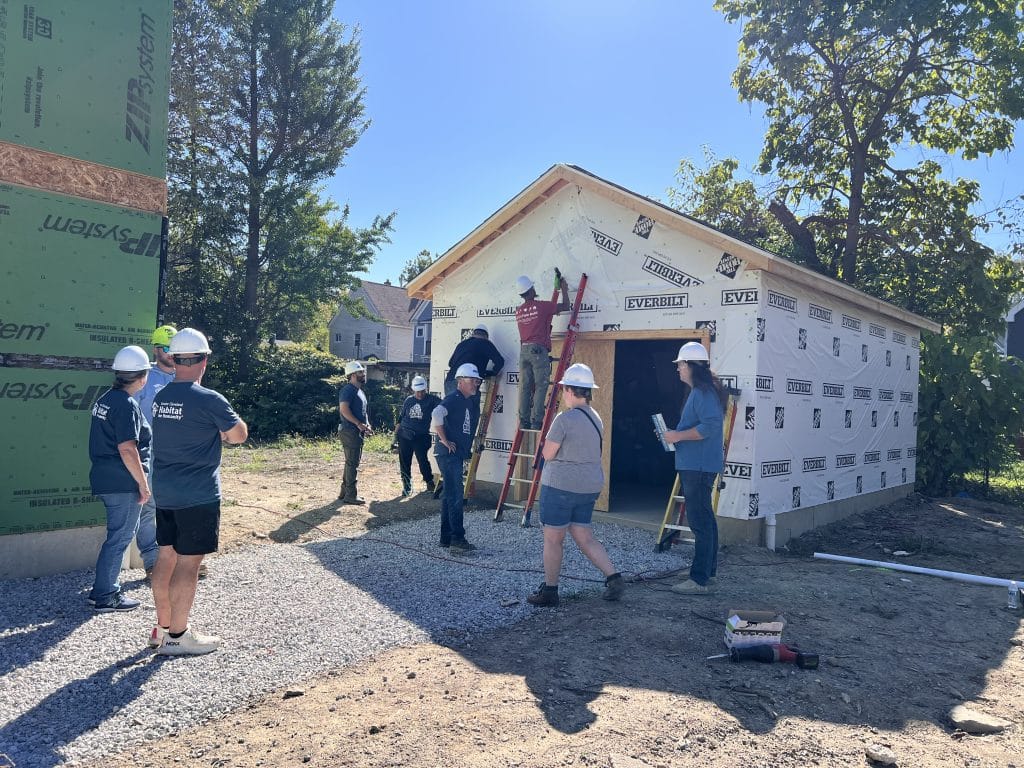
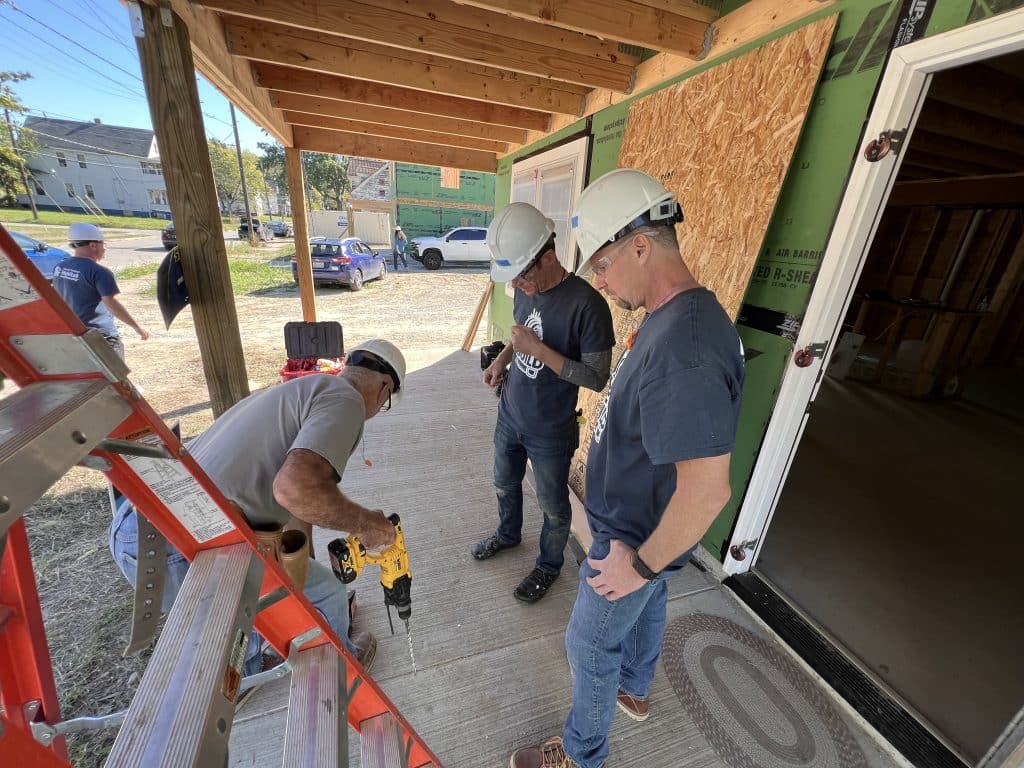
“We wanted to build in the traditional stick method in Pope Leo Village because it’s core to our volunteer-driven model and allows faith groups and volunteers to be hands-on in the construction, but we also wanted future homeowners in Buckeye-Woodland to have choices in the types of homes available,” Litten said.
All the homes in Pope Leo Village will be “green” or energy-efficient, with insulated walls and appliances that use less electricity.
“It’s a little more expensive to build but it really, really makes a huge impact on the affordability for the homeowner,” Litten said.
Most Habitat homeowners hear about the organization from others who have gone through the program. Habitat has already chosen some of the families that will live in Pope Leo Village. Habitat home recipients must have incomes within 30 percent and 80 percent of an area’s median income.
“They have to show need,” Litten said. “They must be coming from a tough situation, like a shelter or an apartment with a bad landlord,” Litten said. “And they have to be unable to get lending through a traditional bank.”
Habitat sells homes at the appraised values, which typically are less than the cost to build, and the mortgages are zero-percent interest. Based on these factors, homeowners pay between $550-$935 a month. Most pay less than $800.
For a downpayment, Habitat’s new-home recipients give 300 hours of service, which might involve helping to build their own homes, working in one of Habitat’s retail stores or participating in a workshop that prepares them for home ownership.
Getting involved
Habitat for Humanity isn’t a Catholic organization but it is Christian-based, so the Pope Leo XIV connection makes sense.
“We’re working on inviting local Catholic churches and other faiths to become a part of Pope Leo Village,” Pride said.
Habit is recruiting high school and college students and young people of various faiths to help build the houses on Elwell.
“Many Catholic and Christian high schools have service requirements,” Litten said. “This could be a great avenue for high schoolers to get in their service hours in a very meaningful way.”
Others are getting involved, too. Habitat has organized several “CEO Build” days when CEOs of 50 local businesses and nonprofits each donated $100,000 toward the Pope Leo Village project and spent a day working on the houses as volunteers.
Pride said Habitat hopes to schedule a day next May when 100-200 volunteers will build all the walls of a house in one morning on a site as close to Elwell as possible.
Anyone interested in getting involved with Pope Leo Village can contact Pride at 216-255-2651 or kpride@clevelandhabitat.org.
Keep our local journalism accessible to all
Reader support is crucial as we continue to shed light on underreported neighborhoods in Cleveland. Will you become a monthly member to help us continue to produce news by, for, and with the community?
P.S. Did you like this story? Take our reader survey!