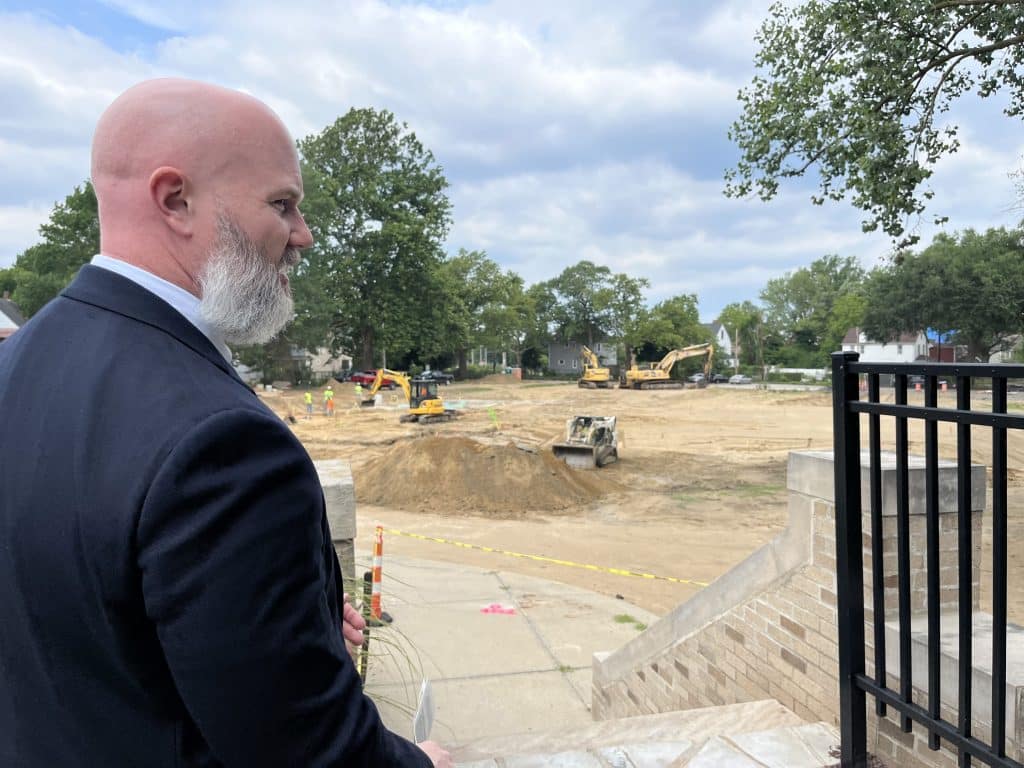
As the Hitchcock Center for Women prepares to round the century mark on its current brick-and-mortar treatment facility, the 46-year-old women’s recovery housing provider broke ground in late June on a 77,000-square-foot modernized addition. Once complete and open to low-income residents in 2025, the new building will offer over 50 single-family Section 8 housing units in Cleveland’s Glenville neighborhood and allow the residential addiction center to expand its services.

Section 8 housing along with women’s behavioral health and addiction treatment resources will be more modern and less scarce in Cleveland when the Hitchcock Center for Women (HCFW) cuts the ribbon on a new 77,000-square-foot building at its east side campus in 2025.
The addition is roughly three-quarters the size of the current treatment center. The project’s final price tag is approximately $27 million. Hitchcock Center President and CEO Jason Joyce said the new building was made possible using money from public donors, including the City of Cleveland ($3.8 million, some of which was American Rescue Plan Act money), the State of Ohio ($5.5 million along with a 4% low-income housing credit), Cuyahoga County ($3.5 million) and the ADAMHS Board of Cuyahoga County ($750,000).
The project’s initial donor was also its only private contributor: the Cleveland Clinic, which chipped in $2.5 million to help promote women’s social services, a corner of health care that Joyce said is underserved and rife with barriers. One of those barriers is a lost sense of community, a factor Joyce hopes will be mitigated once the center opens its new building directly beside the current one.
“Like a New York townhome”
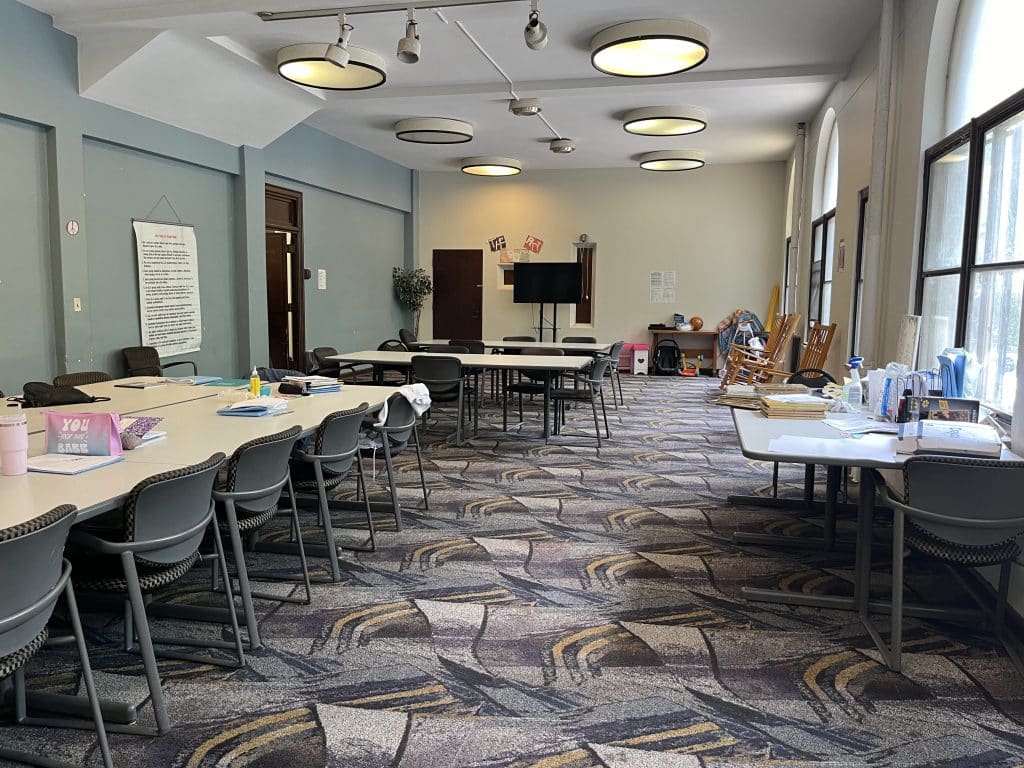
Marous Brothers Construction is on track to complete its work on the new building around June 2025. At that point, Hitchcock’s social workers will shift computers, group tables and chairs from the former dormitories and classrooms of the Saint Mary Seminary to the offices in the new build.
“Everything that’s in here with the exception of our (recovery) housing will move there,” Joyce said. “All our counseling, all our treatment services, all our groups, any of our medical providers that we partner with for physical healthcare … all that is moving into the new building.”
Technically, he elaborated, the new facility is two separate entities joined by one entrance and is housed in the center’s former parking lot. One half will be dedicated to 53 units of Section 8 housing with kitchenettes, an arts and crafts room and an exercise facility, along with private kitchenettes and shared lounges. The other half will serve as residential treatment living alongside space for counseling.
Women and children first
The current, 100,000-square-foot building, meanwhile, will increase its bed count to 42, nearly double the center’s previous capacity of 24, and will continue offering its brand of nuanced recovery housing.
The majority of local organizations that help shepherd women out of addiction, like the Northern Ohio Recovery Association, the YWCA’s Norma Herr Women’s Center on Payne Avenue and the Edna House for Women on West 65th Street, offer some combination of addiction therapy and extended residential services for women in unsafe home environments. Hitchcock, however, differentiates itself by allowing children through the age of 12 to room and sit in on treatment sessions with their mothers, adding layers of accountability and emotional support to the process.
“A lot of our clients are underserved and have a rougher background, whether through homelessness, food insecurity or unsafe housing,” Hitchcock Center Marketing Specialist Laura Harms stated. “(The new building) is going to be more comparable to a hospital. It’s going to be a brand new facility that’s state-of-the-art within the industry.”
New features include a playground (Joyce is hoping to square away enough space to build a “world-class’ facility after submitting a grant application) but, for the most part, the amenities at the new building will be updated versions of existing amenities. That will be an important element as Joyce said it is not uncommon for women to attend Hitchcock’s addiction treatment services for 30 to 45 days and then spend between nine and twelve months living in separate recovery housing.
Hitchcock history
“(The Hitchcock Center) started out in the late 1970s by our founder Jayne Mazzarella,” Joyce told The Land in his office, which is housed within the 100,000-square-foot building that serves as the center’s base of operations. Originally finalized in 1928, after construction began in 1924, the current structure at 1227 Ansel Road straddles the border between the Glenville neighborhood to the north and Hough to the south. An embankment and the resulting Doan Brook separate the building from the Cultural Gardens along East Boulevard.
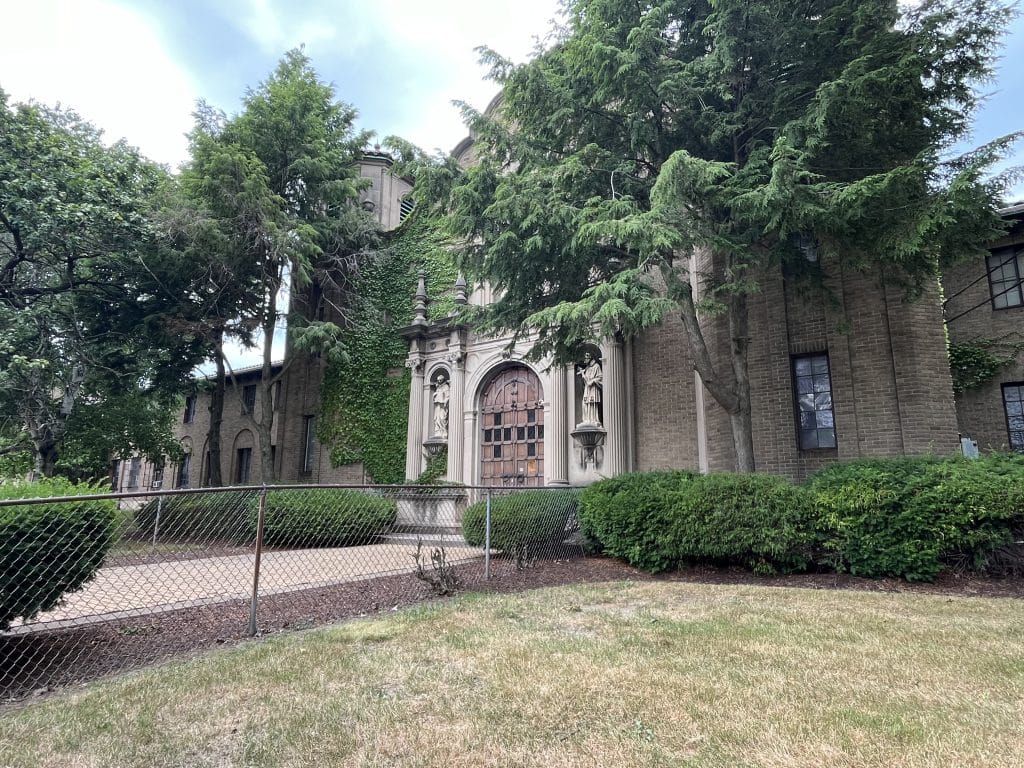
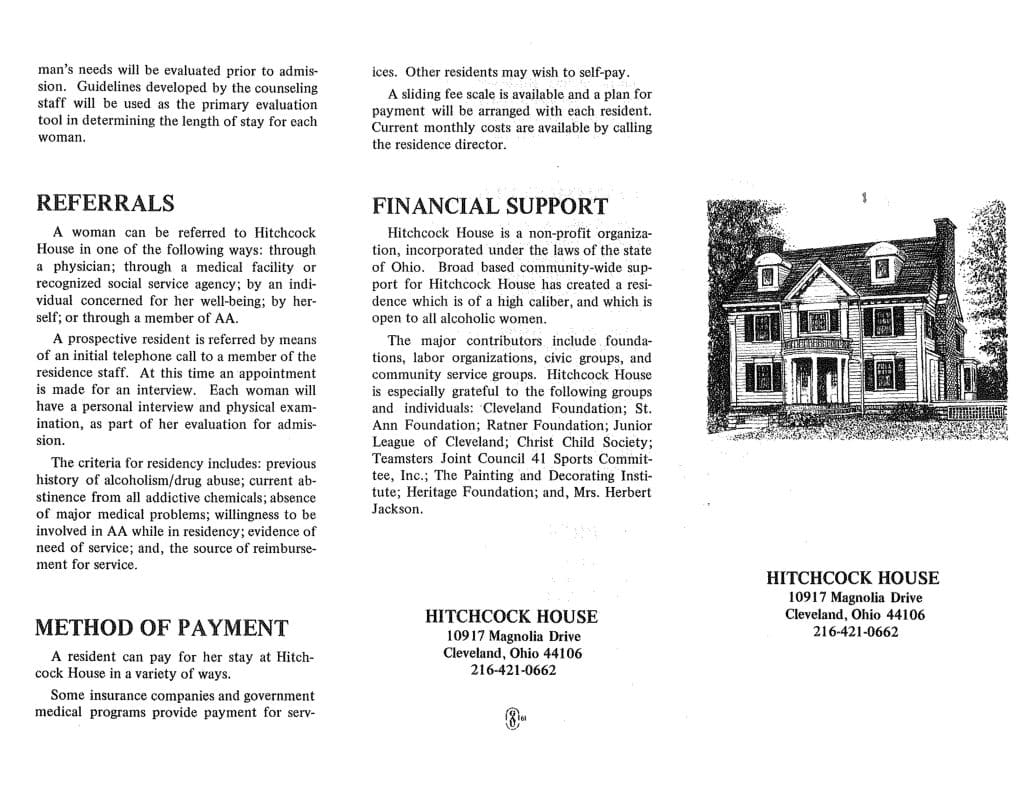
“Mazzella was a nurse that wanted to help out with addiction,” Joyce continued. “I also think at the time, and certainly even still today, women weren’t necessarily targeted for addiction services.” Mazzarella founded the Hitchcock House in a home in University Circle, with less than 10,000 square feet of space, in 1978. The organization then morphed into the Hitchcock Center upon moving to the Ansel address in 1992, after the seminary migrated to a newer building in Wickliffe.
Clinical connections
While the state, county and city are all major donors whose gifts are necessary for the Hitchcock Center’s expansion to become reality, Joyce said the Cleveland Clinic set the funding trend as the new building’s first donor when it offered $2.5 million for the project.
According to Cleveland Clinic Executive Vice President and Chief Community Officer Vickie Johnson, the Clinic’s support of organizations like the Hitchcock Center and Laura’s Home Women’s Crisis Center through City Mission (where Dr. Jacquelyn Bailey, who directs community outreach for the Cleveland Clinic’s Taussing Cancer Center, sits on the board) both shows support to the community and helps the hospital system cover its bases with preventative care.
The clinic’s network of 23 hospitals and 250-plus outpatient service locations target both physical and behavioral wellbeing in their communities, but the system’s support of facilities like Hitchcock serve as a form of preventative maintenance to prevent crises from occuring.
“We collaborate (with the Hitchcock Center) on an ongoing basis, not only through referrals and treatment of people but also from, in this case, a housing perspective,” Johnson said. “For us, collaborating is critical in order for us to attain our objective of building healthy communities together.
“Could you imagine if, in every community where we are located, we planted a flag and said ‘We’re going to eradicate this and that?’ That would be impossible. We have limited resources so we have to really determine what are the best organizations for us to partner with, so we look for organizations that have strong leadership and board-level governance.”

To select which organizations deserve its support, the region’s largest hospital system carries out community health needs assessment reports. The next will be released in 2025, per Johnson, but 2022’s report indicated a need for health and safety in the Glenville area as East Side residents continue to struggle with lead paint and a lack of access to nutritional foods. The problems are significant, but so is the money being spent and the organizations providing support, all matters that provide vindication to Joyce and his staff.
“Seeing an institution that’s so big – the Cleveland Clinic, it’s world-renowned,” Joyce said. “They care about Cleveland, care about the community, care about the people they treat. It’s a huge gesture for them to do that … it carries so much weight with other people.”

The weight of Hitchcock’s services and the impact they have on Cleveland’s women will likely play a bigger role in Joyce’s thoughts and decisions as the women’s center he oversees prepares to expand its footprint.
By putting 40-some treatment residents in close quarters with the 50-plus public housing residents who will eventually live separately from but in close proximity to clients at the HItchcock Center for Women, the CEO is also hopeful that his organization will be better poised to meet the social aspect of its mission for a greater amount of women.
“Part of becoming sober is getting back to the community,” he concluded. “It is to support one another. What we’re attempting to do here, and I think we reach it on most days, is that environment where people support one another in recovery housing.”
Keep our local journalism accessible to all
Reader support is crucial as we continue to shed light on underreported neighborhoods in Cleveland. Will you become a monthly member to help us continue to produce news by, for, and with the community?
P.S. Did you like this story? Take our reader survey!