Old Brooklyn CDC lays out six months’ worth of data collected on the often forgotten corridor, Broadview Rd., with new storefront remodel options coming. The panel seeks to provide advice and best practices on reimagining Old Brooklyn’s center lane.
Correction: An earlier version of this article referred to Broadview Avenue, rather than Broadview Road.
Earlier this month, Councilwoman Rebecca Maurer capped off a weeklong tour of her district with a meeting raising awareness of commercial districts across Ward 12.

The councilwoman started the week releasing an informative video about economic reinvestment funds, then walked Fleet Ave. with the media, and ended the week with a panel discussion on local economic best practices. Maurer has been actively working to inspire Ward 12 residents to reimagine the potential of their commercial districts.
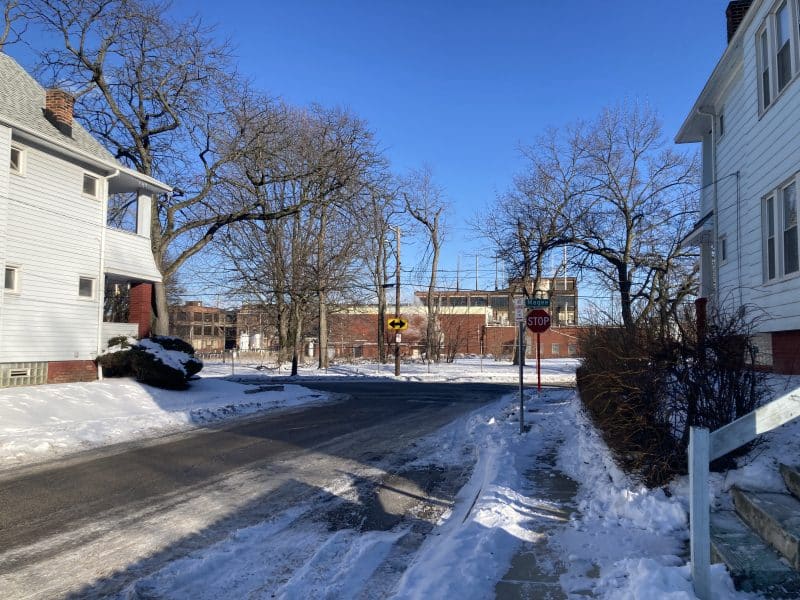
Ward 12 represents significant portions of Slavic Village, Old Brooklyn and Brooklyn Centre. Core to the Old Brooklyn neighborhood is Broadview Road, one of the community’s largest and most traveled business districts, a central focus in this revitalization effort. Broadview Ave. is one of the largest commercial corridors in the Old Brooklyn Community and a sees heavy traffic from residents.
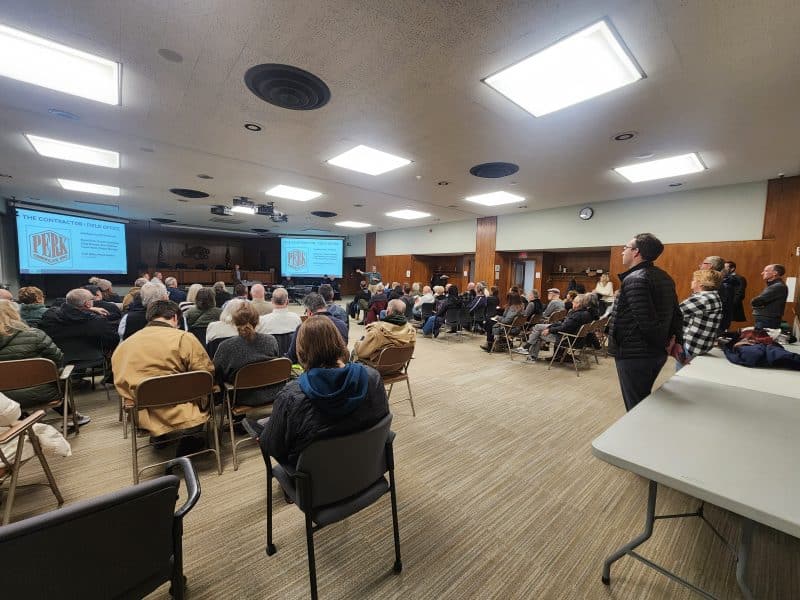
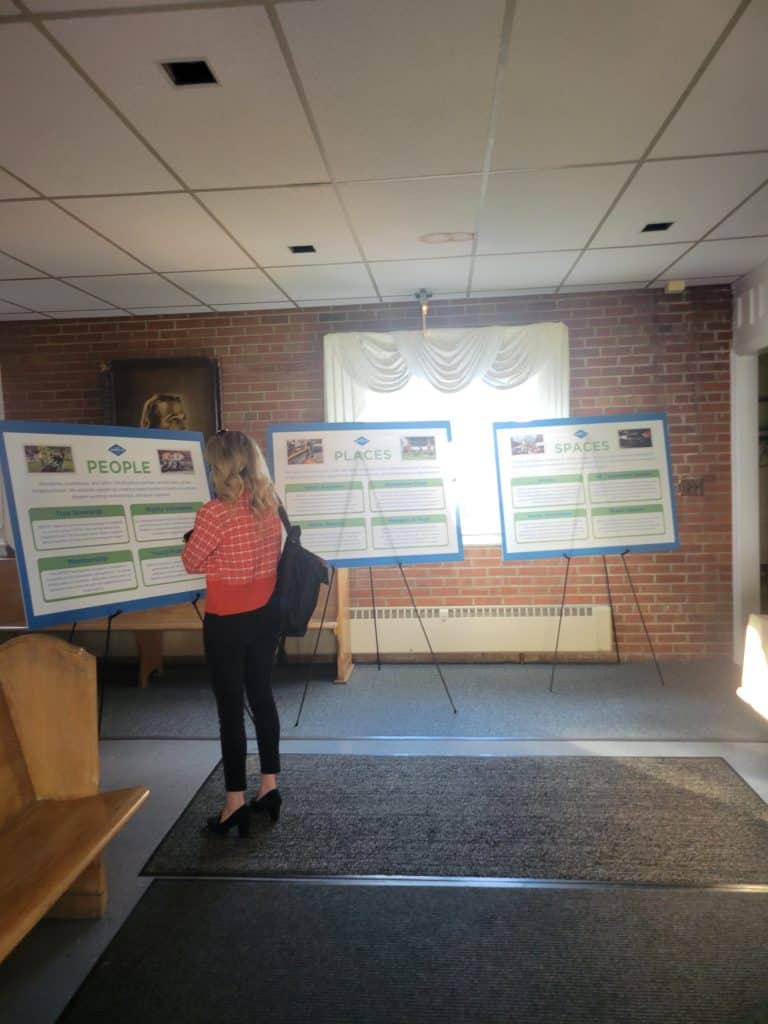
Old Brooklyn Community Development Corporation (CDC) is spearheading efforts to identify the challenges facing its commercial corridors and establish clear next steps for redevelopment. The Commercial Corridor Needs Assessment Panel, hosted by Maurer and the Old Brooklyn Community Development Corporation, took place at St. James Lutheran Church on Broadview Road on Oct. 3.
Now, the Middle Neighborhood Program is injecting $7.3 million into select areas of Cleveland, revitalizing the city’s traditional storefront renovation efforts. Maurer has partnered with Old Brooklyn to create a dedicated position that assists business and property owners throughout Ward 12 in applying for the White Box Program (interior renovations) or the Storefront Façade Improvement Program (exterior upgrades).
Definition of the Problem Area
Old Brooklyn CDC titled its plan, “Broadview Reimagined: A Commercial Corridor Needs Assessment of Broadview Road in the Old Brooklyn Neighborhood of Cleveland, Ohio.” The 30-page report included community and business engagement summaries, charts, grading scales of the area, resident and business owner hopes and concerns, and demographic data around the focus area. The area studied covers 90 parcels, a 1.5 miles stretch of Broadview Ave and 120 storefronts. This portion of Broadview is home to 14,000 people. Development Director Charles Kennick highlighted the area’s significance, noting, “That’s more people than Ohio City and Tremont combined, with a higher population density than Kamm’s Corner.”
Commercial property conditions along Broadview Ave. are in need of investment, with 10.9% of the 120 parcels rated neglected or boarded up. While 10% may seem low, there are also businesses in good condition that are still vacant or unused. This shows that there are more businesses creating a “dead zone” for development. Within each block of Broadview Ave. there is a combination of residential, commercial and dead commercial spaces. These dead spots are what holds the cooridor back because it decreases the sense of walkability, officials say.
The Needs Assessment created a deeper understanding of the commercial space by creating a measure for “property usage,” showing that 21% of commercial property space was vacant or unused space. It was the property usage measure that showed there were whole blocks that had a single business “stranded” and therefore not being optimized as being walkable. Whereas if you only looked at the business’ physical structure you would see an adequately maintained space ready to be used.

The Panel
Panelists
The panelists at the Oct. 3 event were:
Councilwoman Rebecca Maurer
Michael Elliot, vice president of Neighborhood Economic Development at Cleveland Neighborhood Progress (melliott@clevelandnp.org)
Tom McNair, director of Economic Development for the City of Cleveland
Dan Watson, owner of Never Say Dive Bar, located at 4497 Broadview Rd.
After the presentation of the Needs Assessment, where residents and businesses mentioned challenges for their aging neighborhood in both housing and business stock, the remainder of the evening was dedicated to listening to the panelists weigh in on predetermined questions.
The panelists each emphasized the role of neighborhood business districts. McNair called the business district the “backbone” and “character” of the neighborhood, and said it serves as the leading influence for how a neighborhood is perceived. Elliot emphasized the importance of Old Brooklyn CDC’s role in being “critical and uniquely positioned” to build relationships with local businesses and the storefront program funding entities. Elliot mentioned that it is important we consider and account for maintenance needs between “shiny moments of development.”
Old Brooklyn is Well Situated
After an evening of expert discussions on the elements of a sustainable and vibrant commercial corridor, along with a review of the Commercial Corridor Needs Assessment, it became evident that Old Brooklyn has several advantages over other Cleveland neighborhoods. While its business district may be underutilized, the neighborhood’s housing quality remains strong. In fact, along the 1.5-mile stretch of Broadview Road, where half the area is residential, 69.5% of the homes are rated as “excellent” or “good” (A or B grades), with another 28.6% graded as “fair” (C grade). Only one property falls below a C rating, reflecting a community with well-maintained housing stock.
Watson highlighted another strength that Old Brooklyn has in its favor: many individuals in their 30s and 40s are purchasing homes in Old Brooklyn after being priced out of other neighborhoods.
A Business Engagement Survey revealed that 70% of the businesses on Broadview Ave. have been operating for more than five years and have described their businesses performance in the area as stable or growing. Additionally, 50% of the businesses surveyed said they were stable and 43.8% reported growth, signaling a positive business climate.
The unity of the Old Brooklyn Community Development Corporation is another strength to the project. In addition to their traditional roles, Old Brooklyn was able to create a Commercial Corridor Needs Assessment that will serve as the data center for fundraising and organizing. Also, in support of this economic initiative Kniel Christensen was hired as the Commercial Corridor Development Coordinator (knielc@mncleveland.com or 216-352-1472) to personally support interested businesses in several neighborhoods throughout Old Brooklyn, Slavic Village and Metro West Community Development Corporations. There can be a bit of a disconnect between what area a Community Development Corporation covers and what a city councilperson covers, officials say, and having a dedicated professional to smooth the application process can make a huge difference in businesses completing their storefront applications.
That is to say, Old Brooklyn has a lot going for it and a well-crafted and targeted investment could bear a lot of fruit, officials hope. From many angles, a steady population of owner-occupied houses, a stable business community, and a clear vision work in favor of the community.
Defining Success
At the panel, the first question asked of Maurer was, “What does success look like in a reimagined Broadview Corridor?”
She responded, “It’s that sense of walkability, that sense of neighborhood, that sense of neighborhood fabric. Across the city, we’re dealing with that sense of loss in different ways. People don’t feel as connected to their neighbors, and one reason is that they don’t go shopping in their own neighborhoods anymore. They don’t have a place to gather; they don’t have those third spaces that are not home and not work, where they can sit down and interact with neighbors. Creating that sense of walkability and density is really what success looks like to me.”
This reflected residents’ desires too. The Corridor Assessment showed that residents wanted more amenities and walkability. Businesses wanted neighboring businesses that compliment one another. Watson said, “People want to eat in one place, walk next door and have a drink, and then shop or watch a show.”
Interested in staying up to date on the efforts in Old Brooklyn? There are several opportunities coming:
- Old Brooklyn Annual Meeting, Tuesday October 22nd
- Old Brooklyn Better Streets Committee Monthly Meeting, contact jerrod@bikecleveland.org
We're celebrating four years of amplifying resident voices from Cleveland's neighborhoods. Will you make a donation to keep our local journalism going?