By Grant Segall
You can’t become a cop with much of a rap sheet.
Dajianae Johnson was a corrections officer hoping to become a police officer. Then she pled guilty in 2019 to a misdemeanor for attempting to accept stolen property. She also ignored warrants for traffic offenses, fearful that she’d be jailed for lack of money for fines.

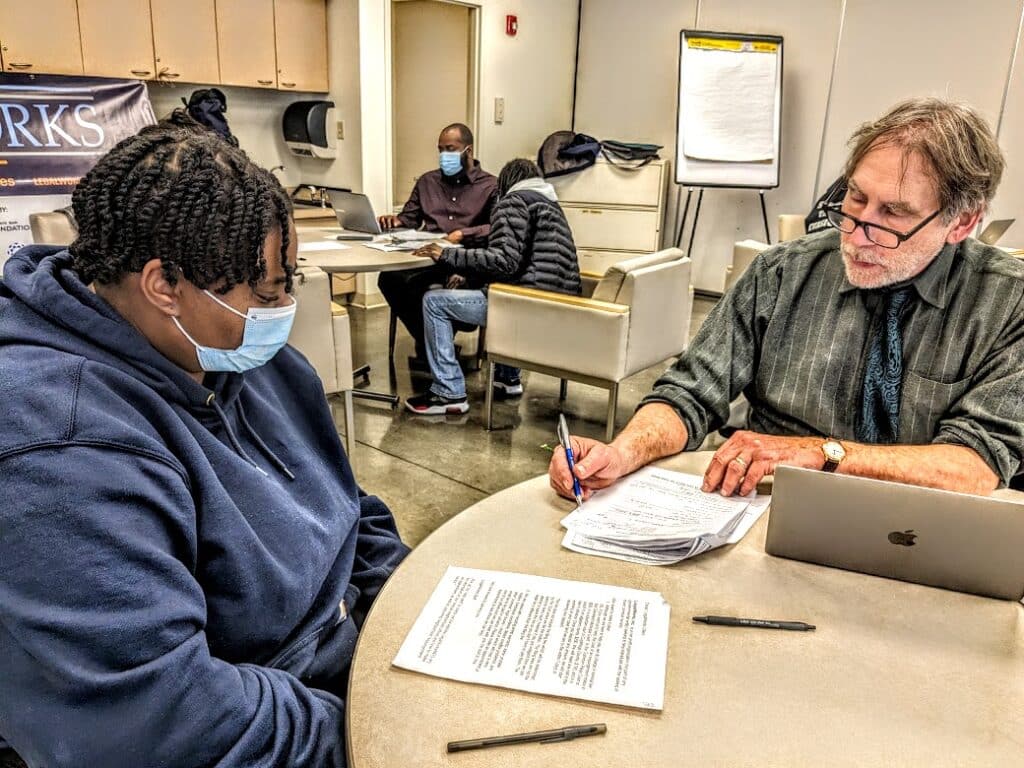
Then Johnson went to a clinic staged by the nonprofit LegalWorks to seal records and clear warrants. “It’s a relief to get them taken care of,” she said. “This should help with my career, putting me back on the path.”
Sealing or expunging a criminal record can change a life, opening doors to jobs, promotions, credit, custodial rights, visitation rights, drivers’ licenses’, gun licenses, and more. State legislation that went into effect in 2021 expanded eligibility for sealing criminal records. But many people who have a years-old or decades-old criminal conviction following them don’t know about this process, if they’re eligible, and how to get their record sealed.
LegalWorks of Northeast Ohio started out almost a decade ago as a partnership with the Famicos Foundation, It provides free and low-cost legal services, including sealing about 1,000 records per year. It holds weekly office hours and periodic clinics for sealing records at Cleveland libraries and community centers.
“We’ve had people start crying,” said James Levin, founder and lead attorney of LegalWorks. “This huge, dark cloud had been lifted. ‘I’ve been living with this, thinking of myself as a criminal, for 30 years. Now I can look in the mirror and say honestly that I’m not a criminal.’”
Bringing help into communities
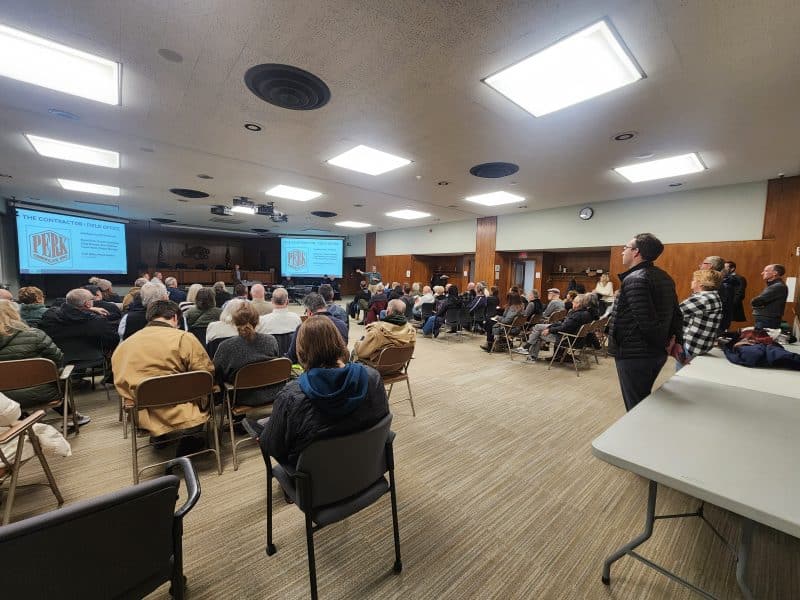
A recent LegalWorks clinic took place last month at the Northern Ohio Recovery Association on East 55th Street.
Client Jermel Carroll saw the clinic as an escape hatch. “You get yourself inside a predicament, it’s hard to get yourself out of it,” he said. “You get can stuck in the system.”
Client Valencia Thompson praised LegalWorks for visiting neighborhoods. “It makes you less anxious when you come here instead of the court. At the courthouse, if they want to throw you in jail, you’re definitely in the right place.”
Levin is a long-time activist behind Cleveland Public Theatre, IngenuityFest and other causes. He believes that people deserve second chances. “Human frailty, something from which we all suffer, occasionally leads us astray. We should be able to look back after a period of time and rinse out some of our decisions.”
Do people who seal their mistakes make new ones? Seldom, according to a Cato Institute study in Michigan. “People who receive expungements have very low rates of recidivism—even lower by some measures than the average crime rates for all Michigan adults. Just 4% of all expungement recipients in Michigan are reconvicted within five years, and most of these reconvictions are for nonviolent misdemeanors,” the study concluded.
Levin said that sealing convictions helps communities overall. “There’s a huge labor shortage. Why not release people to join the labor pool?”
Among many restrictions, an Ohioan can’t seal a conviction while another charge or warrant is pending. So LegalWorks teams up with Cleveland Municipal Court’s In the Neighborhood program, a traveling series of clinics to clear warrants. Court representatives attend LegalWorks clinics and vice versa.
Last year, Cleveland Municipal Court sealed 181 convictions. Meanwhile, In the Neighborhood scheduled 258 appearances in that court and 1,007 in 14 suburban courts. Still, by year’s end, 50,416 Cleveland warrants remained outstanding.

Crossing the finish line
At the recent clinic, 110 people sought LegalWorks’ help and about 80 got it. Some of the people’s convictions were outside LegalWorks’ territory, limited to Cuyahoga and adjacent counties. Some were for crimes that can’t be sealed, such as sexual ones, violent ones, or felonies of the first or second degree.
Levin chatted with clients to learn more about them. He told one, “I try to put two to three sentences about who you are so the judge knows this is a real human being with flesh and blood, a real life, a job, supporting a family.”
He gave clients his cell number and said to expect news in about 13 weeks. He said later that some judges require clients to attend hearings about the seals, and others don’t.
Sometimes, clients don’t have to wait weeks to seal their records. Michelle Earley, Cleveland Municipal Court’s administrative and presiding judge, attended a LegalWorks clinic in Glenville last December, stayed well past the official closing time, and sealed many records on the spot, no additional hearing required. She and some other judges plan to seal more at another same-day sealing clinic on April 6 at the Estabrook Recreation Center, 4125 Fulton Road.
People seeking to seal records that day should come before 9 a.m. or at least by 11 a.m. for intake. They should also be prepared to stay for the afternoon or return then.
In an email, Earley said, “With LegalWorks being a valuable resource to the community and being known for the great work that they provide… the Court is excited about the opportunity to participate in more record sealing clinics.”
Minyon Matthews came to LegalWorks’ recent clinic to clear old convictions. “Jobs, housing, loans, all kinds of stuff, they always shut the door on me,” she said. “Now I got a fighting chance.”
Once her record’s clean, Matthews hopes to open a community center offering food, clothing, education, and LegalWorks services.
Scroll down for more information about costs, locations, and other important information about getting a criminal record expunged (sealed).
LegalWorks, in addition to helping clients of Passages and the West Side Catholic Center, holds the following office hours:
– noon to 3:30 p.m. on Mondays at the Cleveland Public Library’s Glenville Branch, 11900 St. Clair Ave.
– 1p.m. to 4 p.m. Mondays at Women’s Recovery Center, 6209 Storer Ave.
– noon to 3:30 p.m. Tuesdays at the library’s Fulton Branch, 3545 Fulton Rd.
– 1 p.m. to 4 p.m. Tuesdays, University Settlement, 4909 Mead Ave.
– noon to 3:30 p.m. Wednesdays, Mount Pleasant Branch, 14000 Kinsman Rd.
– 1 p.m. to 4 p.m. Thursdays, Famicos Foundation, 1325 Ansel Rd.
– 9:30 a.m. to 1 p.m. Saturdays, Famicos Foundation, 1325 Ansel Rd.
More information about sealing a criminal record and how to access help
By Mandy Kraynak
What does “expunging” or “sealing” a criminal record mean?
Expunging a criminal record means removing it from state or federal record. (Expungements typically take place at the state, not federal level.) Once all of a person’s records are sealed, they’re allowed to say “no” when asked if they have a criminal record.
The terms “expunging” and “sealing” are commonly used interchangeably, even though they’re technically different. In Ohio, records are sealed rather than expunged. Sealed records are not truly “erased” because they still exist, stored at the Ohio Bureau of Criminal Investigation. But because most employers wouldn’t have access to a record that’s been sealed, a sealed record is “effectively and essentially” expunged, Levin said. Some industries, like health care, child care, and elderly care, can access sealed records.
How to get a criminal record sealed
To seal criminal records, LegalWorks charges $50 per case in the Cleveland Municipal Court or Cuyahoga Court of Common Pleas, $100 per case in any suburban Cuyahoga County court, and $200 in courts in adjacent counties. These fees do not include court costs, which range from $50 to $100, but courts can waive fees for clients who are unemployed and file a poverty affidavit provided by LegalWorks.
To get help from LegalWorks, which serves people with low incomes at no cost, you can make an appointment to attend office hours at one of the locations listed on this page. See this schedule of events for the location and time of the next neighborhood clinic.
To apply for help from The Legal Aid Society of Cleveland, which serves people whose household income is 200% of the federal poverty level, fill out this application, call 888-817-3777, or visit the Cleveland office at 1223 W. 6th St. weekdays between 9 a.m. and 5 p.m.
What impact can expunging a record have on a person’s life?
Expunging (or sealing) a criminal record can help people land jobs or advance in their careers. LegalWorks did a survey on the impacts of expungements on people’s lives, and 65% of respondents said that employment and livelihood were the primary impacts, Levin said.
Some people with felony convictions get stuck in entry-level positions and can’t advance to managerial positions because of their records. Others may have to turn down government work. A plumber with a felony conviction may not be able to work on a publicly funded building, for example, Levin said.
The other primary impact that survey respondents cited was mental health, the LegalWorks founder said. “A lot of people say that they’ve been living with a felony for X number of years, and that they think about it every day,” Levin said. Getting a conviction sealed can help people in this situation move forward with their lives and improve their well-being. “It’s just like this cloud that’s been circling them for years is now lifted.”
People with criminal records who are looking to start a business also may have less access to credit, and criminal records can limit options for people applying to live in public housing.
What types of convictions are eligible and not eligible to be sealed?
Eligible: A person can seal unlimited misdemeanors and unlimited eligible fourth and fifth-degree felonies (primarily drug and theft offenses; violent crimes and sexual assault are not eligible). Some third degree felonies may be eligible.
Not eligible: First and second degree felonies, sex offenses, violent crimes, and attempted violent crimes are not eligible to be sealed. With a few exceptions, traffic offenses, and OVI or DUIs are generally not eligible for expungement.
Some unsealable convictions may be eligible for the Ohio Governor’s Expedited Pardon Project. (Applicants must have completed the sentence for the conviction at least 10 years ago, among other eligibility requirements.) LegalWorks provides help applying for this program.
What is Ohio HB-1, and how does it affect eligibility for expungements?
Ohio House Bill 1 (HB1) is legislation that went into effect in April 2021, expanding eligibility for sealing criminal records. The law removed the cap of five felony convictions, and reduced the waiting period to seal fourth and fifth degree felony convictions from five years to one year.
Under the new legislation, people with a third degree felony conviction may be eligible to have up to four convictions expunged (sealed) — no more than two of those convictions can be felonies.
“We’ve been able to go through old files and find people that were not eligible two years ago and beyond and contact them and say, ‘Hey, remember I was telling you you weren’t eligible but you should stay in touch with us? Well, it turns out we’ve got some good news,’” Levin said.
How long does the sealing process take?
The amount of time it takes to seal a record depends on the court where it’s filed and the judge but usually falls within the range of six weeks and a few months. The Common Pleas Court of Cuyahoga County is pretty consistent at 10 to 12 weeks, Levin said.
LegalWorks has also partnered with the city of Cleveland and the Cleveland Municipal Court on occasional expedited one-day sealing clinics with judges.
Learn more about the services that LegalWorks offers at the organization’s FAQ page: legalworksneo.org/faqs. See the schedule and locations of office hours and expungement clinics at https://legalworksneo.org/events-clinics. Contact the organization by filling out this form or calling the numbers listed on the page under each office hours location to make an appointment.
Read more about the process of sealing criminal records in this brochure from The Legal Aid Society of Cleveland, and see the schedule of legal advice clinics here. Follow the steps on this page to request help from The Legal Aid Society.
Keep our local journalism accessible to all
Reader support is crucial as we continue to shed light on underreported neighborhoods in Cleveland. Will you become a monthly member to help us continue to produce news by, for, and with the community?
P.S. Did you like this story? Take our reader survey!