
Cleveland’s Karamu House is one of the nation’s oldest producing Black theaters and has remained a pivotal vessel for Black American culture since its opening in 1915.
But Karamu House also played a historical role in graphic arts. Establishing a printmaking workshop in the 1930s, the art hub gave Black artists the space and resources to create in an efficient manner, with long-lasting impact.
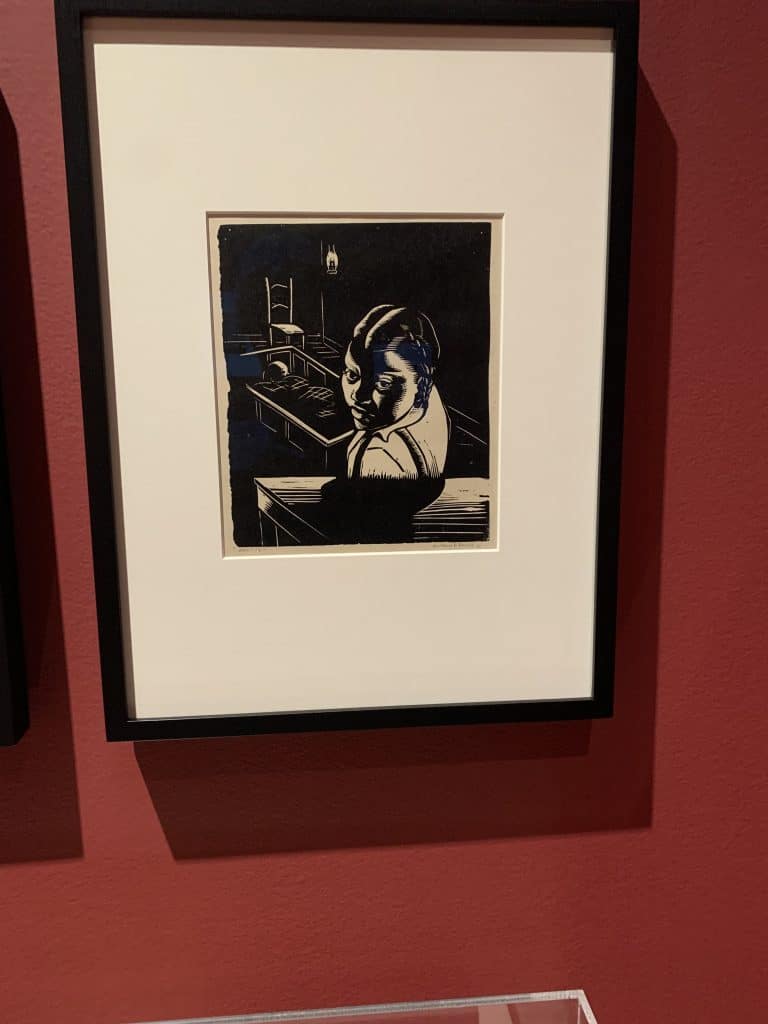
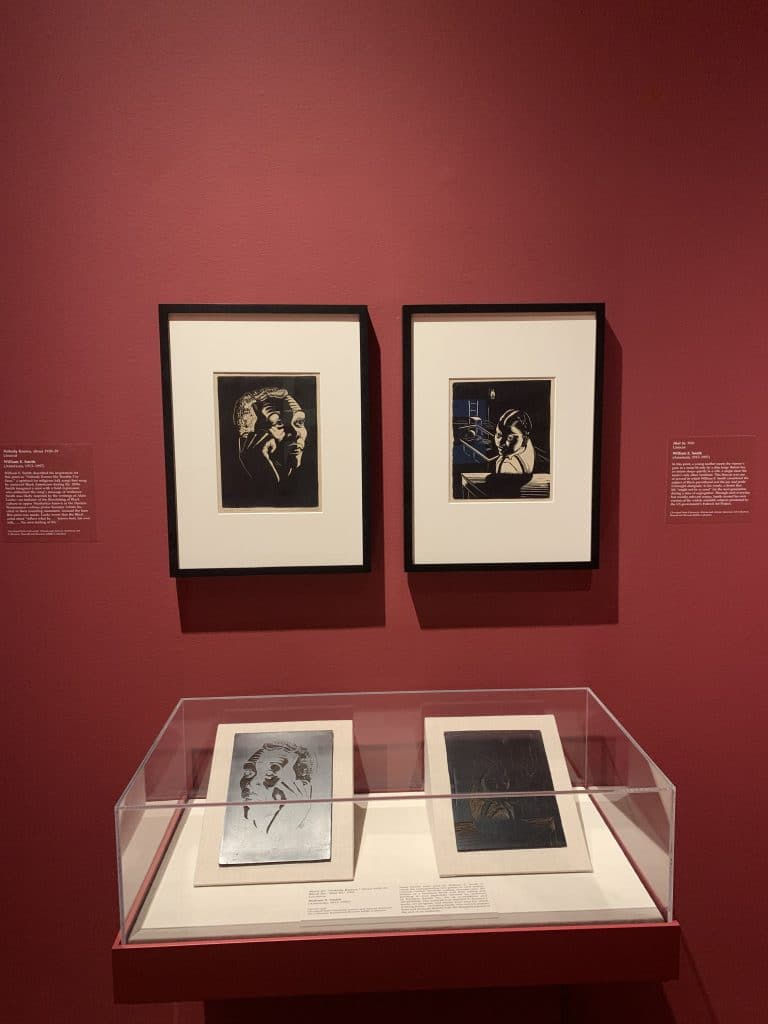
The Cleveland Museum of Art’s newest exhibition “Karamu Artists Inc.: Printmaking, Race, and Community “showcases lithographs, black-and-white etchings and linoleum cut prints of artists and community members – including poet Langston Hughes – and the innovative artist group Karamu Artists Inc.

Karamu Artists Inc. – which included artists such as Hughie Lee-Smith, Charles Sallée, Elmer W. Brown and William E. Smith – were prominent Black printmakers during the Works Progress Administration (WPA) Era and Harlem Renaissance.
The exhibit presents nearly 60 works created by the group members, highlighting pieces that depict daily life for Black Americans in the 1930s and ‘40s. Britanny Salsbury, curator of the prints and drawings for Cleveland Museum of Art, says this perspective made the artists of Karamu Artists Inc. unique from other artists at that time.
“[Karamu Artists Inc.] were making prints that dealt with subjects hidden from daily life in America during the ‘30s and ‘40s,” Salsbury says. “But they were putting a really unique spin on it and really turning it into their own thing.”
Karamu’s printmaking workshop became the foundation of Karamu Artists Inc. As part of the Roosevelt Administration’s Works Progress Administration, the Federal Art Project (FAP) provided employment and opportunities for artists after the Great Depression. Cleveland became home to one of only five FAP print shops that had been established through WPA. As Cleveland became the center of print production, artists had the ability to experiment with various artmaking techniques.
“One of the things that made Karamu House different from other community art centers that had inspired similar trajectories for art making [such as] Chicago, Philadelphia and New York was that Karamu House was not just a community art center but actually a professional theatre with a professional theatre company,” says Erin Benay, an associate art history professor and researcher at Karamu House.
“They were really invested in the professionalization of artists. It was about professionalization and the way artists of color could seek to create an environment in which they could earn a living and livable wage from their art, even beyond the end of federal funding from the Works Progress Administration,” she added.
“Karamu Artists Inc.” will run through mid-August.
Keep our local journalism accessible to all
Reader support is crucial as we continue to shed light on underreported neighborhoods in Cleveland. Will you become a monthly member to help us continue to produce news by, for, and with the community?
P.S. Did you like this story? Take our reader survey!