One of the things I love about the Detroit-Shoreway neighborhood is its accessibility. From where I live, I can take four different bus routes and the Red Line. The neighborhood is walkable, and there are parks, the beach, and a diverse community that truly supports each other and cares for one another.
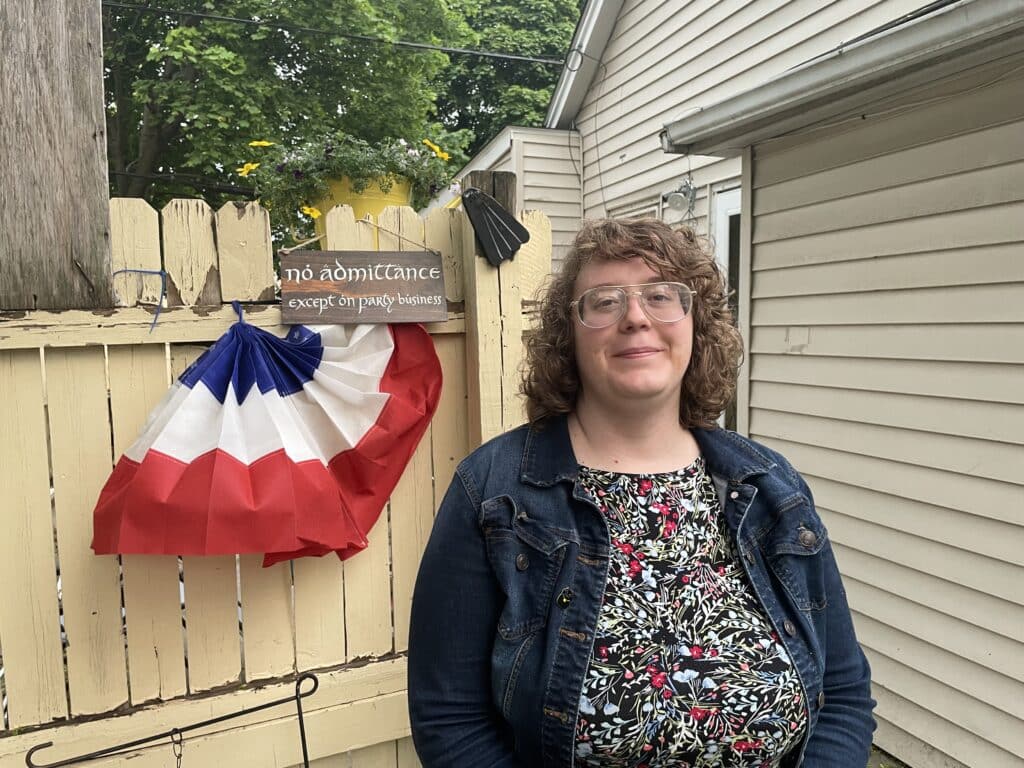
I’ve been disabled since birth. I’m deaf in my left ear, and I have a neurological eye condition called nystagmus, making me visually impaired as well. I also have autism.
I never try to make a big deal out of my disabilities. My motto was to self-accommodate at work, disclose as little as possible, and keep my head down while I paid bills, fed my cats, went to church, and dated.

Then, a massive, shut-down-the-city snowstorm hit Cleveland in February 2022, and I was stranded for the weekend at the hotel where I worked. I was anxious to get home – my cats were trapped alone in my little Detroit-Shoreway cottage, and my crazy cat-lady mothering instincts kicked in. I grabbed an Uber home, and upon skipping up the driveway, I tripped and fell directly on my knee.
It would almost be funny, if it hadn’t led to a massive deep vein thrombosis blood clot in my right leg, and bilateral pulmonary embolisms (that’s doctor-speak for a massive blood clot behind my knee, and blood clots to both of my lungs). I was 28. I had to leave my full-time job at the hotel while I was laid up for a week at Lutheran Hospital. In deep shock that this had happened to me, I began to see things in a new way.
The accessibility wake-up call
I lived alone at the time of my injury. When I was getting treated in the hospital, I was using a walker to get to the bathroom. I kept thinking about how I needed to overcome a huge step to get into the door of my one-floor house. I wondered how I would get in, and who would help me, or what kind of new accommodations I’d need to make for myself.
While I was thankful my house was ground level, I couldn’t imagine having to go up the flight of stairs like I had at my old apartment in Old Brooklyn. I kept wondering about other people in our community who have permanent mobility issues. How do they find accessible housing? Can they afford it? As I rolled around our neighborhood in a wheelchair I had to purchase off the internet, I looked up at all these historic buildings that I loved so much, and thought to myself “God, how could I even get in there if this was permanent?”
Just like that, I realized I couldn’t hide my disabilities or hold my head down anymore. I had to find out where the accessible housing was in our beloved community. Why don’t we think about these things until we sustain a life-threatening injury ourselves? I wasn’t going to need permanently accessible housing, but for the sake of neighbors with mobility issues, I wanted to see how hard it would be to find it.
The search begins
I found that I could Google and find some apartments in Detroit-Shoreway with “disability access” or that were “wheelchair accessible.” But what about affordability? I began by reaching out to the Northwest Neighborhoods CDC, which serves the Cudell and Detroit-Shoreway neighborhoods. They are unique in their offering of subsidized low-rent homes for community members in need of affordable housing. I was curious about how much of their housing stock was aimed at the disabled individuals with mobility impairments.
I spoke with Josh Forbes, marketing director of Northwest CDC. He told me about the 15 or so buildings the CDC manages and offers as affordable housing. But, of the 15 buildings Northwest CDC manages, only five of these buildings have elevators. In those five buildings, a total of 18 units are designed for people in wheelchairs. “A lot of these buildings are historic,” he said, “which can make them expensive to adapt.”
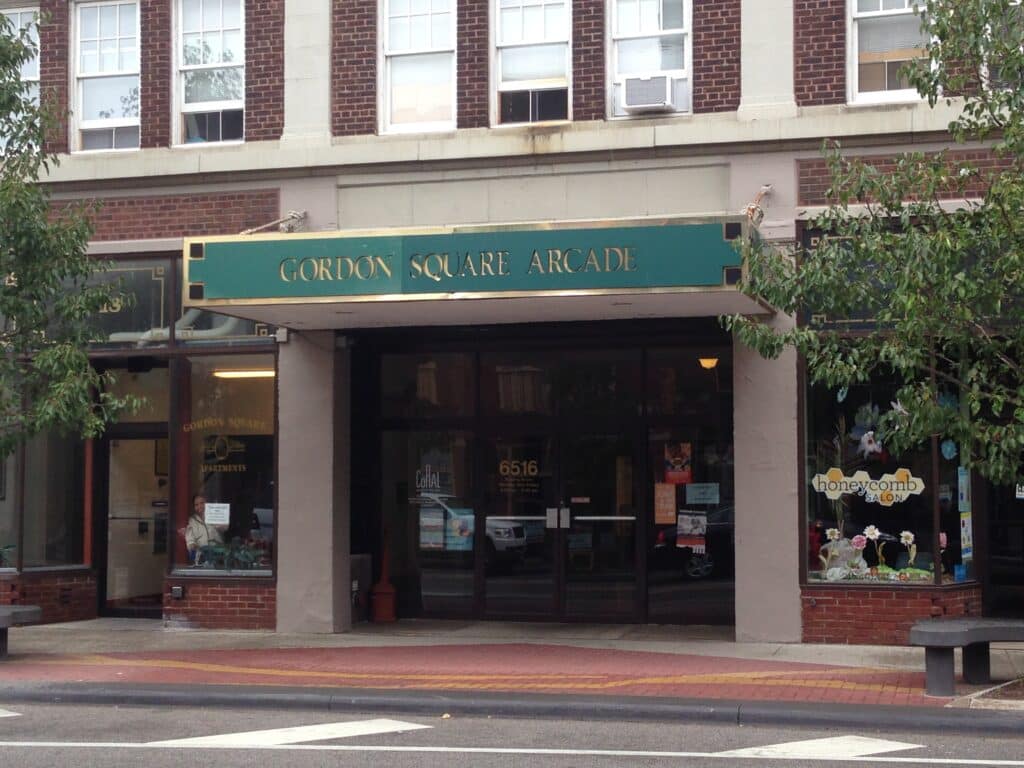
He did have some good news for my search, though. “What a lot of people don’t know,” he said exuberantly, “is that there are apartments above Gordon Square arcade set aside for seniors and the disabled. However, you do need a voucher to live in these units.”
I was surprised! I go through Gordon Square all the time, and had no idea the upstairs of the arcade had this designated purpose. However, that is just one building. With this in mind, I decided to cast a wider net and see what other resources could help in my search.
Nonprofits working for accessible housing
I discovered a great organization called the Northeast Ohio Coalition of Disability Organizations (NOCDO), which is a collaboration of fifty different organizations in Cleveland that serve the disabled community here. NOCDO (formerly known as ADA Cleveland) facilitates advocacy for the disabled community and conducts workshops and seminars about creating accessible housing, along with their organizational partner MaxHousing.
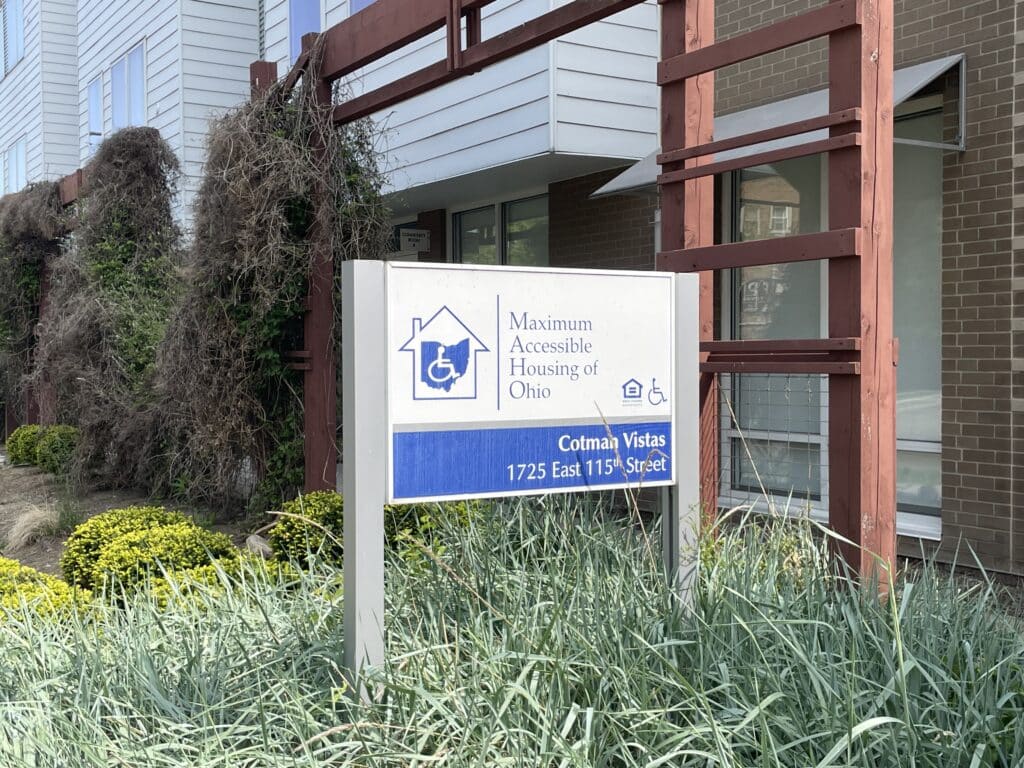
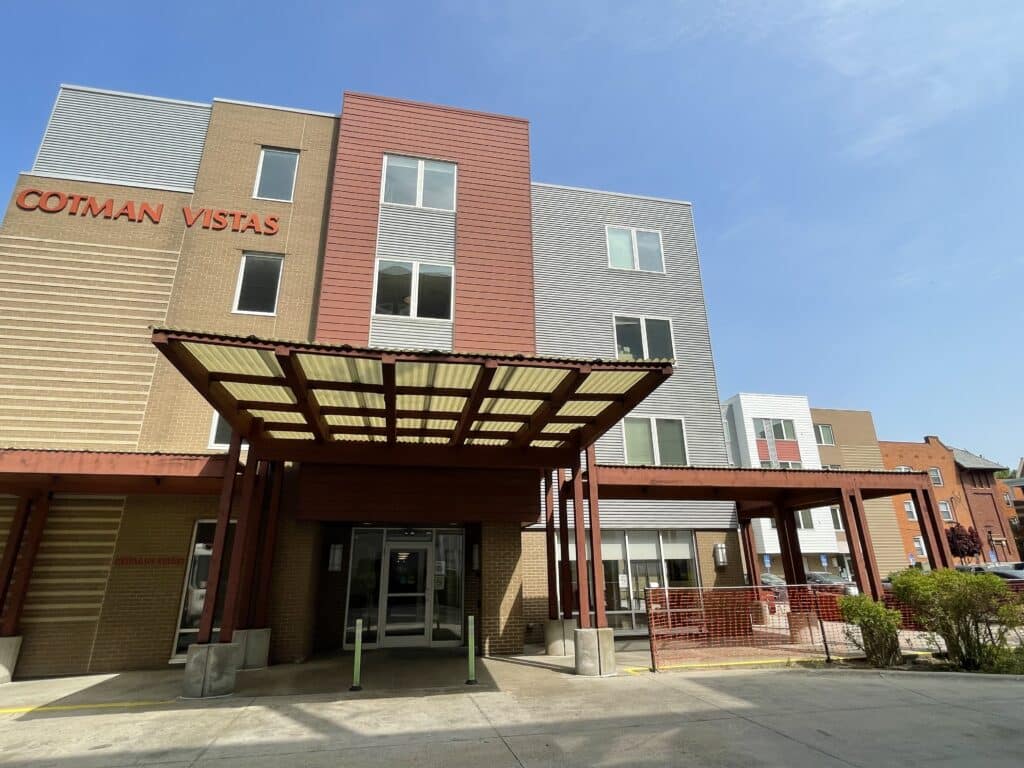
MaxHousing of Ohio was started in 1984, a full six years before the Americans with Disabilities Act was signed into law. MaxHousing’s goal was to have affordable housing for community members with physical disabilities. They are a nonprofit alternative to public housing for disabled citizens. They operate 148 units in all, including 36 units in Cleveland. I spoke to Beth Glas, executive vice president of MaxHousing, who is very passionate about her work..
“The waiting list for our units in Cleveland is about 40 people,” she said. “Turnover for these units is infrequent because there’s not a lot of options.” The accessible units come pre-equipped with things like lower counters, rollout shelving, level handles, higher wall outlets, lower switches, closet curtains instead of doors, tables with a built-in wheelchair cutout, and roll-in showers, she said. Unfortunately, MaxHousing does not have any properties in the Detroit-Shoreway neighborhood and has only one 36-unit property within the city of Cleveland.
I was shocked to learn that the ADA doesn’t cover private housing. “The ADA only covers buildings that function in public spaces,” she said. “But a private bathroom in a home or a rental unit isn’t covered by the ADA – that’s why we don’t have handlebars in all our bathrooms at home.” (The ADA does, however, require that public housing (housing projects) be accessible.)
Beth informed me that it is the Fair Housing Act that legally covers accessible housing for private residences – and the rules mostly apply to newer construction (1991 or after) multi-family buildings. Additionally, apartments that get federal funding (HUD) have different rules and regulations, and offer more protections than private residences covered under the Fair Housing Act. That usually means that about 5% of units (or one unit, whichever is more) in new, federally funded buildings have to be accessible to people with mobility disabilities. In some cases, federally funded major alterations of buildings older than 1991 can also trigger requirements for accessibility upgrades. For more details, check out the city of Cleveland’s fact sheet on what the ADA and FHA require in housing accessibility.
Accessible housing can be hard to afford
Beth mentioned that the average income for their MaxHousing residents is $12,000 a year. Most individuals are on Supplemental Security Income, or SSI, a program that is funded by Social Security for disabled citizens. It can be difficult to find a home with limited income, especially because assisted properties like MaxHousing or the accessible units owned by Northwest Neighborhoods are in demand.
Even if you find a home for rent that you want to make accessible, the cost is on the disabled individual. Legally, landlords are obligated by the Fair Housing Act to allow reasonable accommodations to their rental units. However, the disabled individual has to front the cost of both putting in these accommodations and of removing them once they leave the home. These costs can be burdensome.
In addition, the 2019 American Housing Survey found that low-income people tend to have more mobility challenges and are also more likely to live in homes with poor accessibility – a double whammy. In Cleveland, we don’t have good statistics on how much accessible housing exists. But, nationally, Beth told me, about 1% of housing units are fully accessible – but that goes up to 6% for multi-family buildings built after 2003 and even higher to 11% for buildings with 20 or more units built after 2003. She also says that, nationally, about 35% of existing homes are considered modifiable – but with a neighborhood as historic as Detroit-Shoreway, I have to wonder if it’s even that high here.
We have work to do
Thinking back to when I was sick, I consider myself lucky. I’m fortunate enough to have a support network of family, friends, and a church community I could depend on. They brought me meals, took me to doctor appointments, and helped me out financially while I searched for other work.
I was also lucky that I didn’t have to climb a flight of stairs to get into my apartment, and lucky that this condition wasn’t permanent. However, now that I’ve already had serious blood clots, the chances of me getting another serious life-threatening DVT or pulmonary embolism are higher now that I’ve already had them.
Our community is blessed with a walkable neighborhood and access to frequent public transit with a variety of options to go where you want, and we have a CDC that is actively thinking about disabled community members in the management of their affordable housing options. However, we still have a long way to go. If we truly want our whole community to be inclusive, diverse, beloved, and whole, we have to include our disabled community members. Beth Glass struck me with something she said: “It’s a quality of life difference to be able to turn a handle by yourself.” I hope the Detroit-Shoreway community can provide more of these handles, by which our disabled community members can open more doors to their future.
Northeast Ohio Coalition of Disability Organizations is having a public festival in collaboration with University Circle Inc. on July 26 as part of the summer Wade Oval Wednesday series. They also host a ‘Disability in the Land’ podcast, and the link to the podcast can be found on their website or on Spotify. For more information about accessible housing through Northwest Neighborhoods CDC visit Northwest Neighborhoods and click on the ‘leasing’ tab in the upper righthand corner. If you’re interested in finding accessible housing with a mobility impairment through MaxHousing, go to maxhousing.org.
Kelly Margaret Heikkila was a participant in The Land’s community journalism program.
We're celebrating four years of amplifying resident voices from Cleveland's neighborhoods. Will you make a donation to keep our local journalism going?