Neighborhood Family Practice, an independent provider of affordable health care with seven locations on Cleveland’s west side, plans to open its eighth clinic in early 2026 in the Clark-Fulton neighborhood.
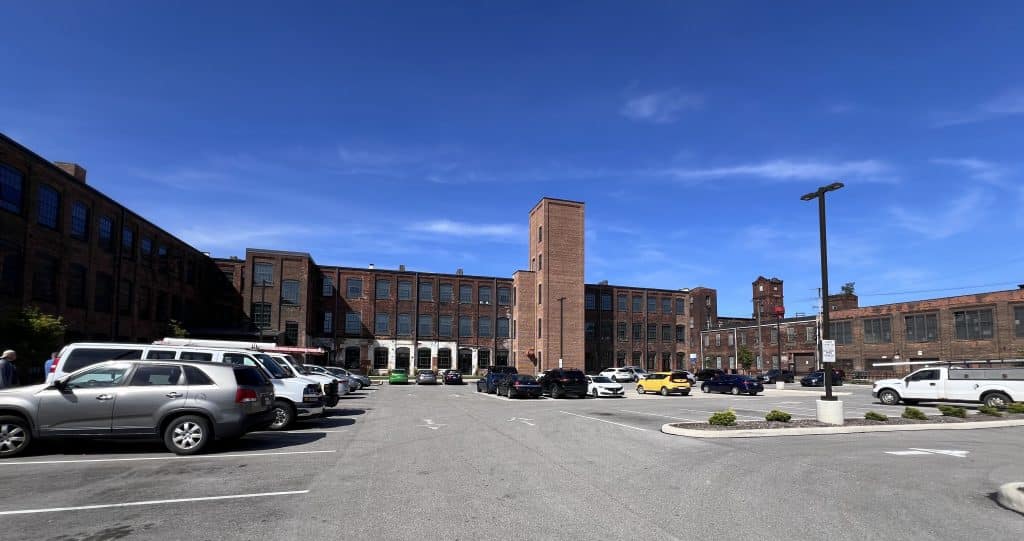
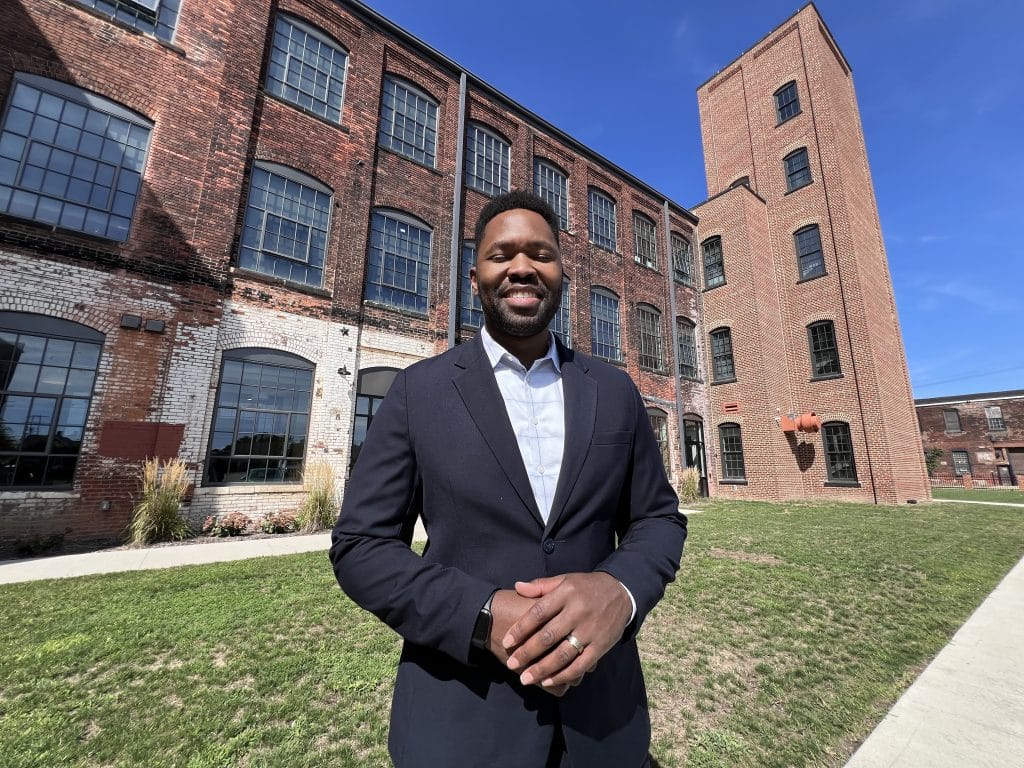
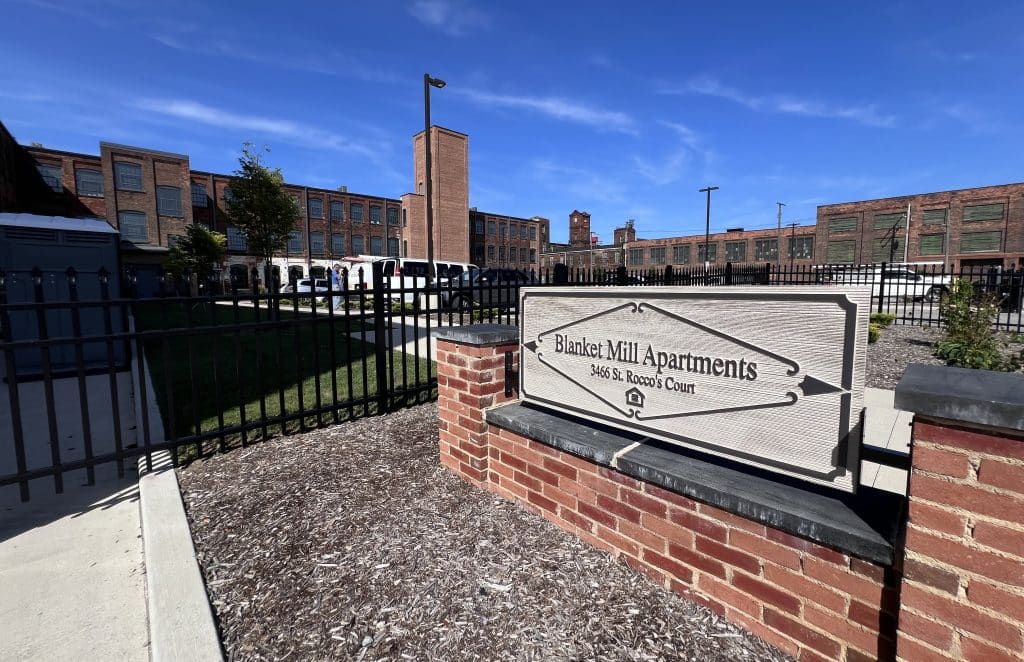
The new clinic will be part of the $30 million Northern Ohio Blanket Mills mixed-use project, the renovation of a three-story, 112,000-square-foot industrial building, once used to make woolen horse blankets, into 60 affordable-rate apartments and ground-floor office space. The development is on West 33rd Street just south of Clark Avenue.
The clinic will occupy more than 18,000 square feet on the ground floor and contain 20 exam rooms and a pharmacy. It will provide primary care and behavioral health services but will focus on maternal and infant health. All of Neighborhood Family Practice’s midwives will move into the new clinic.
“We have learned over the years that it’s more impactful when we centralize a service like that in one location, so practitioners can work together and back each other up,” said Domonic Hopson, president and CEO of Neighborhood Family Practice. “It’s also good for our patients and their family members to become familiar with all of our midwives.”
The renovation of the clinic space is now underway and the estimated total cost is $3.1 million. Hopson said Neighborhood Family Practice has already raised most of that amount. It still needs another $500,000 or so and is having ongoing conversations with donors.
Neighborhood Family Practice will not stop its expansion at Clark-Fulton. It’s already planning its first east-side location on the site of the former St. Vincent Charity Hospital in Cleveland’s Central neighborhood. Hopson is negotiating a property purchase there.
It’s the same location where the Alcohol, Drug Addiction & Mental Health Services (ADAMHS) Board of Cuyahoga County; The Centers, a provider of behavioral health services; and the county’s Department of Public Safety & Justice Services hopes to build a new mental health and addiction crisis center.
“Our patients come from every ward in Cleveland and every suburb, including those on the east side like Garfield Heights,” Hopson said. “We want to make sure that we are positioned appropriately to serve them in the best way possible.”
Meanwhile, Neighborhood Family Practice is bracing itself for the impact of the federal One Big Beautiful Bill Act, which will bring changes to Medicaid coverage. The legislation is expected to cut into Neighborhood Family Practices’ revenues.
“In our rough estimate, in the worst case scenario we may experience a drop of about $1 million in revenue, and it could go up to $2 million,” Hopson said. “Those are not small numbers. We have work to do over the next 18 months.”
A matter of timing
Neighborhood Family Practice, established in 1980, sees more than 22,000 patients and charges them based on their ability to pay. Those with income at or below 100 percent of the poverty rate pay a nominal fee, while those earning between 100 percent and 400 percent of the poverty level are charged on a sliding scale.
However, Neighborhood Family Practice patients aren’t necessarily struggling financially. Hopson said that more than 25 percent of its patients have private or commercial insurance, which speaks to the quality of care Neighborhood Family practice offers.
Hopson said Levin Group Inc., a Cleveland developer, approached Neighborhood Family Practice more than five years ago about including a clinic in the Blanket Mills redevelopment. At the time, Neighborhood Family Practice passed because it was working on other projects.
“But when Levin came back to us a couple of years ago, with an anchor of affordable housing and all the services they planned to offer at Blanket Mills, it aligned well with our current strategic plan,” Hopson said. “Levin is bringing as many services as they can for people living in the apartments.”
In addition to Neighborhood Family Practice, Blanket Mills will include offices for Metro West Community Development Organization, which supports the revitalization of the Stockyard, Clark-Fulton and Brooklyn Centre neighborhoods of Cleveland. Metro West is co-developing the Blanket Mills project with Levin Group.
Also, the Spanish American Committee will operate its Little Steps Bilingual Child Enrichment Center, a childcare center and preschool, in Blanket Mills. In addition, the Cleveland Department of Public Health will have an office there.
Cleveland Ward 14 Councilwoman Jasmin Santana said all of these organizations are expected to move into Blanket Mills by February.
“We were very strategic about the organizations we wanted to move in there because the need of the services they provide is so great,” Santana said. “We’re trying to make it easy for parents and have places they can walk to, so this is a big win for the neighborhood.”
Santana said the apartments are finished and 100-percent occupied. According to the Levin Group website, the complex includes community gathering spaces, gardens and large units with natural lighting.
“It’s beautiful,” Santana said of the apartment building. “You can’t even tell they are affordable apartments. It’s safe, and the building has its own property management.”
Focus on childbirth
Addressing maternal and infant health is critical for Neighborhood Family Practice and its patients. According to a 2023 Child Fatality Report by the Cuyahoga County Board of Health, the county’s child mortality rate of 75.9 deaths for each 100,000 children is 25 percent higher than the state of Ohio’s and 41 percent higher than the country’s.
The new Clark-Fulton clinic will have a “centering classroom” for group prenatal care. Expectant mothers in similar stages of pregnancy will gather to learn about the birthing process and share their experiences with each other.
“We do that now but in a conference room where we have other types of meetings,” Hopson said. “We want to give expectant mothers a dedicated space because the program has been very impactful for our patients. It’s helpful for moms on their first pregnancies to hear from those on their second or third pregnancies.”
The clinic will also include a lab and community education room where speakers will discuss a wide range of topics, including financial and insurance literacy.
One of the biggest challenges for Neighborhood Family Practice as a whole is the One Big Beautiful Bill Act, which Congress passed in July. Hopson said that under the legislation, Medicaid recipients will face more stringent eligibility requirements and will have to reapply for Medicaid more often.
“When you combine those two factors, we are expecting 10 percent of our Medicaid patients to lose coverage, some of them not because they’re ineligible for Medicaid but due to the administrative burden of those additional requirements,” Hopson said.
Hopson said some Medicaid patients will simply forget to reapply.
“When your priority is putting food on the table for your kids, paying rent or keeping the lights on, it’s easy to miss a letter saying you need to update documentation,” Hopson said. “Or maybe you move to a different apartment complex and you miss a notice because the government doesn’t have your new address.”
Hopson said Neighborhood Family Practice plans to work with local, county, state and federal agencies and nonprofits to raise awareness of the more demanding reapplication process for Medicaid patients.
“As a health care organization, that is normally outside of our scope, making sure patients send in the required information,” Hopson said. “But we want to support our patients and make sure they do so.”
Keep our local journalism accessible to all
Reader support is crucial as we continue to shed light on underreported neighborhoods in Cleveland. Will you become a monthly member to help us continue to produce news by, for, and with the community?
P.S. Did you like this story? Take our reader survey!