Neighborhood Family Practice recently celebrated National Midwifery Week by announcing a partnership with Birthing Beautiful Communities and continuing to advocate for Ohio House Bill 7.
House Bill 7 includes provisions for improvements to various support programs like WIC and Help Me Grow. The sweeping bill also addresses the need for Doula services. If it is signed into law, House Bill 7 would establish a Doula Advisory Board, establish a registry of certified Doulas, provide doula services to inmates, and ensure that services with a certified Doula are covered by Medicaid. The legislation was passed by the House on June 12th, 2024. Now, the bill needs to be considered by the state Senate.
Domonic Hopson, CEO of Neighborhood Family Practice, told The Land that Neighborhood Family Practice has “had a loose relationship with Birthing Beautiful Communities (BBC) for a very long time.”
Birthing Beautiful Communities is a nonprofit working to provide practical support to pregnant women throughout the entirety of the perinatal period- which begins with the start of a pregnancy and goes through the first year of postpartum care. The many services they provide include access to a doula, lactation support, transportation assistance, and mental health care.
Neighborhood Family Practice was already working alongside Birthing Beautiful Communities when CareSource – one of five Medicaid managed care plans available to eligible Ohioans – gave them the funding to expand doula care to more of their patients. This funding inspired Neighborhood Family Practice to initiate an official partnership with Birthing Beautiful Communities.
“We could train and hire doulas, or we could partner with an established doula organization. Knowing that we have one of the best doula organizations in the state, right here in Cleveland, it didn’t make sense for us to train or hire our own staff. It makes sense for us to partner with an organization that’s already doing the work,” Hopson said.
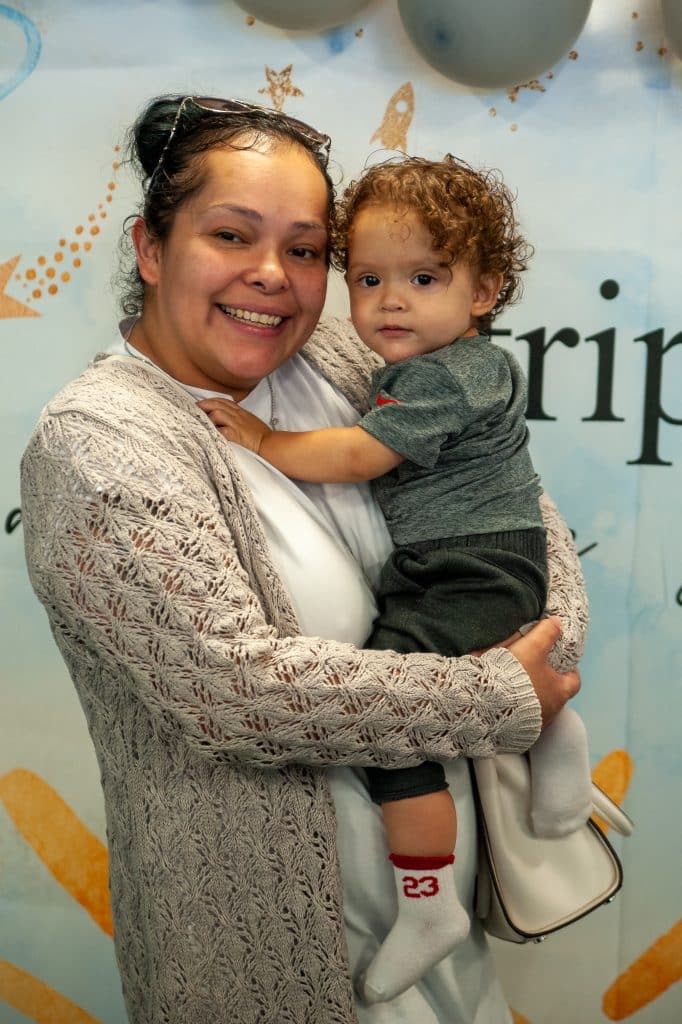
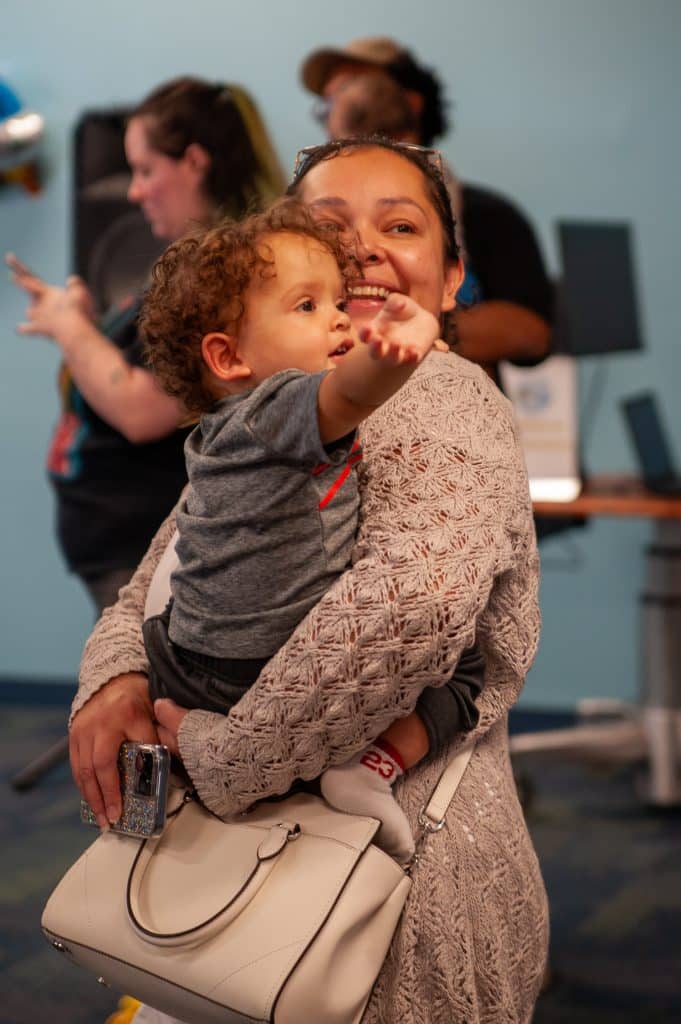
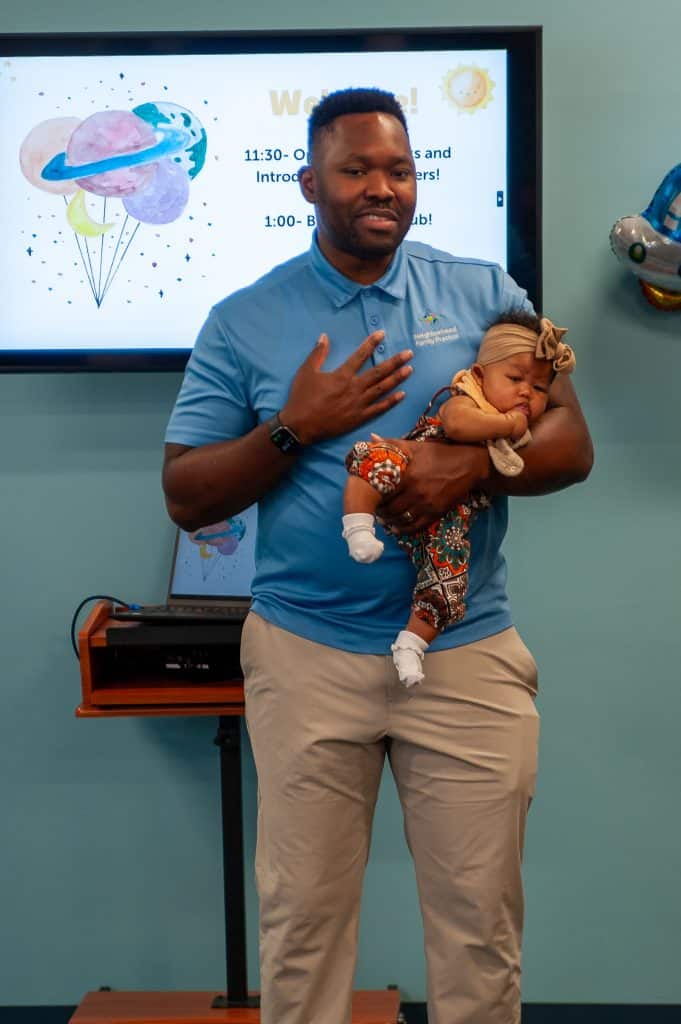
In a YouTube video announcing Neighborhood Family Practice’s expanded partnership with Birthing Beautiful Communities, a BBC Doula named Tonya Nicholson explains the unique benefits that a doula can provide:
“Your doula really is your partner in this process. I know we have a lot of moms who may have support – you may have your mom in there, you may have your significant other. But, traditionally, we find that those folks may not know a whole lot about birth, and maybe mom doesn’t either. So, having a doula there is somebody who is trained to know what kind of medicines are going to be used, what kind of terminology may be used.
“It’s somebody that can help walk you through the process when the nurses and doctors are having to go in and out of rooms (because you’re not the only one giving birth[that day]). That doula is going to stay in there with you. Usually, when a mom decides that she wants a doula, she can reach out maybe around a month, six weeks before she gives birth and they can talk through what’s called a birth plan – what it is that you want from your birth experience. And that doula, again, is there to help you through that process,” she said.
In the same video, Nadia Robinson– who works as a Certified Nurse Midwife for Neighborhood Family Practice– explains what the partnership with Birthing Beautiful Communities will look like in practice.
“When the patient tells me that they have a doula, I’m relieved immediately. Even clients that I have gotten to know really well prenatally, I can’t know in all of the ways. So, it’s just another person in the room that I know is going to help the client get what they are looking for out of their experience. I need all the feedback I can get about how to support somebody in having the birth experience that they want, and a doula creates a layer of safety for that.
“I’m really excited that we’re gonna have the ability, with the patient’s permission, to have a direct relationship with their doula. From visit to visit, it’s going to allow us to center the patient better and at the time of birth, to center the patient better. So I’m really grateful that we’re gonna have the ability to work collaboratively and not just when the patient is involved directly,” she said.
Robinson and the other nurse midwives at Neighborhood Family Practice are, according to the NFP website, “certified by the American Midwifery Certification Board and the American College of Nurse-Midwives, have completed further education in midwifery and other areas of healthcare, and are licensed in the state of Ohio.” Nurse midwives at Neighborhood Family practice work in partnership with obstetrician-gynecologists or family practice physicians to ensure your care is coordinated and of the highest level.
Hopson told The Land that Birthing Beautiful Communities is providing some training and education to their staff around how to fully support mothers, especially those who are navigating poverty. The partnership should encourage everyone involved to provide care in a culturally competent way.
Midwives and doulas can ensure better care outcomes for birthing parents and their infants – meaning that House Bill 7 could spark much-needed improvements to the dire infant mortality rates in our area.
As of 2021, 5.44 out of every 1,000 babies born in America died before their first birthday. Ohio’s average – 7 per every 1,000 – is even higher than the national average and places Ohio behind 41 other states. More specifically, according to a Cuyahoga County Child Fatality Report, the county’s 2021 Infant Mortality Rate was 7.4. Research from First Year Cleveland shows that the data isn’t so straightforward, as there’s a sizable gap between the healthcare experiences of white residents and Black residents. In Cuyahoga County, the 7.4 figure dips to 5.24 for white infants. For Black infants, the figure skyrockets to 12.36.
Preterm births and low birth weights are two things that can contribute to whether or not an infant makes it to their first birthday. Referring to statistics on Black patients, Neighborhood Family Practice reported a preterm birth rate of 8.9% amongst Black mothers and a low-birth weight percentage of 6.8%. Within the same time frame (2020-2022), the city of Cleveland reported rates of 16.6%, and 17.3%, respectively.
The comparatively low rates can be attributed to Neighborhood Family Practice’s comprehensive approach as an integrated practice, as detailed by Hopson: “That’s the beauty of being an integrated practice – we have primary care, family medicine, pediatric care, behavioral health services, and a midwifery department all within one organization.”
Clevelanders who would like to learn more can reach out to Neighborhood Family Practice, or Birthing Beautiful Communities. If House Bill 7 becomes law, Medicaid-eligible birthing parents all across our state would benefit from access to doula services, and the resulting lower rates of infant mortality.
We're celebrating four years of amplifying resident voices from Cleveland's neighborhoods. Will you make a donation to keep our local journalism going?