The opening of a new neighborhood pharmacy doesn’t seem like a big deal. It is, though, when thousands of pharmacies – including those in chains like Rite Aid, Walgreens and CVS Pharmacy – are closing all over the country.
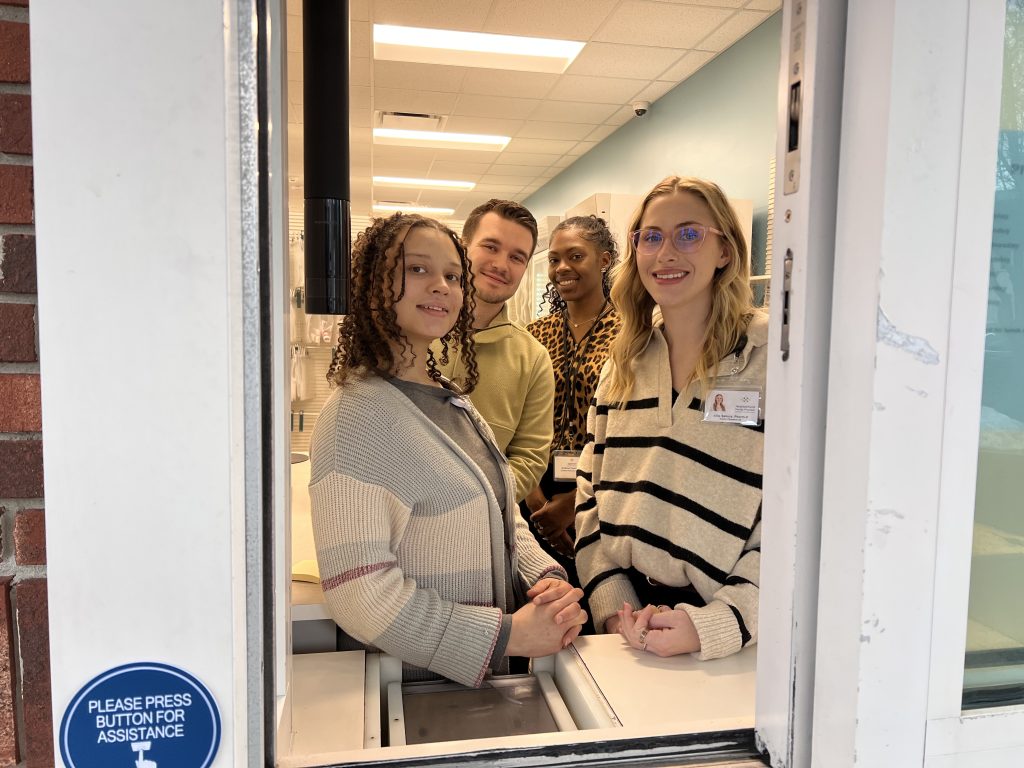
That’s why Neighborhood Family Practice – an independent provider of affordable healthcare with six locations on Cleveland’s west side – is celebrating a new pharmacy that opened last month in its clinic at Lorain Avenue and West 130th Street.
The clinic itself opened in March 2025 and is now fully staffed with four primary-care physicians, three dentists, two therapists and one psychiatrist. The pharmacy, complete with a drive-thru, is the final ingredient.

“The approval process for a pharmacy is separate from the clinic,” said Domonic Hopson, president and CEO of Neighborhood Family Practice. “A pharmacy has to include security features before the Ohio Board of Pharmacy comes out, does its inspections and grants a license.”
For example, the pharmacy must have an alarm system and the walls must reach the ceiling to prevent theft, Hopson said.
The new Neighborhood Family Practice pharmacy also has received accreditation to provide specialty drugs that treat chronic and/or complex medical conditions like multiple sclerosis and rheumatoid arthritis. These drugs are typically more expensive and traditional pharmacies don’t carry them.
Obtaining a license to sell specialty drugs is no easy trick because they must be handled with extra care. Patients using them must be monitored closely for side effects and to make sure the drugs are working as intended.
“This was just a natural next step for us,” Hopson said. “We have found that if patients have to obtain their prescriptions from more than one pharmacy, they are less likely to get them. Here they can get their regular prescriptions and their specialty drugs at one pharmacy.”
The pharmacy at Lorain and West 130th is one of several new developments at Neighborhood Family Practice, established in 1980 to fill a healthcare gap on Cleveland’s west side. Its new clinic in the Clark-Fulton neighborhood on West 33rd Street just opened March 2.
Two former Neighborhood Family clinics – one on Ridge Road near Dennison Avenue and another on Professor Avenue in Tremont – were consolidated into the Clark-Fulton location.
The Clark-Fulton clinic is part of the $30 million Northern Ohio Blanket Mills mixed-use project, which is the renovation of a three-story, 112,000-square-foot industrial building, once used to make woolen horse blankets, into 60 affordable-rate apartments and ground-floor office space.
The clinic in Clark Fulton – called the Ann B. Reichsman Community Health Center after a retired Neighborhood Family Practice physician – will also contain a pharmacy. That will bring to four the number of pharmacies in the Neighborhood Family Practice chain.
Pharmacies are also in a second Ridge Road clinic near Dennison and a clinic on Puritas Avenue near West 150th Street.
Neighborhood Family Practice, which sees more than 22,000 patients throughout Cleveland and Cuyahoga County, also has locations on Franklin Boulevard in the Detroit-Shoreway neighborhood and on Madison Avenue in Lakewood.
Filling a need
Last year, PBS News reported that nearly 7,000 pharmacies had closed since 2019 and more closings were expected nationally. Walgreens, CVS and Rite Aid each had announced plans to close hundreds if not thousands of pharmacies.
In Cuyahoga County, the number of pharmacy closings rose to about 175 in 2023 while only about 25 new pharmacies opened that same year, according to a pharmacy tracking dashboard launched by the Ohio Board of Pharmacy
It’s happening because drug reimbursement rates have been falling, due to “pharmacy benefit managers” – companies that administer prescription benefits for insurance firms and employers – cutting drug prices, according to the PBS report.
Also, enrollment in pharmacy schools has declined, leading to burn out among veteran pharmacists who remain in the field.
Hopson said Neighborhood Family Practice, because it has in-house pharmacies, avoids these pitfalls. The pharmacies don’t operate independently like those in national and regional chains. They are part of Neighborhood Family Practice medical clinics.
Pharmacies are included in Neighborhood Family Practice’s “integrated care model” in which primary-care physicians, counselors and pharmacists work together to care and treat individual patients. This coordinated care results in more successful patient outcomes, Hopson said, because every hand knows what the other hand is doing – even more so because all care providers are in the same building.
“We invest in our pharmacists because they have the training and can adjust meds and help control complex chronic conditions like diabetes and hypertension,” Hopson said. “The number of diabetic patients whose diabetes is controlled is much higher when they have clinical pharmacists on their care team.”
Like with all services at Neighborhood Family Practice, patients are charged for prescriptions on a sliding scale based on their incomes and family sizes.
Neighborhood Family Practice even delivers drugs to homes at no cost if transportation is a barrier and, within the last 18 months, started mail delivery of prescriptions after patients asked for that service.
“We’re always looking for ways to get prescriptions to patients faster,” Hopson said.
Affordability and accessibility are vital because if patients can’t afford prescriptions or must reach a different destination to fill them, they are less likely to take their medications.
“If the patient comes back six months later for a follow-up exam and they’ve never obtained their prescriptions, that’s a failure of our larger healthcare system,” Hopson said.
Hopson said the in-house pharmacies are another way that Neighborhood Family Practice has become a “pillar of the community.”
“Despite our small size, we have a significant impact on the health of our community and we don’t take that responsibility lightly,” Hopson said.
Keep our local journalism accessible to all
Reader support is crucial as we continue to shed light on underreported neighborhoods in Cleveland. Will you become a monthly member to help us continue to produce news by, for, and with the community?
P.S. Did you like this story? Take our reader survey!