A Mexican father once tried to slip into the U.S. with his teenage son and no papers. The two were caught and released pending a hearing. The father gave up and went home. Friends told the son to skip the hearing, since he’d be ordered deported either way, and try his luck staying here.
Now the son is in his 30s and living in Northeast Ohio, still without documents. His record’s clean except for that deportation order. He has an undocumented wife and a little boy, who has birthright citizenship and a heart defect getting treatment here.
“I don’t want them worrying,” says the man’s lawyer, Patrick Espinoza of the Painesville firm Sus Abogados Latinos (Your Latino Lawyers). “These are not the people who should be targeted.”

Many immigrants in Greater Cleveland are worrying about being targeted by President Trump after he retakes office on Jan. 20. He has called immigrants “animals… poisoning the blood of our country.” He has falsely accused them of high rates of crimes, from rape and murder to voting illegally and eating cats. (Studies show that immigrants in Texas have about half the conviction rate and 40 percent of the incarceration rate of people born in the U.S.)
From 2017 through 2020, Trump’s administration made it harder to come here and stay here. The second time around, he and his team have promised far more raids, detentions, and deportations, with the military’s help. They’ve also promised tougher rules, such as a ban on the constitutional right of citizenship for future children born in the U.S. to undocumented immigrants. But details are few and rumors are many.
Says Espinoza, “Our phones have been ringing off the hook.”
Psychologist Evelyn Rivera, who leads the advocacy group LatinOHs, says, “This country is traumatizing the same people who’ve been traumatized in their own country. We are seeing an increase in depression and anxiety.”
Many undocumented immigrants have fled war, persecution, disasters and crime; endured years in cramped, pestilent camps; crossed oceans, deserts and mountains; and dodged robbers, kidnappers and the law. In the U.S., they’ve found safety, prosperity and freedom. Now many have lived here for decades, making a living and raising children.
“They’ve survived and excelled and given back to this country,” says Ruth Rubio-Pino Siaz, who leads Cleveland’s Club Azteca, which serves the Mexican-American community. “Many are elderly. Now they’re facing the possibility that they’ll have to go back — to what? There’s nobody in their towns that they know anymore.”
Documents and doubts
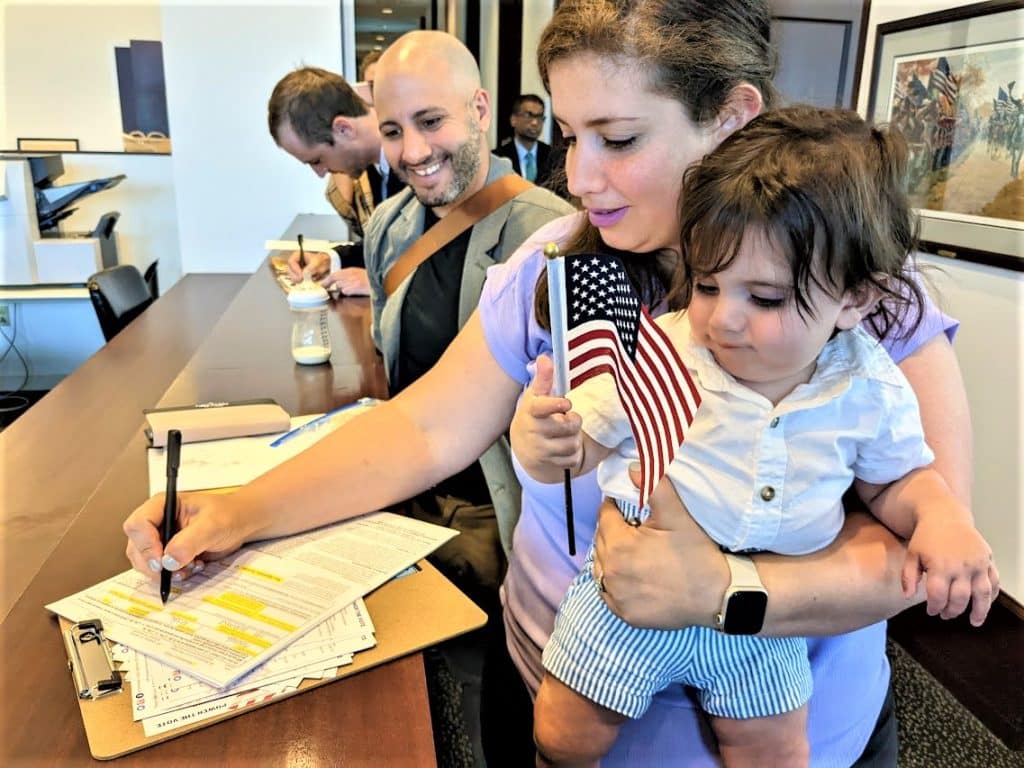
Legal local immigrants fear that Trump won’t let them bring loved ones here. “My wife was crying after the election,” says Bakht Zaman Moqbel, who helped American forces in his native Afghanistan, then fled the falling country with his family. The couple wants to bring over her mother and his parents, whose home has been searched three times by the reigning Taliban. But “most people are thinking the new administration will be 100% against immigration.”
Clevelanders from Somalia are worried, too. “Since Trump’s about to take office, they are fearing they are not going to see their family again,” says Idiris Mohamed, who runs the Somali Community Center.
Some legal immigrants fear that their permission will be revoked. Tanya Budler, whose Rise Together helps local nonprofits find work for immigrants, says, “Some things can happen overnight. We saw that in ’17 with the Muslim ban.” After a week in office, Trump abruptly blocked travelers from seven mostly Muslim countries.
The U.S. has given many refugees permission to stay through next year or a little longer. But last month, Tom Homan, Trump’s new “border czar,” called into Bob Frantz’s show on Cleveland’s The Answer radio station and said that presidents could revoke that permission anytime.
With all the threats, says Joe Cimperman, who runs Global Cleveland, “The Trump policies are already succeeding, because they’re scaring people.”
Exile and return
Gerson Velasquez’s first name comes from the biblical account of a son born to Moses in exile. It means “a stranger in a strange land.”
In 2003, the then 17-year-old Velasquez sneaked into the U.S. from Guatemala without papers. During Trump’s first term, the immigrant was detained for a month, then sent home. But he returned with a visa a couple months later. He’s now a U.S. citizen and owns Half Moon Bakery at Tower City. He has no complaints.
“If people are in this country illegally,” he says, “they have to go back and come in legally.”
Still, Velasquez tells undocumented immigrants not to worry. He says that Trump will rightly focus on ones who’ve committed other crimes. “As long as you don’t do any crazy stuff, you’re good.”
Many immigrants agree. Asking not to be identified, a supervisor at an Asian specialty store in Cleveland says that her workers are confident they can stay. An anonymous supervisor at a Latino store says that some workers seem worried, but others confident or resigned to whatever might happen.
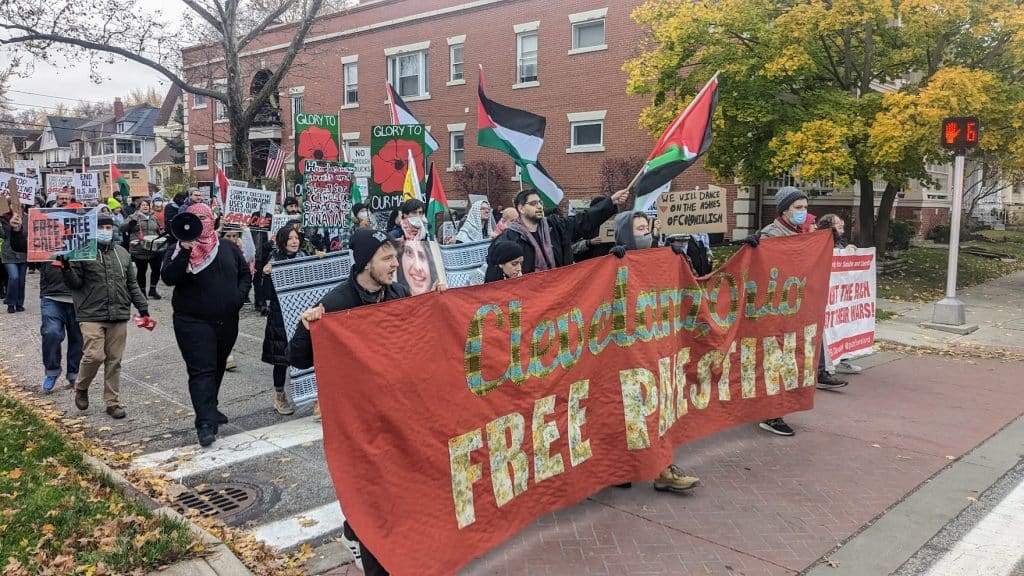
Coco Saliba, who runs the locally-based Arab American Voter Project, says, “I’m not seeing as much of a concern as maybe the media is portraying.” Still, he worries that students from abroad might be deported for unsanctioned protests of Israel’s invasion of Gaza.
From homelands to the Land
According to the U.S. Census Bureau, Cuyahoga County had about 97,000 immigrants in 2023, who represent 7.9 percent of all residents. According to the advocacy group New American Economy, about 60 percent of the immigrants in Cuyahoga and its six adjacent counties had become U.S. citizens by 2019. The rest had visas, asylum, permanent residencies, refugee status, other kinds of authorizations, or were undocumented (13.8 percent).
By definition, undocumented immigrants are hard to count. But they’re estimated to be a bigger share of the population nationally than locally, at 23 percent of all 47.8 million immigrants, according to the Pew Research Center.
The New American Economy reports that 11.2 percent of local immigrants in 2019 were refugees. The Ohio Department of Jobs and Family Services said in November that about 1,390 refugees had come to Cleveland so far this year, mostly from Somalia, Afghanistan, the Democratic Republic of Congo, and Syria.
Whatever their status, newcomers draw others. Muna Harun, an activist from Sudan, says, “New individuals tell family and friends how great Cleveland is.”
Activists say the arrivals enrich our culture and repopulate our town at a time when birth rates are falling and the Sun Belt is beckoning. Melaak Rashid of Smart Development, a nonprofit helping immigrants and others, says, “One of the forces that has kept Cleveland alive is new immigrants.”
The hands that feed us
Each year, Rainbow Farms in North Perry posts help-wanted ads but gets too few takers. So it hires about six migrant workers from Mexico through a federal program. Co-owner Larry Klco says that Rainbow pays more than $9,000 per year in fees for the program but gets well-vetted, productive workers to pick his tomatoes, berries and other crops. He says of those workers, “If we don’t have them, you won’t eat.’”
Klco welcomes a crackdown on undocumented workers, so his migrant workers won’t be mistaken for them.
Legal or not
Given the nation’s low unemployment rate, leaders say that we need immigrants to produce our goods and services, pump our economy, and contribute to Social Security and Medicare.
Pew found that 8.3 million immigrants were working illegally in the U.S. in 2022. According to the U.S. Department of Agriculture, 42 percent of the country’s hired farmworkers from 2020 to 2022 were immigrants working illegally, and another 26 percent were immigrants working legally.
Councilwoman Jasmin Santana says that many undocumented immigrants live in her Ward 14, which includes the Latino hub of Clark-Fulton. “I wish they would go on strike, stop cleaning, stop doing construction, so this nation could see how quickly it would go down,” she says.
With or without authorization, immigrants in Greater Cleveland’s seven counties produced $11.8 billion in goods and services in 2019, according to the New American Economy. Refugees and people with asylum contributed a net $123.8 billion to the local economy from 2015 through 2019, according to the U.S. Department of Health and Human Services. Since then, inflation and continuing immigration have presumably boosted those numbers.
“Immigrants don’t steal anyone’s job,” says Global Cleveland’s Cimperman. “They create jobs. They often do jobs other people don’t want to do or can’t do. I don’t know how you bring inflation down when you harm the workforce and decimate the supply. If you want America to maintain her status as an economic, military or moral superpower, you can’t do that without the muscle, minds and incredible entrepreneurship of the immigrants.”
Immigrant entrepreneurs have founded or co-founded 55 percent of the country’s billion-dollar private start-ups, according to the National Foundation for American Policy. In Cleveland, Smart Development’s Rashid has counted more than 115 businesses owned by people from Palestine or their descendants.
Immigrants also lead the Cleveland Clinic, Cleveland Orchestra, Knez Homes, A.M. Higley construction, Playhouse Square and many other local organizations. Ohioans are sending Bernie Moreno, born in Colombia, now living in Westlake, to the U.S. Senate.
Can students stay?
Many immigrants attend Greater Cleveland’s colleges and universities. In 2019-20, 6,861 of them spent $279.1 million here, according to the New American Economy.
Some immigrant graduates want to stay but can’t find jobs here at their educational level. Jaysing Jagtap from India, who recently earned a master’s in business administration from Case Western Reserve University, says of Cleveland employers, “They prefer to hire people who are local. It’s difficult for someone from a different place to get chosen.”
No one knows
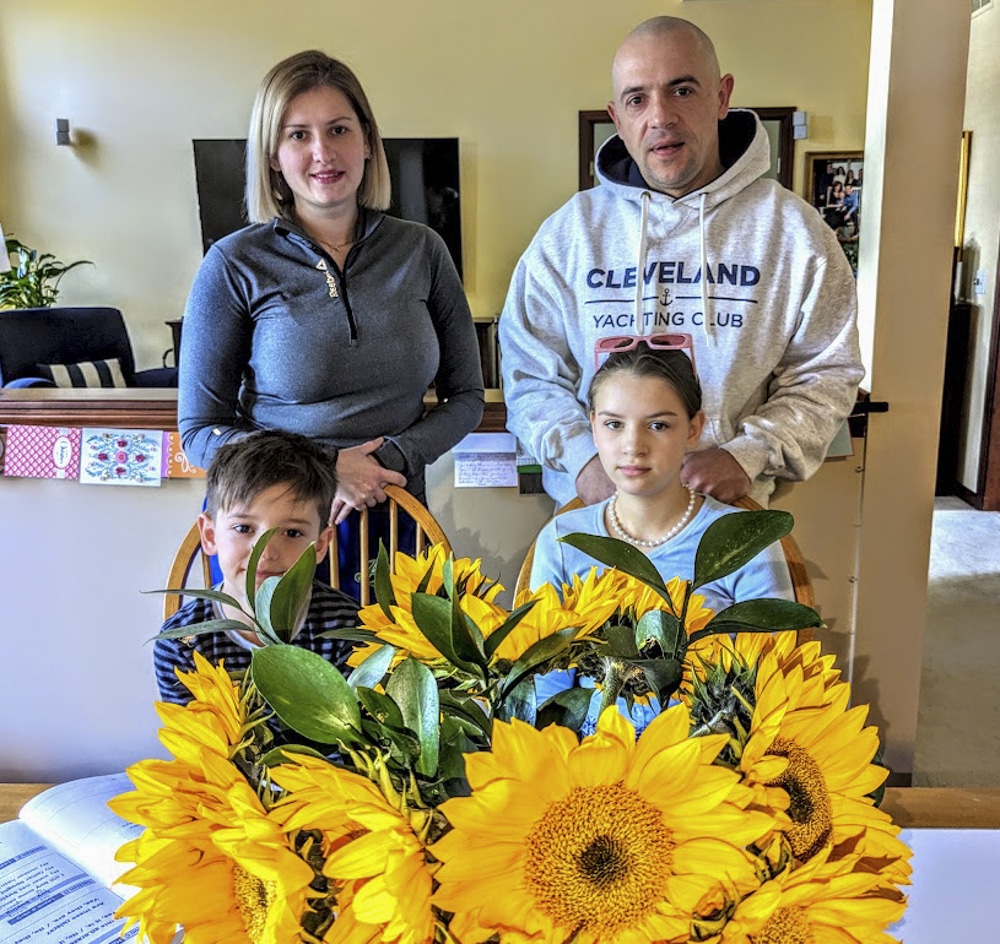
During the Ukrainian War, Marina Didenko ducked a piece of shrapnel just in time. In 2022, she fled her homeland, taking her sobbing son from his cat, his two hamsters, and his father, who wasn’t allowed to leave. So far, the father has survived, but not the pets.
Didenko, now living in Mayfield Heights, says that her son has slowly begun to make friends and get good grades. She praises the local schools and also a local woman who gave her a used car.
Didenko works for one of Cleveland’s many organizations that help immigrants. She fears that it may lose clients and public funds under Trump. She also fears that her temporary status might prove just that.
“We’ve had a lot of changes already,” says Didenko. “What will be after the 20th of January, no one knows.”
Presidents and policies
Cimperman says, “The immigrants haven’t had a fair shake in this country since 1776, even though they’ve given so much.”
But presidents make a difference. Among other changes, Trump started a border wall, admitted far fewer refugees, separated immigrant parents and children, and tried to block a path to citizenship for “dreamers” (children brought here without documents). Still, he sent home far fewer people per year than President Obama had.
President Biden eased some rules and toughened others. He restored previous rates of refugees but made people caught crossing illegally wait five years before seeking permission to return. In a ruling under appeal, he was stopped from honoring new applications from dreamers.
Despite all the changes, immigration has risen fairly steeply and steadily under the past 10 presidents, from 9.6 million in 1970 to 47.8 million in 2023, according to the Migration Policy Institute.
Coming soon
Some observers say that there aren’t nearly enough funds or personnel for much of Trump’s promised crackdown. There were already 3.7 million immigration cases pending at the end of October, according to a Syracuse University database.
The Arab American Voter Project’s Saliba says of Trump, “The belief among many Arab Americans is that his rhetoric may be worse than his actions.” And Rise Together’s Budler says, “It’s an incredibly complicated system. It’s so messed up it can’t be unraveled in one day.”
But Cleveland immigration lawyer David Leopold warns, “When Trump talks about mass deportation, he means it. They’re going to make every effort to remove as many people as possible.”
What should immigrants do meanwhile? “People need to be careful to keep up with their paperwork,” says Leopold. And Faten Odeh, who leads the area chapter of the Council on American-Islamic Relations, says that many immigrants are hurrying to upgrade their status before the inauguration.
But lawyer Espinoza is telling most clients to “hold their breath, sit tight, wait to see what changes are coming.” As for undocumented ones, “People off the radar will probably stay off the radar.” But they should “at least get on the radar of a lawyer, in case something happens.”
He also warns clients about a current surge in scams by nonlawyers guaranteeing that immigrants can stay here despite all the uncertainties.
But there’s one surge that activists welcome. Says Budler, “We’ve seen an increase in people reaching out, asking how they can help. We’re going to need a lot more hands.”
Immigrants seeking help and people wanting to help them may contact any of Cleveland’s many organizations serving them. Some of the groups belong to the Refugee Services Collaborative of Greater Cleveland. The American Civil Liberties Union has also posted a guide to immigrant rights.
Keep our local journalism accessible to all
Reader support is crucial as we continue to shed light on underreported neighborhoods in Cleveland. Will you become a monthly member to help us continue to produce news by, for, and with the community?
P.S. Did you like this story? Take our reader survey!