Ohio City Farm in partnership with Re:Source Cleveland, hopes to expand its farm-to-table impact with the addition of the Roundstone Pavilion.
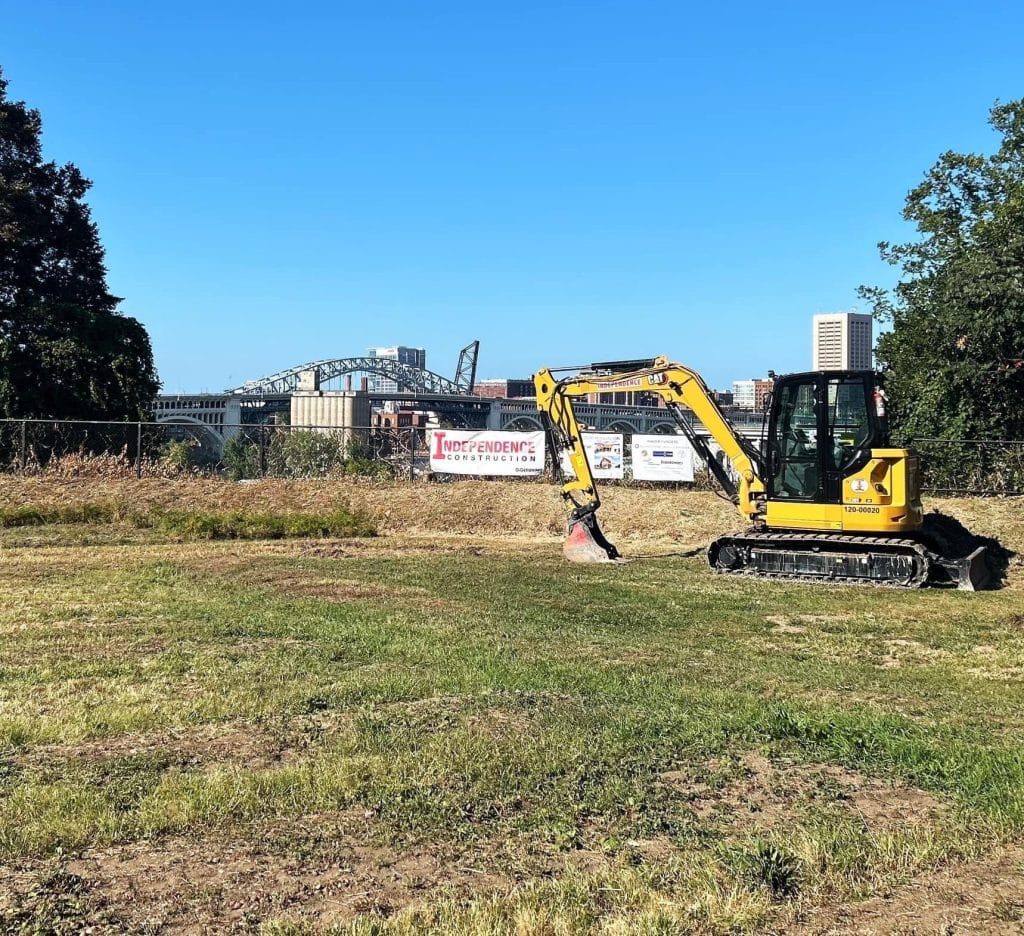
Ohio City Farm is a community farm located in the Ohio City neighborhood along the Irishtown Bend. Established in 2011, the farm was developed as part of a broader initiative to promote urban agriculture and sustainability in the city. During Welcoming Week, on September 19th, civic leaders, business representatives, and community members gathered to celebrate this key milestone in Cleveland’s ongoing urban renewal. The farm is operated by Re:Source Cleveland and is currently staffed with refugees that have backgrounds in agriculture or farming in their countries of origin.
Ohio City Farm
Ohio City Farm — which calls itself Ohio’s largest urban farm — occupies approximately a 5-acre site on West 24th Avenue and Bridge Street and focuses on providing fresh produce to local residents and enhancing food security in an area that has historically faced challenges related to access to healthy food. Ohio City Farms grows a variety of vegetables and herbs, and it engages in practices like organic farming and community-supported agriculture (CSA). The Roundstone Pavilion will extend the farm’s growing season and allow them to keep people employed year-round.

“So as we are an urban farm, and there is no indoor facility, when January hits, we have to furlough people, and right now that furlough is probably about two months. We’re able to be creative about how we can stretch the year out, but at the end of the day, we can’t run the water. There’s nothing we can do in January, February, March. So this will allow us, for the first time, to have an indoor facility so that we can continue to grow in our heated greenhouses, wash and pack the produce, create value-added products, and then create another business stream, another income stream, so that we can keep people employed and increase that starting wage hour. That’s what it’s about for us, is this meaningful work and making sure that this property stays this beautiful green space that it has been,” said Patrick Kearns, executive director of Re:Source Cleveland.
“The Roundstone Pavilion will be the next 15 years of this business model that we’ve run for the last 15 years. We started off as a small urban farm with no infrastructure, without an electric socket, for the first seven years, and every time we’ve invested in infrastructure, it’s allowed us to grow, to add more staff, to go from a starting wage in 2017 of $9 to now a starting wage of $16.50, and an average wage above $18 within the next two years,” Kearns said. “With the Pavilion in place, our goal is to have a starting wage of $20 an hour, and then with the goal of year-round employment.”
Senior Farm Manager Michael Bartunek is passionate about this expansion, “We’re hoping to create some local food, as well as prepared food aggregates through this marketplace. And also, with our CSA being as robust as it is — like I mentioned, we serve nearly 300 families on a weekly basis, that’s 20 consecutive weeks through the season — we really like to look at this market as an add-on ability for that existing market.”
Helping others get set up
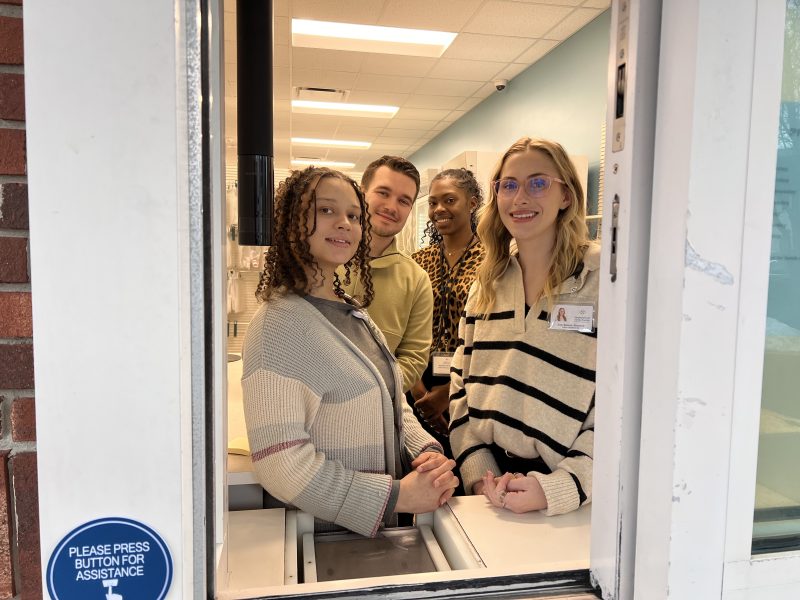
Bartunek says they employ individuals largely from Cleveland’s newcomer population, stating, “ So some of these would be refugees or folks that have come over from other countries on various types of immigrant status. The farm, we have four main groups of folks. We have folks from Southeast Asia and areas around Burma. We have a couple of ladies from the Democratic Republic of Congo. We have a gentleman from Bhutan. Our newest member of our crew is from Afghanistan.”
“Something that we strive to do here is not just to create opportunities for the newcomer population, but our goal here is to create great opportunities for the newcomer population. So that is one thing,” Bartunek added. “It’s good paying jobs and we have a staff that stays with us year to year, because we have found ways to become more efficient, to raise funds and invest in the right types of agriculture. We have a very sound model for our marketing and that means stability. And that’s what any of us want, stability and opportunity. That’s really the core focus of the farm is providing those jobs and staying with the times and making sure that those jobs are paying what people need to make to earn a good living and invest back into their communities here.”
The goal is to eventually host regular events, including farmer’s markets, cooking classes, and wellness workshops – events that will foster a sense of community thereby encouraging residents to connect with one another and the land. Bartunek states “As far as being available to the public, we’re not 100 percent sure yet, but hopefully that will be sometime in 2025 and going into 2026 as far as the market.”
Kearns added, “So our focus is, how can we make it really diverse? How can we bring in international cooks that maybe don’t have the experience of running a business model here? They don’t have the capital to put in a commercial kitchen, which is very expensive and time consuming, but a place where they can get their feet under them as they’re starting to build a business here.”
Kearns discussed his extensive background in refugee work and his transition to leading the organization. He highlighted the organization’s evolution from a small urban farm to a sustainable business model, aiming to provide year-round employment and increase starting wages to $20 per hour. The Roundstone Pavilion project is crucial for this growth, he said, allowing for indoor operations and value-added product creation. According to Kearns,a value-added product is a longer-lasting product than produce. “It’s essentially a shelf-stable product that is made from the produce that we grow here. So it could be that you dehydrate it. It could be fried. It could be spices. It could be pickles. So any type of way that we take what we grow and then we reconstitute it for shelf stable, and then retail sales.” Kearns emphasized the importance of diversity and inclusivity, aiming to support international cooks and vendors. The project aims to create a vibrant, accessible food market.
Kearns hopes that the Roundstone Pavilion will be the next phase of their business model, allowing them to grow and add more staff to their current team of 9 members. Currently, they have to furlough staff during the winter months due to the lack of indoor facilities.The pavilion will allow them to continue growing produce indoors, pack and wash produce, and create value-added products. The farm’s success is a testament to the skills and talents of these individuals.
The project aims to keep people connected to the source of their food and the process of farm-to-table.
Austin Davis, senior policy advisor in Cleveland Mayor Justin Bibb’s office, discussed his role in the city’s refugee response and government affairs. He highlighted the significance of a new international food project in Ohio City, emphasizing its cultural and economic impact.
Davis expanded on this, “Cleveland’s not gonna solve global crises on its own, we are all part of a bigger system here. So when there’s big stories in the news about, for example, Haitian immigrants in Ohio, we should be thinking about and we should be celebrating our cultural diversity and where all of us came from at some point.”
We're celebrating four years of amplifying resident voices from Cleveland's neighborhoods. Will you make a donation to keep our local journalism going?