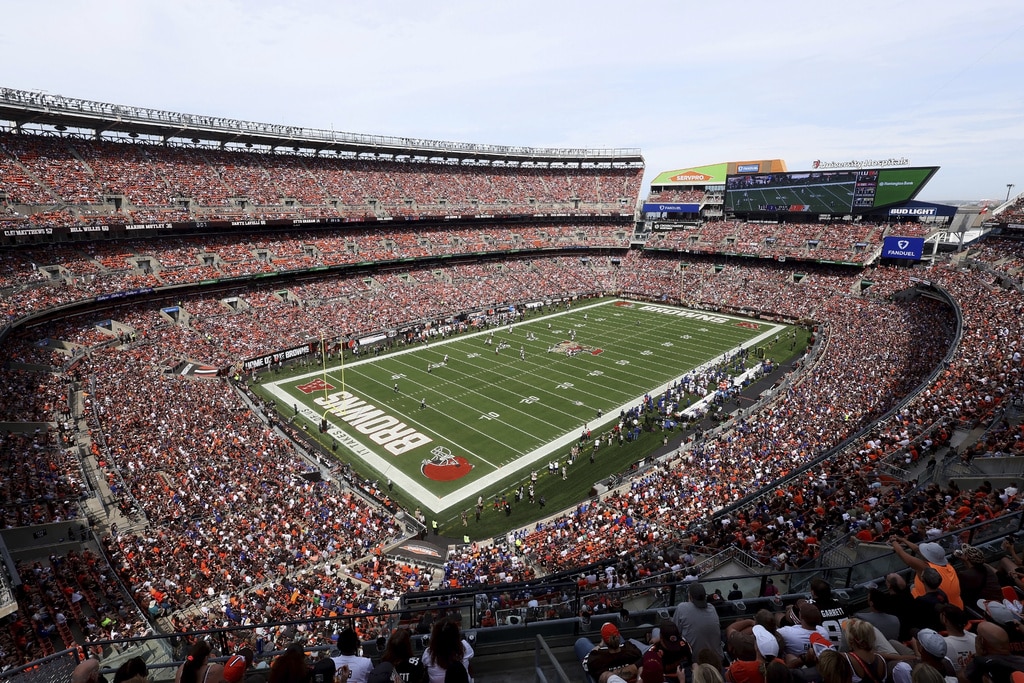
The Greater Cleveland Partnership’s recent endorsement of the Browns’ proposal to build a domed stadium in Brook Park is more than a disappointing policy position — it’s a failure of regional economic leadership.
At a time when Cleveland is finally building momentum toward a modern, inclusive downtown, the region’s largest chamber of commerce has aligned itself with a plan that siphons economic activity away from the urban core, relies heavily on public subsidies, and prioritizes private interests over long-term public good.
As someone who has worked in both public and private sector roles across multiple regions — including Cleveland, Baltimore, and California — and served as an economic development and commercialization reviewer for the U.S. Department of Commerce, NASA, and NSF, I’ve seen how regional growth can either drive transformation or get hijacked by short-sighted interests. This endorsement feels like the latter.

Let’s be clear: the idea that a domed stadium in a suburb will “transform the region” ignores decades of economic research showing that stadiums rarely deliver on promised growth — especially when built outside of city centers.
The Haslam Sports Group projects 60 to 70 large-scale non-NFL events annually. That’s wildly out of step with comparable domed stadiums: Lucas Oil Stadium in Indianapolis hosts about 45 non-NFL events per year. U.S. Bank Stadium in Minneapolis averages just over 35. These cities have stronger tourism ecosystems and centrally located venues — advantages Brook Park lacks.
More importantly, the new stadium would compete with existing Cleveland assets like Rocket Mortgage FieldHouse, the Huntington Convention Center, and Progressive Field. Cleveland has hosted March Madness, the MLB All-Star Game, the NFL Draft, and even the 2016 Republican National Convention — all without a dome.
A 2022 Federal Reserve study found public subsidies for pro sports stadiums yield negligible long-term returns, particularly when they displace existing economic activity rather than generating new demand.
We’ve seen better models work elsewhere. In Atlanta, Mercedes-Benz Stadium was deliberately integrated with MARTA transit access and helped drive adjacent mixed-use development, including affordable housing and retail. Petco Park in San Diego helped transform the once-blighted East Village into a thriving residential and entertainment district. Nationals Park in D.C. catalyzed revitalization of the Navy Yard, bringing in thousands of housing units and public amenities. Camden Yards in Baltimore remains a national model for integrating sports infrastructure into a city’s economic fabric. In each case, the stadium was part of an urban strategy—not a standalone bet on private entertainment.
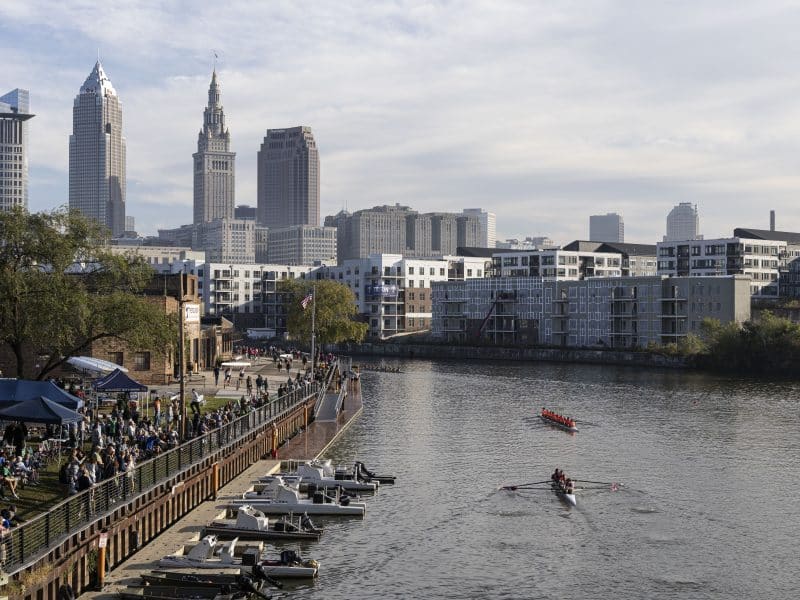
Cleveland has a chance to do the same through a visionary lakefront redevelopment plan that includes housing, public space, and a renovated stadium. GCP’s endorsement doesn’t just undermine that vision — it doubles down on the tired, toxic city-versus-suburb playbook that has held this region back for decades.
The Haslam Group assumes that a domed stadium alone will transform Cleveland into a top-tier events destination. But domes don’t create demand—they follow it. Without a robust hotel ecosystem, strong transit access, and walkable amenities, Brook Park lacks the infrastructure to deliver on that promise. A roof doesn’t attract events; a functioning urban district does.
They also claim the stadium will drive surrounding development—but history shows stadiums only catalyze growth when paired with broader mixed-use urban investment. A Brookings Institution study titled “Sports, Jobs, and Taxes” found that stadiums do not generate significant local economic growth unless tied to comprehensive development strategies.
In its current form, the Brook Park site offers little synergy with other city assets and risks becoming an isolated economic cul-de-sac.
Most concerning, there’s no evidence the stadium would generate new economic activity. Without binding event commitments or a clear plan to avoid cannibalizing downtown venues, this proposal simply redistributes activity rather than expands it. And yet, the Haslam Group projects aggressive returns with no independent feasibility study to validate them.
There was another option. GCP could have called for transparency, or at least advocated for an independent economic impact study. If the Browns are as confident as they claim, they should welcome the scrutiny. Cities like Minneapolis and D.C. used such studies to refine deals and build taxpayer trust.
Instead of demanding facts, GCP embraced fiction — backing a divisive plan that fractures the region, drains the urban core, and rewards political access over public interest.
If the Greater Cleveland Partnership wants to live up to its name, it must remember that partnership means standing with the public — not just aligning with private power. This isn’t just a bad deal. It’s a test of whether civic leadership still serves the people.
GCP didn’t just choose the wrong side of the field — it chose the wrong era. In a city fighting for relevance, they chose retreat over reinvestment.
Leadership means asking hard questions, not rubber-stamping billion-dollar fantasies. GCP had a chance to champion the public. Instead, it co-signed a private agenda wrapped in civic theater.
Keep our local journalism accessible to all
Reader support is crucial as we continue to shed light on underreported neighborhoods in Cleveland. Will you become a monthly member to help us continue to produce news by, for, and with the community?
P.S. Did you like this story? Take our reader survey!