The novelist Kurt Vonnegut once wrote that a “flaw in the human character is that everybody wants to build, and nobody wants to do maintenance.” This can certainly apply to the Northeast Ohio real estate market. It explains, in part, why older suburbs deteriorate, as new developments spring up further and further from urban centers, like mountains beyond mountains.
However, organizations like the Home Repair Resource Center (HRRC) in Cleveland Heights ease the challenges of repairing and maintaining older homes and provide an alternative to endless sprawl. In the face of a culture that prizes the new, HRRC helps residents navigate the complex dynamics of purchasing and sustaining older houses.
The organization does this through a wide range of programs, including how-to programs, a homebuyer education series, free financial counseling, grants and other forms of assistance, free foreclosure prevention counseling, and more. The HRRC also runs a tool library which is available to all members. Although founded in Cleveland Heights, the group now provides services to a wide range of Cuyahoga County communities, including Cleveland’s Buckeye-Shaker neighborhood, and has worked in other city neighborhoods ranging from West Park to Slavic Village.

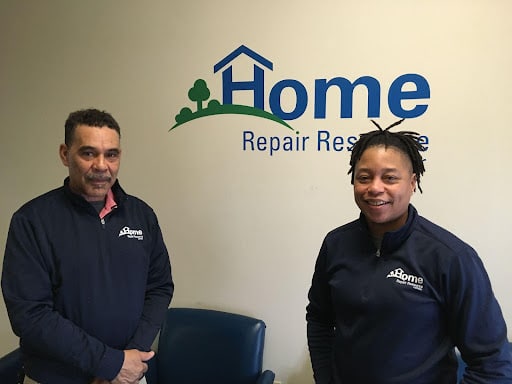
The HRRC promotes a community-oriented approach to housing in a landscape increasingly shaped by impersonal real estate investors. At HRRC, housing is personal. “We want people to live here,” said Tikeesha Allen, executive director of the HRRC. “When you hear Home Repair Resource Center, a lot of people think, ‘oh, you fix houses’… Yeah, we help you fix your house, but we want to empower you, we want to educate you. We want to make you feel like you can do it, whether it’s stay in your home because you fall behind (on your mortgage) or whether it’s fixing an outlet.”
Allen views well-maintained housing as key to neighborhood vitality. She works to bring new homeowners into Cleveland Heights who are “excited about the community and ready to thrive here.”
The group’s mission is to serve low to moderate-income individuals, and Allen says demand for their services has increased as interest rates and home prices have risen. “Aging in place for older populations is really something we need to hone in on, especially with the housing stock in Cleveland Heights being as old as it is,” she said.
The small grassroots organization that began in 1971 out of Forest Hill Presbyterian Church has today flourished into a eight-member team with a budget of about $400,000. Last year, it served more than 1,700 people throughout the region, Allen said. They receive funding from individual donors, program fees, the city of Cleveland Heights, Cuyahoga County, and foundations. The HRRC also partners with other communities, such as the city of Shaker Heights, to bring programs to their residents for reduced fees.

Homeownership matters
Allen became executive director of the HRRC in 2016, bringing a passion for people – and an understanding of how a home provides a strong foundation for individuals, families, and community. Coming from a family in which her grandparents owned their own home, Allen understood the intergenerational significance of homeownership at an early age. During her undergraduate years at Case Western Reserve University, where she studied sociology and religion, she pursued questions of how institutions and organizations advantage or disadvantage people.
Her life experience and her studies prepared her for thinking about homeownership as woven into questions of equity and justice. “Homeownership is not for everybody, but it creates opportunities for low-income folks and Black and brown folks to create generational wealth,” she said. This is especially true in Cleveland Heights, where there are a lot of rental properties, she added.
While in college, she learned about the larger historical context of discriminatory banking practices. She also learned about redlining, which is the denial of home loans in certain neighborhoods to credit-worthy applicants, based on race or ethnicity. Now, with her approach to meeting people where they are, she sees how big systems interface with everyday challenges. She says she can “bring academia into real-life.”


A wide range of services
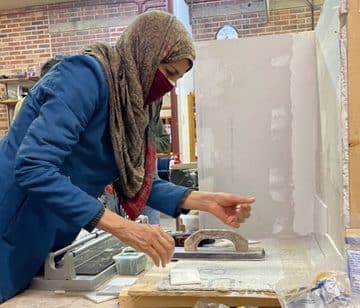
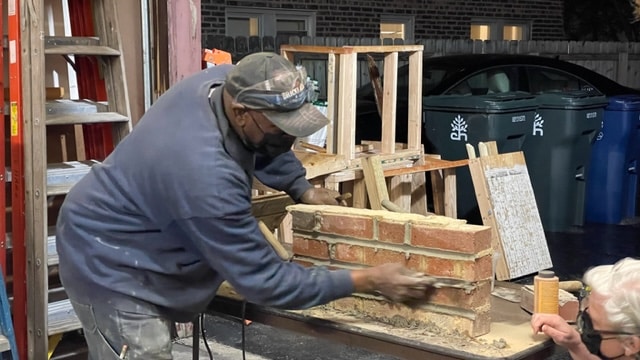
The breadth of services offered by the HRRC reflects the fact that there is not a single answer to the real-life challenges of home ownership. The organization’s activities range from helping people deal with the pesky minutiae of upkeep – the HRRC offers a lending library of tools and provides a range of practical home maintenance classes – to bigger challenges. Under a subsidiary called Home in the Heights, the organization purchases foreclosed homes, rehabs them, and sells them to new owners. They’ve rehabbed and sold 18 since 2018. They also offer financial education, tips on avoiding unscrupulous contractors, and support for individuals seeking access to bank credit.
Programs offered by the HRRC this year have included a women’s how-to electrical series, a homebuyer education Series, and a class on how to deal with a wet basement. All programs offered by the HRRC are designed to help participants gain the knowledge and confidence they need to complete projects on their own or work with contractors. Some HRRC services are free. Others charge a fee. It depends on the nature of the service. One past-participant, Griot Y-Von Cawthon took a class on electrical repairs that prepared her to learn what she needed to know to hire someone without fear of being swindled or taken advantage of, she said.
Another client, Fae Perry, praised HRRC’s classes as reasonably priced and informative. “Even if I don’t want to do all the projects myself, I know the questions to ask if I do get a professional in here,” said Perry. “One of the best things is the tool library,” she added. Recently, she has borrowed a steamer for removing wallpaper, a mitre saw, and a nail gun.
LaShawnda Hudson, who lives in Euclid, said the only thing she’s mad about is that she didn’t find out about the HRRC sooner. She’s taken 6-8 classes and has updated things in her home using what she learned. She recently retiled her bathroom, fixed loose plugs, and replaced hallway flooring, doing the labor herself so her only cost was in materials.
Staff at HRRC are also knowledgeable about the high-stakes issue of lead paint. Before 1978, lead paint was used in most area homes. Consequently, lead, a toxic substance that is especially dangerous to children, is often found in the walls and windows of older homes. It can surface in dust and paint chips if a property is not properly maintained. It can also surface during do-it-yourself home repairs.
“If your house was built before 1978, obviously, there is a potential that it could have lead-based paint,” said Wesley Walker, a lead-certified contractor and educator and HRRC program coordinator. When teaching classes, Walker always raises the issue of lead safety: “We’re always educating people about the hazards of lead.”
Filling a void
Cleveland Heights City Council member Gail Larson describes a longstanding positive relationship between the city and HRRC. A vice chair of the Building and Housing Committee, Larson noted that small problems can lead to much bigger ones: “If you don’t fix a slate on the roof, you have leaks. By offering affordable access to repair, the HRRC keeps homes from compounding the damages that accrue from exposure to the elements.”
Facing a code violation, homeowners of limited means can work with the HRRC to fix their property. Frequently, homeowners can avoid a misdemeanor, returning to court with everything repaired. Council President Melody Hart described this as a “happy situation.”
HRRC’s mixture of resources, programs, and collaborations empowers people and provides for the challenges that owners of old homes face. Although HRRC recognizes older housing stock as a unique asset for older neighborhoods, they are still going against norms that privilege the new. Regarding housing dynamics in Northeast Ohio, urbanist Thomas Bier noted, “Everything gets oriented to producing.”
“It’s a struggle,” Bier explained. “Government policy, federal and state, they celebrate new, and they don’t do much for old. They leave it to do-gooders.”
Bier believes the HRRC is needed in Cleveland Heights to make it easier for homeowners to embark on repairs by providing the necessary support and education, filling a void that might otherwise keep homeowners from properly maintaining their properties. Even so, for Bier, the excellent work of the HRRC faces a problem of scale. The small organization is essential, but “the need is much greater,” he said.
Find out more about Home Repair Resource Center programs here, or call 216-381-6100.
George Blake was a participant in The Land’s community journalism program.
We're celebrating four years of amplifying resident voices from Cleveland's neighborhoods. Will you make a donation to keep our local journalism going?