“Hey, Mommy!” 2-year-old Wally Abrams calls out in the wetlands of the Nature Center at Shaker Lakes. “Let’s climb the rocks!” He marches on top of a trailside row of them. “One, two, three, …sixteen, seventeen, eighteen…”
Wally’s mom, Rachel Abrams, often brings him to the center, a haven of some 20 green acres between busy thoroughfares in Shaker Heights and Cleveland Heights. “He really loves this area,” she says. “It’s a lovely environment.”
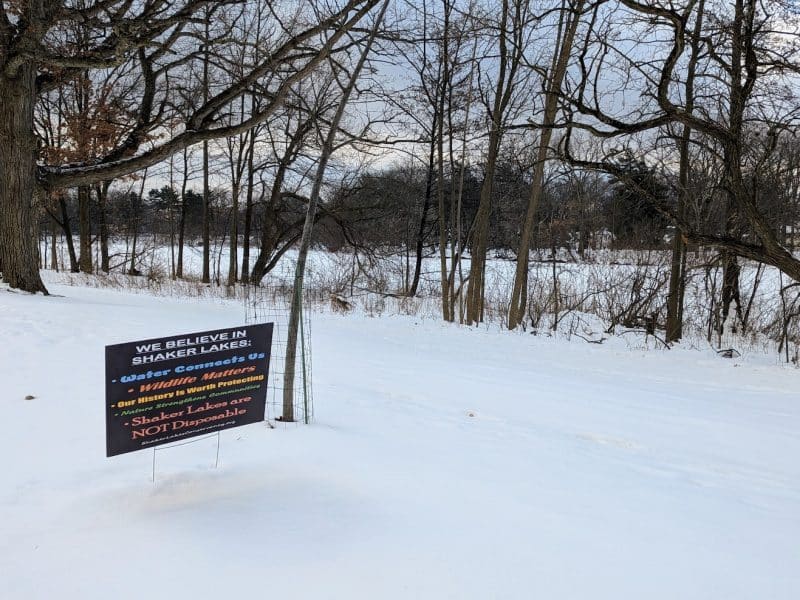
Sixty years ago, residents created the pioneering Nature Center in response to a threat to the Shaker Lakes. Now the lakes’ fate is being hotly debated again, and the center is quietly restoring its section of streams connecting them.

The 2600 S. Park Blvd. center hosts mallows, butterflies, occasional eagles and many other species, including more than 140,000 two-legged visitors per year enjoying a rare urban encounter with nature.
The center offers two miles of trails, among them an accessible All-Peoples’ Trail. It also offers talks, guided walks, plant sales, swaps, exhibits, festivals, compost drops, bird banding, summer camps, virtual events, rental space, teacher training, programs for field trippers from Cleveland and suburban schools, even ballet on a boardwalk over a marsh.
In 1971, the center was one of 11 sites in the inaugural class of National Environmental Education Landmarks. It has also been declared a National Environmental Study Area.
Stream work
Peter Bode, the center’s president and chief executive officer, says that the much-needed stream work has nothing to do with the lakes’ fate. He started planning it long before last summer, when the Northeast Ohio Regional Sewer District controversially changed its recommendations from reinforcing Lower Lake’s dam to razing it.
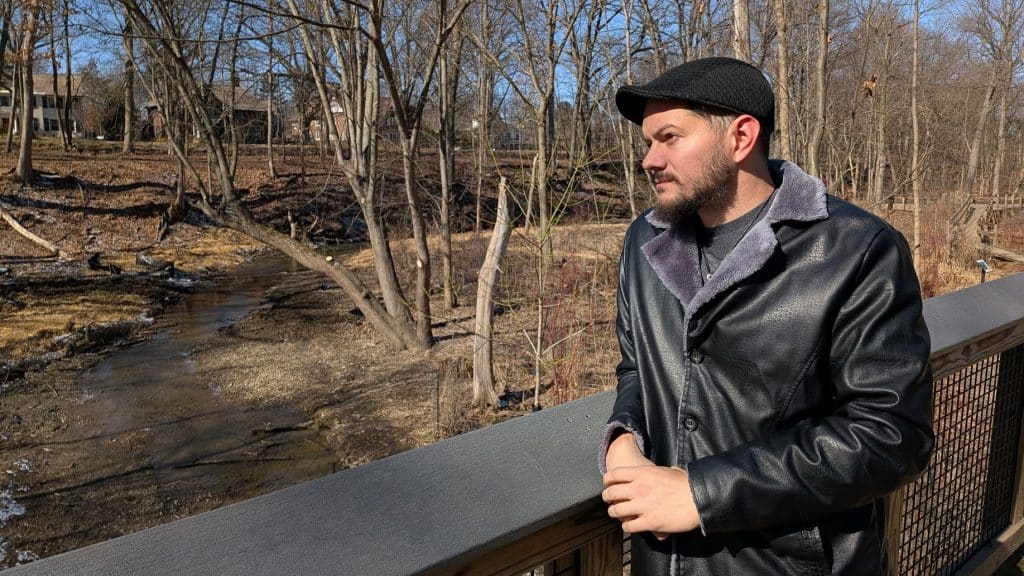
The center’s grounds host the confluence of two branches of the Doan Brook: one from Horseshoe Lake and the other from Green Lake by way of Marshall Lake. The merged waters enter Lower Lake just inside the center’s grounds.
The streams have been rerouted over the years by construction and erosion. Since 1951, Cleveland’s average yearly precipitation has soared by 27 percent and often comes in heavier storms. The swollen branches have washed out some of the center’s slopes and trees. Now they’re starting to threaten a bird-banding station and a parking lot.
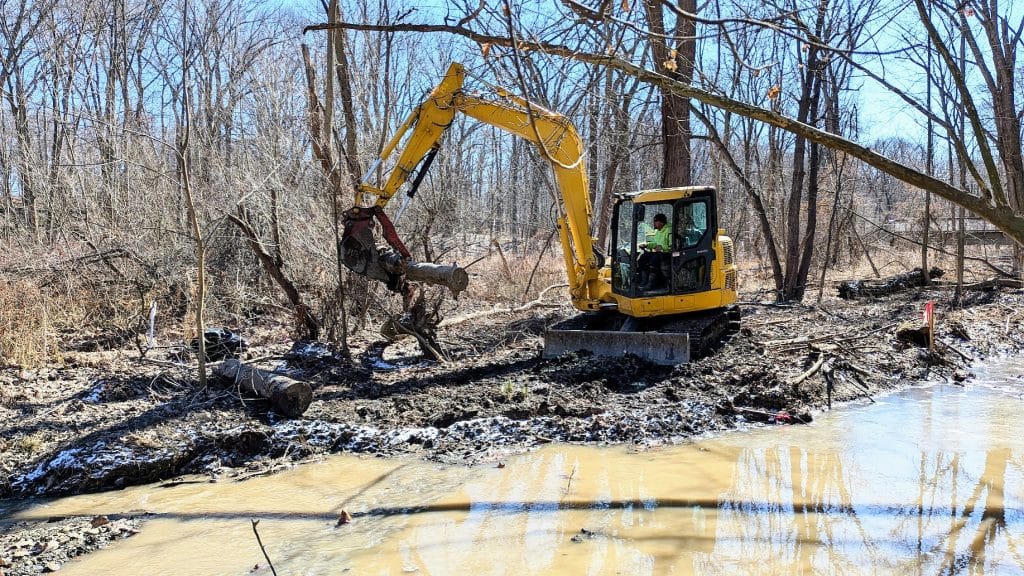
So, Bode says, “We’re re-naturalizing.” With buffers of logs and sandstone, crews are restoring the branches’ original routes as much as allowed by roads and the center’s main building, pavilion and other structures. They’re also removing invasive trees and shrubs, planting native ones, removing invasives, adding native species, and restoring and connecting eight acres of wetlands. Bode says the trails will remain in place, better protected than before.
The $495,000 project is being funded by matching grants from the sewer district and the Ohio Environmental Protection Agency. Construction began Feb. 23 and should end next week, followed by a couple weeks of planting and seeding.
Amy Weinfurtner, an organizer of the Shaker Lakes Conservancy, calls the work “a full-scale clearing of a habitat” that might alter the Shaker Lakes ecosystem. But visitors praise the project.
“I’m all in favor of restoring things,” says Ray Rund.
“What they’ve done so far has been lovely,” says Amy Morgenstern. “They’re proactive about how we’re going to protect nature.”
Old and new controversies
Three centuries ago, pioneers from the Shaker religious sect formed Lower and Horseshoe Lake by building earthen dams across the Doan. Shaker Heights’ developers gave those lakes and surrounding parklands to Cleveland. Shaker Heights, Cleveland Heights and the Nature Center have long leased and maintained them.
In the 1960s, Albert Porter, Cuyahoga County’s engineer and Democratic chairman, wanted to run the Clark and Lee Freeways through the parklands and surrounding estates. He mocked outraged residents as “little old ladies in tennis shoes” and the area as “a dinky little park and a two-bit duck pond,” singular. But foes created the Nature Center as an additional obstacle and finally persuaded the state to stop him. He later pleaded guilty to shaking down employees.
In the late 2010s, the Ohio EPA said that the dams at Horseshoe and Lower Lake were dangerously decaying. Crews breached Horseshoe’s dam.
Now NEORSD is awaiting federal approval for a two-year, $32 million project to raze that dam and rework the site’s roughly 60 acres of marsh and dry land. Shaker Heights will contribute about $4.6 million and Cleveland Heights $2.5 million of the cost, covering amenities such as trails, a nature playground and an outdoor classroom. Construction should take about two years.
As for Lower Lake, NEORSD said last summer that the dam there had proven to hold back too little water to serve the district’s mission of flood control, but could burst and release a fatal amount all at once. Also, an opportunity had arisen for the district to add a culvert downstream in University Circle, reducing the dam’s value.
So NEORSD officials offered to spend an estimated $45 million to raze the dam and do related work. But they said that, if the suburbs chose instead to replace it, they’d have to fund the estimated $55 million project themselves.
The Shaker Lakes Conservancy arose to try to save Lower Lake and bring back Horseshoe Lake. And the suburbs hired a lawyer to see whether they could make the district pay to save Lower Lake’s dam.
Bode has proposed a compromise at Lower Lake: razing its dam and embanking a lake, alongside the Doan, of about 10 acres versus the current 18.
On the one hand, he says that razing the dam would help recreate the area’s original marsh, which would better filter pollution. “The current lake is highly sedimented and is not a healthy ecosystem. It is beautiful but needs quite a bit of love and attention.”
On the other hand, he says that the name of the Nature Center at Shaker Lakes would make little sense without Lower Lake at hand. Besides, visitors love Lower Lake’s gleaming water, varied wildlife, and rich history. He thinks the site, “once re-envisioned, can be a case study for a healthy and high functioning inland lake in a very urbanized environment.”
NEORSD leaders have said they’d consider Bode’s idea.
Today, the nature center spends a little more than $2 million per year on operations. It has more than 1,000 members and about 35 employees, or 22 full-time equivalents.In Porter’s memory, the center’s store is called the Duck Pond Gift Shop. At the organization’s 50th anniversary gala, men wore black ties and tennis shoes.
Keep our local journalism accessible to all
Reader support is crucial as we continue to shed light on underreported neighborhoods in Cleveland. Will you become a monthly member to help us continue to produce news by, for, and with the community?
P.S. Did you like this story? Take our reader survey!