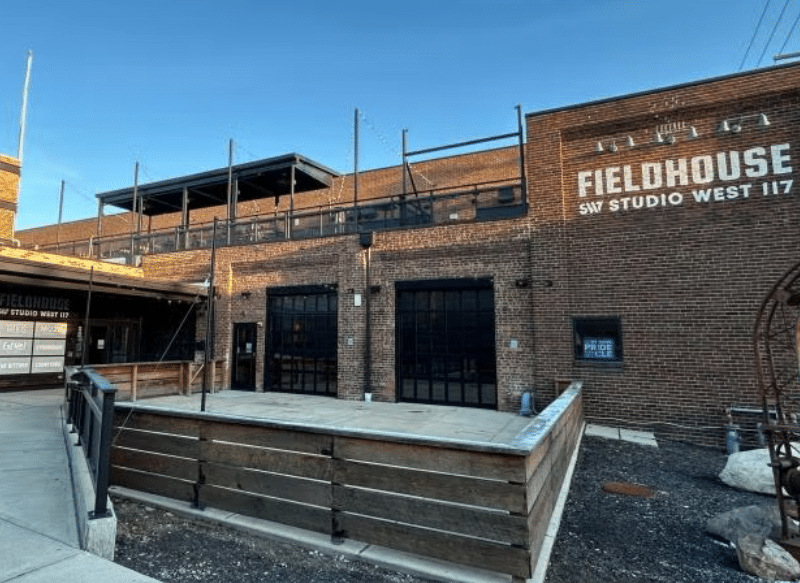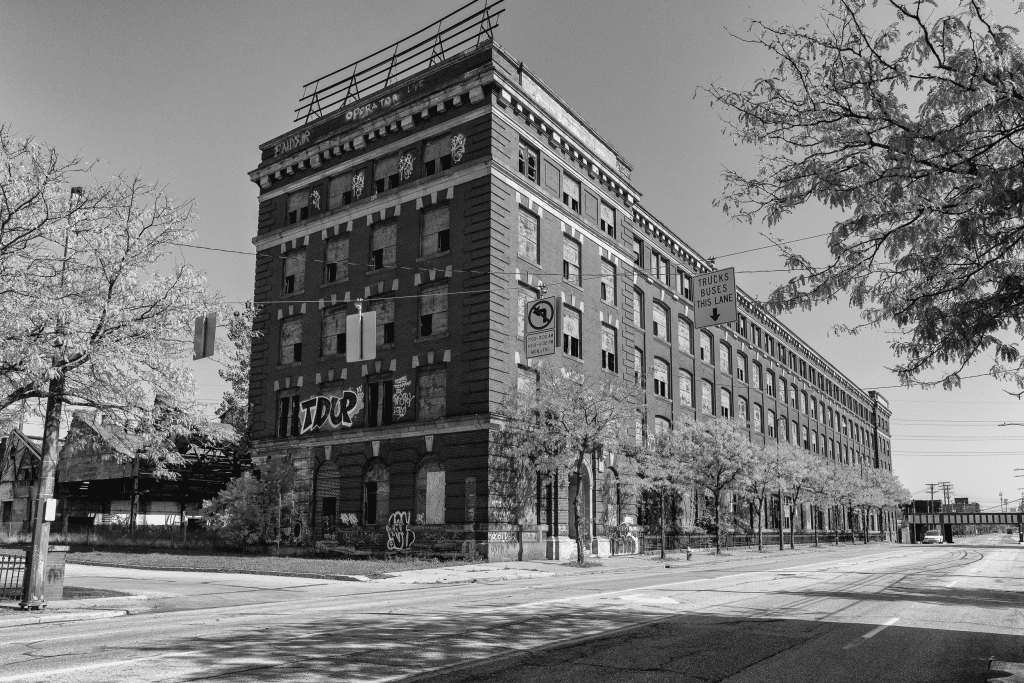
The five-story building on Carnegie Avenue, just west of the elevated Pennsylvania Railroad tracks, and east of East 55th Street, was the home of the Warner & Swasey Company, a world-renowned manufacturer of machine tools, telescopes, and precision instrumentation. The building has been vacant since 1985 when the last of the company’s manufacturing and management functions moved to Solon Industrial Parkway. Since then, the building has waited patiently for a new life.
In 2010, the city of Cleveland solicited proposals for redevelopment. Geis’s Hemingway Development was selected and submitted plans to convert the site into a high-tech office, lab, and manufacturing center, but withdrew due to remediation delays and market conditions. The building languished until Philadelphia-based developer, Pennrose, LLC, in partnership with MidTown Cleveland (a Community Development Corporation), was selected to head the adaptive reuse project that eight years later has begun with the John G. Johnson Construction Co. as General Contractor. The plan, now underway, is to transform the long-vacant factory into a mixed-use, mixed-income, housing and commercial space.
This is the first of a series of quarterly articles that will document the adaptive reuse of the Warner & Swasey Building. When the project is complete the historic building will once again be the centerpiece of Cleveland’s Midtown neighborhood. As a child I loved the sweet smell of the cutting oil and the singing of the machines at work, as we drove past the building’s open windows. Later, I enjoyed every minute of my summer employment and the year that I worked there between college and military service. As an architectural photographer and local history author I am thrilled to be documenting the rebirth of a place that has played such an important part in my life, and that of Cleveland and beyond.

In the latter half of the 19th century, Cleveland was rapidly transforming from an agrarian society to an industrial powerhouse, especially in the fields of machine tools, precision instruments, and manufacturing technology. At the heart of that transformation were skilled artisans and engineers whose early training in the machine shops of New England laid the foundation for ground-breaking innovations. Among those were Worcester Warner and Ambrose Swasey, whose partnership led to the creation of one of America’s most respected machine-tool and telescope manufacturing firms — the Warner & Swasey Company.
Worcester Warner was born in 1846, in Cummington, Massachusetts. Raised on a farm, he showed an aptitude for physics and mathematics. After leaving formal schooling, he went to work in the drafting room of a Boston engineering firm, learning mechanical drawing. In 1866, when that firm moved to Exeter, New Hampshire, Warner moved with it and entered an apprenticeship program in the machine shop, marking the beginning of his lifelong engagement with machinery and precision engineering.
Ambrose Swasey was born later in the same year in Exeter. Like Warner, Swasey came from a farming family but was drawn to mechanical work and pursued a machinist apprentice at Exeter Machine Works, where he met Warner, an apprentice in the same shop. Not only did they develop technical skills, but they began what would be a lifelong friendship and professional collaboration.
Apprenticeships were characteristic of the era: hands-on training under skilled craftsmen. Apprentices like Warner and Swasey learned by doing—by cutting metal, setting up machines, understanding metallurgy, and solving practical production problems. Apprenticeship was a reliable pathway into the emerging field of precision engineering. It forged both technical abilities and a commitment to meticulous workmanship. He two young men lived together, studied together, and planned together. As their apprenticeship was ending, they wrote letters to four companies seeking employment as journeymen. They received offers from all four and accepted the offers from Pratt & Whitney Company, in Hartford, Connecticut, then one of the nation’s premier machine-tool builders.
At Pratt & Whitney, Warner quickly advanced through the ranks. As a foreman in the machine-tool department he organized the display of the company’s machinery at major exhibitions, including the 1876 Centennial Exhibition in Philadelphia. His role showed his technical leadership and his aptitude for communicating precision engineering to a broader public. Swasey distinguished himself in another specialty. He became foreman of the gear-cutting department, where he developed a new technique for manufacturing gear-tooth cutters and in 1875 he invented the epicycloidal milling machine, a critical innovation for producing exact gear curves—work that was essential for the efficiency and reliability of industrial machinery.
Their time at Pratt & Whitney polished their technical skills, exposed them to industrial scale manufacturing, and deepened their understanding of precision tooling and machine shop organization. It also connected them with broader networks of machinists and innovators, many of whom would come to hold important roles in the machine-tool industry in the future.
By 1880, Warner and Swasey had both accumulated substantial experience and reputations within the machine-tool community. Their shared vision and complementing skills prompted them to leave Pratt & Whitney to establish their own firm. They moved to Chicago, then the nation’s fastest-growing industrial city, and far enough from the competition of New England machine tool companies. Chicago offered proximity to railroads, western markets, and large industrial customers, as well as a reputation for entrepreneurial opportunity.
Warner and Swasey operated a small machine shop in an upper-story loft on State Street, and continued refining precision mechanical devices, particularly instruments related to railroad and industrial measurement. Chicago provided exposure to large-scale production needs and a broad customer base, but they faced intense competition, rising rents, and a scarcity of highly skilled precision machinists.
In less than a year, the partners decided that Cleveland would be better suited to their vision. The city offered skilled machinists trained in precision work, lower operating costs, access to iron and steel suppliers and rail and lake transportation. Cleveland’s industrial culture favored technical innovation and long-term investment in specialized machinery. The move in the spring of 1881 marked the transition from experimentation to sustained industrial success, anchoring Warner and Swasey in a city whose industrial landscape aligned closely with their technical and entrepreneurial goals.The Warner & Swasey Company, quickly became known for excellence in turret lathes, precision machine tools, and—largely due to Warner’s personal interest—astronomical instruments.
The company soon became known for its telescopes and mounts, such as the 36‑inch refracting telescope for the Lick Observatory, in Santa Clara County, California, in 1888, then the largest refractor in the world. Five years later, the mounting and mechanical structure for a 40-inch refractor, the largest ever built, for the 1893 World’s Columbian Exposition, and installed at the Yerkes Observatory, in Williams Bay, Wisconsin. Both instruments earned international acclaim for their unprecedented accuracy and durability, but of equal importance was the first telescope produced by Warner & Swasey.
The 9.5-inch refracting telescope was designed during Warner’s time at Pratt & Whitney. That experience shaped his approach to telescope engineering, applying machine-tool logic to their design. Warner’s idea was for a medium-sized refractor, large enough for serious scientific work but compact and robust enough for college observatories. The telescope, built during the period that they were in Chicago, featured an achromatic lens, ground by a leading optical maker of the period, in a mechanically advanced equatorial mounting of Warner’s design including several innovations that later became hallmarks of the firm. Even at this early stage, the telescope reflected a conscious attempt to standardize excellence in astronomical instrument construction. In 1883, the telescope was sold to Beloit College in Wisconsin, where it served as the centerpiece of the college’s astronomy program. For Beloit, the acquisition represented a significant investment in scientific education at a time when American colleges were increasingly emphasizing observational science. The telescope proved itself well suited to this role. In 1967, the telescope was bought by Dave Garroway, the pioneering television broadcaster best known as the original host of NBC’s Today show. Garroway was a serious amateur astronomer with a deep interest in the history of scientific instruments. His acquisition of the telescope reflected both its historical importance and its continued functional excellence eighty-six years after its construction.
Today, the 145-year-old 9.5-inch Warner & Swasey refractor is at Keystone College in La Plume, Pennsylvania, where it remains an object of historical and educational significance. Its presence connects contemporary students directly to the formative years of American precision instrument making. The telescope illustrates the continuity between machine-tool engineering and astronomical science, a relationship that Warner & Swasey would later exploit on a grand scale in projects such as the 72-inch reflector built for the Dominion Astrophysical Observatory in Victoria, British Columbia, the largest telescope in the world at the time of its completion in 1918.
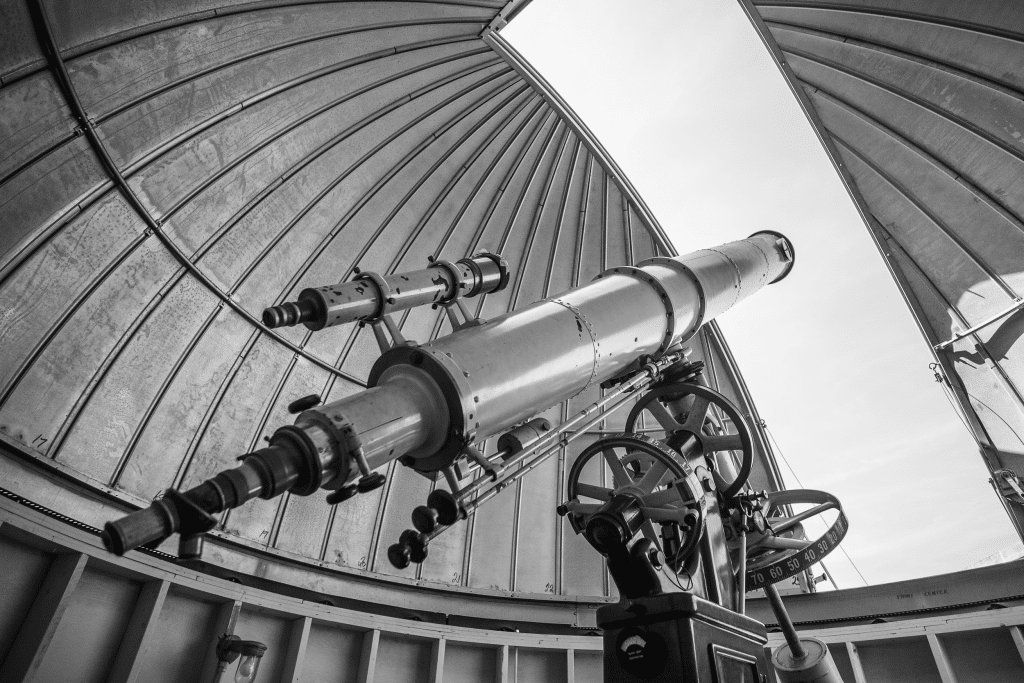
Another 9.5-inch telescope with a big story, closer to home, is the one that was built in 1893 for the backyard of the adjoining properties where Warner and Swasey had built complementing homes with a single shared driveway, split for access to each of the owner’s garages. The observatory stood at that split, shared by the partners, and enjoyed by their guests. In 1919, the telescope was refurbished and updated and installed in an observatory building on Taylor Road in East Cleveland as a gift to the Case School of Applied Science.
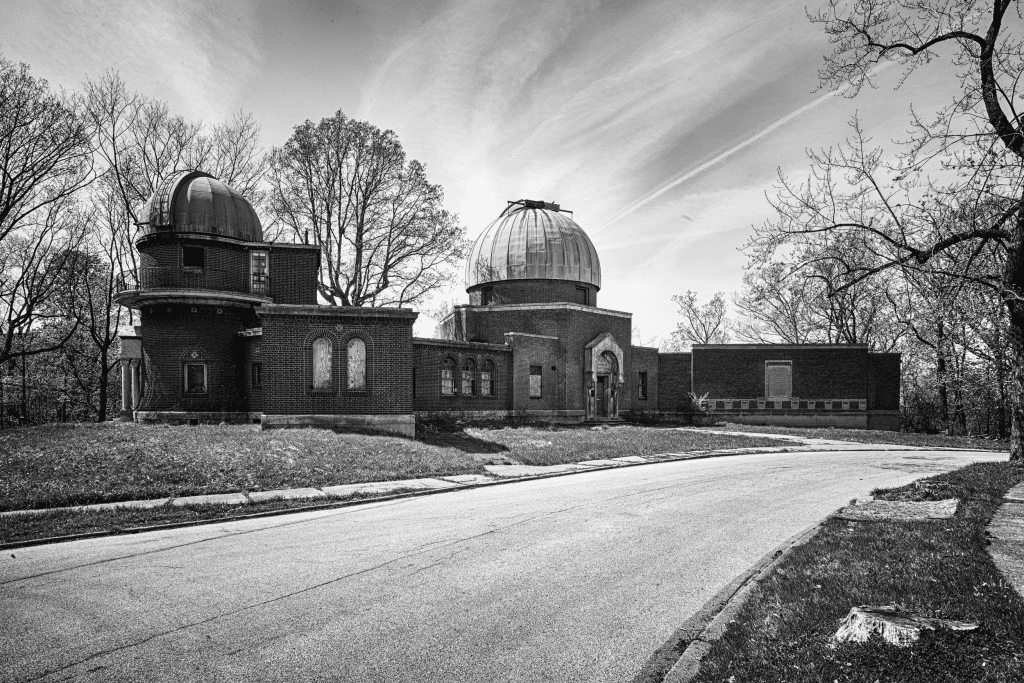
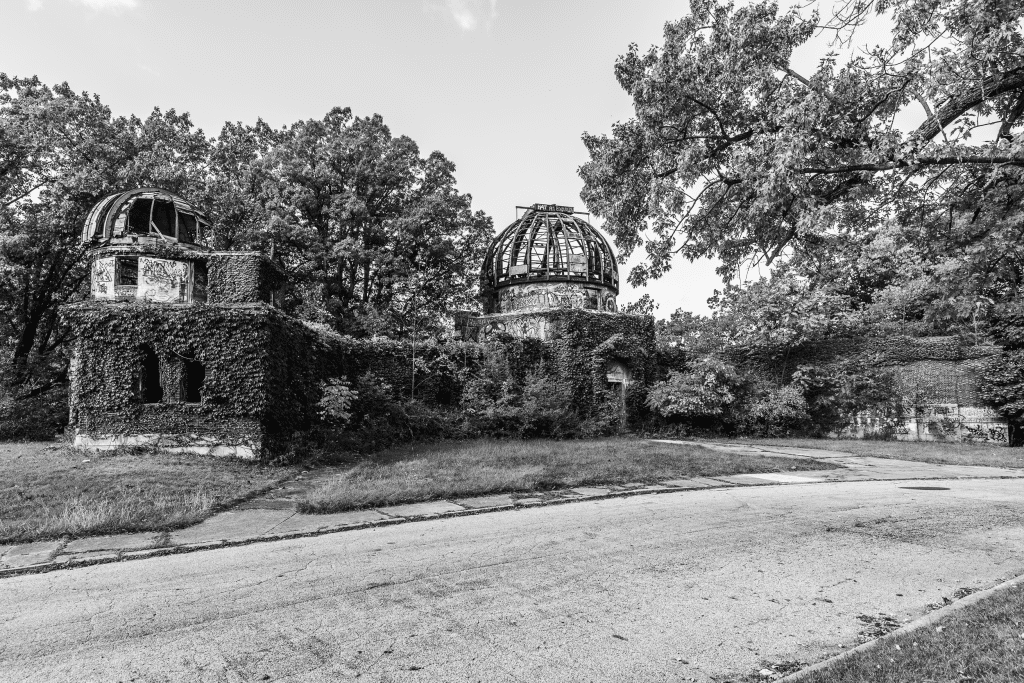
Over the ensuing decades, the Taylor Road observatory expanded with additional instruments, including a 24-inch reflector telescope in the late 1930s, and later a 36-inch reflector, as well as the addition of lecture halls, a library, and facilities for astronomical research. As Cleveland grew, so did light pollution. By the 1950s, Case astronomers began relocating the larger instruments to the Nassau Astronomical Station in Geauga County. By 1982, formal astronomical operations at the Taylor Road observatory had ceased altogether. The astronomy department, faculty, and remaining equipment were relocated to the University Circle campus, and Case Western Reserve University undertook a project to reinstall the historic 9.5-inch refractor on the roof of the A. W. Smith Building in 1986, where the 133-year-old instrument is used by students, faculty, and staff for teaching and introductory observing sessions.
Keep our local journalism accessible to all
Reader support is crucial as we continue to shed light on underreported neighborhoods in Cleveland. Will you become a monthly member to help us continue to produce news by, for, and with the community?
P.S. Did you like this story? Take our reader survey!