Cleveland’s population is slowly decreasing, and subsequently the number of wards has dropped from 17 to 15. In 2013 wards were changed from 19 to 17. Our most recent census was in 2020, and the effects of the ward change went into effect after approval on January 5th, 2026.
As Cleveland’s population has declined, the number of wards in the city has changed not only the shape and size of each ward, but also the representative power of people living in neighborhoods across the city.
Community conversations, surveys and public comment at weekly Cleveland City Council meetings were the avenues residents had to voice their thoughts and opinions on redistricting, before Council members voted on the new boundaries on Jan. 5.

Some neighborhoods, like Slavic Village, were split in the process, and other wards, like Wards 12 and 15, were heavily altered. This made some community members claim gerrymandering, when politicians manipulate boundaries for political gain, an abuse of power that our city and state has a history with. This tactic, some say, is responsible for much of the palpable segregation and community challenges present in the city of Cleveland.
A 2020 UC Berkeley study, based on census data, indicates that Cleveland is the sixth most segregated city in the country. Most people of color reside on Cleveland’s East Side, and those neighborhoods are the ones experiencing high rates of blight and divestment.
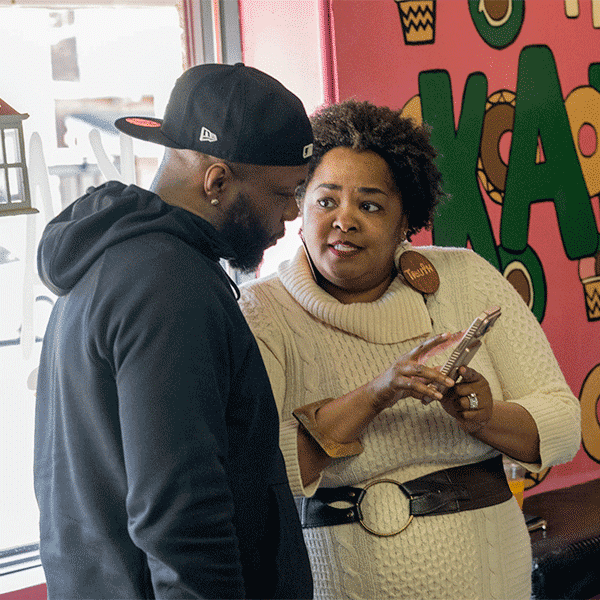
One of the Cleveland City Council members stepping into this reality and representing a new ward is Stephanie Howse-Jones. Ward 8, which includes Hough, St. Clair-Superior, AsiaTown and parts of Midtown and Downtown, is keeping up the tradition of empowering and activating residents through initiatives and programs. I sat down with Councilwoman Stephanie Howse-Jones, who is entering her fifth year of service as a Cleveland City Councilwoman. We met at a St. Clair Superior staple, KafeLA, owned by Kayla Dial.
Aja Joi Grant: Since the ward was redrawn, how does that benefit, or challenge, your approach to service and the residents that have been added to your ward?
Stephanie Howse-Jones: The way that I look at this work, is that while boundaries may be different, the first part of my title is “Cleveland,” I feel an obligation to be in partnership with people. Yes, it is different, life is all about change, evolution, addition and subtraction. It’s really thinking about how we can do this collectively, and have processes where we identify the things we can collectively agree on. Inevitably, there will be things we disagree on, and we’ll have to understand that we still need to make choices for the benefit of the collective. We have goals to connect with the residents of the New Ward 8, to attract people who are interested in working together for the betterment of the community at large.
Aja Joi Grant: What plans do you have for New Ward 8 this year, given your hands-on approach and goals to serve new residents?
Stephanie Howse-Jones: My office is launching our 8 for 8, which will be a series of eight pop-ups in February and March. These will be opportunities for residents to connect with me and be aware that I am their representative, introduce myself, and establish communications and connections with people. It is not necessarily a formal meeting, like the drop-in hours at my office. I just want to introduce this concept to people leading up to our year in review annual meeting, which will be Saturday, March 21, at St. Casimir in St. Clair-Superior. Our ward covers a lot of territory, and these pop-ups help facilitate awareness to neighborhoods of ward changes and what is available to them as residents of Ward 8. We have to take a very ground level approach to meeting people where they are, you will find me set up at grocery stores, coffee shops, restaurants, to not make people go out of their way to introduce myself to them, making them aware of this change and gaining feedback. A real effort has to be made to connect with people, and that is what 8 for 8 is all about. Asking people where they want to see community meetings, drop in hours, and what initiatives do you want to see in your neighborhood? How can we work on them together?
Aja Joi: Let’s talk about some of the initiatives and opportunities for residents to make change.
Stephanie Howse-Jones: Sometimes I tell people, I am not going to do anything, it is more so about what we are going to do collectively. I’m not able to do anything alone. It is not “me” work, it is “we” work.
When it comes to people’s specific initiatives and programs that they want to focus on, I am able to identify support and resources, but I want to empower the community to lead the work and build up the work. The vastness of the ward limits my capacity to lead community projects. This is “we” work, I can assist in making connections and access to resources like grant funding opportunities, so that you can do the work that is important for you and your block. We have to get people activated.
Aja Joi: What are some methods that have been successful in getting people activated in that way?
Stephanie Howse-Jones: It is still yet to be determined, just to be completely honest. There is such a grave disbelief in everything. From the government, to churches, schools and civic organizations, people don’t believe us. Because when you get up everyday and go outside, people feel like nobody in these institutions cares about me because of what my surroundings look like. I aim to connect with people around the notion that “ain’t nobody coming,” as in nobody is coming to magically save anyone without work and intention. If the people are not contributing to the work, then it is not getting done. We have to connect to our gifts and talents to use what we have to do for us. Regardless of age and ability, everybody has value and everybody has the skills to pour into the village.
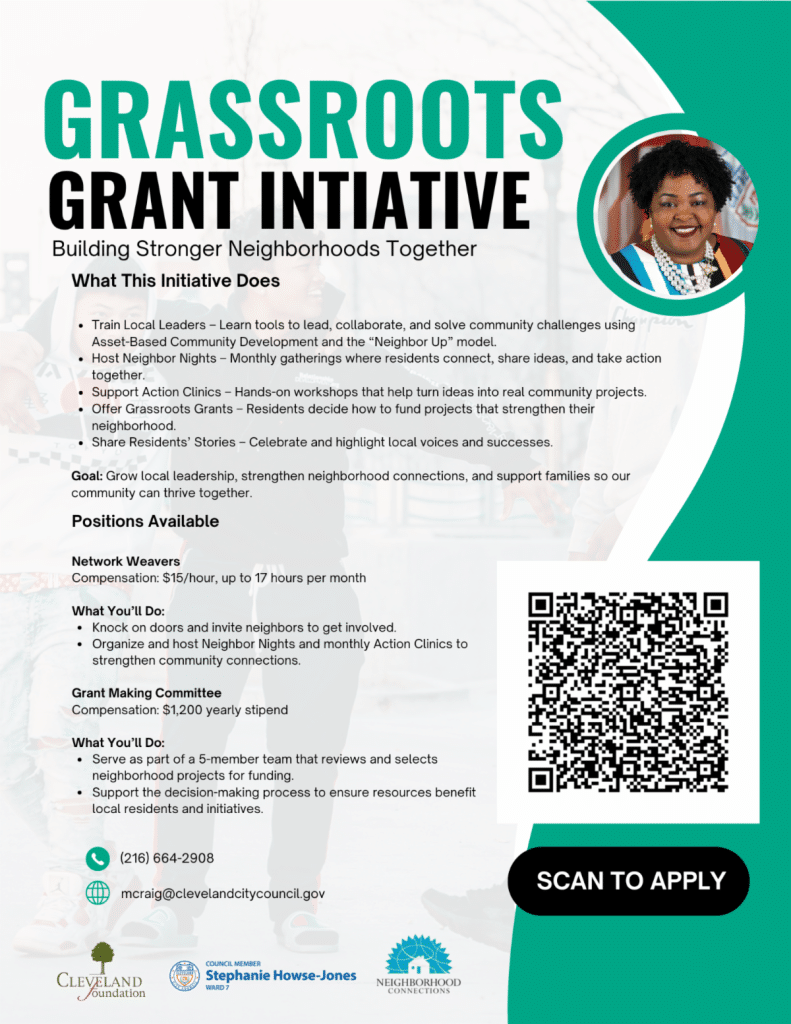
With our neighborhood grant fund, working with Neighborhood Connections, and we are actively recruiting our grant committee networkers. That will be a group of five people who will be responsible for reading proposals and determining who to select for funding. In addition to that we are recruiting our Neighborhood Weavers, these will be folks who go door to door letting people know about the community goals throughout the ward, and the opportunity to connect with other community members and leaders at neighbor meet ups. We also will have action clinics where people can have concerns met with a plan to lead the change. We’ll be able to bring people together in these action clinics to take ideas and concerns to hopefully formulate a plan for activation. Then from there, people can go to the grants committee, and receive some small resources to get their ideas moving. This is the idea that we are piloting, we have the resources to do this for about 18 months. The goal is to attract more funding and donor support to continue this work long term. We want to keep the momentum going. As we know, government resources are dwindling, so we have to reinvent our processes of connecting with people and find out how we can get them activated and given resources.
While speaking Howse-Jones explained the process and intention behind the Grassroots Grant Initiative, in partnership with Neighborhood Connections. This initiative is reminiscent of a historic Cleveland initiative with Mayor Carl Stokes. The Cleveland:NOW Program in 1968, a public and private funding program that addressed rehabilitation in Cleveland neighborhoods, empowered residents to build positive and enriching experiences for their communities. Many beneficiaries included neighborhood groups like Afro Set, which was based in Hough and created a youth development space and communal hub.
Information on the Grassroots Grant Initiative can be found in the flyer below.
We're celebrating four years of amplifying resident voices from Cleveland's neighborhoods. Will you make a donation to keep our local journalism going?