Ohio has been in the forefront of a national drive for regulations on voting. Now state and federal officials want more.
Republicans say they’re trying to prevent fraud. Critics say the real goal is to suppress eligible voters, especially Democrats.
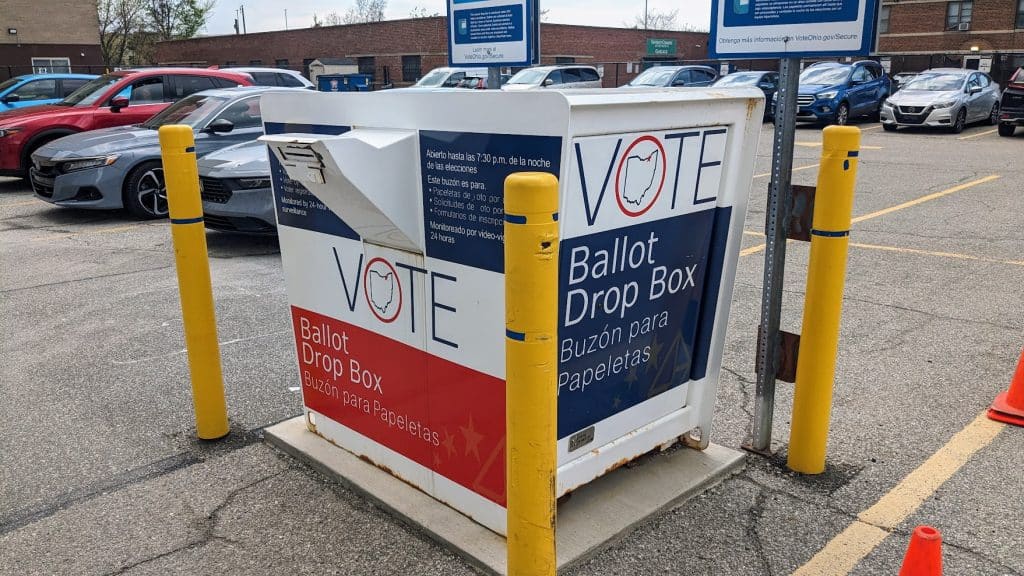
Analysts aren’t sure about all the technicalities in pending measures. But, if enacted and upheld in court, the matching Ohio Senate Bill 153 and Ohio House Bill 233, now in committees, would appear to ban unattended drop boxes. They would make petition circulators wear state-designed badges. And they would refer people for possible prosecution who register but either prove ineligible or fail to respond within two weeks to the second of two notices asking them to confirm their information.

The federal Safeguard American Voter Eligibility(SAVE) Act, passed by the US House and sent to the Senate, would require new and updated registrations to be made in person with proof of the voters’ U.S. citizenship. And a March 25 presidential order would restrict voters, voting machines and election officials.
Senator Andrew Brenner, R-Delaware, one of Ohio SB 153’s sponsors, said in a press release, “Having only legal voters cast a ballot each election should be common sense. This bill makes sure that Ohio has fair and reliable elections so that every time a vote is cast, no one can doubt that their vote will be secure.”
The other sponsor, Theresa Gavarone, R-Bowling Green, said, “Senate Bill 153 addresses areas of the election law we can improve, including an extra layer of protection to enforce our state constitution’s citizenship requirement. This is a simple fix that strengthens trust and integrity in our institutions.”
Trump’s order said, “Elections must be honest and worthy of the public trust.”
But known cases of fraud are extremely rare. In the 2020 presidential election, The Associated Press found fewer than 475 possibly fraudulent votes in six battleground states, and most of those votes were rejected.
An elections scholar, Professor Atiba Ellis of Case Western Reserve University law school, said, “It’s a danger to American elections to write our policy based on these myths.” He said the changes would block far more valid voters than invalid ones.
Democrats and voter rights advocates call the supposed fixes unnecessary, costly, confusing, intimidating, discriminatory, illegal, unconstitutional and undemocratic.
U.S. Representative Shontel Brown, D-Warrensville Heights, said in an email to The Land, “President Trump and his MAGA allies have declared war on voting rights, risking the disenfranchisement of millions in order to feed the big lie that the 2020 election was stolen.”
Advocates say Ohio’s bills to ban drop boxes would hurt rural, disabled and immunocompromised voters. They also object to prosecuting people who register for ignoring notices that might look like junk mail.
Collin Marozzi, deputy policy director of the American Civil Liberties Union Ohio, said of state lawmakers, “They’re taking the first step down the road toward criminalizing democracy.”
Asked for comment on the bills’ merits, Benjamin Kindel, spokesman for Ohio Secretary of State Frank LaRose, who oversees elections, said, “Our team is currently reviewing the legislation and will continue to monitor and have conversations with legislative members.”
Ohio SB 153, summarized here, and the twin HB 233 are expected to pass. Republican Governor Mike DeWine has not said whether he’d sign the legislation. In 2023, he signed a milder elections bill and said in a press release, “I do not expect to see any further statutory changes to Ohio voting procedures while I am governor.”
The federal SAVE Act appears unlikely to get the 60 votes it would need in the Senate. Advocates have challenged Trump’s order in court and vow to challenge the federal and state bills if enacted. A federal district judge has delayed parts of the order.
Proving your right to vote
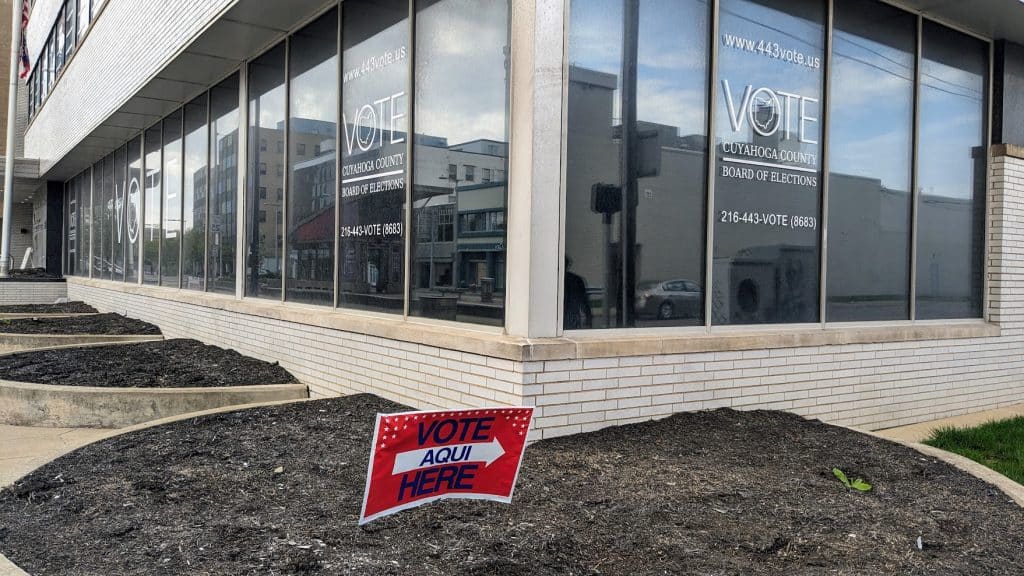
All U.S. citizens living in Ohio can register to vote for a general election that will be held after their 18th birthday, unless they’re incarcerated, declared incompetent, or disenfranchised for breaking election laws. They may also register to vote for candidates in that year’s primary. They must register again after changing their names or addresses.
But many would have trouble meeting the pending federal requirements for proof of citizenship. A 2023 survey found that 3.8 million Americans lack such proof, and another 17.5 million would need more than a day to retrieve it.
Passports prove citizenship, but an estimated 146 million eligible voters lack them. The cheapest kind, a passport card, costs $65 and takes four to six weeks to get without extra fees.
Naturalization papers prove citizenship. So does an Ohio driver’s license or state ID, but only if issued after April 7, 2023, without the word “noncitizen.”
Birth certificates prove citizenship. An Ohio certificate costs $21.50 from the Ohio Department of Health or $25 from the Cleveland Health Department. And citizens who’ve changed their names, as an estimated 73 million Americans have done for marriage, would also need marriage licenses or court orders to prove their identities.
Kayla Griffin Green, Ohio director of All Voting Is Local, said these costs amount to poll taxes, forbidden by the 24th Amendment.
Trump’s order rejects mail ballots that reach election boards after Election Day, versus Ohio’s requirement for postmarks by the previous day. It calls for state voter rolls to be reviewed by the Department of Homeland Security in coordination with the Department of Government Efficiency, which was led by tycoon Elon Musk. New election machines would have to be created and deployed that issue receipts of voters’ choices.
The order didn’t say whether a voter could take a receipt from the polls. If so, voter advocates say it would violate the secret ballot. A relative or an employer could demand to see it and punish or reward voters accordingly, despite a law against buying votes.
DOGE’s role was criticized in a campaign email from Bryan Hambley, the only declared Democratic candidate for election next year as Ohio secretary of state. “This new system will be vulnerable to corruption and incompetence.”
State Treasurer Robert Sprague, the only declared Republican candidate, did not respond to questions.
Incumbent LaRose, now running for state auditor, said in a press release about Trump’s requirements, “Fortunately, I can say that a lot of this we already do in Ohio, but where there’s an opportunity to do more we can certainly work with our state and federal lawmakers to address it.”
LaRose spokesman Kindel and Cuyahoga County Board of Elections spokesman Mike West said it was too soon to speculate on the cost and labor of fulfilling Trump’s order.
Ohio’s strict rules
Ohio was ranked last year as the sixth hardest state for voting by the Cost of Voting Index from Claremont Graduate University. A 2023 Ohio law requires photo IDs. It limits drop boxes to one per county. It also imposes earlier deadlines than before for receiving mail ballots and for validating provisional ballots.
In Ohio and many other states, Republican activists have increasingly challenged the eligibility of individual voters. The Plain Dealer reported thousands of challenges in 13 Ohio counties in the first eight months of 2024. Ideastream reported that a Wood County activist challenged more than 16,000 voters, or about 19 percent of the county’s registered ones. Some challenged voters had to defend themselves at hearings.
Every year, Ohio elections officials purge the registration rolls of people declared ineligible, dead, long inactive or no longer living at their registered addresses. Last year’s purge erased 154,995 registrants. The advocacy group Demos has called Ohio’s purges the most flawed of 10 states examined.
According to voter advocate Greg Palast, the rising restrictions in Republican-led states stopped at least twice as many Blacks last year as whites. He estimates that they cost Vice President Kamala Harris 3.6 million votes and the election.
Griffin Green said that the pending state and federal restrictions would bar many more eligible voters than before and discourage many others, who’d be too busy, confused, or scared to cope with them. “Certain laws have a chilling effect.”
Voters expect not just to cast votes but have them counted. Yet Ohio officials rejected 34,364 provisional ballots in 2024, up from 24,369 in 2020. And Trump promoted and keynoted what became a deadly attempt in 2021 to overturn the people’s choice of president, as confirmed by many elections officials and judges from both parties.
What can people do? Advocates advise every eligible voter to register soon, before more restrictions take effect. They also urge voters already registered to double-check that their registrations are active, accurate and up to date.
But registrations help only when elections take place. Griffin Green said that, given the rising restrictions, “Many people in the election space have serious concerns whether in two to four years we will even have elections.”
Keep our local journalism accessible to all
Reader support is crucial as we continue to shed light on underreported neighborhoods in Cleveland. Will you become a monthly member to help us continue to produce news by, for, and with the community?
P.S. Did you like this story? Take our reader survey!