
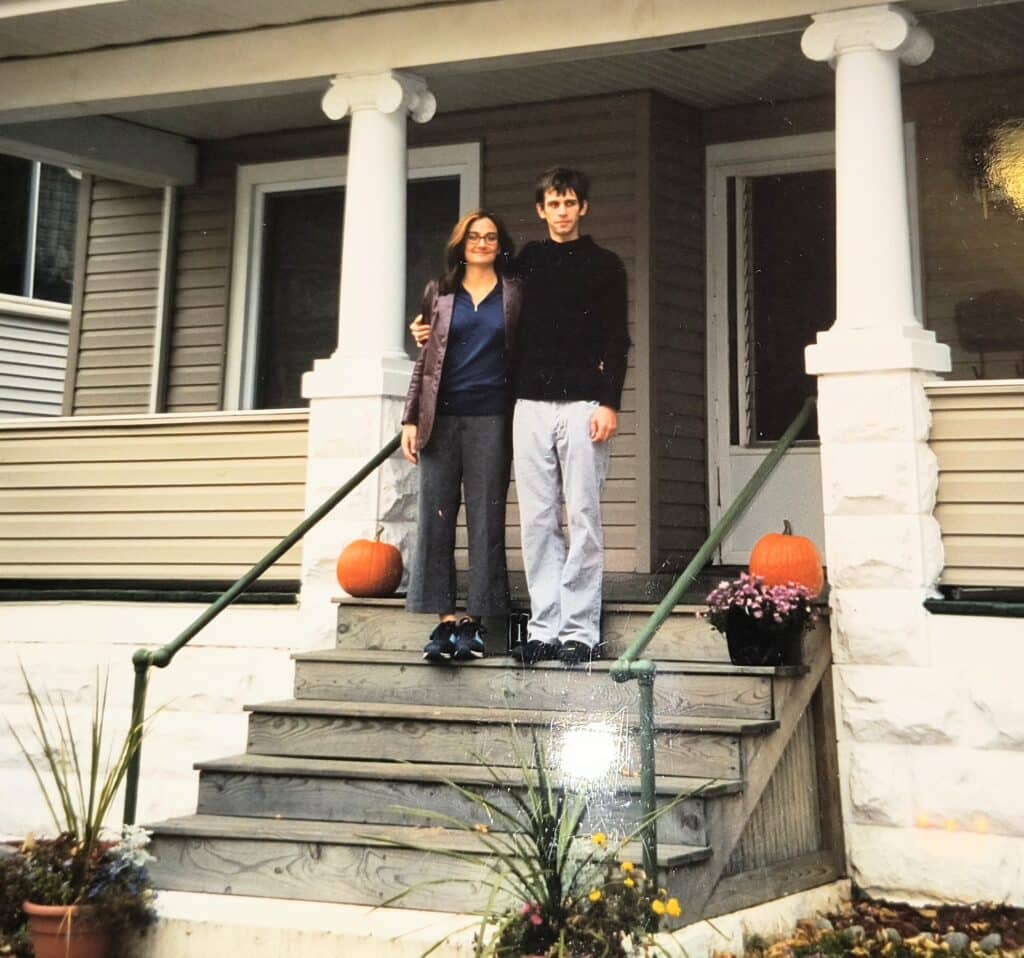
When we first moved to our near west side of Cleveland neighborhood in 2002, my husband and I couldn’t believe our good fortune. Living on W. 89th St. north of Detroit Ave., we were just a five or six minute walk from Edgewater Park. Even before we had kids we were at the park nearly every day, taking the dog for a walk or just enjoying the view.
This neighborhood was quieter than where we had been living in Ohio City, and we had friendly neighbors on both sides of us. We didn’t know of any official name for our new neighborhood, which the real estate listings referred to as “Edgewater.” We just knew we liked it here. There was talk of turning the Shoreway into a Boulevard and of the Metroparks taking over Edgewater Park. We were hopeful for what the future would bring.
Fast forward 10 or so years, and the neighborhood we thought held so much promise had actually declined, for reasons we didn’t fully understand. The 2008 housing crisis and recession certainly had an effect, causing property values to plummet, but it was the seemingly endless sound of gunshots at all times of the day and night that really disrupted both our sense of peace and the fabric of the neighborhood. Neighbors moved away, and a feeling of helplessness began to settle in.

For me, the neighborhood’s rock bottom was April 2017. That’s when a few days of constant gun violence culminated in a shootout on W. 87th St. behind our house. Over 50 rounds were fired, and the house diagonally behind us was caught in the crossfire. Miraculously, no one was hurt, but just a few minutes after the gunshots stopped, those neighbors had to evacuate because a bullet had struck their gas meter.
This shootout was the final straw for many people living around here, including the family immediately next door, friends whose kids played with ours. But we decided to stick it out, and I vowed to take a more active role in the neighborhood. I had come to realize that as bad as things were, the perception or stigma of our neighborhood was even worse. We also seemed to be overlooked by law enforcement and city departments like building and housing.
That’s when I realized that one of the challenges our neighborhood faced was that no one really knew we existed. We weren’t on anyone’s map and no one knew what to call us: Detroit Shoreway, Edgewater, Cudell? We were something of a no man’s land, an in between place, not claimed or recognizable to many people beyond those who lived here.

What’s our name?
Back in our early days of living on W. 89th, we attended a few block club meetings, usually held in someone’s backyard, to discuss neighborhood issues. This area was often referred to as the “West Eighties” and I remember at one of these meetings our then-councilperson Jay Westbook pulled me aside and mentioned that he had come up with “the best name for the neighborhood – Edgewater Parke, with an ‘e.’” I laughed and said I liked it – it seemed fitting. Turns out, he had this conversation with other block club members, and the name stuck, at least among the people who lived here.
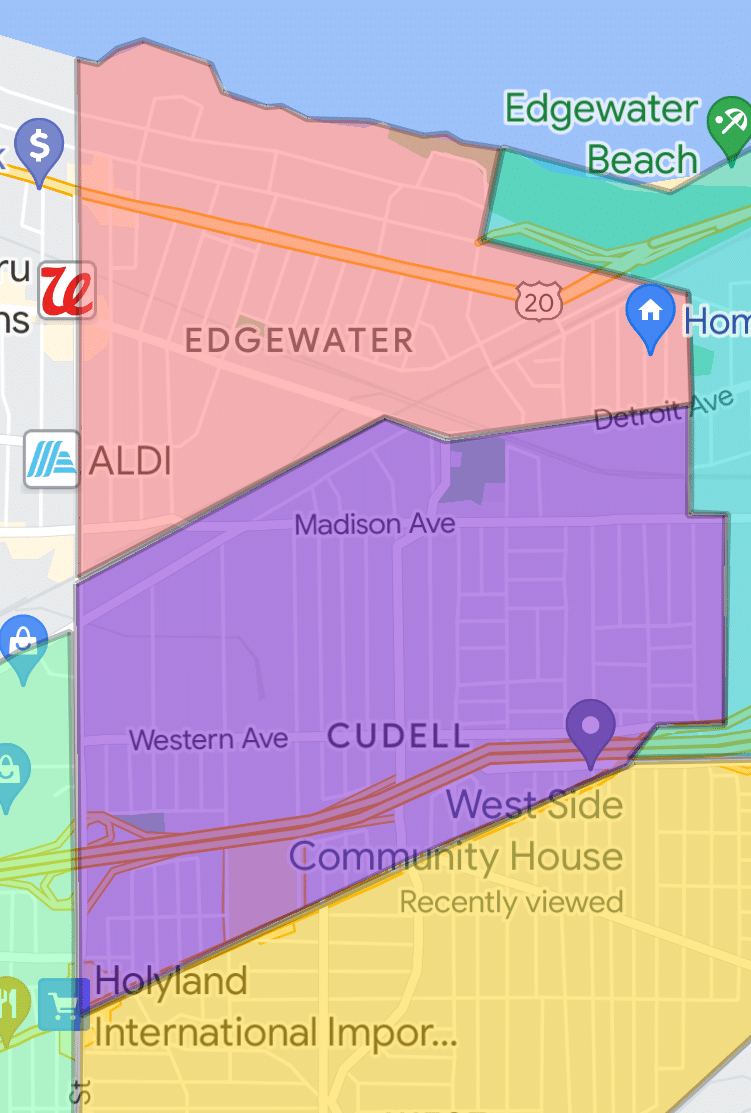
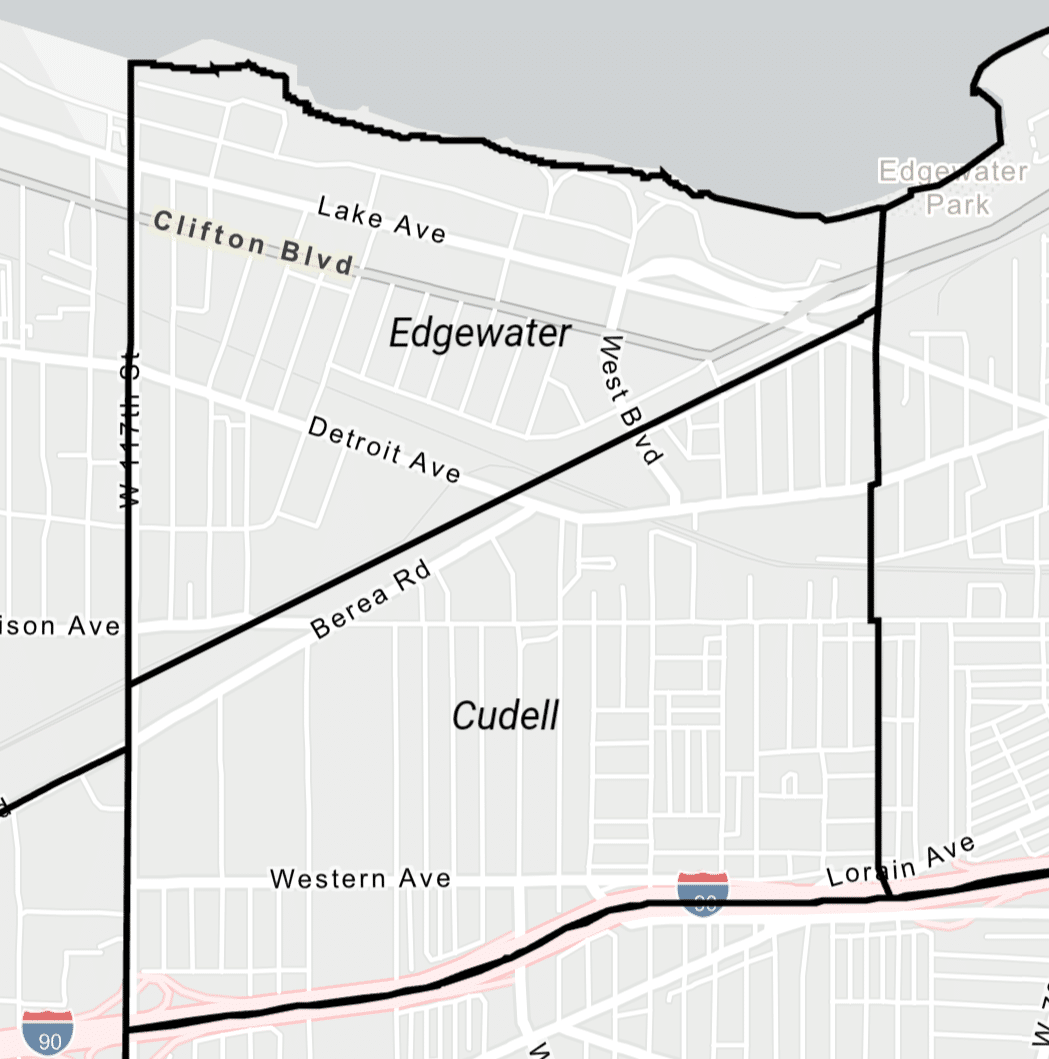
But what were we really? Neither Cudell nor Edgewater, according to the Encyclopedia of Cleveland History: Not the Cudell neighborhood because we’re north of Detroit Road, and not the Edgewater neighborhood because we’re south of the CSX railroad tracks.
Historically, the city officially considered us part of the Edgewater neighborhood. At some point since I’ve lived here, this changed, and the city began designating this area as part of Cudell. I knew this was important because Edgewater was known as a wealthier area while Cudell is more working class. When and how did our neighborhood’s name change? That started my quest to find out.
Who names neighborhoods – and why it matters
I learned that in Cleveland and other cities, neighborhood names are actually official government designations. According to Adam Davenport, Cleveland’s chief city planner, the city designates areas as Statistical Planning Areas, or SPAs. These SPAs are meant to use census tracts to determine neighborhood social welfare needs and then use the data to justify funding requests and services. Cleveland attaches names to these statistical areas, which then become the official names of the neighborhoods.
While SPAs are meant to conform closely to existing social and economic communities, they must also follow census tract boundaries and consist of two or more side-by-side census tracts.
But neighborhood boundaries are complicated – things don’t always fit neatly, and names do matter. Where you live, your neighborhood, is an important part of your identity. Maintaining an identity with where you live can create a stronger sense of pride, self-image, and representation. However these names came to be, once assigned, they play an important role in conveying the nature of a place.
Modern scholars see place as a social construct, reflecting ever changing conditions of power, socioeconomics, race, and gender. How a neighborhood is known to itself and to the outside world can affect everything from how residents are treated by others to how much their home is worth. Did it matter – to us, to people outside our neighborhood – if we were suddenly part of Cudell rather than Edgewater?
A mysterious move from Edgewater to Cudell
Initially part of what was known as West Cleveland, my neighborhood began forming in the late 19th century as single family homes started being built on side streets between Lake Road and Detroit Ave. West Cleveland was annexed to the city of Cleveland in 1894, and that same year Edgewater Park was created. Many of the houses around here were built between 1890 and 1910, with more to follow in the 1920s as land to the west was subdivided. The area where I live was known as “Edgewater,” after the park.
The original census tract for the Edgewater neighborhood, 1011, was eventually split in two by the federal government. Census tract 1011.01 covers the older part of the neighborhood, including my home, while 1011.02 is the slightly newer area to the west of Edgewater Park. And sometime between 2004 and 2011, the city quietly moved my census tract from the Edgewater SPA to the Cudell SPA.
In 2011, using 2010 census data, there was a city effort to update Cleveland SPA boundaries and neighborhood names with input from the local community development corporations and city council members. At first I thought this was when my neighborhood, census tract 1011.01, was moved from the Edgewater SPA to the Cudell SPA, but I later discovered that these 2011 maps showed that the city had already moved my census tract by then.
I contacted Robert (Bob) Brown, the now-retired director of city planning from 2004 to 2014, to ask about the changes. Brown, who is a wealth of information, confirmed that SPAs are generally meant to follow naturally occurring neighborhoods. He also explained the reason for the census tract split: the federal government aims to keep census tracts under 10,000 people, so at some point in the 1960s and 1970s when several large apartment buildings were constructed in census tract 1011, it pushed the population too high, justifying the split into tracts 1011.01 and 1011.02. Still, that didn’t explain why Cleveland moved 1011.01 from Edgewater SPA to Cudell SPA.
Unfortunately, I haven’t been able to find out anything more about the city moving my neighborhood from Edgewater to Cudell, such as an exact date or better yet, why the change was made at all. But both Brown and Cleveland city planner Davenport believe that it was likely because my census tract was better matched demographically to Cudell than Edgewater.
Even though I couldn’t find all the answers I wanted, I’ve learned a lot about neighborhood names in general and why they are so important. Regarding my neighborhood in particular, things are definitely changing and it does feel, in terms of safety, that we are moving in the right direction. We have a very active block club, the Edgewater Parke Neighbors, and the work we’ve been doing seems to be making a difference. Many of the vacant lots left over from the housing crisis have become infill housing and recently a new Horizon school opened on Detroit Ave. Additionally, property values have been steadily rising in our neighborhood, along with the good (equity in our homes) and the bad (higher taxes, lack of affordability) that comes with that.
For me, though, the best thing that’s happened is the positive outlook my neighbors and I now share about this neighborhood and all of the ways we can join together to make it better. Our Edgewater Parke name might not be widely known around Cleveland, but for those of us who live here, it’s something to be proud of.
To learn more about the Cudell and Edgewater neighborhoods, visit nwneighborhoods.org or call 216/961-4242. To join the Cudell Facebook group, visit Cudell and Edgewater Community.
Nikki Hudson was a participant in The Land’s community journalism program.
We're celebrating four years of amplifying resident voices from Cleveland's neighborhoods. Will you make a donation to keep our local journalism going?