
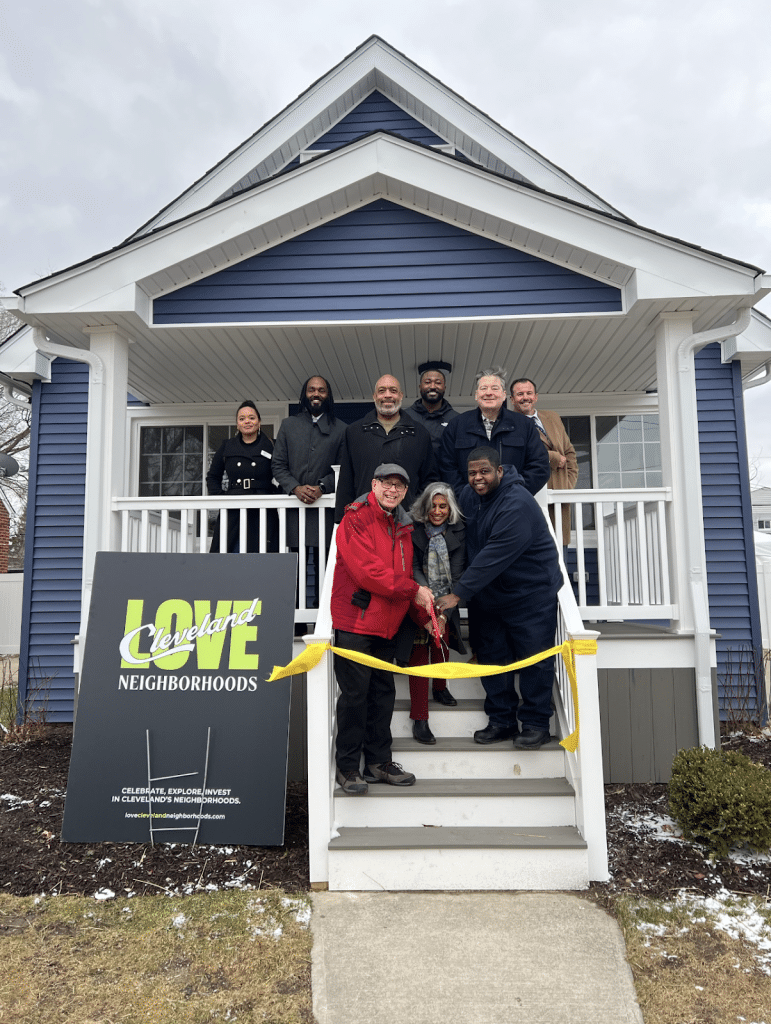
In March, Cleveland’s Middle Neighborhood Initiative (MNI) celebrated its one-year anniversary with an event marking the completion of its first renovated home.
The initiative, spearheaded by Cleveland Neighborhood Progress (CNP), is committed to revitalizing neighborhoods dwelling somewhere between decline and prosperity. These “middle neighborhoods,” while not experiencing the heavy disinvestment of some Cleveland areas, are often overlooked and lacking in private market investment. The initiative aims to change that.
MNI is working to transform neighborhoods like Collinwood, Old Brooklyn, Lee-Harvard, and West Park; areas that have long been loved by residents but have seen a slowdown in their housing market, and are ineligble for large public intervention.

The goal of MNI is to instead provide intentional investment in these neighborhoods that can improve the housing market, making these communities more desirable without the influx of risky, large-scale private developments that can lead to displacement. By focusing on renovating homes and enhancing neighborhood amenities, the initiative aims to make a tangible difference in these communities.
Why the Middle Neighborhood Initiative Exists
At its core, the Middle Neighborhood Initiative seeks to stabilize and strengthen neighborhoods by investing in homes and small businesses. Jeff Versespej, chief operating officer of Cleveland Neighborhood Progress, emphasized that the initiative is driven by data, ensuring that community investment is targeted to the right areas.
“We wanted to let community data tell us where to be, not base it on political maps,” he explained. The goal is to prevent further deterioration of these neighborhoods and help them thrive by bringing in new investments while maintaining the character of the existing community.
The initiative’s work involves not just renovating homes but transforming the neighborhoods in which they stand. Verespej elaborated, “If you’re buying a home in these areas but there’s a vacant building at the end of the block, you’re going to question that. We’re making sure that the homes we renovate are complemented by improvements to neighborhood amenities.”
This approach includes working with small businesses to revamp storefronts, add signage and create inviting public spaces that encourage both residents and businesses to invest in the neighborhood.
A Year of Progress and Challenges
Josh Jones Forbes, director of marketing and communication at CNP, shared that while the MNI is still in its early stages, it has already seen considerable progress.
“We’ve completed one house, with more under construction, and are working on 10 commercial properties,” he said. These homes are not only being renovated to provide better living spaces but are priced at a point that supports community revitalization. For example, the first completed home is listed at $269,900, a price that is below market value, to make it accessible to potential homeowners who care about the neighborhood’s future.
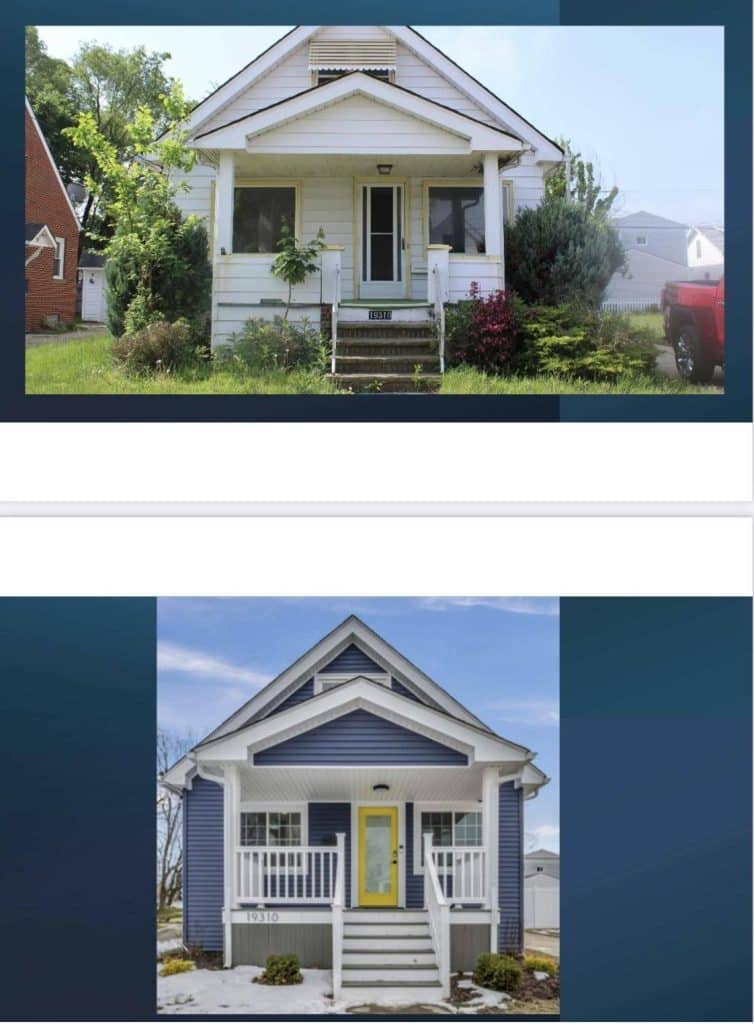

The renovation team made significant changes to the property, which is located on Muskingum Avenue, converting it from a modest two-bedroom, one-bath home into a four-bedroom, two-bath residence, effectively doubling the square footage to over 1,800 square feet. The design choices were driven by the desire to accommodate modern family living, with an emphasis on creating more open living spaces, including a larger kitchen and open gathering space. The addition of a second bathroom was also crucial in meeting the needs of today’s homeowners, reflecting the growing demand for more functional and comfortable living environments.
However, the work doesn’t stop at home renovations. The initiative faces challenges from predatory investors, including out-of-state LLCs that often buy up homes for cash and allow them to fall into disrepair. As Forbes explained, “We’re competing with these LLCs by acquiring homes before they can swoop in. Our goal is to buy houses in vulnerable price points, revitalize them, and ensure that they’re available for responsible homeowners who will contribute to the neighborhood’s revitalization.”
A Celebration with Strong Community Support
The one-year anniversary event was a powerful demonstration of support for the initiative, with several key figures lending their voices to the celebration. The guest list included:
– Tania Menesse, president & CEO of Cleveland Neighborhood Progress, who highlighted the initiative’s goals and impact over the past year.
– City Councilman Mike Polensek, who expressed his ongoing support for efforts to revitalize Cleveland’s middle neighborhoods.
– City Council President Blaine Griffin, who spoke on the importance of collaboration between public and private sectors for neighborhood transformation.
– City Councilman and Chair of the Development, Planning, and Sustainability Committee Anthony Hairston, who emphasized the vital role of sustainable development in the city’s future.
– State Representative Terrence Upchurch, who discussed the importance of state-level support for initiatives that directly benefit communities.
Building for the Future
Looking forward, the Middle Neighborhood Initiative has set ambitious goals to renovate 200 homes and commercial properties in Cleveland over the next several years. These renovations are not just about housing; they are about building a future where people who work in Cleveland, can afford to, and want to, live in the neighborhoods they serve, officials said. By focusing on homes that are priced at an accessible level for workforce housing, the initiative hopes to stem the loss of middle-class residents to suburban areas.
While MNI has achieved significant milestones in its first year, its work is far from over. Forbes and Verespej both emphasized the importance of collaboration with community organizations, like Cleveland City Council, and funders like KeyBank and the Cleveland Browns. These partnerships are crucial for ensuring the initiative’s long-term success in revitalizing Cleveland’s middle neighborhoods.
As the Middle Neighborhood Initiative continues to grow and develop, its leaders hope its impact will be felt not just in the renovated homes but in the thriving communities they help create, and a Cleveland that is inclusive, resilient and poised for future growth.
We're celebrating four years of amplifying resident voices from Cleveland's neighborhoods. Will you make a donation to keep our local journalism going?


![Lakewood High School students organize walkout to protest ICE [photos]](https://d41ow8dj78e0j.cloudfront.net/wp-content/uploads/2026/02/12155714/DSC_3775-800x600.jpg)


