For people with sensory processing disorder and related conditions, a fun outing at a museum, ballpark or concert can become suddenly overwhelming. Bright lights, loud noises and large crowds can trigger discomfort, irritability and even panic.
The Cleveland Metroparks Zoo, in partnership with the Cuyahoga County Board of Developmental Disabilities, is taking steps to help those facing these challenges enjoy their time at the zoo without having to leave early.
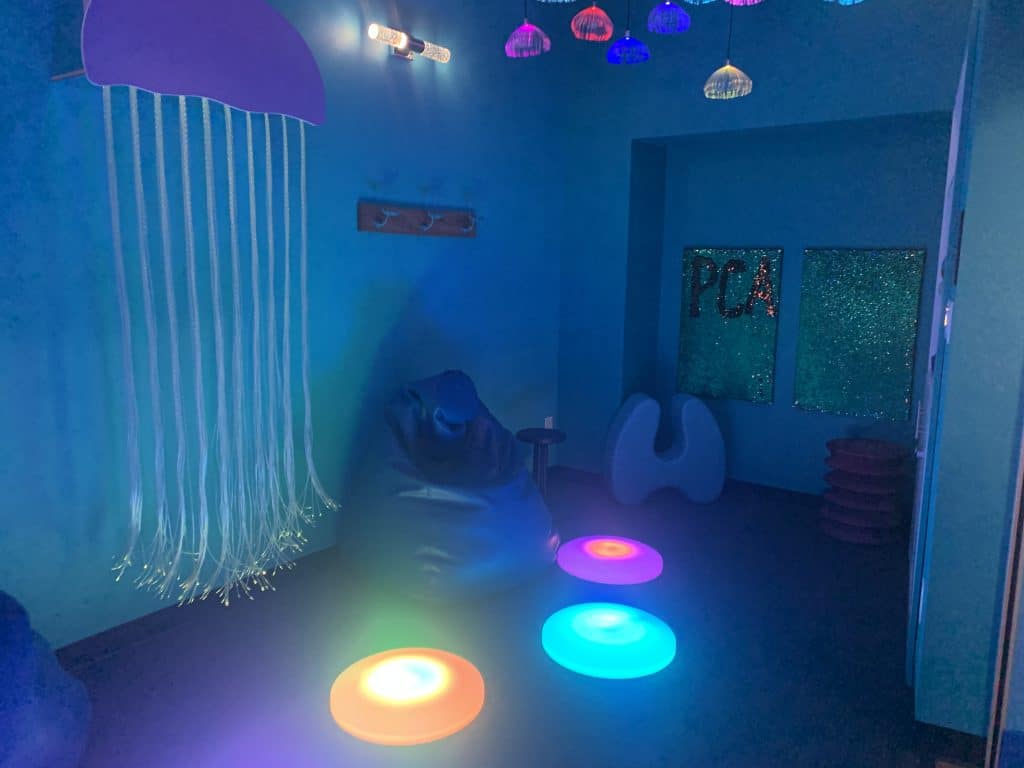
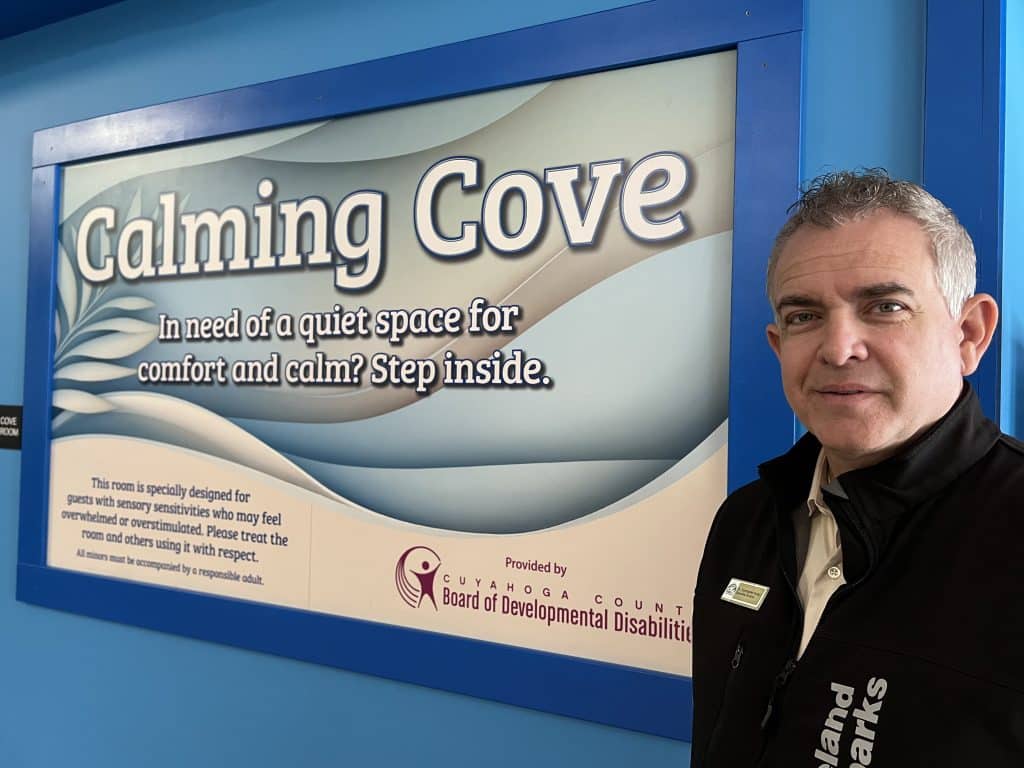
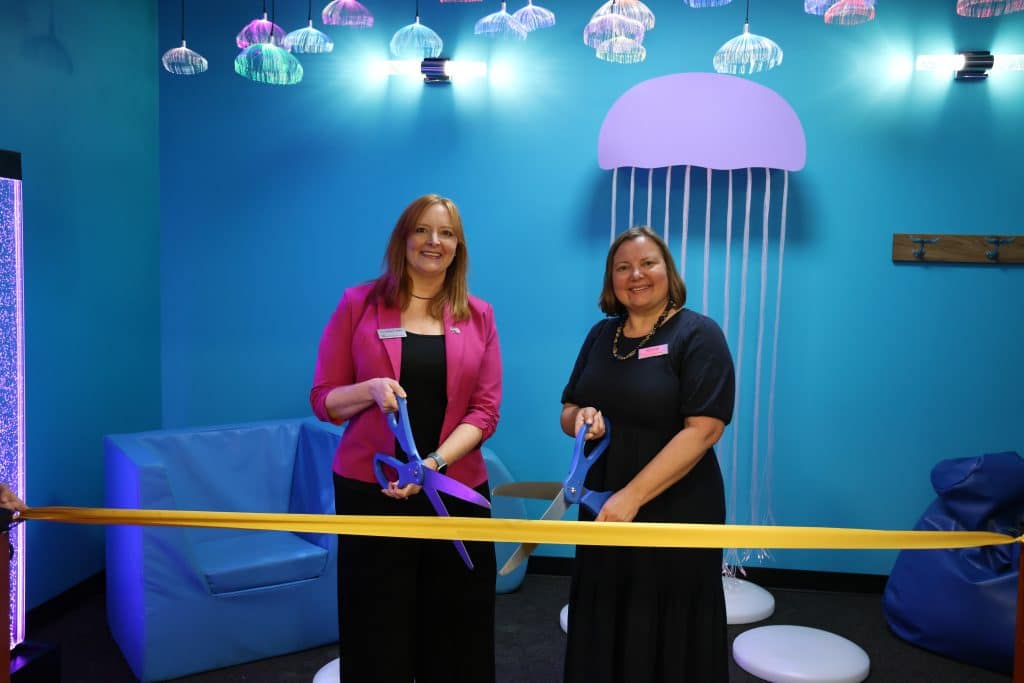
The zoo, with $80,000 in Cuyahoga DD funds, has installed a “sensory room” called Calming Cove at the entrance to the Primate, Cat and Aquatics building. Calming lights, soft, comforting sounds and relaxing furniture allow visitors who are sensitive to lights, noise and crowds to take a quiet break. Once refreshed, they can return to the main zoo instead of ending their outing prematurely.

The county grant also paid for a “universal changing table” in a restroom near the Daniel Maltz Rhino Reserve. Adults with disabilities who have incontinence or those who are catheterized can use the table to clean up and continue to explore the zoo.
The zoo, without Cuyahoga DD financial assistance, installed another universal changing table in a second restroom near the rhino area.
“Sensory rooms have been in place for several years, especially in homes or settings that serve people with disabilities, and even in schools,” said Amber Gibbs, superintendent and CEO of the Cuyahoga County Board of Developmental Disabilities (Cuyahoga DD).
“But we are starting to see them at places in the community that serve everyone, like the zoo, to make everyone feel welcome,” Gibbs said. “It’s happening all over the country.”

According to a July 2024 study in Pediatric Research, the official publication of the American Pediatric Society, one in four people in the United States has a disability. Some disabilities are invisible to others like attention-deficit-hyperactivity disorder, autism, posttraumatic stress disorder, anxiety and panic, Parkinson’s disease, dementia and stroke recovery.
For people with these conditions, common activities like grocery trips and elevator rides can be overstimulating and overwhelming. They cannot mentally process all the sensory information around them.
The scientific community is optimistic that sensory rooms can help those with sensory disorders but studies state that more research with larger groups of people over longer periods of time are needed to confirm that.
A 2021 study published on sciencedirect.com notes that sensory rooms used in education seem to improve focus among pupils with special needs and autism. A 2025 study published on journals.plos.org says that sensory rooms might calm nerves in adults.
Even virtual-reality sensory rooms, as opposed to physical rooms, may reduce anxiety and depression among adults and improve sensory processing, according to a 2023 study on nature.com.
Chris Kuhar, executive director of Cleveland Metroparks Zoo, said he has witnessed Calming Cove soothe anxious zoo guests, more so than he expected. Since the room opened in April it has become so popular that even people without sensory disorders are stopping in, causing overcrowding.
“We want it to be a place where people can come in, calm down and not be overwhelmed by the sensory simulation of the zoo,” Kuhar said. “So we’ll probably limit this a little bit more so that those who most need it get the benefit from it.”
Lights & colors
In Calming Cove, the first things you notice are the lights and colors.
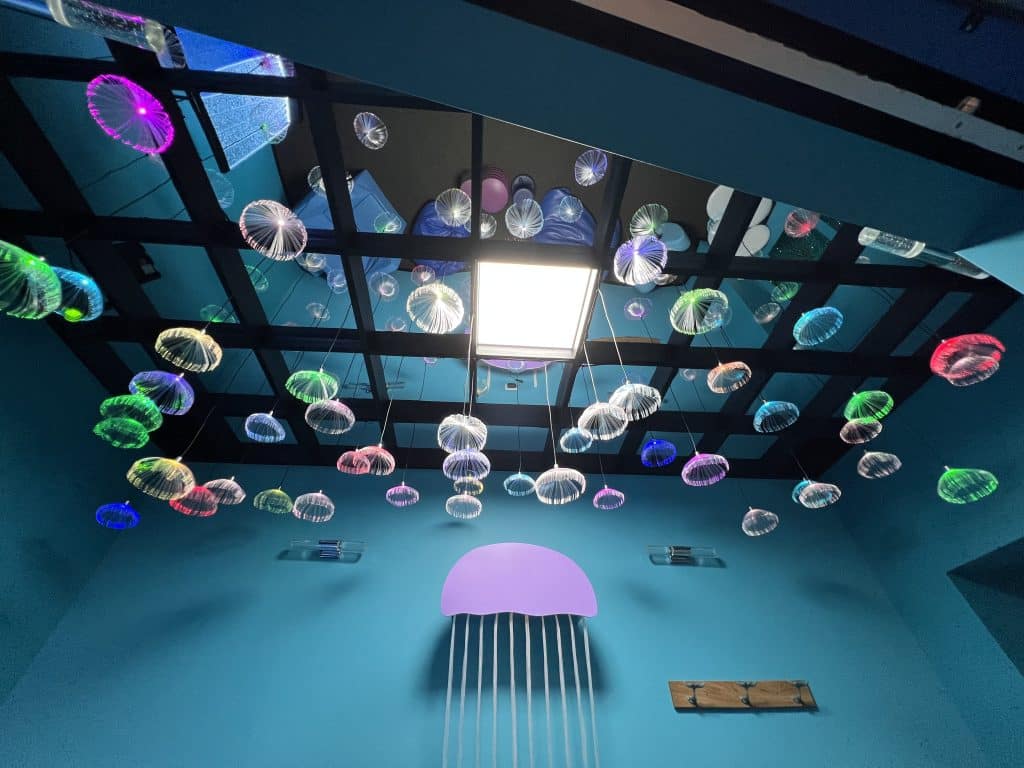
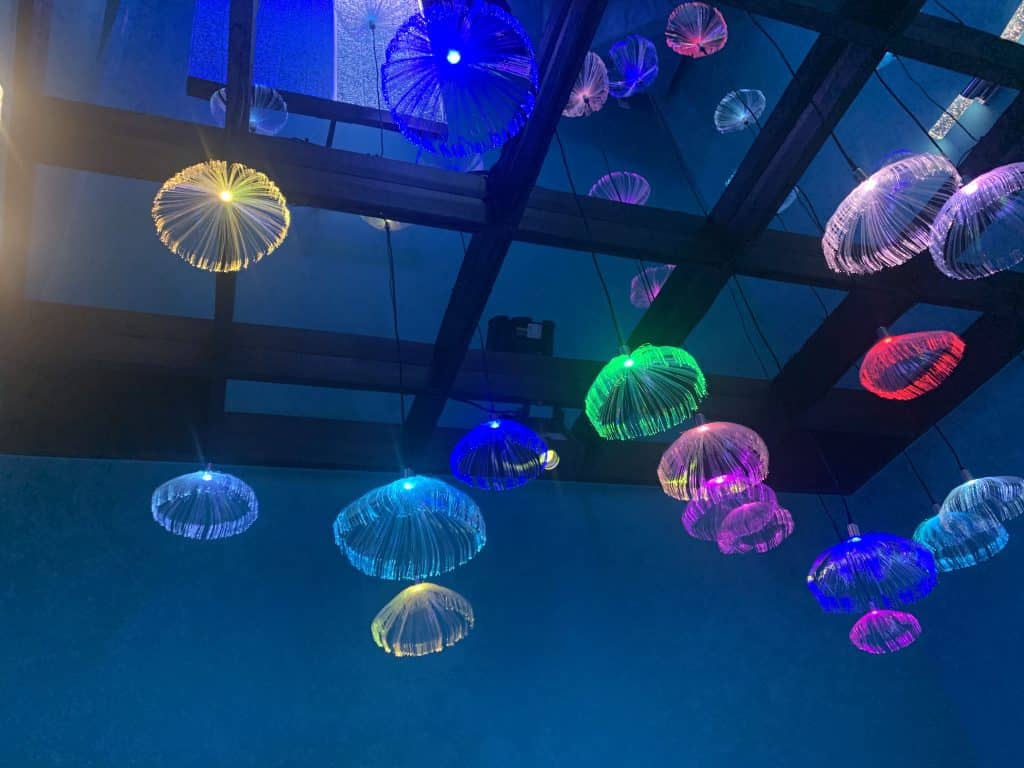
Bubbles lit by ever-changing colors ascend continually inside a “bubble wall” while “jellyfish” of various colors dangle from the ceiling. Plastic ropes with fiberoptic lights hang from another wall. Guests can step on liquid floor tiles that change colors when pressure is applied.
An audio machine mimics the sound of crashing waves. Visitors can run their fingers through “reverse-sequin panels” and change the texture and feel of the display.
“The room offers someone a sensory experience that is different than what they were experiencing in the place they were in, like the zoo,” Gibbs said. “It can help them to regulate themselves.”
Calming Cove contains a beanbag chair and a “wobble stool” that requires fidgety guests to expel energy as they try to maintain their balance. Another chair provides a hugging sensation. There are also weighted pads and blankets visitors can drape over their laps.
“For a long time we’ve known things like weighted blankets or pads or even weighted stuffed animals can be very calming for people,” Gibbs said. “It feels like a big safe hug.”
As for universal changing tables, Gibbs said the county developmental disabilities board has helped bring them to various recreation centers, the Cleveland and East Cleveland public libraries and the Greater Cleveland Aquarium.
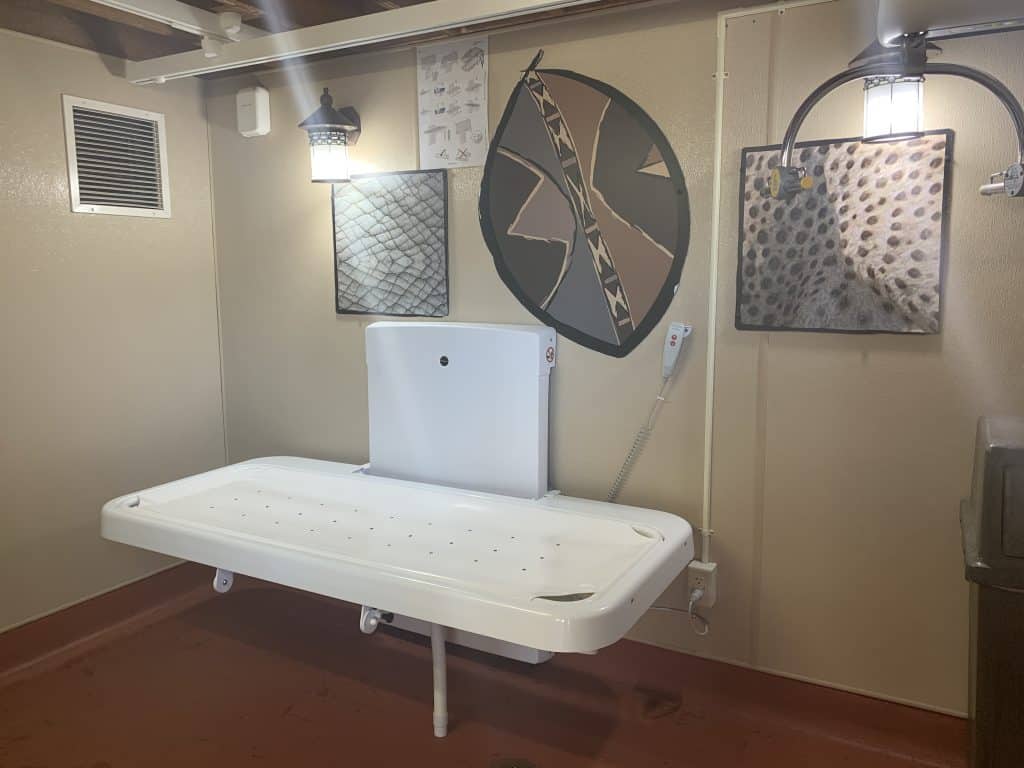
However, Gibbs said the universal changing table at the zoo is the first in the county to include ceiling tracks and a sling. These allow a wheelchaired person to transfer from the chair to the table and then to the sink to wash up.
“For those in wheelchairs using adult diapers, they can plan their day,” Gibbs said. “They can spend eight hours at the zoo because they know there’s a place they can go and lie on a safe, large-enough table, get changed and cleaned up and go back to their day.
“This is perfect for people with developmental disabilities but also for elderly people or anyone with any physical disabilities, or parents with kids working on potty training,” Gibbs said.
County officials are talking to Huntington Convention Center of Cleveland and Cleveland Hopkins International Airport about bringing universal changing tables to those venues. In some cases, the county might even provide grant money.
“We know that having a dignified, safe restroom experience really is important to people and it determines where they spend their free time,” Gibbs said.
Sensory certification
The sensory room-changing table project at the zoo originated about two years ago. A staffer at Cuyahoga DD met a worker with the Cleveland Zoological Society – a nonprofit that raises funds for the Cleveland Zoo – at a philanthropic event. They talked about how to make the zoo more accessible and welcoming.
By that time, Cuyahoga DD was well-acquainted with sensory rooms. It was beginning to work with other organizations to introduce them to Greater Cleveland. The Board also built a portable sensory room and started parking it at community events and locations, including the zoo.
Zoo officials also knew about sensory rooms, learning about them from KultureCity, a nonprofit that promotes accessibility for those with sensory-related disabilities.
KultureCity awards “sensory inclusive certification” to organizations, businesses and caregivers that support its cause. The Cleveland Zoo has been certified since 2019.
The zoo distributes KultureCity “sensory bags”, holding items like noise-canceling headphones, to guests with sensory-related disabilities. The bags also contain information about the sensory room and universal changing table.
“Our staff goes through annual training on what these opportunities mean for our guests so that we are better prepared to answer their questions when they get here,” Kuhar said. “KultureCity has certified a number of zoos in the United States.”
Meanwhile, the zoo-Cuyahoga DD partnership continues. Next year, when the zoo opens its new primate space in its Tropical Forest, it will have hands-free doors for the disabled.
“We want to make the zoo accessible for all,” Kuhar said.
Keep our local journalism accessible to all
Reader support is crucial as we continue to shed light on underreported neighborhoods in Cleveland. Will you become a monthly member to help us continue to produce news by, for, and with the community?
P.S. Did you like this story? Take our reader survey!