The National Weather Service issued a lake-effect snow warning for Cuyahoga County, with the region experiencing snow and high winds, during the Thanksgiving holiday and into the weekend. It was the first winter weather of the season. It snowed again the first week of December and temperatures dropped precipitously this past weekend.
While cold weather is nothing new for Cleveland, with average December through February temperatures ranging from 40 degrees at the highest to just below 24 degrees at its lowest, local front-line providers and shelters are already mobilizing to support the homeless population as temperatures drop.
“Warm weather shelters, cold weather shelters, specifically in our current climate, in communities like Cleveland and other places that have harsher winters or are even harsher summers, are lifesaving interventions,” said Josh Johnson, vice president of training and technical assistance for the National Alliance to End Homelessness.

Whether or not Northeast Ohio is headed for a record-breaking winter season remains to be seen, yet the risks are no less severe for Clevelanders experiencing homelessness.
Supporting the unhoused during the winter season
During the 2024-2025 winter season, five people in Cuyahoga County died from hypothermia, according to a February public health advisory from the county medical examiner. The advisory outlined precautionary steps residents could take to keep themselves safe during extreme cold, with remaining indoors being one of the recommendations. However, for many, accessing shelter is not always so simple.
“The reality is people have difficulty accessing shelter for a variety of reasons, you know, if they’re homeless with their partner, or if they’re homeless with an animal,” explained Chris Knestrick, executive director of the Northeast Ohio Coalition for the Homeless (NEOCH). “I think people need to realize that it’s not always as easy as just going to the shelter and getting a bed, people have real lives and things they love that they can’t just leave.”
To help address some of the barriers making it difficult for people experiencing homelessness to access shelter, NEOCH, a nonprofit working to eliminate the root causes of homelessness, shared they’re in the process of purchasing a building which will become a seasonal shelter.
“I think for a very long time, our community has kind of hodgepodged seasonal shelter together in a really beautiful way, but then a way that has limited clients’ access to it and so we’re really excited about stepping into seasonal shelter,” said Knestrick. “It will serve couples, it can serve people with animals… We’ll fit around 50 individuals there, with eight bathrooms with showers, the idea is really kind of more of a hospitality center and a really welcoming homey space.”
NEOCH is also among the two organizations Cuyahoga County recently announced funding for to provide seasonal shelter. In the November 18 press release, NEOCH along with the Metanoia Project, were identified as sites that both would be able to shelter up to 40 individuals nightly on a first-come, first-serve basis along with providing meals, clothing, showers, laundry facilities and more.
According to the county, this funding will expand capacity to support those experiencing homelessness during the colder months. The Metanoia Project opened its seasonal shelter November 23 at 11115 Kinsman Road. NEOCH will open its seasonal shelter in December at 1530 East 19th Street.
“The goal of seasonal shelter services is to serve unsheltered homeless individuals during the winter months when the temperature drops to dangerously low levels,” explained LeVine Ross, director for Cuyahoga County’s Office of Homeless Services
in an emailed statement. “The short-term goals are to provide safe, comfortable, overnight shelter to homeless individuals while offering food, clothing, showers, linkages to services, and addressing any medical concerns.”
Advocates emphasize that in addition to the lifesaving support of seasonal shelters, truly addressing homelessness requires understanding of the systemic issues that continue to push people into instability.
A year-round crisis
“Homelessness is a housing crisis and not a personal failure,” explained Johnson. “It’s the symptom of systems failing people and not people failing systems. So I think we have to continue echoing that and then telling the right story and really uplifting the right solutions.”
The National Alliance to End Homelessness (NAEH), a nonprofit organization located in Washington, D.C., working to prevent and end homelessness in the United States, identifies factors such as low incomes and the lack of affordable housing as key drivers of rising homelessness in its State of Homelessness: 2025 Edition.
“There’s 19,000 people falling into homelessness every week [across the United States]… It’s basically saying that the resources to help and house folks aren’t keeping up with the amount of folks who are falling into homelessness,” said Johnson.
The NAEH report also highlights an increase in first-time sheltered homelessness, or individuals entering shelters rather than living outside or in places not meant for human habitation.
“Most people who come to shelter are not staying on the streets in warm months,” explained Erin Kray, director of housing and shelter at Lutheran Metropolitan Ministry in an emailed statement. “…most people who come to us have nowhere to go and enter homelessness directly to shelter, skipping living outside.”
Lutheran Metropolitan Ministry (LMM), a nonprofit organization, which operates the largest shelter in the state of Ohio, shelters on average between 400 and 430 men per night at their 2100 Lakeside Avenue location and served more than 2,600 individuals in 2024.
“There can be slight upticks in colder months, but our census is not increased dramatically by winter,” said Kray. “The numbers are stable across seasons because homelessness is a poverty and lack of affordable housing issue all year round.”

In early 2024, LMM opened an expansion to its Lakeside Avenue location, offering shelter participants more space and amenities. “Our Shelter mission is to provide emergency shelter, supportive services, and solutions to homelessness. In addition to providing critical safety net services like shelter, food and clothing, LMM’s Shelter offers case management services to exit people from shelter as quickly as possible into positive housing locations,” said Kray.
For many shelter participants, organizations like LMM have been a constant and dependable source of support during periods of homelessness, regardless of the season.
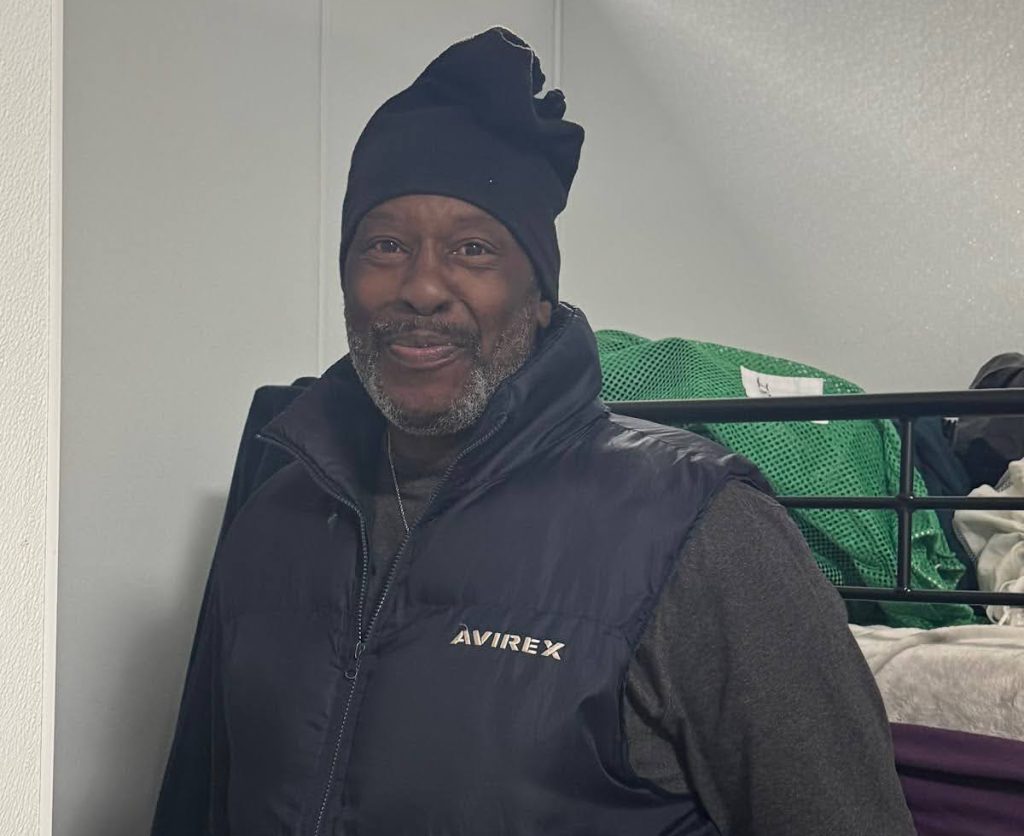
“Experience is the most key. Being here shows you where you’ve come from and where you need to go… People on the outside don’t actually realize that there’s good here,” said Kevin Butler, an LMM shelter participant.
Butler is currently staying in one of the semi-enclosed sleeping spaces in LMM’s expanded wing, where participants have private areas and lockers. He shared that he has come back to the shelter on and off for years when needed. When asked if he had any concerns about the upcoming winter, Butler said no.
“I’ve been here before … It’s always been the same and has changed, essentially, for the good. [The] changes to the programs or the facility have provided for me. It has been absolutely the best thing that a homeless person or myself going through a changing life can have,” said Butler.
A Path Forward
2024 was a record-setting year for homelessness in the United States, with the Department of Housing and Urban Development (HUD) reporting in its 2024 Annual Homelessness Assessment Report that homelessness across nearly all populations reached its highest recorded levels. In the report, Ohio is listed as having more than 11,700 people who were reported to be experiencing homelessness in HUD’s single-night point-in-time estimate.
To address homelessness, advocates share that it requires fighting a battle on multiple fronts.
“Realistically, it’s going to take one, a commitment to housing, affordable housing for everybody in the community… it’s going to take adequate income for everybody in the community,” said Johnson. “ We need a strong, homeless prevention network that really helps people who are precariously housed.”
The City of Cleveland is already working toward addressing one of the central issues driving homelessness, accessible housing. Through the Home for Every Neighbor initiative, in partnership with Cuyahoga County’s Office of Homeless Services, the city set a goal of reducing unsheltered homelessness by connecting individuals to affordable housing. As of April 2025, the city reports that it achieved its goal months ahead of schedule by connecting more than 150 unsheltered individuals to housing.
As Northeast Ohio prepares for another winter season, advocates and front-line providers affirm that real progress will require not only seasonal strategies, but long-term commitment, collaboration and a community willing to shift the narrative around homelessness to improve outcomes for all.
“There’s nothing easy about being on the streets in the middle of winter in Cleveland. People are just attempting to survive, and if we want to ask them to do more than just figure out how to survive in our winter, then we need to walk alongside them,” said Knestrick.
Resources
- If you or someone you know is experiencing a homelessness crisis, call coordinated intake at (216) 674-6700. Coordinated intake is available by phone from 8 am to 8 pm Monday through Friday and can be accessed by calling United Way’s 211 after hours and on weekends.
- Learn more about what to do if you become homeless on NEOCH’s website here.
If you or someone you know are interested in hearing more about volunteer opportunities with Lutheran Metropolitan Ministry or ways to donate to the people they serve, please reach out to mail@lutheranmetro.org.
We're celebrating four years of amplifying resident voices from Cleveland's neighborhoods. Will you make a donation to keep our local journalism going?