Arts Impact, recently gave supporters of arts education a view of a different kind of art exhibit at the Cleveland Public Library’s main branch. The art pieces on display were from Cleveland Metropolitan School District (CMSD) students. What made this unique was integrating art into the students’ math, science and social studies lessons.
Arts Impact works with students in grades K-12. Founded in 2002 as “Arts Alliance,” the program emphasized using hip-hop in education to teach identity and other social and emotional learning topics. Although hip-hop is still used, the program now focuses more on helping students use contemporary art and new media to solve math problems, and aid in teaching other core subjects like science and social studies. Over 35,000 students have now come through the program, mainly from CMSD.
“Our professional art educators are not going in to just do art,” Rick Grahovac, executive director at Arts Impact, said. “We are not there to replace the art teacher. We are there to improve educational achievement and help students grow personally. Our curriculum is an approach to teaching where you’re using art and science or math. The State of Ohio enforces educational standards. So, in third-grade science, you should be here. In fourth-grade math, you should be here. They also have standards for art based on grade level. We’re fully integrating art with the other subjects.”
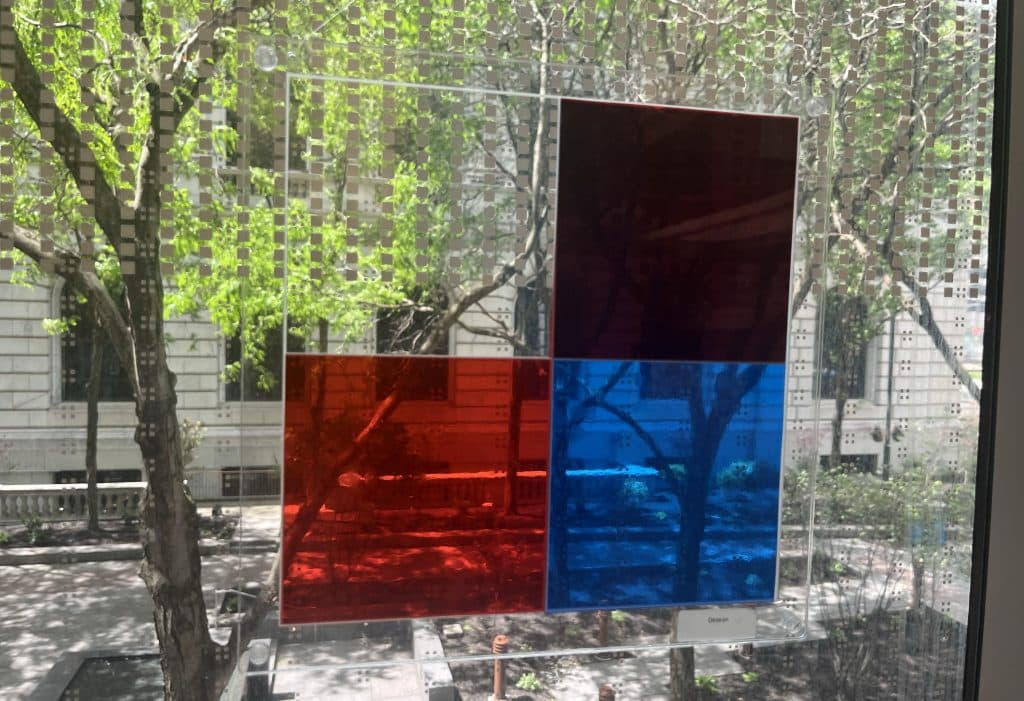
Creating stained glass panels to illustrate fractions is a useful technique in math
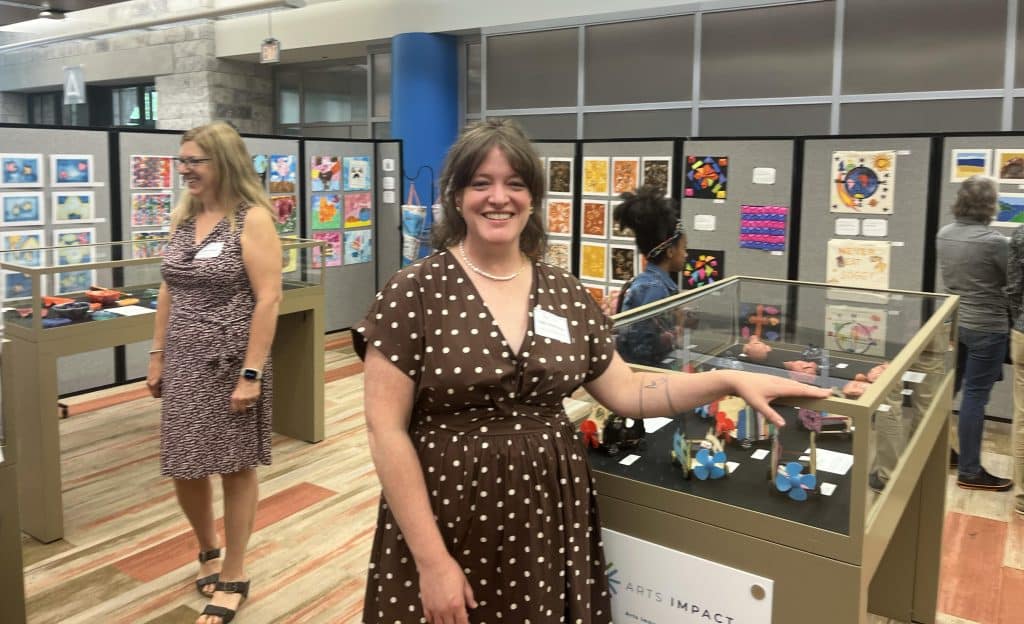
Like many of us, Kelly Mattimoe, lead artist educator for Arts Impact, grappled with learning math as a student. Now, she visits schools in the district and is intrigued by how impactful her lessons are.
“When I was growing up, I was terrible at math, but I was good at art,” she said. “And I think if I had the opportunity to learn about math through doing an art project, that would have improved my art skills. And I think many of our students benefit from that arts integration model by increasing their skills in core subjects. It also offers access to a lot of cool art-making supplies.”
At first glance, the vibrantly colored math art project from the 4th-grade class at Kenneth W. Clement Boys’ Leadership Academy in Cleveland looks like a stained-glass window panel. But upon further examination, it’s clearly a fraction — like those pie charts some of us remember from grade school.
According to Mattimoe, the artistic design on the plate represents two equivalent fractions. The red rectangles represent 10/20 (ten twentieths), and the blue squares represent 2/4 (two-fourths).
The colorful parts of the design, both blue and red, were made from the same amount of material, just cut differently. The final artwork illustrates that the two fractions (10/20 and 2/4) are equivalent. It’s a visual representation of those two equivalencies, she said.
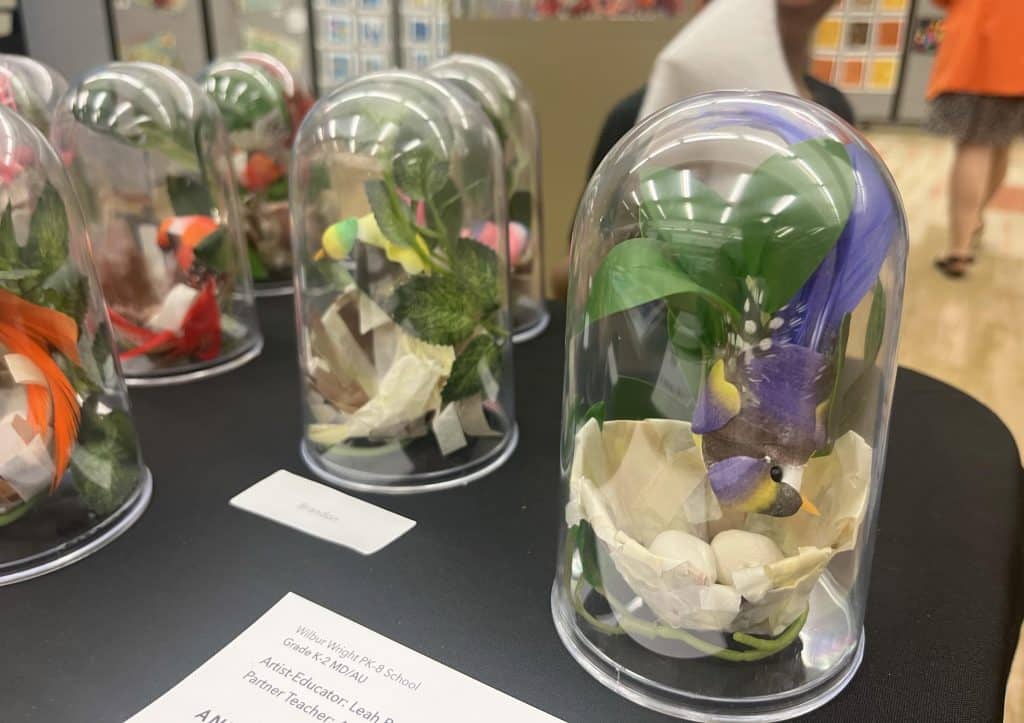
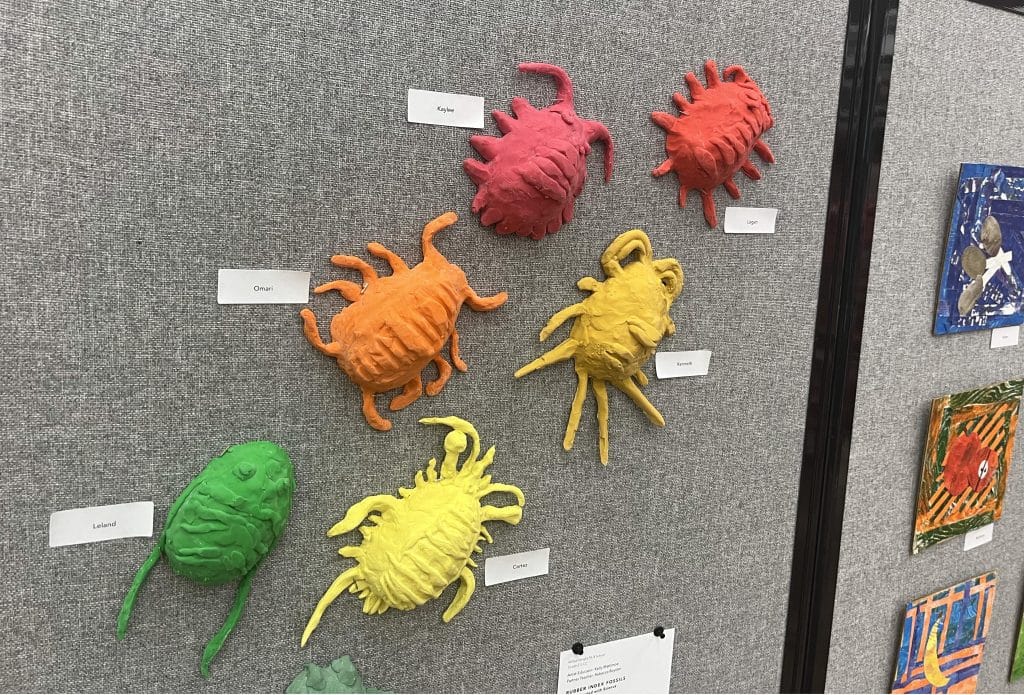
Integrating art into curriculum was the focus but artistic creativity dominated
The electric circuit car, created and designed by third-grade science students at Paul Dunbar Arts Enrichment Academy in Cleveland, was a standout in the exhibit.
An artist at Arts Impact spent ten weeks introducing electrical energy to the group and all other components, such as physical science.
“The students learn that heat, light, sound, conductors, insulators, force, and magnetic energy are all forms of energy in the physical science component of electrical energy,” said Marianne Hiti, director of programs at Arts Impact. “Our artist helped them create a field guidebook and instructional literature to help construct it.The artist contributed batteries, wire connectors, copper wire, and copper tape.”
After collecting all the tools, students started building the cars in various colors and designs. They worked as a team as they created a simple circuit. The other materials for the powered car included a battery, a battery case, a wire connector, and a motor. Hethiti said the students looked amazed when they flipped a switch, and the car moved.
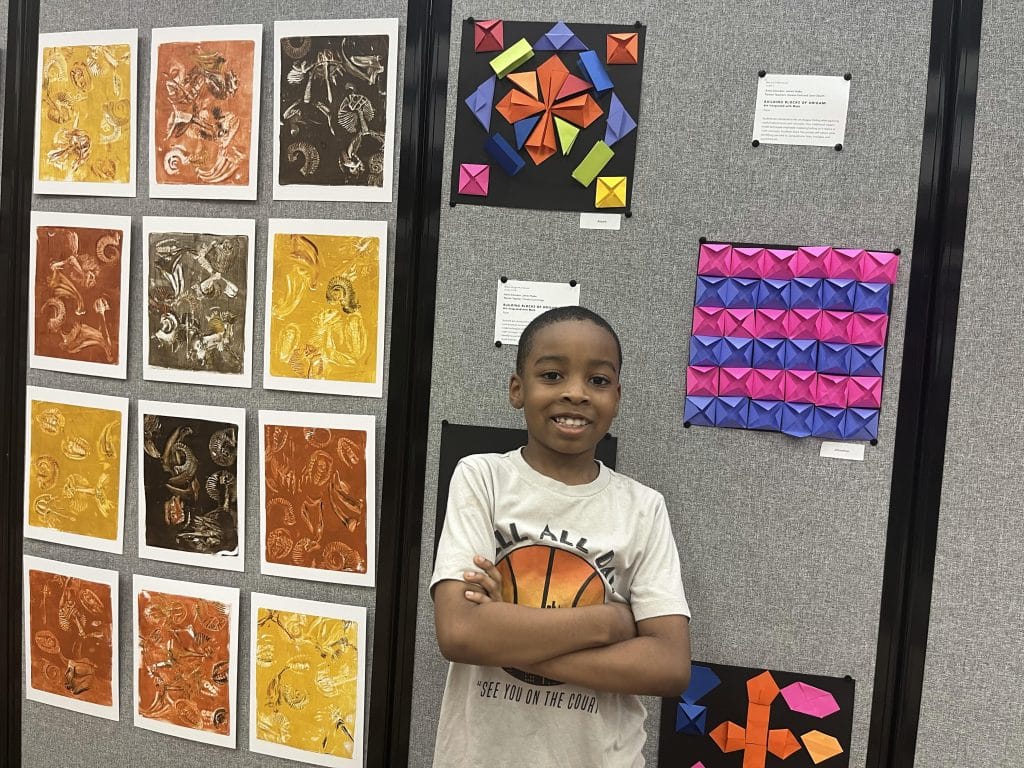
Origami, Japanese inspired art, covered a wall panel at the show. The colored shapes were created in various dimensions to demonstrate how triangles and polygons work in math.
At various times, students are evaluated and assessed, as well as given pretests and post-tests, to see how far they have progressed academically. Instructors look for achievement in science, math or whatever subjects they are combining art with.
According to Grahovac, the results from the tests showed incredible growth in students’ math and science skills.
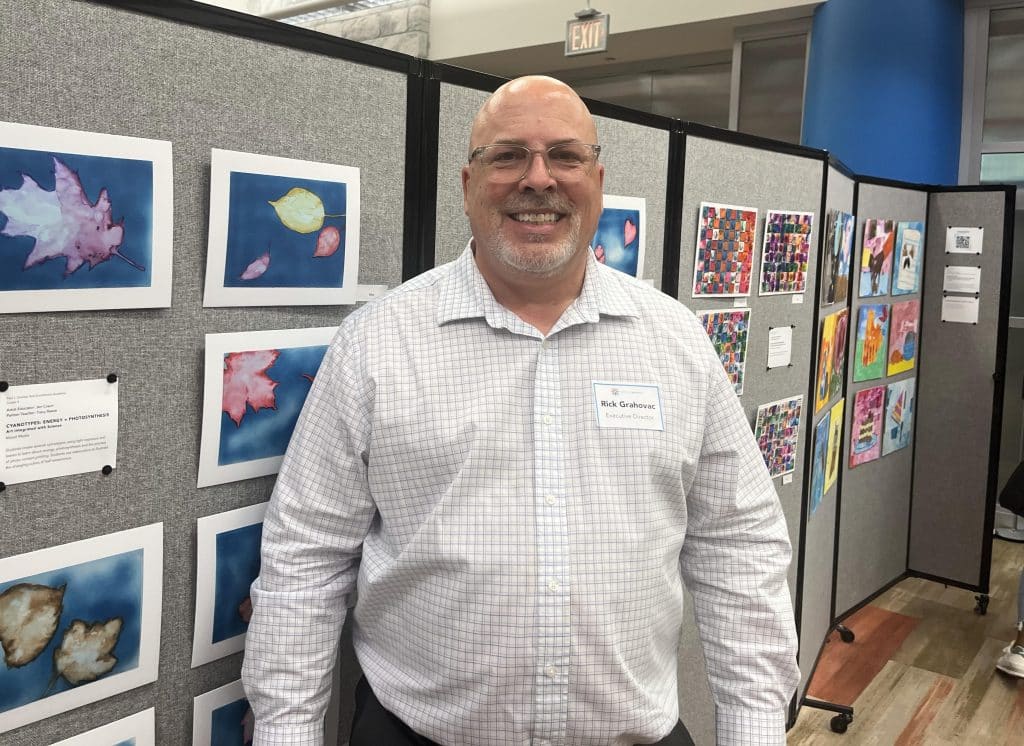
“Last year, we had over 2,500 students participate in the programs; however, when we did the study on how the students progress, we used just slightly over 800 who participated in arts-integrated lessons in science, math, and language arts,” Grahovac said. “Of those students, 90% increased understanding in science, 88% in math, 86% in language arts, and 100% of teachers reported increased student engagement and would recommend the program to other teachers.”
Julie Stoll, coordinator of the Early Childhood Program at Kent State University, was not familiar with Arts Impact, but is thrilled to hear that the program exists for CMSD students.
“There’s this huge connection with children’s thinking about math and understanding of social studies concepts with art. Many ways exist for children to share their ideas and thinking through other media. It could be painting, woodworking, or music. Kids will adapt easier if they are mentally engaged and on task. Engaging them in things that interest them and connect it to what they’re learning, is the recipe for more growth.”
Arts Impact staff assessed over 300 students participating in arts-integrated social and emotional learning programs. They found that eighty-six percent gained self-awareness, 85% developed social awareness, 84% improved self-management, 82% enhanced relationship skills, and 89% stated art helped them express emotions. Ninety-three percent of these students said they would recommend the program to friends.
“Arts Impact is partially funded by CMSD, a foundation and individual donors. Two-thirds of their budget is from philanthropy, and a third comes from service fees, which is the school portion. We continually combine various sources to stay afloat,” Grahovac said.
This was the inaugural year that the pieces were displayed in one place. Unfortunately, CPL could only provide four days for the show. The organizers are planning a longer exhibit next year.
Keep our local journalism accessible to all
Reader support is crucial as we continue to shed light on underreported neighborhoods in Cleveland. Will you become a monthly member to help us continue to produce news by, for, and with the community?
P.S. Did you like this story? Take our reader survey!