It’s a cliche that artists can’t make a living, but Cleveland creatives are ramping up efforts to help each other avoid that fate. As the city prepares to use a $250,000 Cleveland Foundation grant to hire a full-time senior strategist for arts, culture and creative economy to help foster an arts economy here, local artists are working to boost the entrepreneurial power of their creative community.
“I hear more conversations around art and supporting art and exhibitions, Cleveland-based artist Jordan Wong explained to The Land, “but it’s interesting to me that there is not a lot highlighting artists being entrepreneurs and artists creating for themselves and leading different projects or experiences.”
Quietly, but with increasing visibility, Wong and others are developing workshops for creatives and networking to share intel about positive and negative local experiences, fair business practices, negotiating contracts, and maintaining creative control.

“No more starving artists”
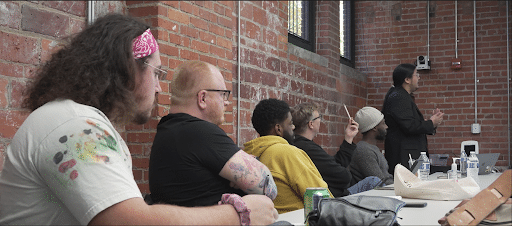
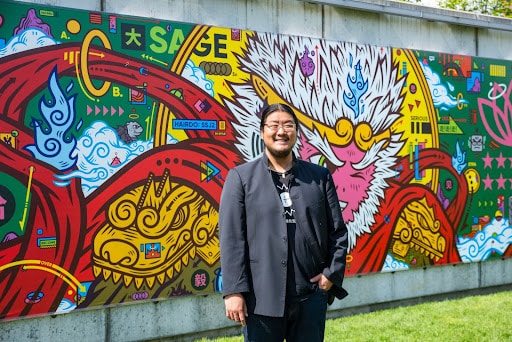
Wong believes that creatives who know how to gain access to resources and investments ultimately produce better music, paintings, poetry, film, photographs and other art. It’s an optimistic lesson he hopes to impart, along with some business sense, in the second round of his three-part No More Starving Artists workshop series at Future Ink Graphics, which is planned for August 11-13. (Wong will also facilitate a shorter session in the Business of Art seminar series at Zygote Press in May.)
“My goal is to inspire artists to think differently about their profession,” he said. “I’m not looking to give you all the answers, I’m looking to share different ways you can find answers yourself. Everyone’s practice is different. I feel like when we start asking better questions, we’re going to come up with better solutions and better answers.”
Wong explained that his workshops emphasize the role of both contractual obligations and open communications in building healthy working relationships with clients. New this year is a discussion of networking and how forming trust-based relationships can lead to future work. Returning lessons will cover proposals, contracts, and invoices for artistic work.
Wong also intends to share with participants his creative control agreement, which outlines Wong’s creative process and bars both him and his client from revising the work. While creative control is earned through trust, says Wong, the agreement specifies “what to do to earn trust and then what that trust actually looks like.”

Finding fair deals for artists
Cleveland multimedia artist Antwoine Washington helped Wong select grant recipients to attend the 2022 workshops for free. He says stocking an entrepreneurial tool belt is important for independent artists such as himself, who often have the deck stacked against them when it comes to inking profitable deals.
“Cleveland isn’t actually a heavily art collecting city,” said Washington, whose densely layered paintings, vibrant illustrations, and atmospheric installations look to convey the Black experience. “If you’re not in with an institution or no one’s bringing your work to the table, it can’t be seen.”
Washington shared stories of two transactions in which he lost money while selling his work over the course of his six-year career. (He will also share some of his experiences in an upcoming session in the Business of Art series next month.)
“I explored (shows and exhibits) a couple of times, but I found out really quickly those percentages don’t actually match the services,” referring to the commissions he was required to pay. “If you want 40% of the sale, you have to be able to spell out for me 40% of the work that you’re doing.”
Referencing a local institution without revealing its name, Washington described a bad deal that left him with little creative agency and a pile of paperwork. After failing to complete the promised steps to enter his work into a gallery exhibit, says Washington, the group made the last-second decision to not participate in the event. The organization then attempted to convince Washington to instead sell his work to a private buyer outside of the event – a deal that would net the organization a 50% commission – leaving the artist feeling like he had little business leverage or control over what happened to his work.
In contrast, some local institutions have moved to offer standardized contracts and payment agreements, says local philanthropist and art leader Fred Bidwell. Bidwell, executive director of the Cleveland Triennial for Contemporary Art, says the Triennial is certified by Working Artists and the Greater Economy, a nonprofit that works for fair compensation of artists. All 28 of the art institutions that hosted pieces during the Triennial’s most recent FRONT International 2022 exhibition adhered to the W.A.G.E. compensation standards.
Bidwell, also the executive director and CEO of Transformer Station, a Hingetown museum that displays fine art and photography, said the triennial exhibit is only the second arts institution in Ohio to become W.A.G.E. certified.
“FRONT International has been the advocate for this idea of artists getting paid, which seems like a pretty simple concept,” explained the collector and photographer. “It’s a pretty rigorous process to qualify (for W.A.G.E.). You have to make contractual commitments and there’s a schedule of minimum payment standards for artists’ work in all categories that you agree to abide by.”
Artists need more than “exposure”
Bidwell and his wife, Laura, have carved out a niche as some of the Cleveland area’s more ethically minded collectors, recently commissioning Wong to complete a backlit illustration for their home kitchen. And, with a background in shooting and displaying his own photos, Bidwell can match Washington with anecdotes aplenty of candy-coated scenarios where he felt taken advantage of as a burgeoning artist.
Consider a casual exhibition of pieces lining a hallway at a restaurant or coffee shop, for example; Bidwell said opportunities like that provide good exposure for visual creatives, but can set dangerous precedents. In such cases artists have to create the work, frame the work, hang the work and, if it doesn’t sell, remove it from the space.
“Or, ‘do this mural on the side of my building, that would be great for your exposure,’” he continued. “But it’s bullshit, and part of the problem is artists agree to that, and it’s a bit of a vicious cycle.”
Just as adherence to W.A.G.E. standards may shift public consciousness toward a more ethically profitable world for artists, bad deals can have the opposite effect. The more that creatives are willing to accept higher risks than rewards for their work, the more venue owners are willing to short them, suggests Bidwell.

Looking ahead
In the lead-up to hiring the new creative strategist, Joyce Huang, Cleveland’s director of city planning, has been meeting with local artists and institutions to learn what problems they face in the hopes of laying a groundwork for future opportunities to assist artists.
Huang said the senior strategist will continue these rendezvous while working alongside Mayor Justin Bibb in his office. “They will be the mayor’s first phone call on anything related to arts, culture, and the creative economy,” Huang explained, employing a term that has become an increasing focus of major metropolitan corridors throughout the United States. “I anticipate that they will be working across departments to write legislation or amend legislation. They’ll be in front of council to present various ordinances for adoption. They are going to be trying new, innovative initiatives.”
Huang is hopeful that the senior arts strategist will stay at city hall past the two years currently allotted, pointing to similar departments focused on growing creative economies in cities like Chicago, Minneapolis and New Bedford, Massachusetts. One aspect of the job she can’t anticipate is what specific initiatives will look like – whether taking the form of new grant money, marketing efforts, or using the city’s voice to promote issues the same way a politician would wield the bully pulpit.
Meanwhile, Wong continues to work to build community as workshop leader and artist: Future Ink Graphics and Julia De Burgos Cultural Arts Center in Brooklyn Centre have committed to partner to sponsor artists who will attend Wong’s August workshop at no cost to them. In the coming months, Wong hopes to invite more artists via partnerships with the Museum of Creative Human Art (an education-based organization that Washington co-founded), Karamu House, SPACES, and others. Up to 45 artists will be eligible to attend.
Sign up for free Business of Art seminars in May with Jordan Wong and Antwoine Washington and Aaron Willams. Readers looking to attend Wong’s next “No More Starving Artist” workshop series in August can fill out this survey.
Keep our local journalism accessible to all
Reader support is crucial as we continue to shed light on underreported neighborhoods in Cleveland. Will you become a monthly member to help us continue to produce news by, for, and with the community?
P.S. Did you like this story? Take our reader survey!