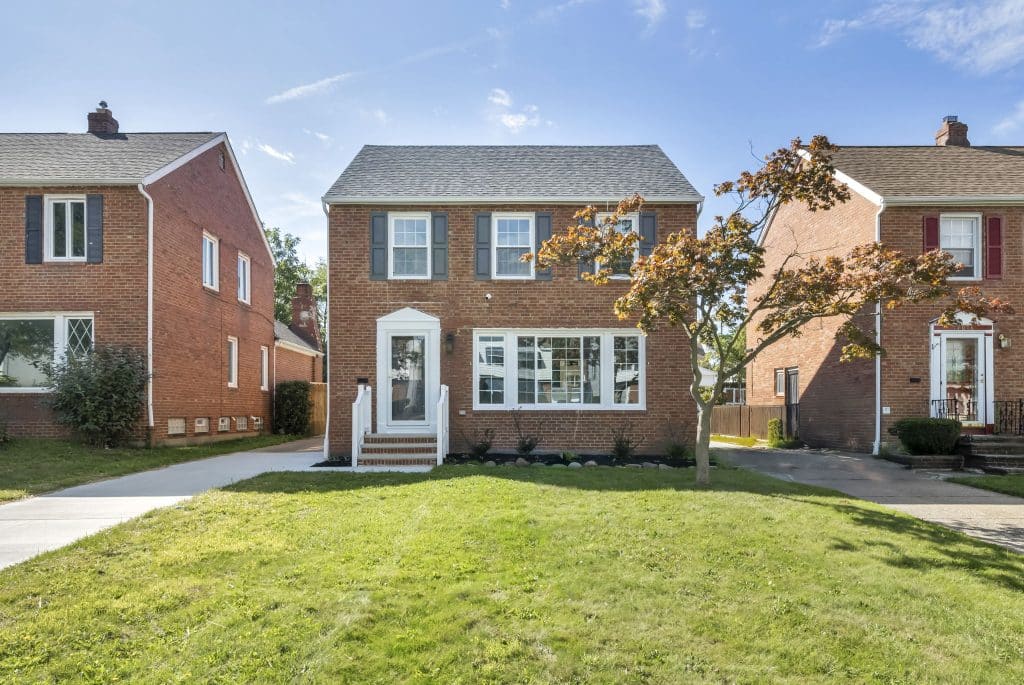
In early October, the Cleveland Neighborhood Progress unveiled the completion of its first renovated home in the Lee-Harvard neighborhood, as part of the organization’s Middle Neighborhood Initiative (MNI).
The newly renovated addition to the Lee-Harvard community is a two-story brick house that resides on Eldemere Ave. The home includes three bedrooms, two bathrooms, a new sunroom, a new roof, new windows and masonry repairs. Before the renovation, the home was missing shutters on its front windows, and the trim around the door needed to be repainted.
Making its way into its second year, MNI aims to focus on stabilizing neighborhoods that are at the edge of decline, where investments can improve the neighborhood towards prosperity. Cleveland Neighborhood Progress has partnered with the state of Ohio and the city of Cleveland to assemble nearly $12 million to invest in Cleveland’s “middle” neighborhoods which include Collinwood, Old Brooklyn, West Park and Lee-Harvard.

“[Cleveland Neighborhood Progress] is the nonprofit working to strengthen every neighborhood citywide,” said Josh Jones Forbes, the director of CNP’s marketing and communications. “And we do that through direct investments like the Middle Neighborhood Initiative and also partnerships with community development organizations [and] nonprofits at the neighborhood level that are closest to residents and businesses.”
The initiative entails a partnership with the Harvard Community Services Center, which will provide home repairs and commercial property improvements.
“Our CDC work is to make sure that we are on top of the housing issues and concerns,” says Elaine Gohlstin, the president and CEO of Harvard Community Services Center. “Working with partners around building new houses like CNP has been exciting because we haven’t had a new house built in at least the last 10 years.”
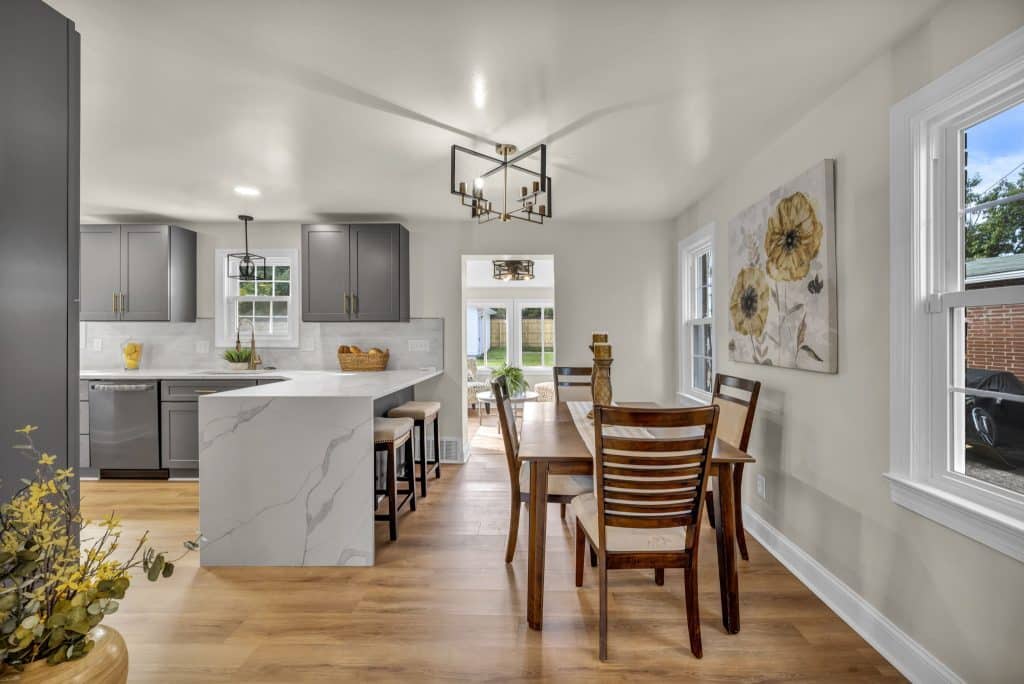
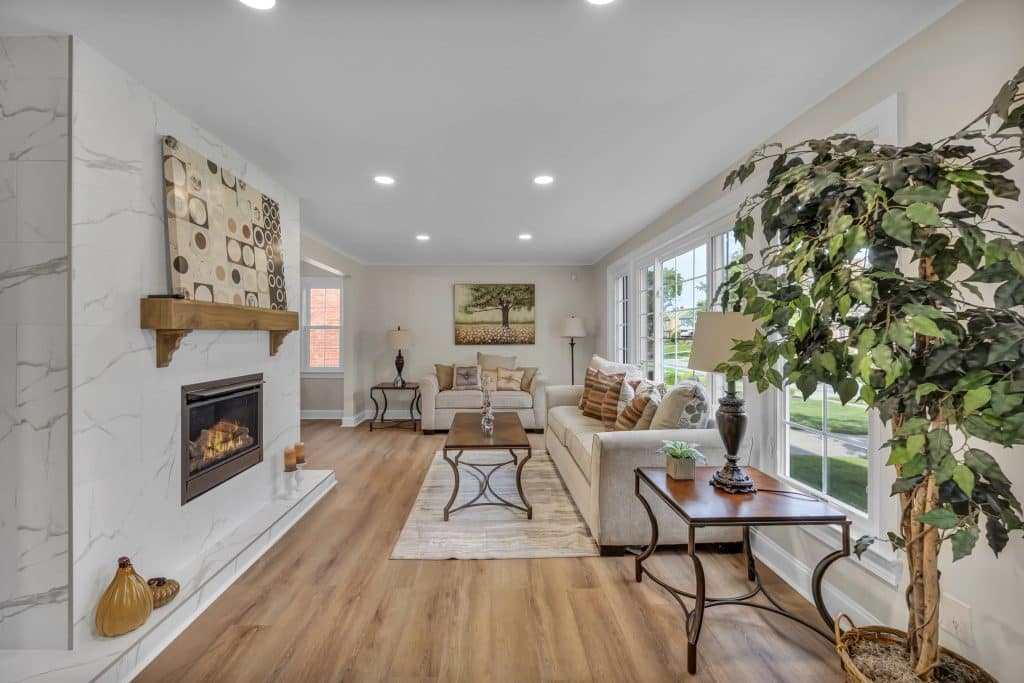
Lee-Harvard is located on Cleveland’s southeast side, tucked in between Shaker Heights, Warrensville Heights and Maple Heights. In the 1920s, Lee-Harvard, once known as Lee-Seville, was mostly undeveloped farmland, according to Case Western Reserve’s Encyclopedia of Cleveland History. Land developers at the time envisioned an upper-class residential area, restricting African-Americans from the ability to move in.
By the 1960s, African Americans made up nearly 75% of Lee-Harvard’s population, making it a place of refuge for middle-class African Americans who hoped to create a new life outside of inner-city Cleveland. Today, Lee-Harvard has the highest African-American homeownership and the lowest poverty rate in the Greater Cleveland area. But despite high ownership, racial discrimination and disinvestment into the community has led to stagnant property value.
The renovation of homes is part of a broader effort, which aims to encourage homeowners in each neighborhood to invest in their properties– leading to more stabilized property values.
“Lee-Harvard in particular has a really strong history of Black homeownership,” Jones Forbes acknowledged. “Many homes in the neighborhood were built by Black families with Black developers to work on generational wealth.”
Keep our local journalism accessible to all
Reader support is crucial as we continue to shed light on underreported neighborhoods in Cleveland. Will you become a monthly member to help us continue to produce news by, for, and with the community?
P.S. Did you like this story? Take our reader survey!