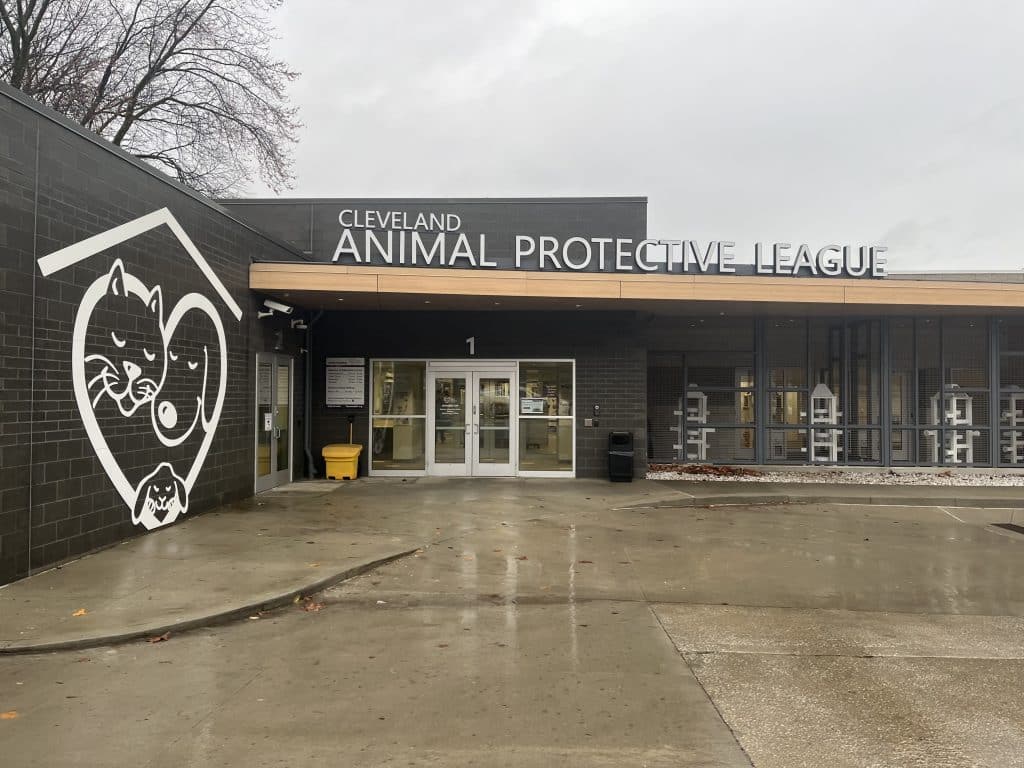
It’s a national trend that animal rescues and shelters have been overloaded with more pets than they can handle. Rising costs, housing challenges, and poverty have all contributed to the problem nationally, and Cleveland is no exception. “The problem in our shelters is a community issue. We need to band together as a community to help people find solutions for their pets, reclaim their pets, keep their pets, and adopt new animals,” said Mindy Naticchioni, Shelter Administrator of the Cuyahoga County Animal Shelter. Here’s what’s happening and how the community can help.
Adoptions are down while stray numbers continue to be high
In 2022, Ohio experienced a 6% surplus of animals entering shelters compared to those leaving, exceeding the national average of 4%. These reduced adoption numbers have left shelters overpopulated. Naticchioni explained, “While our intake numbers aren’t skyrocketing, we are seeing dogs stay substantially longer. We went from having around 100 dogs in our care to closer to 140 at times in the shelter and in foster homes. It has really required us to pivot how we’re keeping healthy, adoptable, happy animals because the owners and adopters aren’t coming in as readily.” From January 2022 to December 2023, eight shelters in Cuyahoga County, including the Cleveland Animal Protective League, the Cuyahoga County Animal Shelter, and The City of Cleveland’s Division of Animal Control, including their adoption center City Dogs, took in a total of 12,986 animals, 7,637 of which were strays. Of these, 9,243 were adopted or transferred, just 448 were returned to owners, 219 died in care, and 564 were euthanized.
Dog licensing is an easy way to help lower stray numbers and protect your pet
State law requires shelters to hold strays for 72 hours. What happens after the 72 hours is left to either a city ordinance or the individual shelter to decide. This includes the possibility of euthanasia. As a pet owner, time may not be on your side. “The number one reason we get dogs is because someone has gone out of town, they’ve left their dog with someone, and now it has gotten loose. I can’t tell you how often we hear that story, at least once a day if not more,” said Naticchioni, who stressed the importance of licensing your dog. If your dog enters a shelter with a current year’s license, it’s instead held for 14 days. Licensing fees help to support the operations of the county shelters. Cuyahoga County dog licenses cost $20 a year and can be obtained online, through the mail, and at the Cuyahoga County Animal Shelter.
It’s also important to register your pet’s microchip. “The bulk of the dogs that come in that are microchipped are not registered, or the information on them is not up to date,” Naticchioni emphasized. If your pet is lost, she recommends calling the local police department and using online tools like PawBoost, Petco Love Lost, and social media to spread the word quickly.

Many factors contribute to the stray population
For many Clevelanders, the obstacles to licensing and reclaiming their pets are overwhelming. Becca Britton, Founder and Executive Director of Neighborhood Pets, an outreach and resource center explained, “A lot of these pets that end up in a shelter have a home, and their owners either don’t know how to get them or they’re afraid to go because of the law enforcement piece, and it’s expensive to get your dog back. Sometimes people just don’t have it.” Reclaiming fees include impound costs, daily pet housing and feeding, licensing, and any applicable penalties for late licensing. In Cuyahoga County alone, more than 16.2% of residents live in poverty.
Expiring tenant protections and housing insecurities add more challenges, with many people facing relocation and struggling to find options for their pets. Britton believes lengthy waiting times for surrender appointments due to overcrowding and fees contribute to the problem. “Instead [of waiting and paying], you can call Animal Control and say, ‘I just found this stray dog,’ and they’ll come take them. It all comes down to the financial hardship of the city,” said Britton.
Further, vet appointments and surgeries, including essential spays and neuters, and pet necessities have all become more expensive post-COVID. These rising costs affect both the shelters and the pet owners. Said Sharon Harvey, President and CEO of the Cleveland Animal Protective League (APL), “It’s much more expensive for us to do what we’re doing because the costs of pet food, shelter supplies, veterinary supplies, and medication has gone up, but it has also affected surrender rates and the number of people reaching out saying, ‘I don’t want to surrender my pet, but I need help. Can you help me afford to keep my pet.’”

Cleveland’s shelters and welfare agencies are addressing the pet and the person
“What many of us in animal welfare are coming to terms with is there’s more that needs to be done outside the walls of our shelters. We’re not doing enough preventively to slow down the number of animals needing to come in, especially the animals that owners don’t want to part with,” said Harvey. To address these concerns, the Cleveland APL introduced Project CARE, a resource program including a low-cost vet clinic for qualifying low-income pet owners in Cleveland and East Cleveland, with plans to expand its preventative services over the next few years.
For Clevelanders and residents in inner-ring households living in poverty, Neighborhood Pets in Slavic Village offers services including a pet food bank, affordable pet supplies, and transportation to appointments. Its low-cost veterinary clinic provides free exams, vaccines for $15, and no-cost spay and neuter surgeries. Neighborhood Pets goes beyond pet assistance by partnering with local social services agencies to assist seniors, people who are unhoused, those with substance abuse disorders, and more. “There’s this thought that if you can’t afford to take care of your pet, you shouldn’t have one. We absolutely do not agree with that. A lot of our clients live isolated lives, they don’t have this huge network, and they are struggling financially. There’s always lots of other things going on whether it’s mental illness, addiction, the trauma of actually living in poverty. I can’t tell you how many clients have said if it weren’t for my dog, I wouldn’t be alive today,” said Britton.

Community help is needed
All three organizations stressed the need for community assistance and welcomed donations of money, pet food, and supplies. Volunteer opportunities, for young and old, including foster care, dog walking, and kennel help are always available. As Harvey explained, “If they’re willing and able, we will train them to do just about anything. Our volunteers work in every element of the organization.”
Youth education is also key. The Cuyahoga County Animal Shelter and others provide group and school programs in hopes of molding future animal advocates, both in shelter and off-site. “Our goal is to really reach out to young people and get them engaged in understanding about spay and neuter and talking about dog licensing,” said Naticchioni.
If you must surrender your pet, Harvey emphasized the importance of first trying to find a new home independently. “We need to change the expectation about why shelters are here. A lot of people turn to us as the first place when they have a pet they can’t keep. We would love for people to try to place pets themselves first before they turn to the APL or other shelters.” Naticchioni encouraged the use of social media and personal networks, though kindness is key, especially in the comments section,“Putting that out there is so humbling. Knowing that people face so much ridicule is somewhat heartbreaking, because if you’ve really done your best, and this is where you are and things have changed, it might be the sacrifice.”
And, as Bob Barker always said, don’t forget to spay and neuter your pets.
To make donations, find volunteer opportunities, and find help if you’re struggling to care for your pets, details can be found at the Cuyahoga County Animal Shelter’s website, Neighborhood Pets website, Cleveland APL’s website and City Dogs Cleveland’s website.
We're celebrating four years of amplifying resident voices from Cleveland's neighborhoods. Will you make a donation to keep our local journalism going?