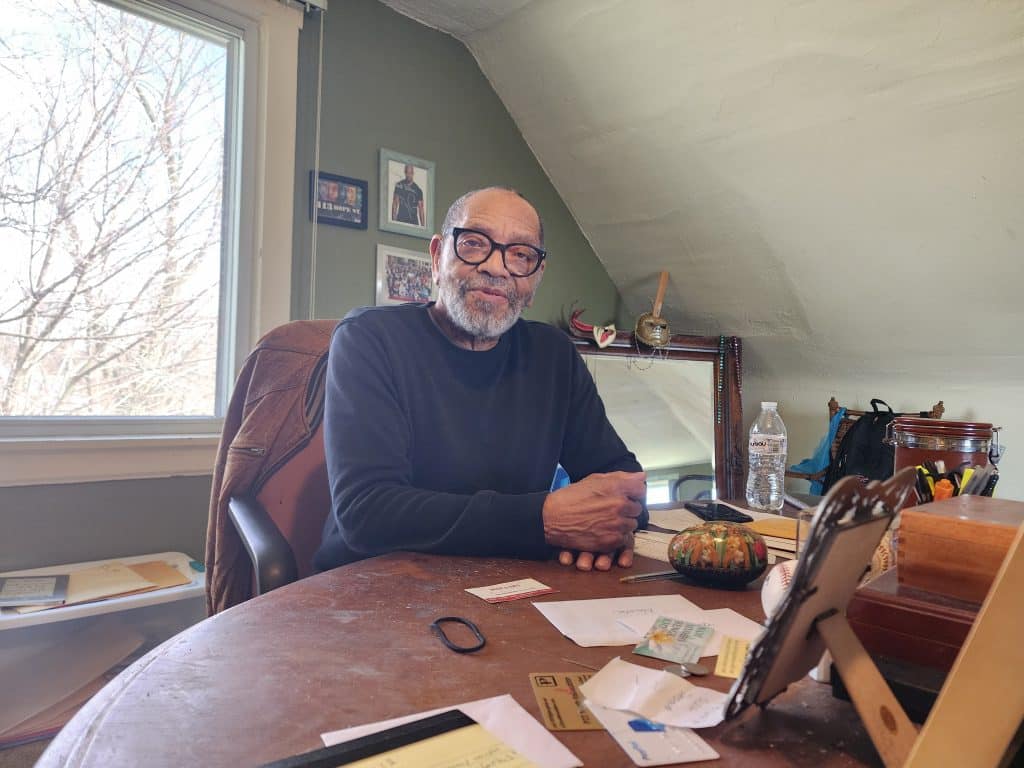
In a profession built on visibility, costumer Harold “Ragz” Crawford made a career out of what audiences rarely see.
For more than five decades, Crawford has helped define how stories look on screen and stage, contributing to productions that helped reshape Black representation in American entertainment. As he prepares to travel to Beverly Hills for an April 4 induction into the California Music Entertainment Hall of Fame at the Saban Theatre, his work is stepping briefly into the spotlight.
The moment offers a rare opportunity to examine the role of a “hidden architect” of storytelling.

Before an actor delivers a line, before a character fully takes shape, Crawford has already done the work — translating script into fabric, silhouette, and identity. In film, television, and theater, a costumer is responsible for designing, fitting and maintaining the wardrobe that defines each character, ensuring continuity and authenticity across every scene.
“I create characters with clothes — that’s what I do,” Crawford said. “I take a script and bring those characters to life with clothes. It’s like a painting in motion.”
Entering Hollywood’s Changing Landscape
Crawford’s journey began in 1970s Hollywood, during a period of both expansion and exclusion.
At 19, he entered the industry through the Minority Labor Program, rotating through major studios including 20th Century Fox, Warner Bros., Paramount and Universal.
“Imagine graduating from Compton High School and suddenly standing at the gate of 20th Century Fox with no preparation,” Crawford said. “It was like being dropped into a completely different world.”
He was among a small number of Black costumers working in Hollywood at the time — part of a generation that helped open doors while navigating an industry still defining its limits.
From there, Crawford built a résumé spanning television and film, working on series such as “McMillan & Wife,” “Quincy” and “The Incredible Hulk.” He also worked on films including “Black Belt Jones” and “Cornbread, Earl and Me” — part of a wave of productions that helped expand representation and storytelling centered on Black life and experience.
“We were learning as we went,” Crawford said. “The industry realized these films were profitable, but they were also telling stories that hadn’t been told before.”
His role was both technical and interpretive. For Crawford, the work has always been about more than execution — it is about authorship.
Standing at the Edge of History
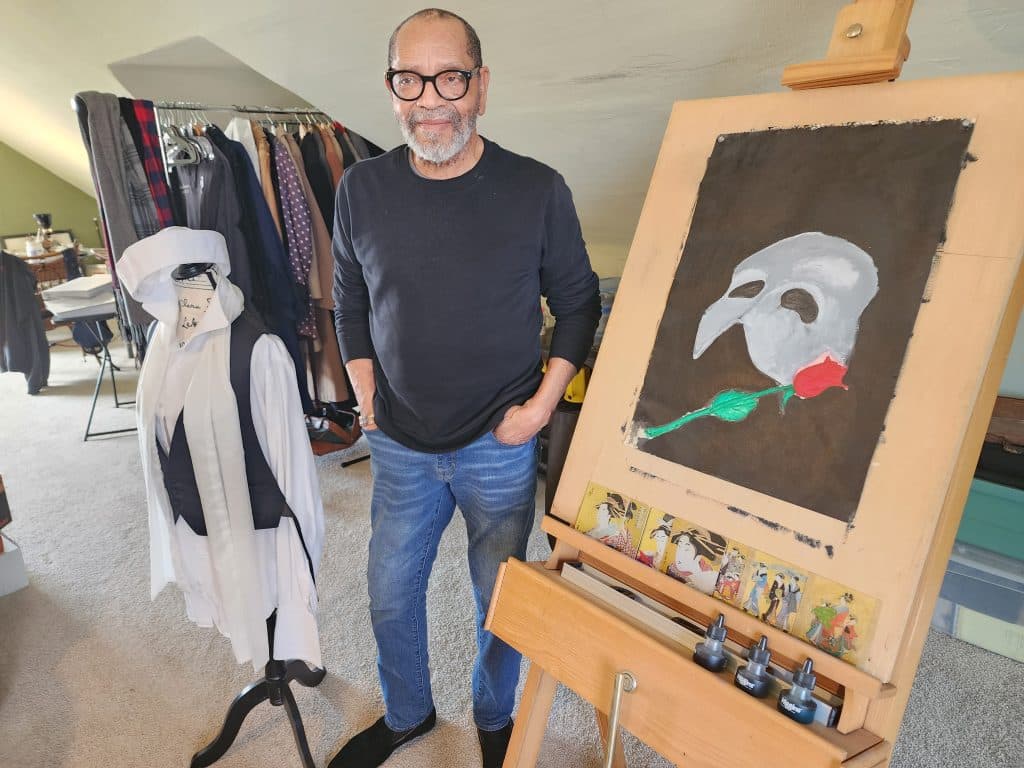
That perspective was reinforced during one of the most defining moments of his career: his work on “Phantom of the Opera” alongside actor Robert Guillaume. At the time, Guillaume’s casting represented a significant cultural shift, placing a Black actor in one of theater’s most iconic roles.
Crawford recalled observing the response of composer Andrew Lloyd Webber as Guillaume took the stage — an affirmation that underscored the magnitude of the moment.
“When he performed, it was powerful,” Crawford said. “The audience was in awe. It was history seeing a Black man in that role.”
Crawford, serving as Guillaume’s dresser, ensured that every detail aligned with the demands of the production. But he also witnessed something larger: a moment when visibility, talent, and opportunity converged to expand the boundaries of representation on stage.
Bringing Hollywood to Cleveland
Years later, Crawford would make another pivotal transition — this time across the country.
After relocating to Cleveland, he arrived without the industry network he had built in California. Early attempts to connect with local institutions, including Karamu House, did not immediately lead to work.
His breakthrough came through chance.
A newspaper article about his Hollywood background caught the attention of theater director Terrence Spivey, who tracked Crawford down — beginning a collaboration that anchored his entry into Cleveland’s theater community.
Spivey, who served as artistic director of the historic Karamu House from 2003 to 2015, quickly recognized what Crawford brought with him.
“Ragz brought a Hollywood discipline to the stage,” Spivey said. “He didn’t just design costumes — he elevated the entire environment. I watched him roll mirrors into rehearsal, work with actors in real time, and create a level of detail you don’t often see in regional theater.”
Crawford’s approach reflected habits formed on major studio lots — treating every production, regardless of scale, with the same level of care.
“I treated every actor like a professional — making sure everything fit, everything was clean, everything was right,” he said. “That’s how I was trained.”
He would go on to work with Cleveland Public Theatre, Near West Theatre and Chagrin Valley Little Theatre, bringing a Hollywood sensibility to regional stages while deepening his connection to Cleveland’s cultural landscape.
Over time, he began to see those spaces differently.
“I started connecting the dots,” he said. “People I had worked with in Hollywood had come through Karamu.”
The realization reframed his understanding of Cleveland — not as a departure from the industry, but as part of a broader artistic pipeline.
As he prepares to return to California, this time as an honoree, Crawford remains focused on the process that has defined his career.
“When I get a script, something clicks,” he said. “I start seeing the characters, the world, the visual story. Actors are like blank canvases,” he said. “I get to paint with clothes. I create characters. It’s like moving art on stage.”
Keep our local journalism accessible to all
Reader support is crucial as we continue to shed light on underreported neighborhoods in Cleveland. Will you become a monthly member to help us continue to produce news by, for, and with the community?
P.S. Did you like this story? Take our reader survey!