A new display at the Cleveland History Center highlights the works of the Plain Dealer’s and Cleveland Press’ first Black photographers, alongside the photography of other great Cleveland artists.
[Cleveland Press Collection at Cleveland State University]

A fascinating look at local black photographers and their work recently opened at the Cleveland History Center.
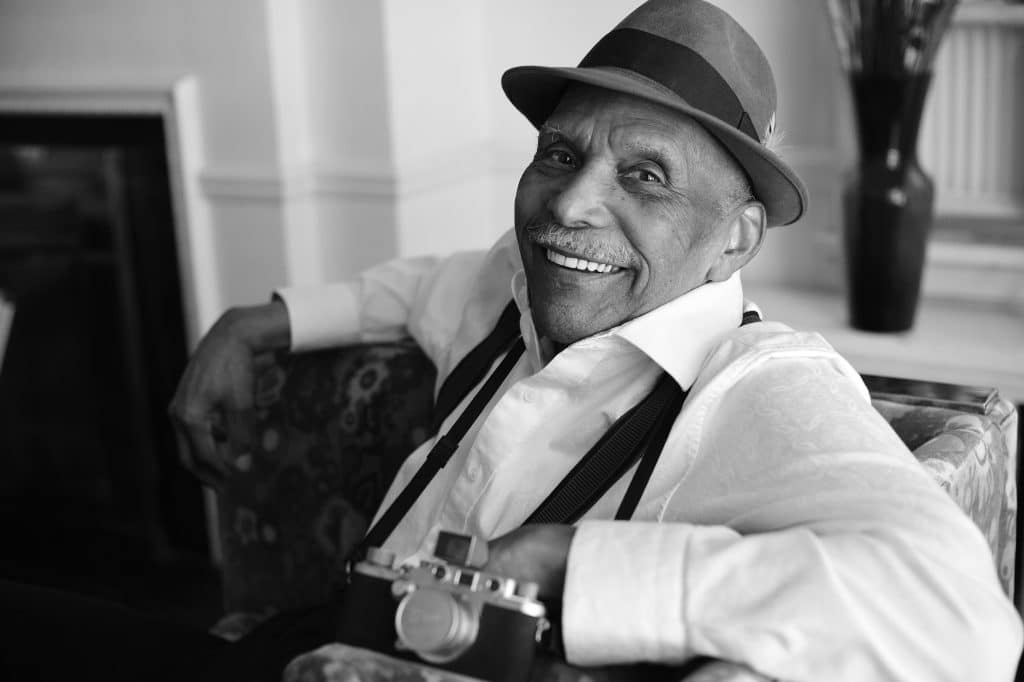
The display, housed in the drawing room of the historic Bingham Hanna Mansion connected to the museum, is titled “History in Their Hands: Black Photographers in Cleveland, Ohio, 1968-Present. ” It tells the story of legendary photographers like Charles J. Pinkney, the late James “Jimmy” Gayle, former Plain Dealer photographer, the late Van Dillard, former Cleveland Press photographer, and a new generation of artists including Mychal Lilly, Gina Gayle, and Amanda D. King. Alongside each piece is a description and a bit of history behind it.
The idea for this stunning collection started mostly with Dr. Regennia Williams, a distinguished scholar of African American History and Culture at the Cleveland History Center. In 2012, Williams co-authored “Through the Lens of Allen E. Cole” with Sam Black, a former curator of African American history at the museum, on photographer Alan E. Cole. According to the Cleveland Public Library, Cole was a local photographer who churned out more than 50,000 images, all documenting African American life in Cleveland. In the 1930s, he contributed photos to the Call and Post. He died in 1970, according to the WRHS Allen E. Cole collections.
In 2022, Williams took part in a ceremony honoring nine black local photographers. It was that event that helped Williams to envision a place where people can see a bit of Cleveland’s vast history through photographs. The exhibit includes some of the honorees from 2022.
“It was a wonderful group of photographers we celebrated, and they enjoyed the event,” Williams said. “It had been 10 years since the Cole book was published, and it was time for a new book. So, I was hoping that we would get additional photos from other local photographers to enhance the story we started with Cole. We didn’t want to exclude him, but [we also do] not focus exclusively on his pieces. When the opportunity came for a dedicated permanent space for African American History and Culture at the museum, we decided to showcase African American photography as the first exhibit.”
Touring the exhibit
The drawing room harkens back to the days when local industry pioneers such as the Rockefellers built massive estates with high ceilings, meticulously carved woodwork, and grand bookshelves that touch the ceiling. The paintings on the ceiling of the drawing room are done in detail. It’s now on the National Register of Historic Places.
White-framed photographs make each image pop against the mahogany woodwork. Photographers are not unlike any artist. Most writers, actors and painters take great pride in their work. Before you start tinkering with the placement of a particular artwork, getting suggestions from the proprietor first is a good idea.
“The photographers insisted that the frames be white because they wanted their work to stand out,” Williams said. “I wanted all of them to be the same. I wanted them to be brown. One of the photographers says if they’re all going to be the same, can they all be white? I said the frames will cost the same, whether brown or white. However, stark white was not my preference. I preferred the frames to be in a warm color.”
Because of the building’s historic nature, the walls could not be painted to accommodate the presentation. Williams decided to paint panels using a hue from the Sherwin-Williams historic paint color palette.
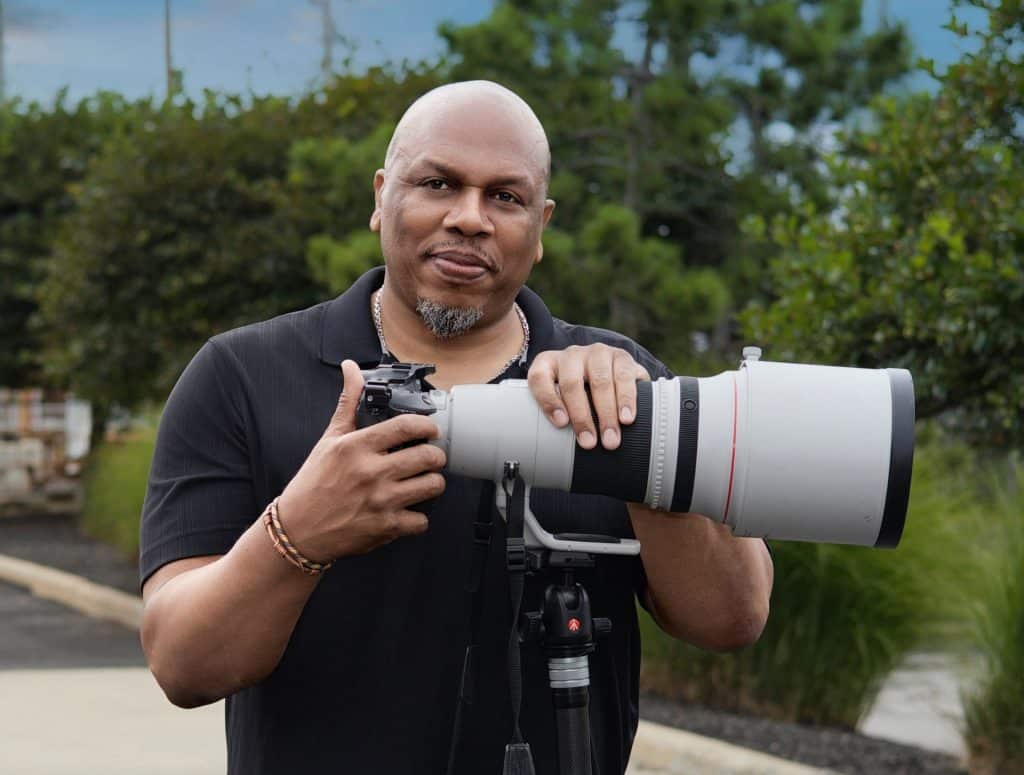
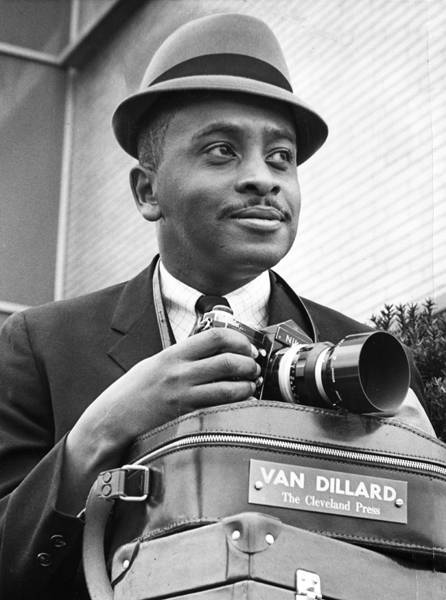
Upon entering the room, a portrait of Van Dillard on his first day at the Cleveland Press newspaper catches the eye. Photos of Malcolm X, Coretta Scott King visiting Cleveland, and Lebron James receiving the NBA championship trophy are just a few of the exhibit’s highlights.
Dillard was born in Cleveland and grew up in the Central neighborhood. He graduated from East Technical High School and later attended Kent State University. He interned at the Cleveland Press and was hired as their first black photographer.
“In 1967, Dillard was a non-traditional student on the ’10-year plan’ to get his bachelor’s degree,” Williams said. “When the Press ceased operations in 1982, the post office hired him. After overcoming the setback brought on by the layoff, he and his family moved to the suburbs. After he died in 1998, his daughter inherited an entire archive of photos from his years at the Press. The main press collection is still at Cleveland State University, and his pictures are part of it, including that official photo of him with the camera case wearing a hat that’s on display at the museum.”
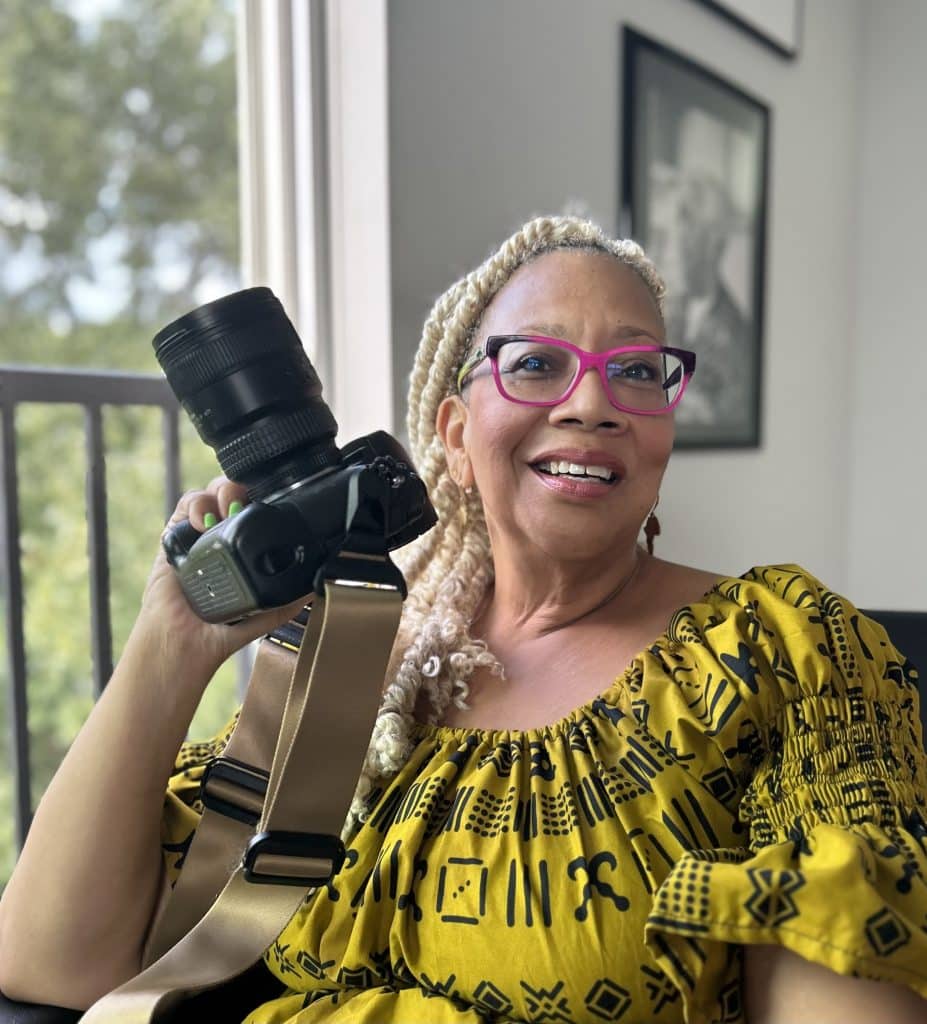
Jimmy Gayle was the first Black full-time photographer at the Plain Dealer in Cleveland in the mid-1960s. He was widely known for his humorous approach to photography. According to his daughter, Gina Gayle, he had a knack for getting whatever shot he envisioned. Gina, who also has photos in the exhibit and teaches at Boston College, was elated to hear that her dad was finally getting his due.
“I was delighted because I had wanted to do something like this for decades,” Gina said. “My father passed away in 1991, and organizations such as the Western Reserve Historical Society and the Case Western Reserve University Library were willing to work with me [only] if they owned the collection, so that would not happen. So, I think I first met Dr. Williams in 2011, and we were talking about this, and Margaret Bernstein, a former columnist at the Plain Dealer who worked with my dad, and I have been talking about this and working on different ways that we could create something to honor his work. So, it was like a dream come true, a prayer answered, and I am so thankful for Dr. Williams and her foresight. It’s just a place where, if they had some chairs, you could go hang out, read a book, and study more about the artists in the show.”
Gina reminisced about how she would shadow her dad on various assignments and still uses many of his techniques. She choked up, speaking about how honored her dad would be.
“I think, oh, my goodness,” said Gina, trying to control her emotions. “My father loved and adored me, but would have been so obsessed with his grandsons that my number one status would have moved to number three. I think he would be beside himself, seeing his work on display. I’m visualizing him checking it out with his friend Charles Pinkney. I don’t have any other words, I’m sorry.”
The exhibit will be on display for a year. The Cleveland History Center is at 10825 East Blvd, Cleveland.
Keep our local journalism accessible to all
Reader support is crucial as we continue to shed light on underreported neighborhoods in Cleveland. Will you become a monthly member to help us continue to produce news by, for, and with the community?
P.S. Did you like this story? Take our reader survey!