Tina Longley is about to begin her journey to become a community health worker (CHW), starting Cuyahoga Community College’s community health worker training program at the end of the month.
She first heard about CHWs last July when she was staying at the Norma Herr Women’s Center, an emergency shelter for women on Payne Ave. near downtown Cleveland. There, she met Ginny Pate, a community health worker with Carmella Rose Health Foundation who helped Longley get Medicaid. Longley has been out of homelessness for a little under a year now.
Now, Pate will be supporting Longley as she completes her CHW certification. As a CHW, Longley especially wants to help people experiencing homelessness get connected to resources and support.

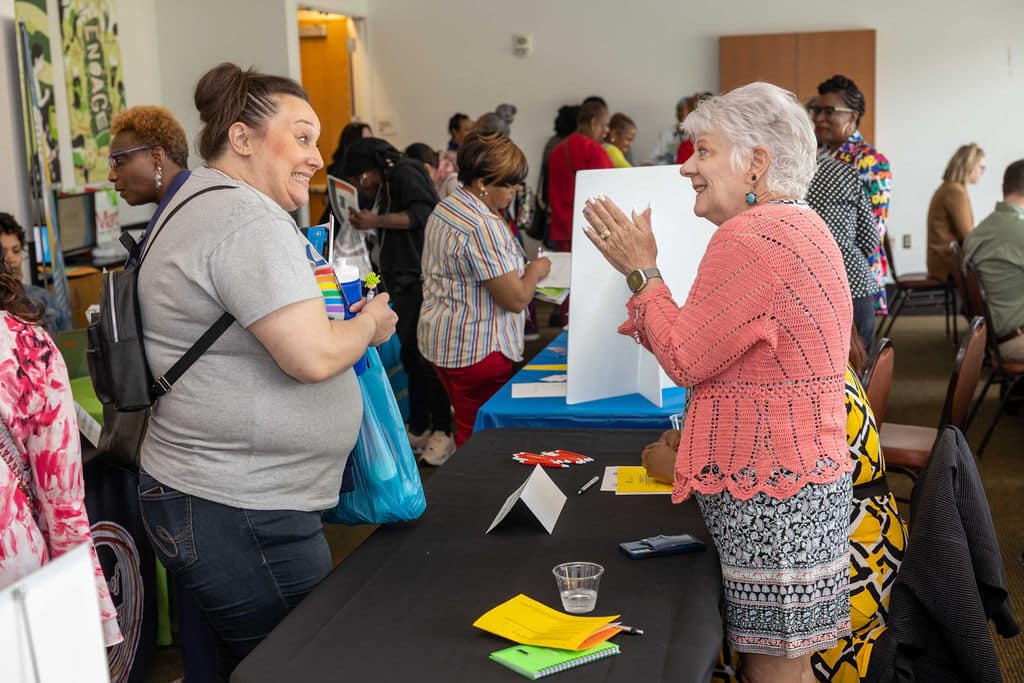
“I’m all about getting in the community and helping people where I was,” the aspiring community health worker said during the group discussion portion of a June 6 Community Health Worker Day event at Cleveland State University.
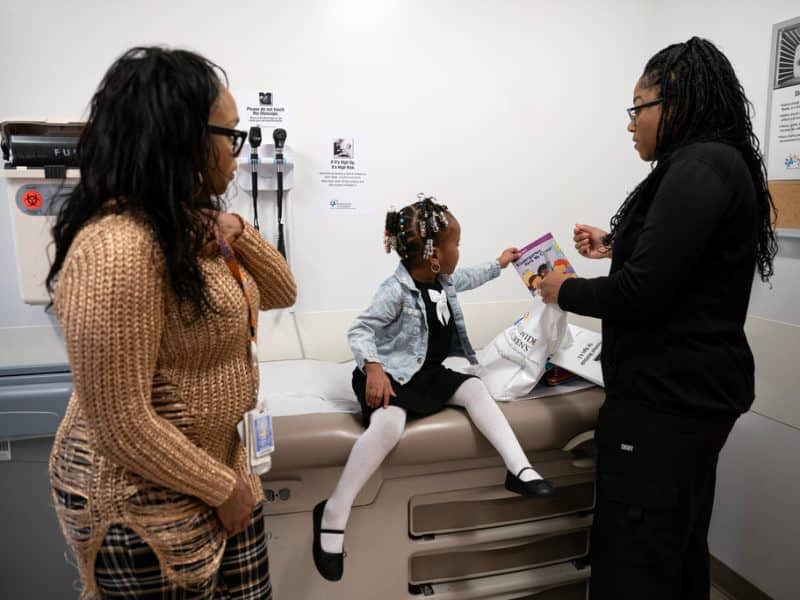
The term “community health worker” encompasses multiple different roles. CHWs work one-on-one with people in underserved communities to help them navigate the healthcare system, social services, and other resources. They help people find housing, employment, insurance, and transportation. CHWs are important because without them, many patients’ needs could end up falling through the cracks.
CHWs advocate for their patients and help them find care and resources to meet their specific needs, said community health worker LaTanisha White. They understand the “pulse of the neighborhood,” as Tracy McArthur, a CHW instructor at CSU puts it.
The federal government has recently invested in growing the CHW workforce, and scholarships are now available to train Clevelanders interested in becoming community health workers. In September 2022, the Biden administration put $225.5 million in American Rescue Plan dollars toward training 13,000 community health workers across the country. The Health Resources and Services Administration (HRSA), which is part of the U.S. Department of Health and Human Services, awarded the funds to 83 grant recipients.
The MetroHealth System received a nearly $3 million grant, which it’s using to train a total of 240 CHWs at Tri-C, Cleveland State University, and Kent State University at no cost to students over the course of three years. So far, 57 students supported by the grant have completed the program.
Applicants must have a high school diploma or GED certificate, but a college degree is not required. Pay for CHWs varies by the employer but typically ranges from $20-$35 an hour.
“I describe community health workers as activists, agents of health and social change, communicators, connectors, healers, translators, relationship workers, and experts in what I call soul work,” Stephanie Brooks, dean of Cleveland State University’s College of Health, said at the event honoring CHWs, which was hosted in partnership with Tri-C and a network of organizations called the Better Health Pathways HUB.
Joan Thoman, an associate professor of nursing who founded CSU’s community health worker program, said the demand for CHWs is rising at healthcare institutions and other organizations as they see the need to plug gaps in healthcare and better connect patients to resources. “I kept seeing so many things fall through the cracks in terms of patient care. And it was more of a systems issue, so there needed to be a gap filled,” Thoman said.
What do community health workers do?
Helping community members set up medical appointments and navigate the healthcare system is only one aspect of what CHWs do. They’re a little like social workers who help healthcare patients navigate challenges. Community health workers focus on everyday factors which affect people’s health and well-being, such as access to food, education, and transportation. These factors are known as the “social determinants of health,” although Thoman prefers the term “social drivers of health,” which she said she picked up from MetroHealth CEO Airica Steed.
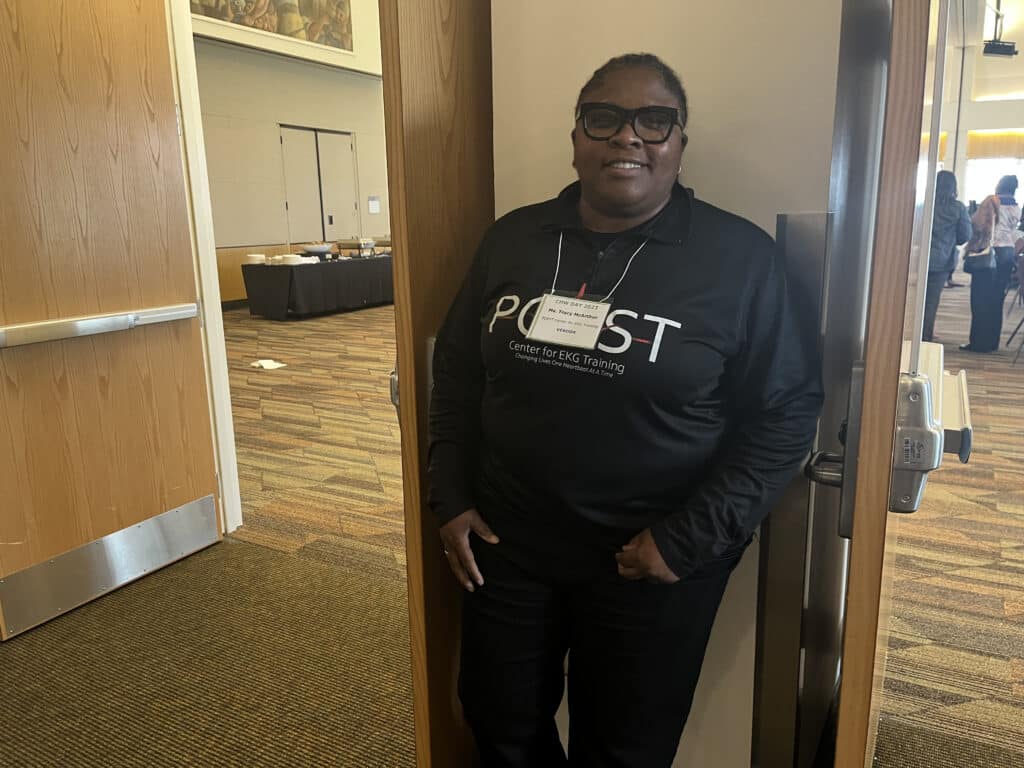
Some CHWs work for community-based organizations, and others work for large health systems. Many community health workers have multiple credentials, and some perform multiple functions, like working as nurses, midwives, and doulas. McArthur, the community health worker instructor at CSU, for example, also runs PQRST Center for EKG Training with her sister in University Heights. In some cases, CHWs focus on a specific group, such as seniors or formerly incarcerated people, or type of care, such as HIV care or perinatal care.
In Northeast Ohio, Better Health Partnership, a network of Northeast Ohio health systems, social service agencies, and community-based organizations, helps connect community members to CHWs and resources. The organization’s Pathways HUB partners with employers of CHWs, who use a shared system for client referrals and resource connections. The CHW employers, or care coordination agencies, receive payment from Medicaid managed care plans and other funders once a client’s needs are met.
The HUB also provides professional development opportunities to CHWs and guides them through the recertification process. (In Ohio, CHWs must renew their certification every two years.) There are 36 community health workers in the HUB, plus 20 supervisors who also have CHW certifications.
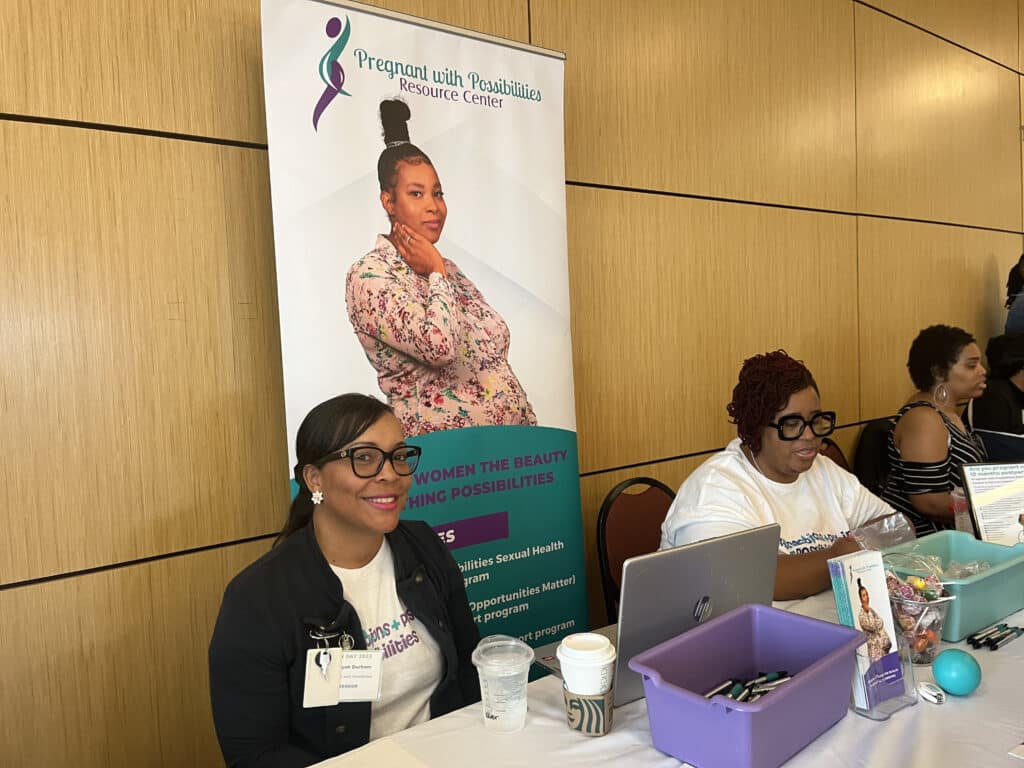
Takiyah Durham, director of programs and operations with Pregnant with Possibilities, supervises community health workers, and is getting recertified as a CHW herself.
“I would say community health workers are heroes,” Durham said. “They are our heroes. They’re working tirelessly to get clients connected to resources, to help clients be successful at whatever goals they need to be successful with.”
How to become a community health worker
To earn their certification, prospective community health workers have to attend classroom sessions and complete 130 service hours in the field. The Ohio Board of Nursing issues the certifications, and CHW students have to fill out an application to the board and pass a background check to obtain a certification after completing the requirements.
Locally, Cleveland State University, Tri-C, and Kent State University offer community health worker programs, with full scholarships available through the federal grant. The programs require a high school diploma or GED.
CSU holds 15-week sessions on Saturdays from 9 a.m. to 3 p.m. The next cohort begins on Aug. 26. CSU’s program also requires a four-day Chronic Disease Self Management certification, which it’s offering over the course of two weekends in September. (Learn more here.) You can apply for a scholarship for the CHW program by completing a 300-word essay with your application. The deadline for the upcoming cohort is Aug. 12.
Tri-C’s program requires 106 hours of classroom training, and it offers classes on weekday evenings. Learn more about the program and register here. Kent State University’s program offers online, day, and evening classes and has opportunities for service hours available mainly in the day and on some evenings and weekends, according to its website.
Marquita Rockamore, the director of Tri-C’s community health worker training program, said that topics covered in the training include chronic diseases, health throughout a person’s lifespan, and poverty as a public health crisis. As a former social worker, Rockamore said she understood the importance of community health workers right away.
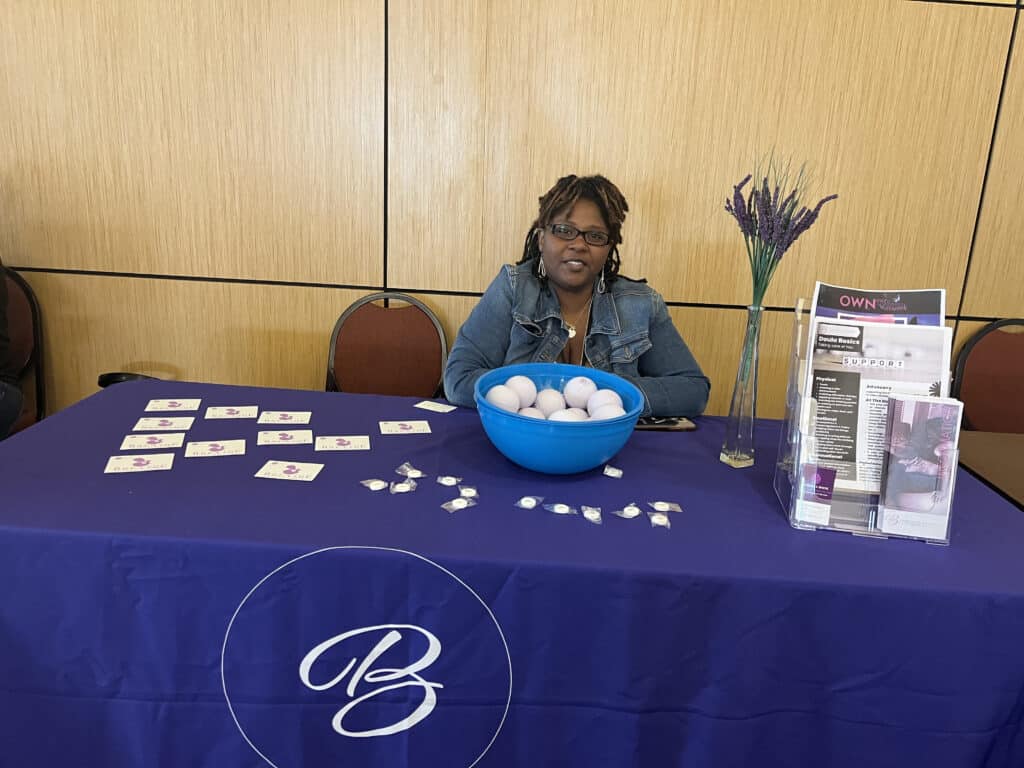
It took LaTanisha White two years to complete her CHW certification in between working and running another program. She had done community health work for a few years before beginning the certification process, and she initially questioned the need for a certification. But the certification ended up opening doors for her, she said. She now runs a Birthing Beautiful Communities program that provides doula services to people incarcerated at the Cuyahoga County Jail.
Certifications allow CHWs to work for organizations that get payment reimbursements, rather than being limited to organizations that rely on grant funding to provide services, Rockamore said. That means more job opportunities for certified CHWs.
During a Q&A with community health workers at the CHW day event, an audience member asked Krista Lumpkins, director of training and community outreach, how long she had been working as a doula. Then, the audience member followed up with another question: Are there any openings?
Lumpkins responded that Birthing Beautiful Communities is looking to bring on more doulas and that the next training starts in October. (Doula training is separate from community health worker training. Applications open in August. Learn more here.)
Learn more about Cleveland State University’s CHW program here, Tri-C’s program here, and Kent State University’s program here. Click here to learn more about the Better Health Pathways HUB.
Keep our local journalism accessible to all
Reader support is crucial as we continue to shed light on underreported neighborhoods in Cleveland. Will you become a monthly member to help us continue to produce news by, for, and with the community?
P.S. Did you like this story? Take our reader survey!