Bill Garvey, president of the Greater Cleveland Film Commission (GCFC), anticipates another blockbuster year for the film industry in Northeast Ohio, starting with two explosive opening events in January.
On Friday, January 9, GCFC will hold its “Behind the Camera with Legendary Producer & Production Manager David Lester” fundraiser event at the Cleveland History Center at 10825 East Blvd. in Cleveland.
The event coincides with the “Hollywood on the Cuyahoga” exhibition at the Western Reserve Historical Society. The yearlong show highlights the region’s vital role in filmmaking from Thomas Edison’s invention of the motion picture camera in the late 19th century to the filming of the “Superman” movie released in 2025.

A native of North Olmsted, Lester served as production manager and/or producer of “Star Wars: A New Hope,” “Star Trek: The Motion Picture,” “Broadcast News,” “Bull Durham,” “The Shawshank Redemption,” “The Black Stallion,” “Air Force One,” and “Tron.”
“In addition to producing some of the most iconic movies of all time, David played an important role in the industry’s technological advancement by helping develop the computer-drive, robotic camera work for “Star Wars” and other films that had never been done before,” Garvey said. “If I weren’t hosting, I’d be at this event anyway because I’m excited about all of the stories we’re going to hear that night.”
Lester will share behind-the-scenes stories and reflections from his illustrious filmmaking career.
“We need stories to see and share experiences of others, to widen our world-view, maybe see some good action and even be entertained, so we yearn for stories, and future storytellers abound,” Lester said. “This upcoming generation of visual artists has the tools necessary in hand – a phone and some editing software replaces the camera, film, processing and printing which plagued my generation. You have the stuff. Make a movie and see if you can move people.”
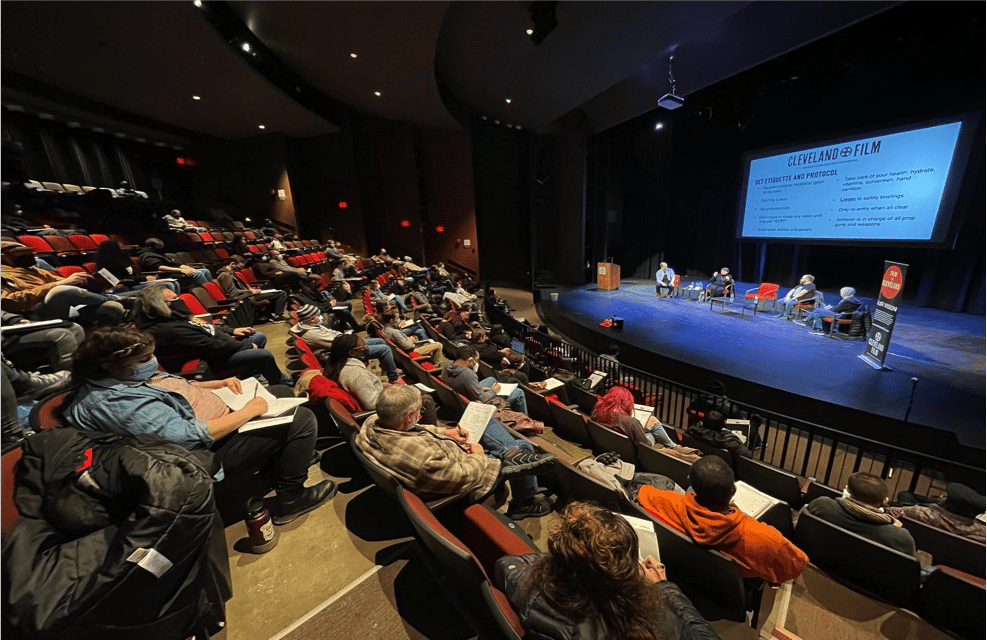
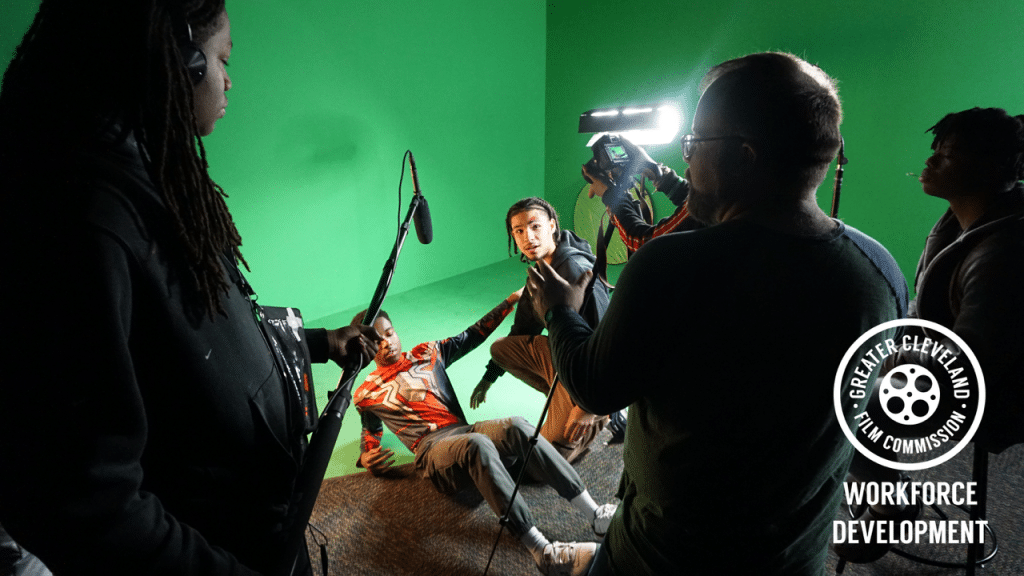
Garvey and Lester will reteam the next day to teach a production assistant training workshop in partnership with the Tri-C Metro campus. The event is free, but registration is required.
“Jobs in the film industry are an employment opportunity that not many people know about, so a lot of our effort is built around training,” Garvey said.
Lester will take workshop participants through a step-by-step, hour-by-hour day of what was happening on the set of “Air Force One,” which shot a significant portion of the film’s opening sequence in Cleveland. According to Garvey, the workshop will feature all of the “business of film skills” necessary for a production assistant to get into the film industry.
“This workshop program has been around for almost the entire existence of the GCFC, and over the last four years that I’ve been here, we’ve built out a lot of additional resources and programming,” Garvey said. “The gist of these events is to provide attendees a deep dive into a day on the set of a recognizable movie or TV show.”
The health of the film industry in NEO
The health of the film industry in Cleveland and throughout Ohio depends significantly on the state tax credit to support moviemaking.
According to a March 2025 article in MovieMaker magazine, “Ohio has emerged as a powerhouse in the film industry, attracting major Hollywood productions with its competitive tax incentives, diverse landscapes, and rapidly expanding film infrastructure.”
Regarding the significance of the tax incentive, Garvey said: “With our Ohio Motion Picture Tax Credit Program, we have a tool to bring productions here. Without that tool, you could build the most beautiful, state-of-the-art studios, and projects will not come because the movie business is built around production incentives. Full stop.”
Garvey considers Ohio’s program competitive, which is critical because Ohio is vying against 37 other states and 106 other countries that offer production incentives.
“We have to make sure that we are every bit as competitive as we can be to grow this industry here and reap the benefit of the growth in production due to streaming and the expansion of the demand for this industry,” Garvey added.
In 2025, GCFC played a direct role in lobbying the Ohio Legislature to increase the annual production incentive cap from $40 to $50 million. According to Garvey, GCFC secured total combined production budgets of $256.5 million to spend and create film industry jobs in NEO during 2024-2025.
“We applaud the state’s support of this industry’s growth, and we’re just now starting to see we’re reaping the rewards of that growth as we become more prominent as a film destination to studios,” he said. “This year, we enacted some positive and efficient tweaks to the program that will reap rewards next year.”
Strong economic impacts of filmmaking in Northeast Ohio
Since 2007, more than 300 productions have filmed in Ohio. That includes independent and studio feature films, documentaries, commercials, music videos, public service announcements, photo shoots, television programs, video games and web series.
In 2024, GCFC booked $77.8 million in direct spending, which employed 2,926 people in Northeast Ohio. Additionally, 2,570 background actors, who are typically paid on an hourly basis, worked locally on “Superman” alone.
Garvey noted that, as a nongovernmental not-for-profit entity, GCFC does not receive any of the economic windfall they generate to support film productions. Thus, fundraisers, like the event with Lester, are crucial to the organization’s functioning.
As he recalled from his decade of working as a location manager in Ohio before taking over GCFC in July 2021, Garvey pointed out that, when a film comes to town, some of the biggest beneficiaries are small businesses such as crane operators, locksmiths, security companies, party tent firms, port-o-john suppliers, dumpster companies and dry cleaners.
In an article on GCFC’s website about the businesses that benefitted by helping transform Cleveland into the fictional town of Metropolis for the filming of “Superman,” Jay Dee Cleaners, a Euclid dry cleaning company was hired after a phone call. They cleaned most of the costumes for the Superman actors after each day of shooting.
“The only thing we didn’t really get was the Superman outfit. We didn’t get the cape, the villain stuff,” said Jay Dee Cleaners general manager John Sabo. “Seeing the stuff we cleaned in the movie is pretty cool.”
CCM Rental in Chesterland has provided tents, chairs, flooring, lights and partitions for changing rooms or whatever production companies need.
Shawn Dolan, CEO of the company, estimates they have worked on about 20 different movies that filmed in Cleveland, including “Superman,” “Eenie Meenie,” “White Boy Rick,” “A Man Called Otto,” “The Fate of the Furious,” and “White Noise.” “Superman” alone put $350,000 in CCM’s coffers.
“It’s huge to see how many businesses are touched by one little movie coming into town,” Dolan said. “Film production companies try to do as much locally as they can. They like helping little mom-and-pop restaurants and renting out old churches or abandoned buildings, and it can be chaotic because it’s often last-minute, but it’s great to see the extra revenue and the buzz around town.”
In 2024, productions spent $28.59 million at 406 local small business vendors, and the total payroll was $41,530,552 for productions. Crew and background actors combined for 5,496 total jobs. Garvey considers hotel rooms an important economic metric, and production companies spent a total of $4.5 million for 30,966 hotel rooms in 2024. (2025 numbers were not yet available.)
Interested businesses should look at GCFC’s website, as they also offer training programs on how to work with the film business.
Two new state-of-the-art virtual production studios in place
Although a competitive state tax incentive is essential, Cleveland now offers two other attractions for filmmakers, a pair of virtual production studios that both came online in 2025. Garvey considers those facilities “the next step in our evolution that makes us more attractive to studios, producers and local independent filmmakers.”
TRG Multimedia’s studio operations are located in a 160,000 square-foot space in the former American Greetings headquarters in Brooklyn. The company moved into 80,000 square feet of the building in 2019 and has expanded several times since.
Their space features a virtual production wall where LED backdrops provide any type of setting for a film scene in an indoor, controlled space. There is also a 40-foot by 60-foot cyc (cyclorama) wall to project images on to create a virtual set.
Additionally, 40 semi-permanent sets are available to photograph advertisements or shoot commercials for agencies or businesses. The facility includes administrative offices, a complete prop shop, hair, makeup and costume areas, offices and a sizable bay where a 5-ton equipment truck can park to unload.
“These sets are all working for brands on any given day,” said Adam Wilde, CEO of TRG. “All of this commercial work allows us to have a virtual production stage like this that we can offer to the film community.”
Last year, the production company for the Tyler Davidson-produced movie “Buddy” filmed a significant amount of the movie in the TRG studio. In January, “Buddy” will be screened at the prestigious Sundance Film Festival. Although they did not use TRG’s facilities, another movie filmed in Cleveland, “Carousel,” will also premiere at Sundance.
“I see Cleveland in a strong position to move forward in this industry and grow substantially,” Wilde said. “The industry is becoming decentralized from Los Angeles, which is a good thing for Cleveland. With our budgets here, we can beat what’s happening on the coasts, and our talent and technology is equal to what you’re seeing on the coasts.”
As for the role Garvey and GCFC play, he said: “Bill’s fantastic. I worked with him when he was a location manager in town. You could just tell his attention to detail. He’s taken that skill and his knowhow of the industry and applied it tenfold to get films in Cleveland.”
New Interactive Media Lab at Cleveland Institute of Art
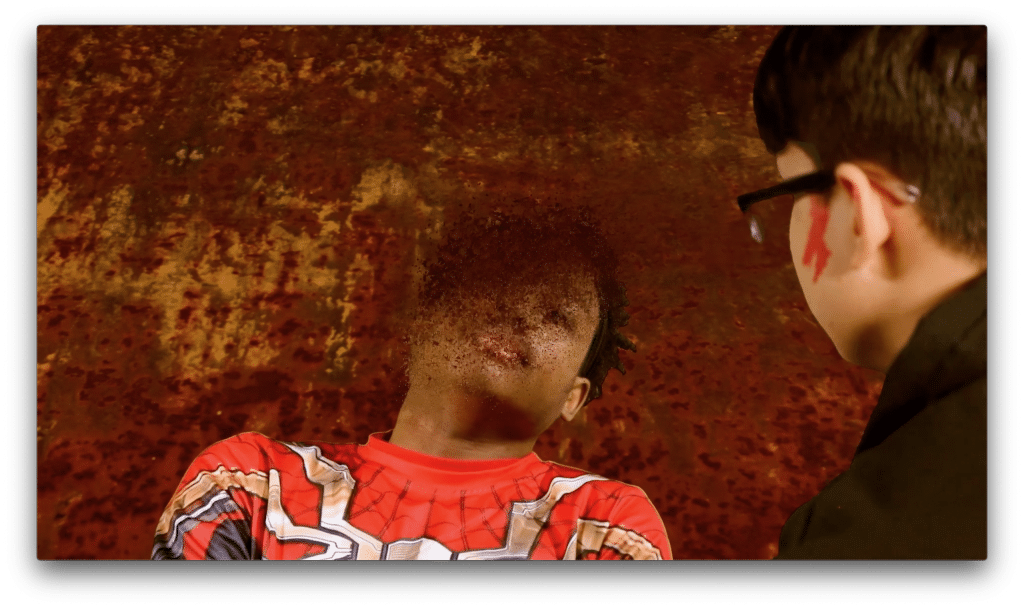
In September 2025, the Cleveland Institute of Art (CIA) opened its new state-of-the-art virtual production studio in the MidTown Collaboration Center at East 66th Street and Euclid Avenue.
Roughly nine years ago, after moving into the CIA’s new campus on Euclid Avenue, outgoing president Grafton Nunes was tasked by the CIA Board of Directors to envision “the next big idea for the college.” Nunes devised the idea to build a cutting-edge virtual production facility.
Nunes negotiated with the Cleveland Foundation to become an anchor tenant with an ownership stake in the MidTown Collaboration Center, raised the first $6 million and worked with the architects on the design.
CIA hired Disguise Services to design and install the $13 million, 14,300-square-foot Interactive Media Lab (IML), the same company TRG used. The facility features a 36-foot-high LED wall with a flush-mounted LED floor to provide an image backdrop that surrounds the actors and set and employs cameras with motion-capture technology.
In keeping with Garvey and GCFC’s goals, the versatile space will help make Cleveland a more attractive destination for productions that need local crew with these skills.
Who needs to live and work in LA?
Garvey likes to debunk the myth that the film business is only alive and well in Los Angeles or New York, and that’s where people need to be to succeed.
A native of New York, Garvey worked in the film industry there for 13 years, traveling to locations as needed. In 2008, he moved here because his wife Carol was a native Clevelander. He then worked as a location manager in Ohio for more than a decade until he took over GCFC.
“After having worked in 10 different states, I realized Ohio is a filmmaker’s Shangri La,” he said. “I stopped moving once I got here, because it’s the best combination of good tax incentive, good quality of life, low cost of production, changing seasons, and incredible architecture and topography. In my opinion, you don’t find that combination anywhere else in the country.”
Garvey conveys all of that in his message to the next generation that GCFC teaches and trains on how to approach the film industry.
“If you are reliable, have a good attitude, and are willing to work hard, this industry will reward you, and you’ll get the next job,” Garvey said. “This business that lives and thrives in Northeast Ohio, and you can succeed right here, without having to leave.”
Keep our local journalism accessible to all
Reader support is crucial as we continue to shed light on underreported neighborhoods in Cleveland. Will you become a monthly member to help us continue to produce news by, for, and with the community?
P.S. Did you like this story? Take our reader survey!