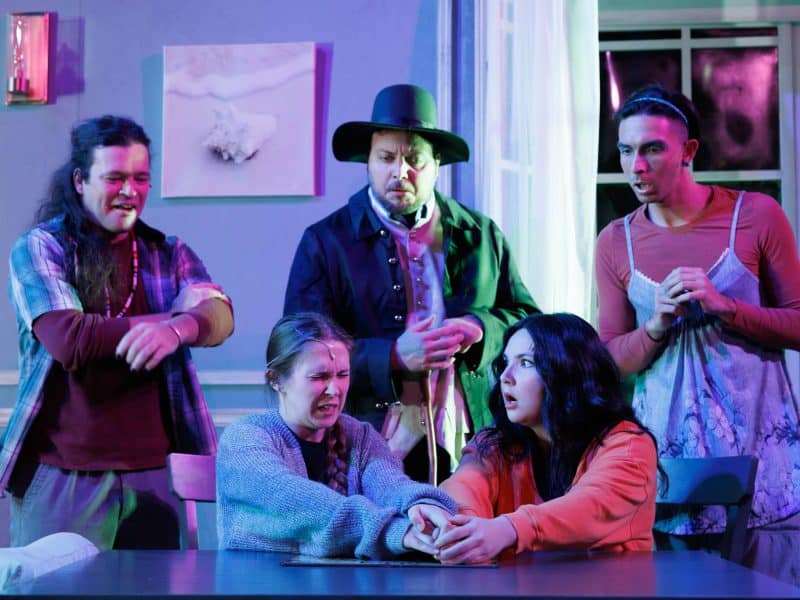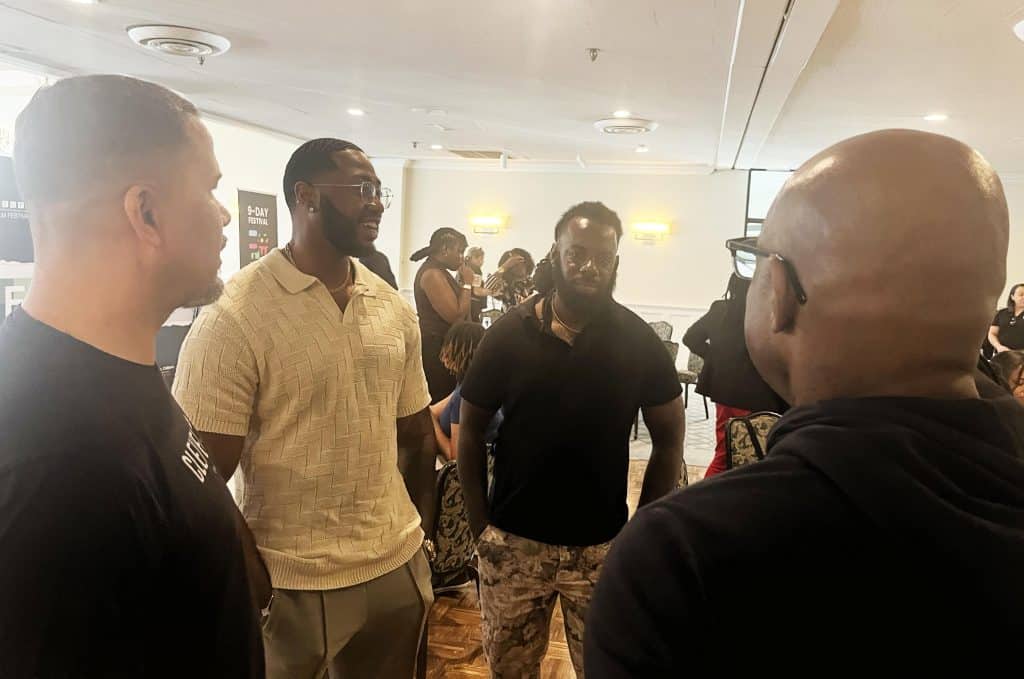
The 2025 Greater Cleveland Urban Film Festival (GCUFF) opened September 18 and concludes September 26 with a finale featuring an awards ceremony honoring local and national filmmakers.
This is the festival’s 14th year of showcasing storytellers who bring their subjects to life through cinema. Directors and producers from Cleveland and across the country were selected by a committee and their work covers a wide range of subjects, including gripping tales like “Born in the Struggle,” a candid discussion by the children of Black activists, and how their family dynamics have shaped who they are today. And inspiring creations depicting the spirit of resilience, such as “Finding the Underdog: Qwan’tez Stiggers’ Story.”
Donna Dabbs, executive director of GCUFF, believes the purpose of the festival is to extract stories from urban life that may be overlooked by other outlets.

“We need to have a place for our stories,” she said. “The festival turns 15 years old next year, and when we started all the stories being told were mostly negative. I grew up at a time when a community was rich with connections and knowing everybody. There were rich stories you could see unfolding before your eyes. You had singers performing on the corner. Many of our dads would be walking up and down the street, telling stories that could either be wise or leave you with a raised eyebrow. And, maybe some libations along with a crap game or two. It was all a rich part of life. So, it’s important that we just be able to expand our palate.”
A Cleveland story
Getting Cleveland families connected to the internet was behind Wesley Wood’s documentary “Driven to Connect.” The film takes a hard look at why so many Cleveland families are not connected. And how a relatively new tech company, DigitalC, is bridging the gap.
Wood, a Cleveland Heights native and founder of Perspective Filmworks in Cleveland, heard about DigitalC and their effort to bring Wi-fi to areas in Cleveland. When schools shut down during the pandemic and became virtual, many Cleveland Metropolitan School District students didn’t have access to the internet at home.
“The motivation for doing this film came from the disparity in being digitally connected in Cleveland,” he said. “The organization that led that fight to close the gap is DigitalC. Back in 2023, when we started the documentary, DigitalC was negotiating with the Cleveland City Council to get $20 million for equipment and resources to accomplish their digital goal. I feel blessed to have been able to capture that story, that journey.”
The film opens, taking moviegoers through the highs and lows of Cleveland’s industrial history. It notes that it was only a few years back when 14.7% of Cleveland homes had no broadband internet subscriptions. The use of the term “digital redlining” (a lack of internet access in Black communities) is used in a similar context as it’s used when speaking about residential redlining.
When Joshua Edmonds, CEO of DigitalC, meets with members of the Cleveland City Council to discuss funding, it begins contentiously. One councilman said that the funding being asked for by DigitalC is normally used to fund several projects, not one.
“We feel like we captured the story,” Wood said. “It felt criminal not to grant everyone access to the internet. It feels great to have given them a platform and to shed light on their story. I didn’t want to make it all about disparity; it’s about the people. We are working on a follow-up documentary to see how far DigitalC has progressed since 2023.”
You can watch all of “Driven to Connect” on YouTube.
Underdogs and other stories
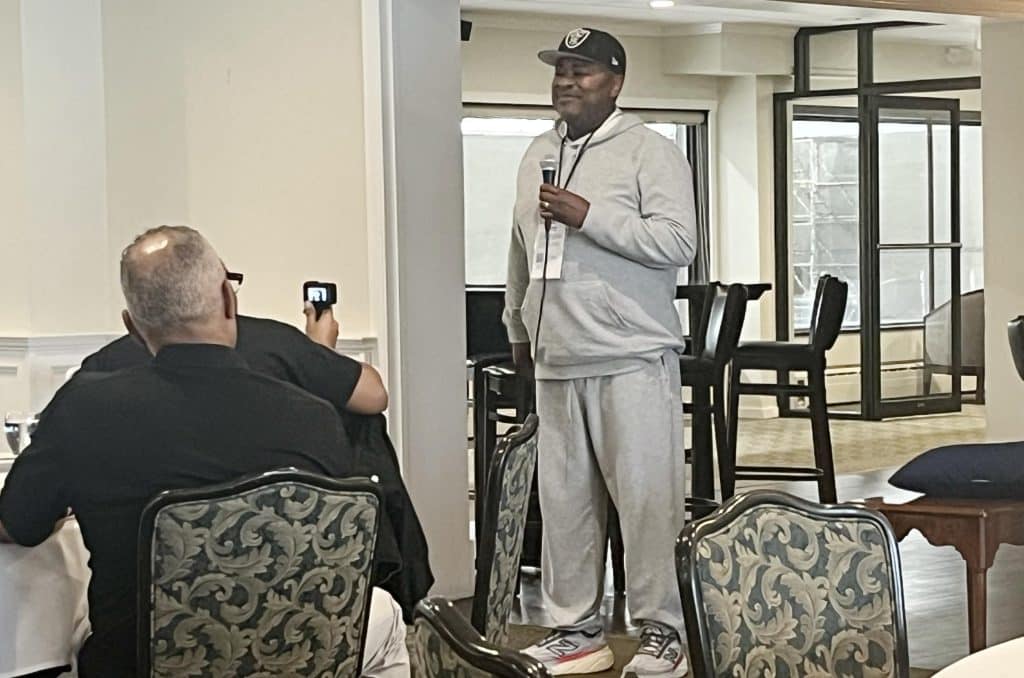
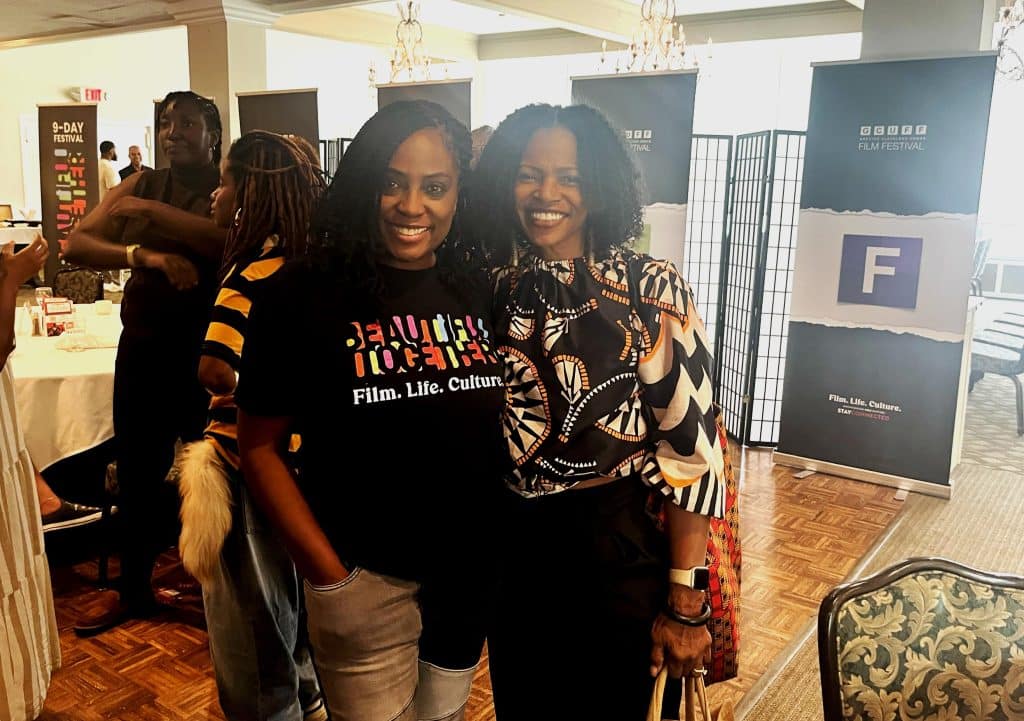
As Leah Marshall was leaving “Finding the Underdog: Qwan’tez Stiggers Story,” produced by Branson Wright, she stopped to speak about her love of football movies and the inspiration she felt after the screening. For her, the key point of the true story was how the lead character took the nontraditional path on his journey to a football career. After having doors closed in his face, he stayed focused on his dream, she said.
Dabbs says after the festival is over, some of the films end up on Tubi, a streaming channel; unfortunately, other independent filmmakers’ work may never be seen again. During a Q&A, the director of “Finding the Underdog: Qwan’tez Stiggers Story” was asked if larger streaming services like Netflix would be showing his film. He responded that he could get it on the platform tomorrow but wouldn’t receive a dime for it. He cautioned artists to be patient and not give your work away.
“As a community, we need to come out and watch these movies,” Dabbs said. “So, anytime you get numbers, you get attention. So that’s really been our challenge in Cleveland, getting the word out so people can embrace the films. Other cities like Chicago, New York and Atlanta with larger black populations participate by coming out to support festivals such as this. Cleveland seems to be a bit of a challenge.”
The festival streams the movies from September 23 through September 25. On Friday, September 26, there will be a “Closing Night Film & Awards Ceremony.” The 2025 film “Can You Stand the Rain” will be shown on Friday at 6 p.m. at the Cleveland Public Library’s Martin Luther King Jr. branch, 10601 Euclid Ave, Cleveland.
For a complete list of films, and a link to viewing them, www.gcuff.org/
Keep our local journalism accessible to all
Reader support is crucial as we continue to shed light on underreported neighborhoods in Cleveland. Will you become a monthly member to help us continue to produce news by, for, and with the community?
P.S. Did you like this story? Take our reader survey!