On August 12, Huntington announced plans to reopen its branch located at 11623 Buckeye Road in Cleveland’s Buckeye Neighborhood. The decision came 10 months after written notice to customers that the bank was closing permanently due to safety concerns of employees and customers. When the bank reverses that decisions and reopens in late October, it will offer financial products and services suited to the neighborhood, services that were advocated for by the abruptly formed Keep Huntington on Buckeye committee.
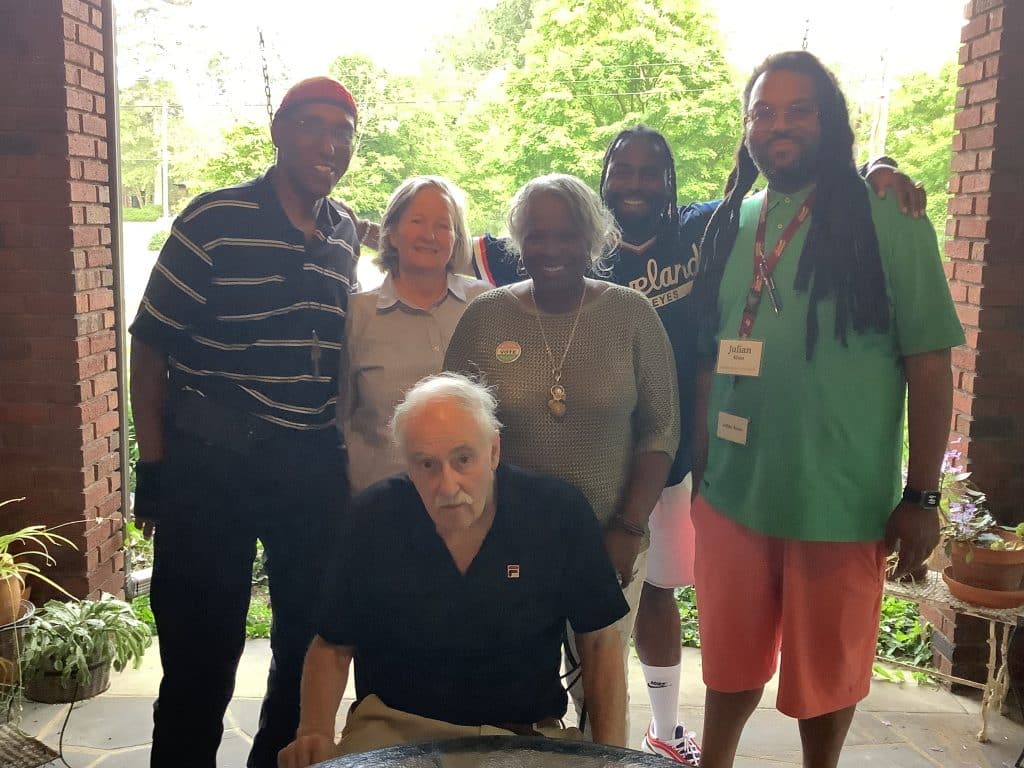
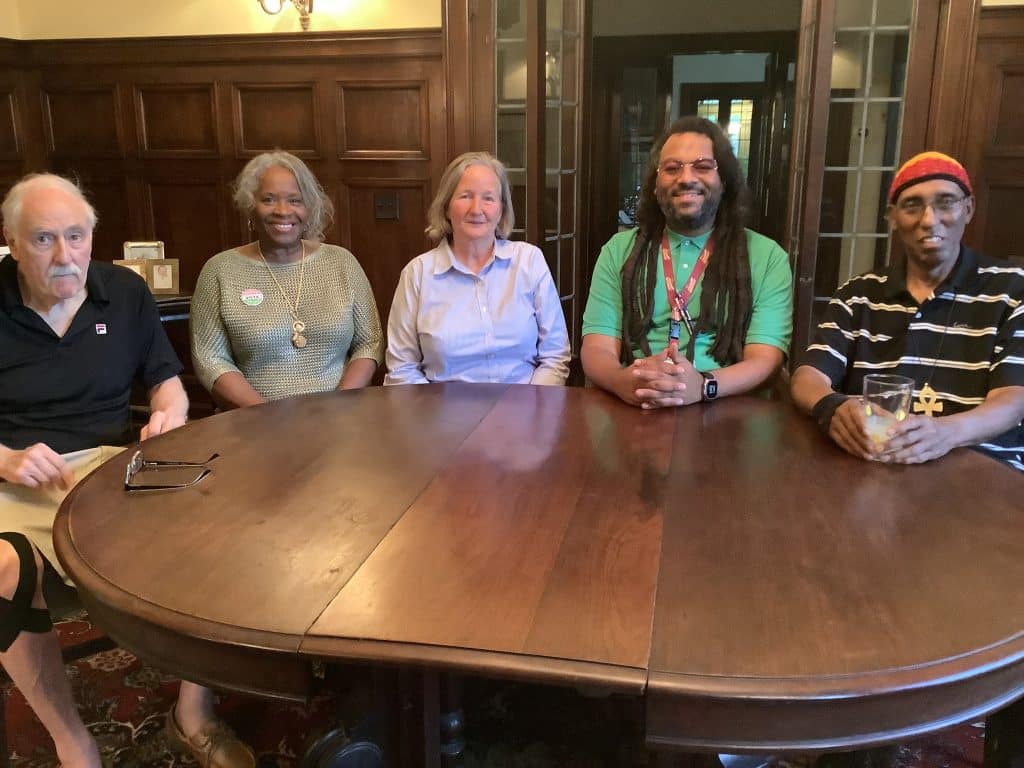
The announcement was made during a press conference at Providence House East Campus with Cleveland City Council President Blaine Griffin and Ward 4 Councilwoman Deborah Gray present. Also in attendance were Keep Huntington on Buckeye committee members Tamara Chappell, Charles Bromley, Greg Groves, Robert Render, Mary Boyle, Julian Khan, Gayle Bromley, Jerrod Amir Shakur, Jay Westbrook, and Meg Winegard – all residents and organizers of the neighborhood.
“You see the soul of Buckeye today,” Griffin said. “We basically said as a community, ‘We want this bank here.’ We’re extremely excited and this is what happens when everyone comes together and shows collaborative leadership.’”

“Blaine and Deborah were both very instrumental in the bank’s decision to reopen,” said Bromley. “When we saw Blaine, we said ‘Oh yeah, they’re opening back up because they don’t show up to losing events.’”
“This has been a rollercoaster of a ride because some days it looked optimistic and some days we felt like puppets just showing up for a lecture series,” Chappell said. “But I felt like if the federal government opened the post office back up, what’s Huntington’s problem?”
After months of meetings with local and federal politicians, community organizers, enhanced safety improvements within one mile of the branch, and ongoing media coverage of the closure, Huntington committed to a new relationship with the Buckeye neighborhood.
“We’re pleased to announce that our Buckeye branch will reopen by the end of October, and we’d like to thank all of our partners across the city for joining us in committing to the safety measures and ongoing partnership to make this possible,” said Sean Richardson, Huntington’s regional president in Northeast Ohio.
“We’re excited to continue to serve the Buckeye community, as we have for the last 20 years. We look forward to continuing our investment in this historic neighborhood,” he added.
Keep Huntington on Buckeye committee
After receiving written notification of the branch’s planned closure last October, Chappell, Boyle, and Bender sought help from Neighbor Up with keeping the bank open. Neighbor Up is a nonprofit organization whose mission includes sharing its collective power, providing support through mutual sharing of resources and building authentic relationships through open dialogue.
From this meeting, the Keep Huntington on Buckeye committee was formed and members immediately contacted the media and political leaders and prepared a petition.
“People from all over the county were standing in line to sign the petition because they had seen it on television and knew what we were doing,” Bender said. “We also asked Chip Bromley to lend his expertise of dealing with bank closure because we know he is an organizer from back in the day and has done this before.”
Once the Keep Huntington on Buckeye committee was up and running, Bromley contacted the Office of the Comptroller of the Currency (OCC) and asked whether Huntington had registered its planned closure. The OCC is the primary regulator of certain banks and part of its mission is to ensure consumers and communities have fair access and equal treatment as bank customers.
After contact from the OCC, Huntington revised its permanent closure to a temporary closure.
The Keep Huntington on Buckeye committee also contacted Senator Sherrod Brown, who is on the Senate’s Banking and Finance committees and U.S. Representative Shontel Brown, in whose district the branch is located. Both attended meetings and gave their full support to the Committee.
Safety Measures
All parties involved in keeping the bank open, immediately began to strategize ways to finance and implement safety measures that were important to Huntington’s decision to reopen.
On February 5, the city of Cleveland initiated a microgrid intervention along the Buckeye Corridor which included recommendations to improve site security and provide a safety assessment at the branch in Buckeye. A microgrid is a local electricity system that is connected to renewable energy like wind and solar with battery storage. In the fall of 2021, Cuyahoga County established Cuyahoga Green Energy focused entirely on renewable energy and resiliency.
After six months, the city presented statistics which shows the new microgrid over the next six months resulted in 439 hours spent on the microgrid, 539 traffic enforcement activities, 50 vehicles towed, 24 arrests made, violent crime decreased by thirty percent from the prior year, and overall crime decreased by 15.38%.

In a press conference after the reopening was announced, Blaine shed light on efforts that continue to increase safety in the Buckeye neighborhood.
“We worked on some safety efforts and initiatives, Councilwoman Gray and I are going to try and make some private investments in safety,” Griffin said. “Commander Valentino stepped up with the microgrid to focus on quality-of-life issues.”
Building on Buckeye’s landmark status
A couple of weeks before announcing the reopening, Kris Dahl, Huntington’s vice president, regional communications, provided an update on the Buckeye branch. “Huntington continues to work with the city of Cleveland and other community leaders to pursue meaningful safety improvements in the area surrounding our branch,” Dahl said. “This process has been underway since the beginning of the year, and we are committed to exploring all reasonable options before announcing a decision.”
But the Keep Huntington on Buckeye committee did not sit back and hope for the best as members had already seen major businesses leave the neighborhood before. They continued to strategize and collaborate with nonprofit organizations, Griffin, Gray, Sen. Brown, Congresswoman Brown, OCC officials, and the media.
“I think they realized this wasn’t going away when they were above the fold on the Plain Dealer,” Bromley said. “And they were on the five o’clock, six o’clock, and eleven o’clock news.”
Boyle wrote a letter to Huntington expressing her frustration with the planned closing. “Why now, when my neighbors have worked diligently to restore Buckeye as a central hub of commercial and residential strength?” Boyle asked. “This required new city leadership, significant public investment, and a strong community development corporation. Then you decide to leave, just when the results are beginning to show.”
Chappell said that Huntington is part of the community and needs to do more as there are 2,200 vacant lots in the area. She wants Huntington to be the initiator of loans rather than getting credit from the OCC when the bank buys a loan.
“The grants they announced were just the beginning of their commitment to the community,” Chappell said. “Everyone doesn’t have a high-credit rating. They have a low-credit rating product and I want to know how many loans they are going to give people.
“Also, everyone doesn’t want to own a house but for those who do, it ought to be available to them, and Huntington can help.”
The Home Mortgage Disclosure Act ((HMDA) requires many financial institutions to maintain, report, and publicly disclose loan-level information about mortgages. The information helps show whether lenders are serving the housing needs of their communities; gives public officials information that helps them make decisions and policies; and sheds light on lending patterns that could be discriminatory.
Bromley said the Committee will continue to hold the bank accountable for its behavior by reviewing its annual report on mortgages it makes. “We’re going to take a close look at what they’re doing. We will also be focusing on other banks in the neighborhood too,” Bromley said.
Buckeye’s Financial Forecast
The future of the Buckeye neighborhood is clearer as money for safety programs, access to home and business financing, street and road repair, and other improvements are being queued up as a result of Huntington’s unexpected decision almost a year ago.
The bank will resume offering access to banking services through its drive-through and in its lobby by appointment only. Huntington will also contribute more than $250,000 in philanthropic support to Burten, Bell, Carr CDC to fund safety improvement grants that will help small businesses, Community Housing Solutions and Home Repair Resource Center to fund home repairs, and ESOP/Benjamin Rose Connecting Our Seniors to Technology (COST) program, and other organizations in the Buckeye neighborhood.
“Something special is happening on Buckeye,” Griffin said. “This is a pivotal point in our community to turn our trajectory towards the future which is making sure that Buckeye-Woodland Hills is a vibrant community once again.
They’re coming with more products and more ideas to invest in our community and that’s what good corporate citizens are supposed to do.”
When asked his thoughts on the bank’s decision to reopen, Bender quoted Rev. Martin Luther King Jr., “It’s always the right time to do what is right,” adding “and that’s what they did.”
The Keep Huntington in Buckeye committee work is not done but to remind them of what they accomplished they plan to plant a tree in front of the bank. “The tree will represent growth and hope,” Chappell said.
We're celebrating four years of amplifying resident voices from Cleveland's neighborhoods. Will you make a donation to keep our local journalism going?